Hi, what do you want to do?





TeachEngineering
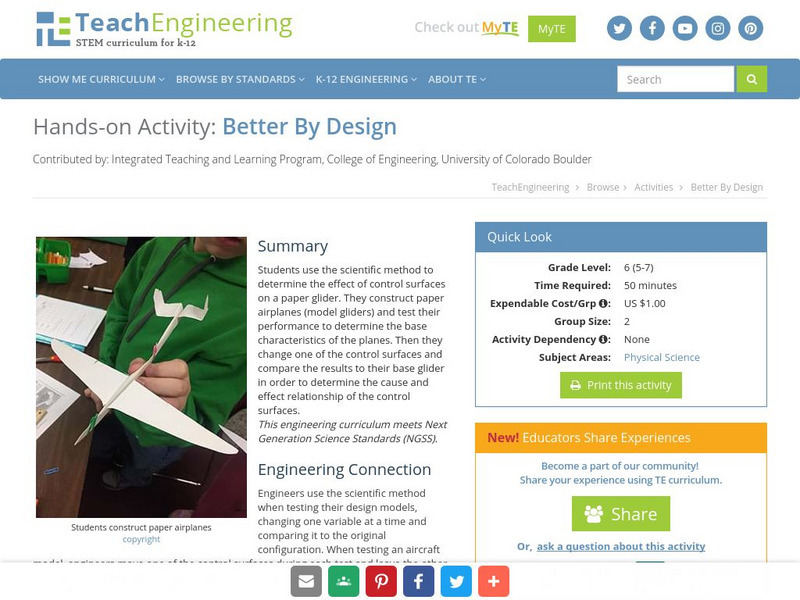
Teach Engineering: Better by Design
The purpose of this activity is to use a scientific method to determine the effect of control surfaces on a paper glider. The students will construct a paper airplane/glider and test its performance to determine the base characteristics...
TeachEngineering
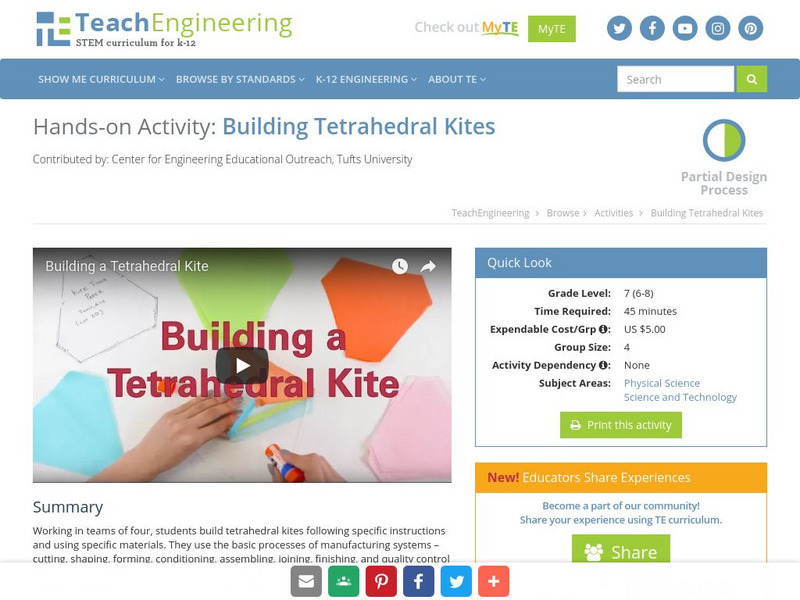
Teach Engineering: Building Tetrahedral Kites
Students build a tetrahedral kite and test it out. While building they are learning about flight and the manufacturing process

Smithsonian Institution
Smithsonian Learning Lab: How Things Fly: Activities for Teaching Flight
Through this series of three lessons, students will gain an understanding of the basics of flight. They will learn about the four forces of flight and practice their observation skills through a number of fun experiments. In addition,...
TeachEngineering
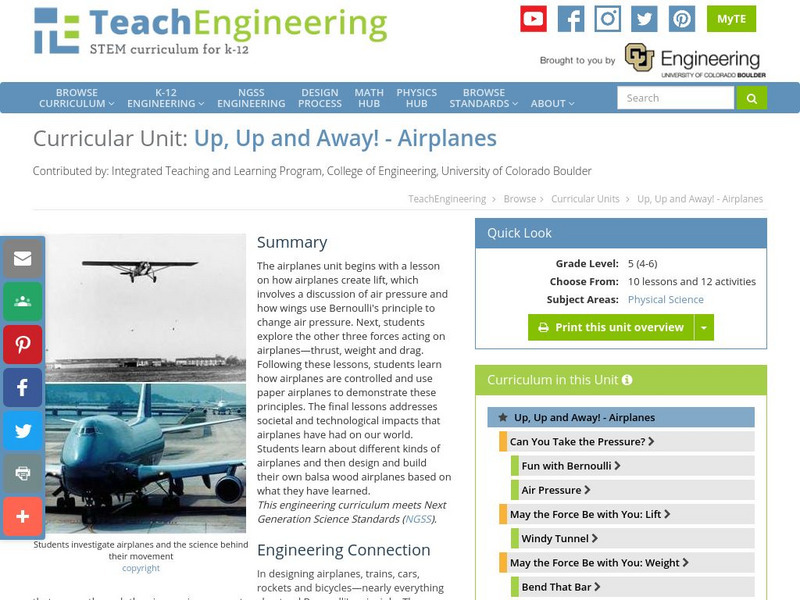
Teach Engineering: Up, Up and Away! Airplanes
The airplanes unit begins with a lesson on how airplanes create lift, which involves a discussion of air pressure and how wings use Bernoulli's Principle to change air pressure. Following the lessons on lift, students explore the other...
Science and Mathematics Initiative for Learning Enhancement (SMILE)
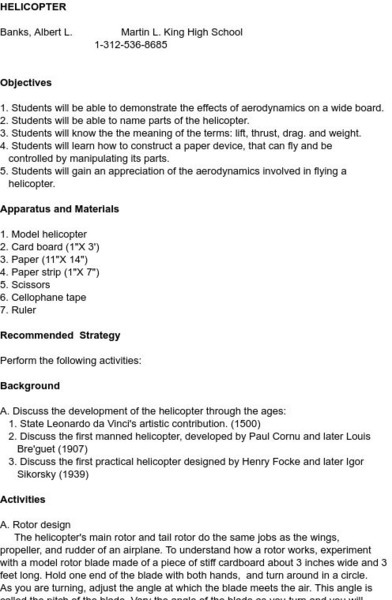
Smile: Lab Activity: Helicopter
The Illinois Institute of Technology lets students investigate the aerodynamics of a helicopter, focusing on the variables which effect the lift, thrust, drag, and weight. Students investigate the effects of aerodynamics on a wide board.
Curated OER
Aerodynamic Frame
A detailed look at the aerodynamic principles associated with cycling. Good science and even better web page design. Includes an online calculator that allows the user to calculate the aerodynamic drag and propulsive power of a bicyclist...

Other
Easy to Make Paper Airplanes
Have fun making different kinds of flying vehicles. You will learn how to make a paper airplane, helicopter, rocket, blimp, etc.

Michigan Reach Out
Nasa Trc: Flying Wing
In this lesson plan students can make a flying wing and trouble-shoot until the wing glides smoothly.
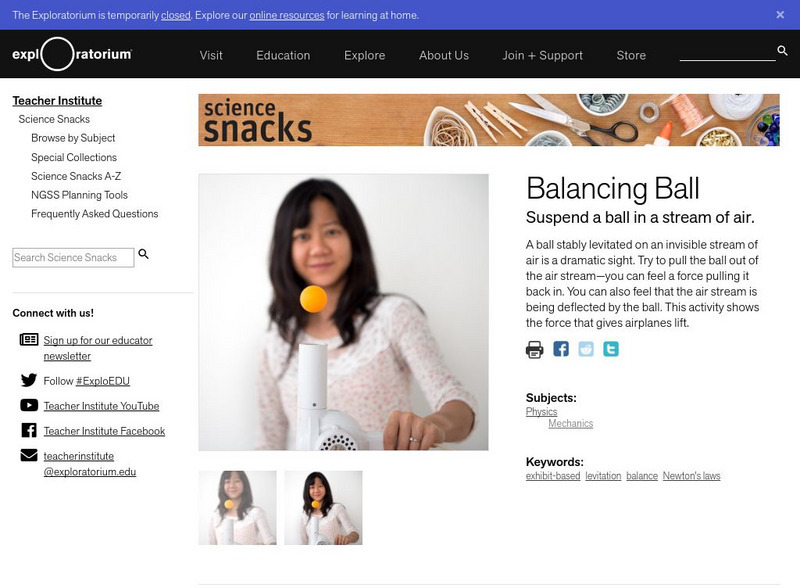
Exploratorium
Exploratorium: Science Snacks: Balancing Ball: Suspend a Ball in a Stream of Air
In this lesson plan students learn about air flow using a suspended ball in an air stream.

NASA
Beginners Guide to Model Rockets
This resource provides numerous links that will give teachers and students an overview of rocketry.
PBS
Pbs Nova: Pilot the Wright Brothers' Flyer
In this interactive, find out how the Wright brothers' design of the first flyer provided lift and speed, and allowed the pilot to make adjustments in response to changes in wind speed and direction.
Other
Ken Blackburn: Paper Airplanes
Information on paper airplane designs, history, and contests. Click on "Paper Airplane Aerodynamics" for an analysis of the world record holding paper airplane design.
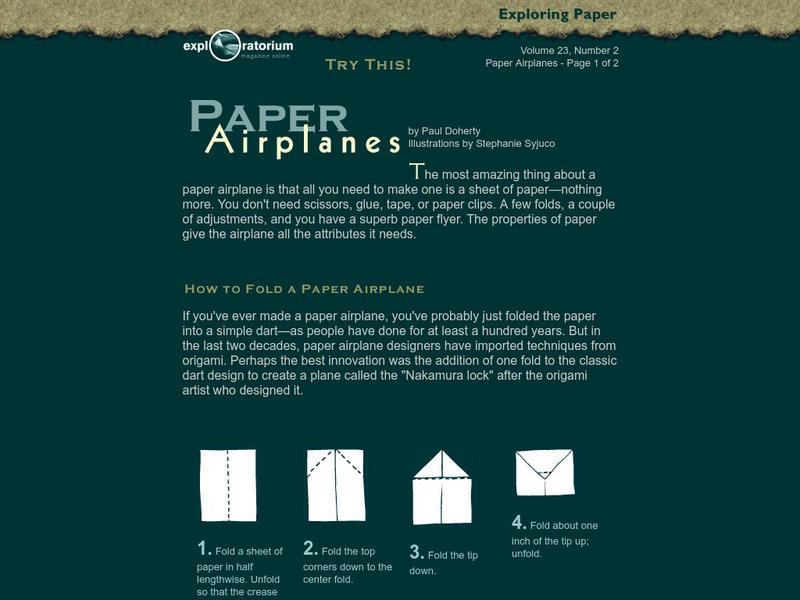
Exploratorium
Exploratorium: Paper Airplanes
At this site students will use origami to fold a paper airplane that fly better than the classic dart airplane.
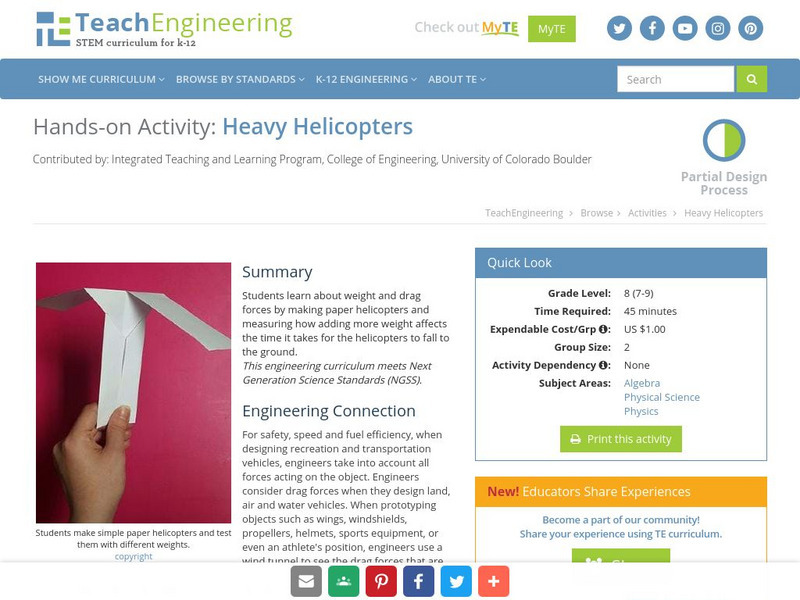
TeachEngineering
Teach Engineering: Heavy Helicopters
Students learn about weight and drag forces by making paper helicopters and measuring how adding more weight affects the time it takes for the helicopters to fall to the ground.
TeachEngineering
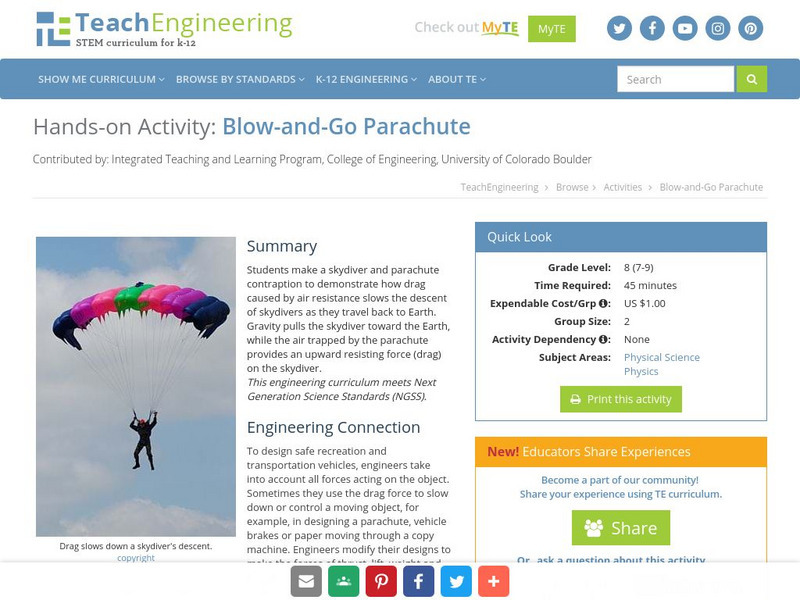
Teach Engineering: Blow and Go Parachute
Students make a skydiver and parachute contraption to demonstrate how drag caused by air resistance slows the descent of skydivers as they travel back to Earth. Gravity pulls the skydiver toward the Earth, while the air trapped by the...
The Franklin Institute
Franklin Institute Online: The Challenge of Flight
Think about the challenges that faced the Wright Brothers, then see if you can design and fly your own model aircraft. There are other sources provided to help you along the way.
NASA
Nasa: Glenn Research Center: Teamwork in Aerospace Activity
Learn about the principles of aerospace engineering and the importance of teamwork by designing and building a paper airplane for a "fly-off" competition. Lesson plan includes introduction to team structure, activity directions, and...
Science Buddies
Science Buddies: Rocking the Boat
Become an engineer for a day and discover the best way to keep from rocking the boat in this engineering science fair project. When a ship rocks back and forth, it can make people seasick, but also it makes it dangerous for jets to land...
Other
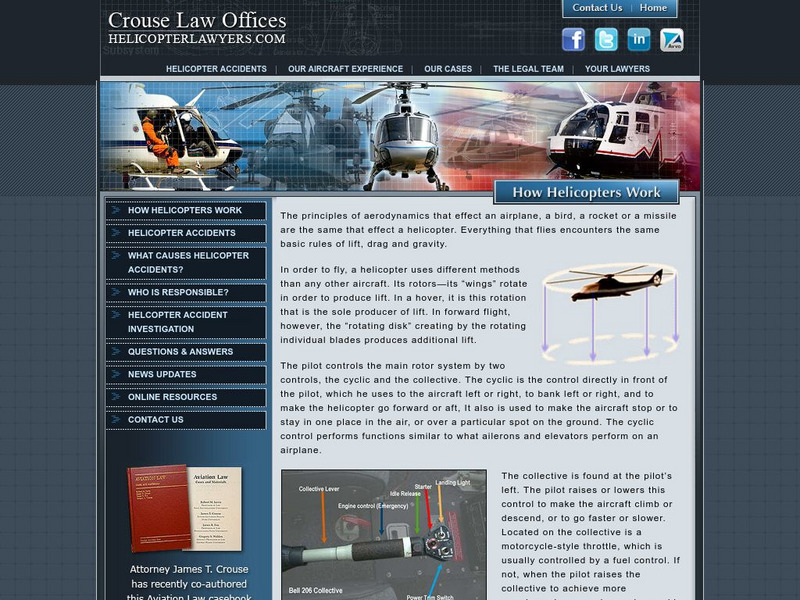
Crouse Law Offices: How Helicopters Work
Explains what aerodynamic principles and elements of its design enable a helicopter to fly.
Science and Mathematics Initiative for Learning Enhancement (SMILE)
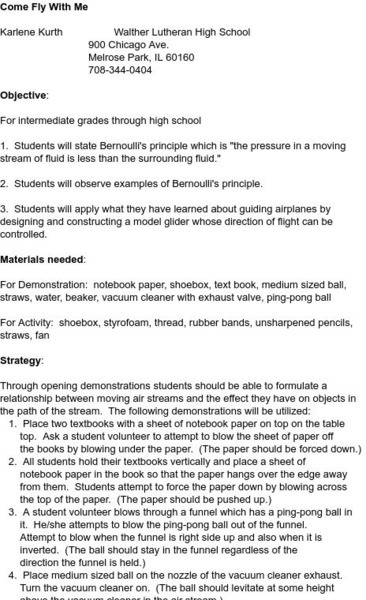
Smile: Lab Work: Come Fly With Me
This site by the Illinois Institute of Technology lets students use a vacuum cleaner hose, ping pong balls, straws and other materials to investigate the effect of moving air upon the surfaces which it hits. Principles are applied as...
Museum of Science
Museum of Science and Industry, Chicago: Activities: Make and Fly a Helicopter
Print and cut out the template for the helicopter. Then experiment with adding and subtracting weight, or changing the shape of the copter or the blades to see what makes it fly best.
Curated OER
The Exploratorium Museum: The Science of Sports Cycling
A detailed look at the aerodynamic principles associated with cycling. Good science and even better web page design. Includes an online calculator that allows the user to calculate the aerodynamic drag and propulsive power of a bicyclist...