Hi, what do you want to do?






Library of Congress
Loc: African American Mosaic: Influence of Prominent Abolitionists
See documents and pictures of those actively involved in the anti-slavery movement. From the Library of Congress.
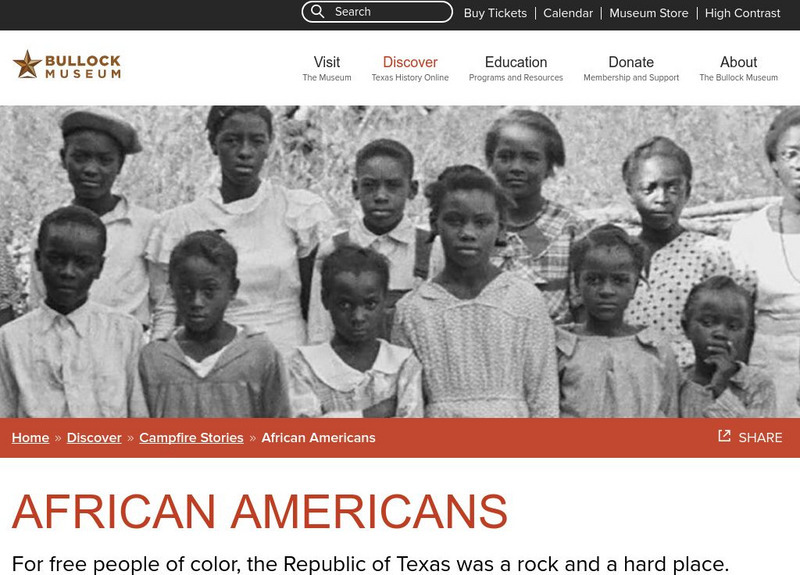
Bullock Texas State History Museum
Bullock Museum: African Americans
Share in the campfire stories of the people who defined Texas. Read about free people of color, and how the Republic of Texas was between a rock and a hard place.
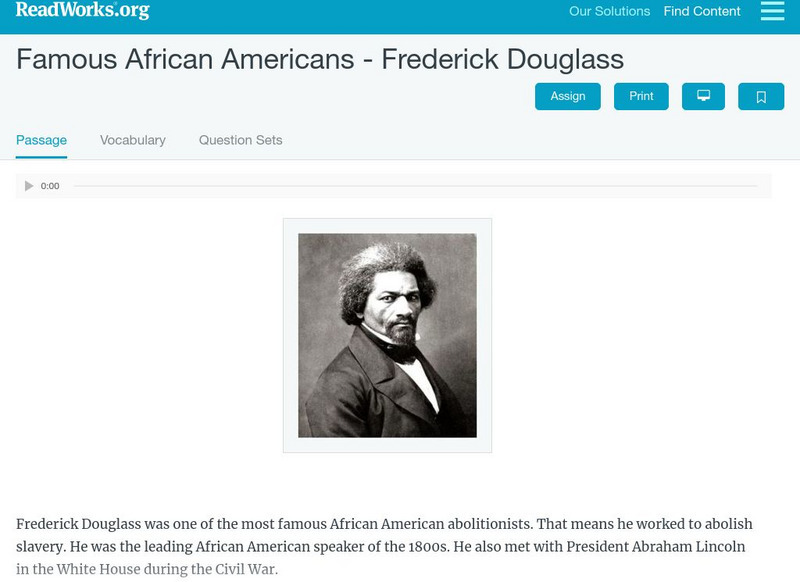
Read Works
Read Works: Famous African Americans Frederick Douglass
[Free Registration/Login Required] This passage contains biographical information about the famous African American abolitionist and former slave, Frederick Douglass. This passage is a stand-alone curricular piece that reinforces...
National Humanities Center
National Humanities Center: Teacher Serve: The Traditional Arts and Crafts of African Americans Across Five Centuries
Detailed essay provides an overview of Africa's contributions to American culture while discussing how basket makers, potters, and quilters helped preserve American history through their works.
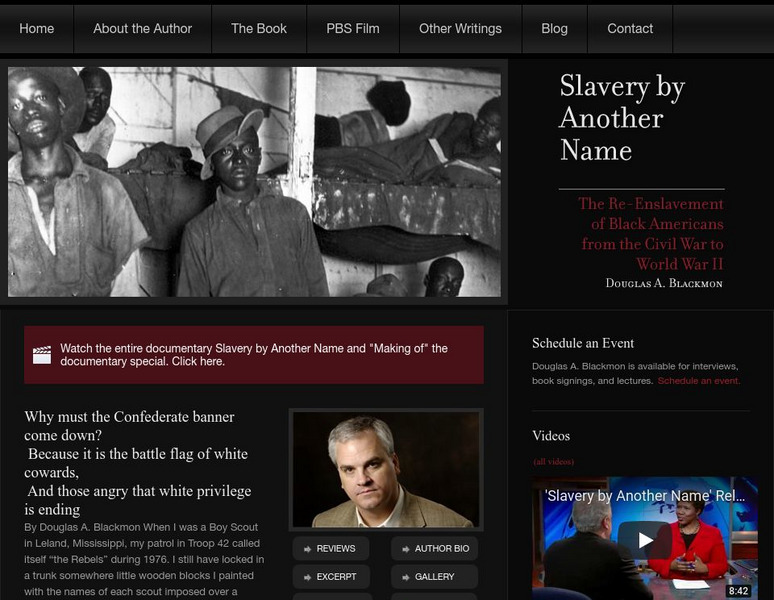
Other
Slavery by Another Name
Read this detailed narrative to learn about the mistreatment of African Americans long after people thought slavery had ended after the Civil War, but actually persisted into the twentieth century. Based on original documents, photos,...

Khan Academy
Khan Academy: Us History: 1865 1898: Life After Slavery for African Americans
Learn about life after slavery for African Americans.
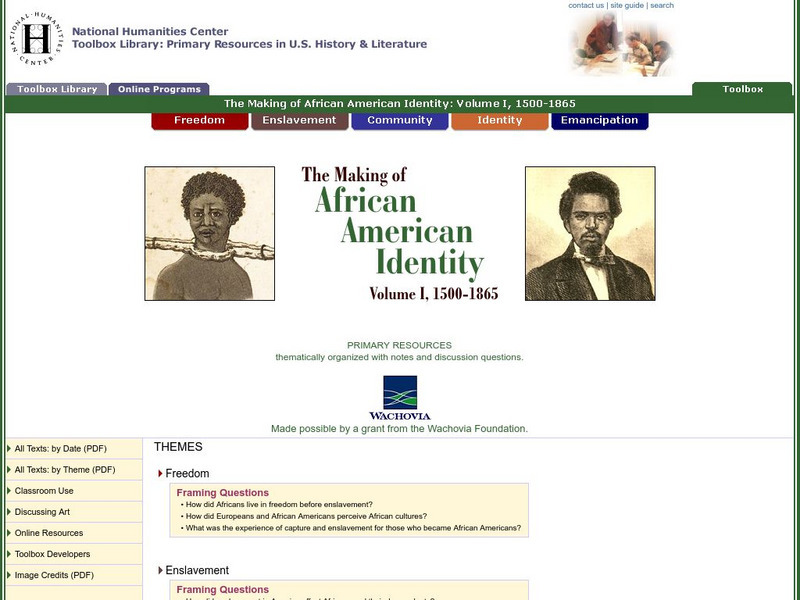
National Humanities Center
National Humanities Center: Toolbox Library: Making of African American Identity: V. 1, 1500 1865
One hundred and sixty primary sources-historical documents, literary texts, and visual images-that explore the conditions of slavery, the search for identity, the development of a sense of community while enslaved, and the struggles for...

National Humanities Center
National Humanities Center: Toolbox Library: Freedom, Making of African American Identity: V. 1, 1500 1865
Twenty nine primary sources-historical documents, literary texts, and visual images-that explore the qualities and conditions of African lives on the west coast before and during the European slave trade.
National Humanities Center
National Humanities Center: Teacher Serve: How Slavery Affected African American Families
University of North Carolina at Chapel Hill professor Heather Andrea Williams discusses the lives of enslaved African American families and how slavery made their lives different from other families.
National Humanities Center
National Humanities Center: Toolbox Library: Petitions, Making of African American Identity: V. 1
Three late-eighteenth-century petitions to state legislatures and one to Congress by enslaved or free African Americans seeking civil liberties. These four petitions, called "memorials", present a range of origins, goals, and outcomes.
National Humanities Center
National Humanities Center: Toolbox Library: Poets, Making of African American Identity: V. 1
The writings of four African Americans poets from the late-eighteenth to the mid-nineteenth centuries that examine slavery, abolition, and emancipation. These authors include Phillis Wheatley, George Moses Horton, James Whitfield, and...
Annenberg Foundation
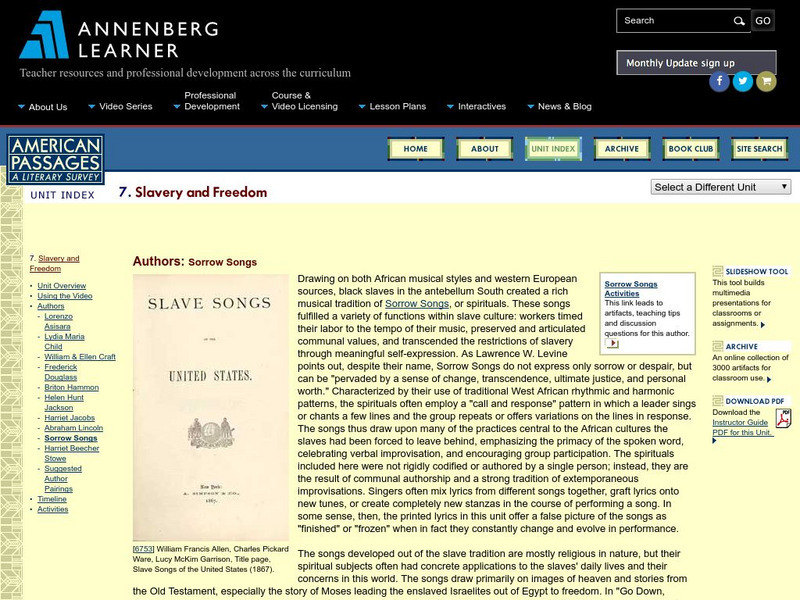
Annenberg Learner: American Passages: Slavery and Freedom: Sorrow Songs
Sorrow Songs are examined as the music the African American slaves of the antebellum South to express both sadness and despair as well as well as hope for better. See "Sorrow Songs Activities" for related artifacts and activities.
National Humanities Center
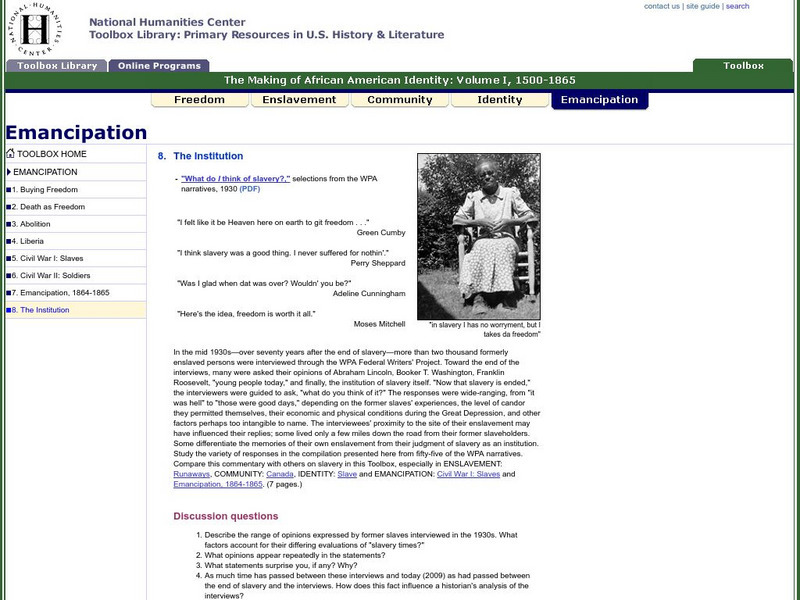
National Humanities Center: Toolbox Library: The Institution, Making of African American Identity: V. 1
Interviews from the 1930s that reflect on African Americans' experience of the institution of slavery. A narrative with firsthands accounts is linked within this resource.
National Humanities Center
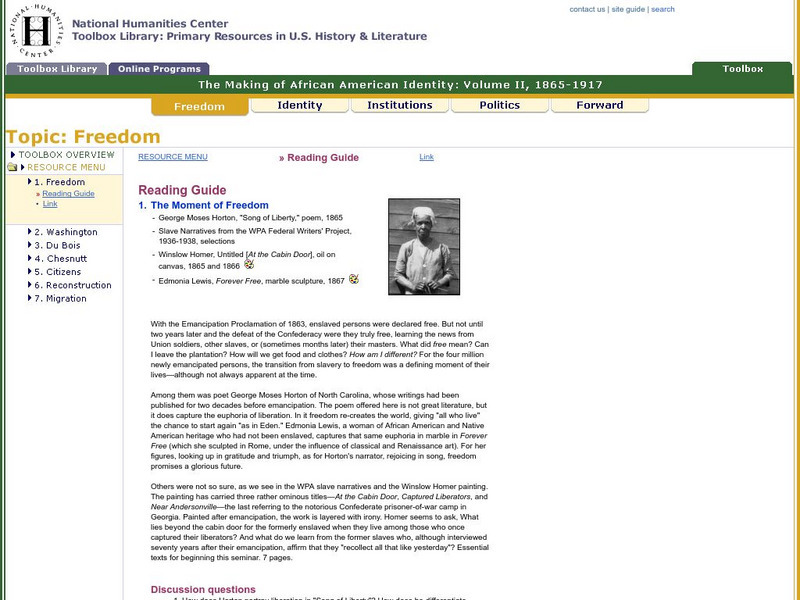
National Humanities Center: Toolbox Library: The Moment of Freedom: Making African American Identity
For the four million newly emancipated persons, the transition from slavery to freedom was a defining moment of their lives?although not always apparent at the time. This resource provides texts that explore what freedom meant to African...
Library of Congress
Loc: African American Odyssey: Reconstruction and Its Aftermath
From the Library of Congress, this resource documents the course of post-Civil War, post-slavery life for black Americans. Topics include education, constitutional amendments, voting rights and the many challenges African Americans faced...
National Humanities Center
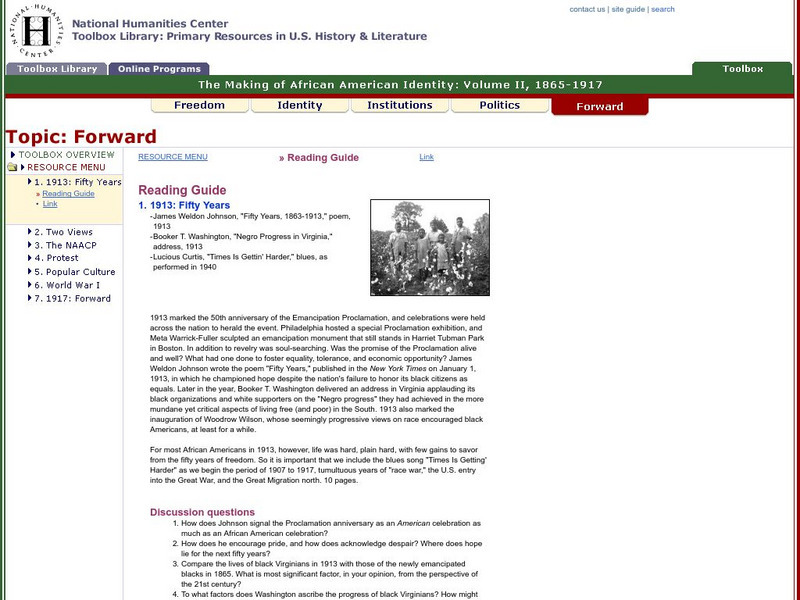
National Humanities Center: Toolbox Library: 1913: Fifty Years, Making of African American Identity: V. 2
A poem, an address, and a blues song that express black life in the first fifty years after the Emancipation Proclamation. The texts examine whether the true meaning of the proclamation carried forward to the lives African Americans.
National Humanities Center
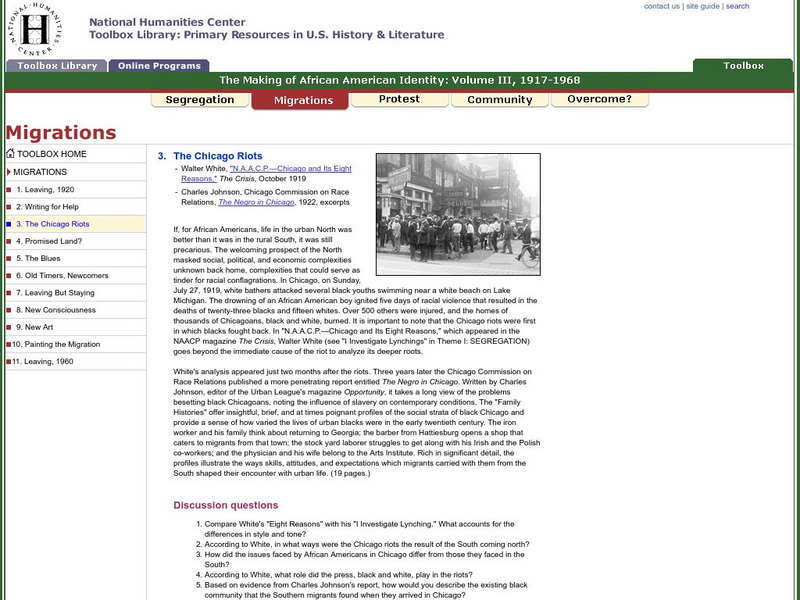
National Humanities Center: Toolbox Library: Making of African American Identity: Chicago Riots
An analysis of the 1919 Chicago race riot and a description of African American life in Chicago. One analysis is provided by Charles Johnson, editor of the Urban League's magazine Opportunity, describing the problems that beset black...

National Humanities Center
National Humanities Center: Toolbox Library: Education, Making of African American Identity: V. 1
Nineteenth-century accounts and twentieth-century recollections by former slaves of the absence of and obstacles to education for African Americans. Links to narratives of freed and newly freed slaves are provided.
National Humanities Center
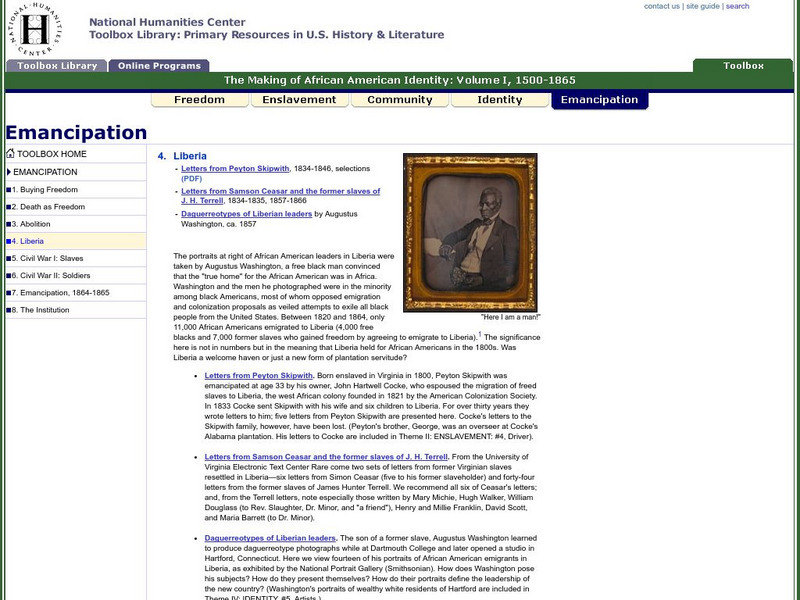
National Humanities Center: Toolbox Library: Emancipation: Liberia, Making of African American Identity: V. 1
Primary resource provides letters, statements, and photographs of free and enslaved African Americans who journeyed to Liberia to establish new lives and identities. Also includes questions for class discussion.

National Humanities Center
National Humanities Center: Toolbox Library: Making of African American Identity: Emigration
Proposals for and arguments against the emigration of blacks to Haiti and to Africa during the mid-nineteenth century. The struggle of African Americans, such as Martin Delany, to determine the appropriate course of action with this...

The History Cat
The History Cat: African Americans After the War
Provides a discussion of what life was like for African Americans after slavery ended, focusing on the Freedman's Bureau, Freedman schools, and the Ku Klux Klan.
The Henry Ford
Living Under Enslavement: African Americans on Hermitage Plantation
This virtual tour of the slave quarters of the Hermitage Plantation tells of the family life of slaves, their skills, and their resistance to the institution of slavery.
Milwaukee College Prep
African American History: North and South, Slave and Free
An overview of the status and experiences of African Americans in the mid-1800s, both free and enslaved. Includes references to Frederick Douglass and his efforts to enlighten people about the discrimination and prejudice faced by...
PBS
Wnet: Thirteen: Slavery & the Making of America
Using primary documents, oral histories, and other historical resources, discover how the arts of Africa, Europe, and pre-Civil War America influenced the culture of enslaved African Americans.