Hi, what do you want to do?






University Corporation for Atmospheric Research
Ucar: Clouds in the Air: Why Are They There?
An experiment that demonstrates why there are clouds in the sky. Start with air, invisible water vapor, particles we call condensation nuclei, and air pressure...the cloud comes later!
University Corporation for Atmospheric Research
Ucar: How Weather Affects Air Quality
How is air pollution affected by weather? Some types of pollution are worse in the summer heat, while others are worse in cold winter weather.
CPALMS
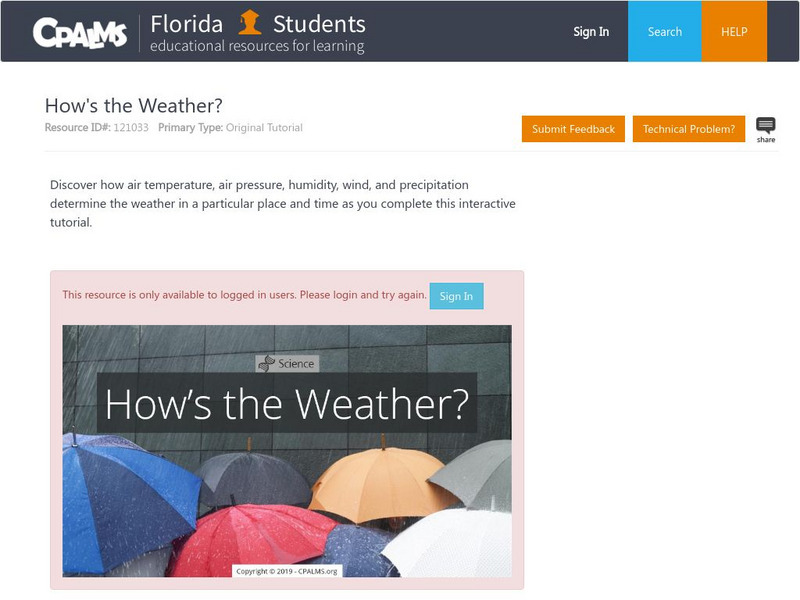
Florida State University Cpalms: Florida Students: How's the Weather?
A tutorial that describes the five factors that determine the weather in a particular place and time. The factors discussed in this tutorial are air temperature, air pressure, humidity, wind, and precipitation. A PDF file of the tutorial...
University of Illinois
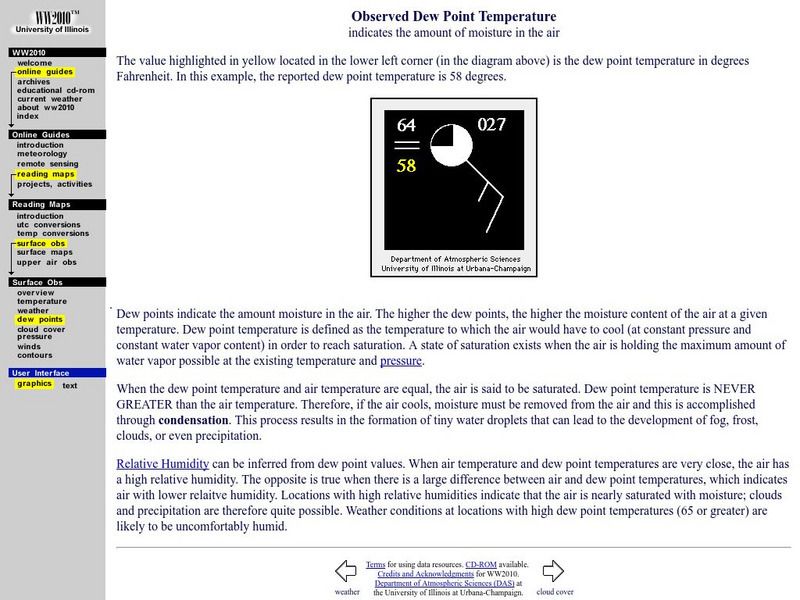
University of Illinois Urbana Champaign: Observed Dew Point Temperature
Describes what dew point is and how it relates to moisture content of the air. Also explains condensation and relative humidity.

Alabama Learning Exchange
Alex: I'm So Crushed
In this activity, learners will have an opportunity to solve a mystery. They will discover why a soda can collapses during a demonstration due to the effects of changes in temperature and atmospheric pressure. Students will gain further...
NASA
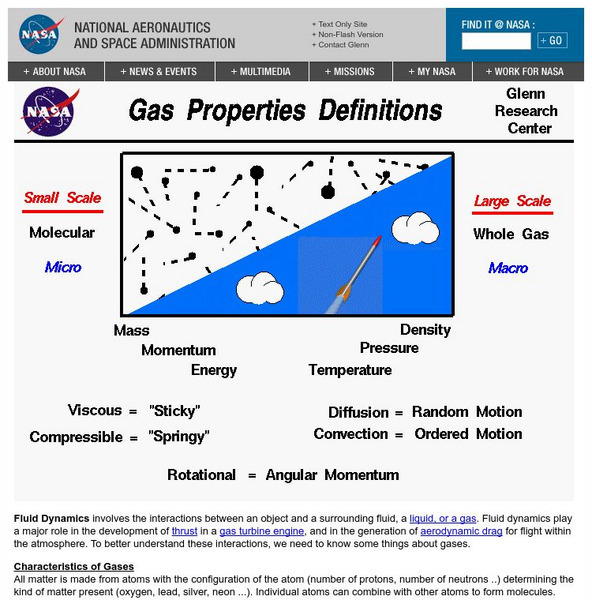
Nasa: Gas Properties Definitions
Use this site to learn about basic gas properties including motion, viscosity, and compressibility. Includes links to activities for all ages.
Science Buddies
Science Buddies: Do Hurricanes Cool the Ocean?
If you've ever so much as watched a news clip about a hurricane, you probably know that hurricanes draw their power from warm ocean waters. If that is true, does it mean that hurricanes actually cool the ocean down when they pass...
National Snow and Ice Data Center
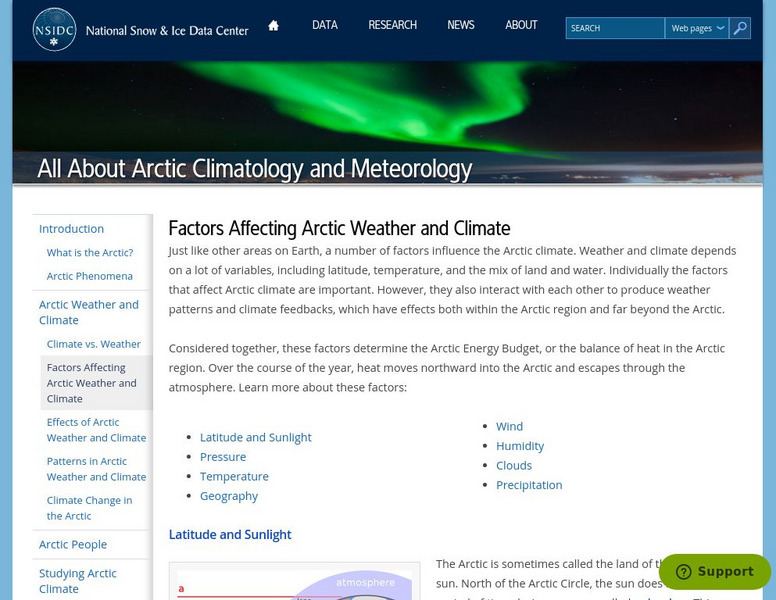
National Snow and Ice Data Center: Factors Affecting Arctic Weather and Climate
An introduction to the factors that affect the Arctic's weather and climate: latitude, land/sea distribution, solar radiation, air temperature, air pressure, winds, humidity, clouds, and precipitation.

TeachEngineering
Teach Engineering: Weather Basics
Learners are introduced to the basics of the Earth's weather. Concepts include fundamental causes of common weather phenomena such as temperature changes, wind, clouds, rain and snow. The different factors that affect the weather and the...
American Geosciences Institute
American Geosciences Institute: Earth Science Week: Build Your Own Weather Station
Students are guided in how to build their own weather station that will measure temperature, humidity, precipitation, atmospheric pressure, and wind direction and speed.
A&E Television
History.com: Challenger Explosion: How Groupthink and Other Causes Led to the Tragedy
Seven lives were lost as communications failed in the face of public pressure to proceed with the launch despite dangerously cold conditions. January 28, 1986, The sun had been up for less than an hour and air temperatures were a few...