Hi, what do you want to do?





Colonial Williamsburg Foundation
The Colonial Williamsburg Foundation: The Bill of Rights
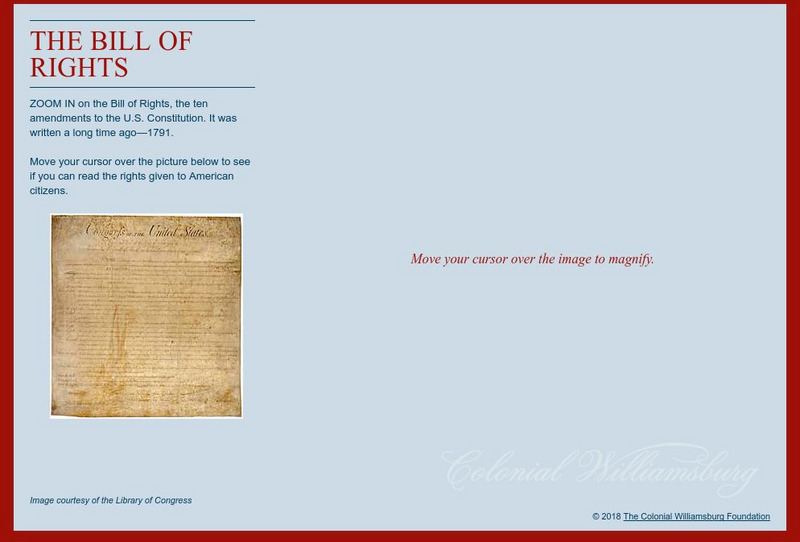
Take a close look at the United States Bill of Rights, the ten amendments to the U.S. Constitution. It was written a long time ago-1791. Move your cursor over the picture below to see if you can read the rights given to American citizens.

PBS
Pbs Learning Media: Writing in u.s. History: The Bill of Rights
Explore why the Bill of Rights was added to the Constitution and its enduring impact on defining our rights. In this interactive lesson from WGBH, students develop a written argument in response to the question "How does the Bill of...
Annenberg Foundation
Annenberg Classroom: The Bill of Rights Interactive Quiz
Many Americans take for granted the freedoms contained in the first 10 amendments to the Constitution. As students play this game, they will discover surprising facts about the story behind the Bill of Rights and gain a clearer...
Bill of Rights Institute
The Bill of Rights Institute: Free Lesson Plans
Free lesson plans concerning the Bill of Rights and the freedoms guaranteed by the Constitution. Included are lessons on important news stories occurring today, as well as lessons on famous Americans and how they executed their rights.
Teaching American History
Teaching American History: The Documentary Origins of the Bill of Rights I
Explore both the British and state influences on the U.S. Bill of Rights. Understand the origins of each amendment to the Constitution.
Teaching American History
Teaching American History: Origins and Politics of the Bill of Rights
Use an interactive spreadsheet to investigate both the origins and the politics of the Bill of Rights. Peruse the proposals made by James Madison and which ones were adopted. Click on the color-coded documents to view them.
Teaching American History
Teaching American History: The Politics of the Bill of Rights: Part Iii
Investigate what the politics were leading to the creation of the Bill of Rights. Identify how the debates in the first congress led to the stages of approval and ultimately the adoption of the ten amendments to the U.S. Constitution.
Teaching American History
Teaching American History: Bill of Rights Introduction
What is the Bill of Rights? Why were they created? Find out the purpose of these ten amendments to the U.S. Constitution and how they work to protect the citizens in the U.S.
Huntington Library
Huntington Library: The Bill of Rights
In this lesson, 5th graders learn about the bill of Rights, why it was added to the Constitution, and its importance to the freedoms and liberties that Americans have today. Student resources are included.
Yale University
The Avalon Project: The English Bill of Rights 1689
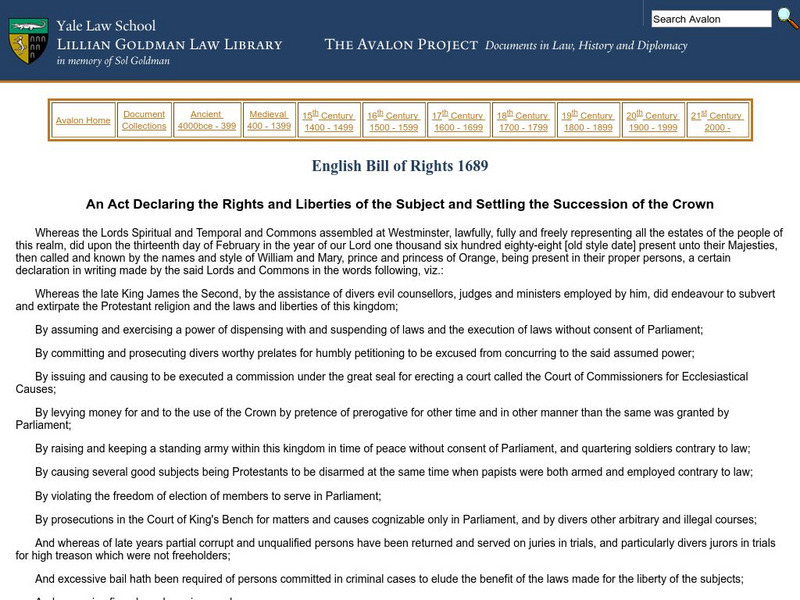
An electronic version of the original English Bill of Rights, written in 1689, which influenced the writings of Thomas Jefferson, Benjamin Franklin, and John Adams, and laid the basis for American Democracy and common law.
Read Works
Read Works: American Government the Bill of Rights Part Ii
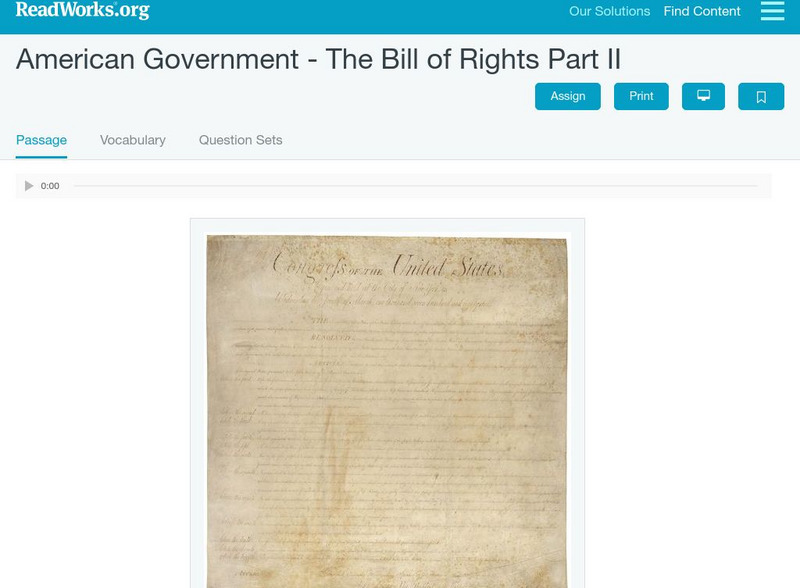
[Free Registration/Login Required] This informational text passage explains a few parts of the Bill of Rights. This passage is a stand-alone curricular piece that reinforces essential reading skills and strategies and establishes...
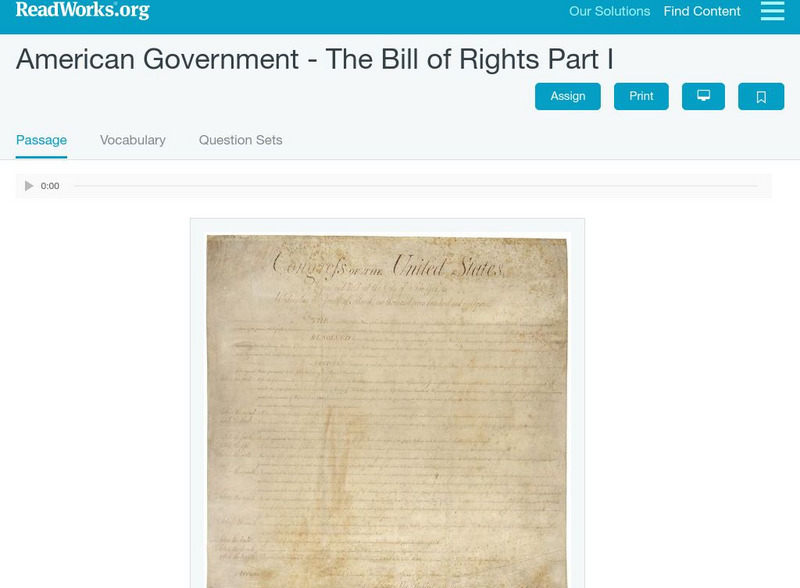
Read Works
Read Works: American Government the Bill of Rights Part I
[Free Registration/Login Required] This informational text piece shares a history to the Bill of Rights. This passage is a stand-alone curricular piece that reinforces essential reading skills and strategies and establishes scaffolding...
University of Groningen
American History: Outlines: The Bill of Rights
Article on the history and purpose of the Bill of Rights which spelled out specific protections in the first 10 amendments of the Constitution.
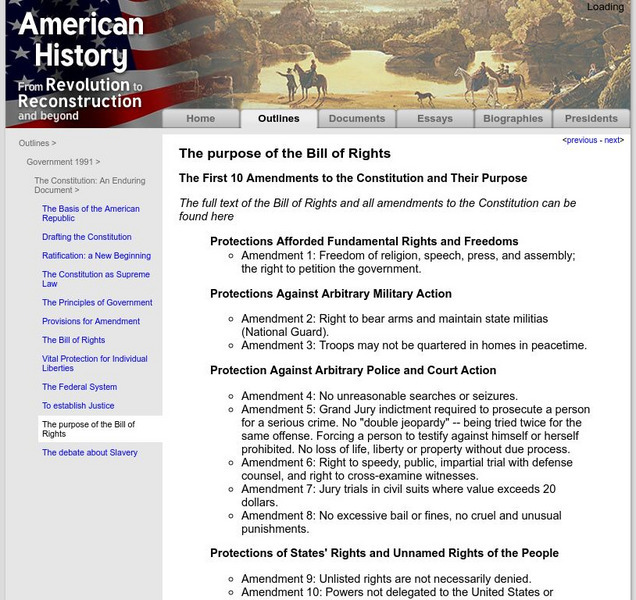
University of Groningen
American History: Outlines: The Purpose of the Bill of Rights
Text of the first ten amendments of the Constitution found in the Bill of Rights.
Library of Congress
Loc: America's Story: Bill of Rights
The Bill of Rights was adopted to protect each United States citizen's rights. Learn about how the Bill of Rights was formed and the protections it guarantees to Americans.
Ohio Test Prep
Ohio Test Prep: Bill of Rights
Ohio test preparation material on the Bill of Rights provides three video tutorials that hit specifically learning target 9 which is to cite evidence for historical precedents to the rights incorporated in the Bill of Rights.
Bill of Rights Institute
Bill of Rights Institute: John Adams
Short, overweight, and quick-tongued, John Adams hardly fits the model of the typical Founder. But Adams's contributions to American independence and the formation of the United States government were great. Adams penned defenses of...
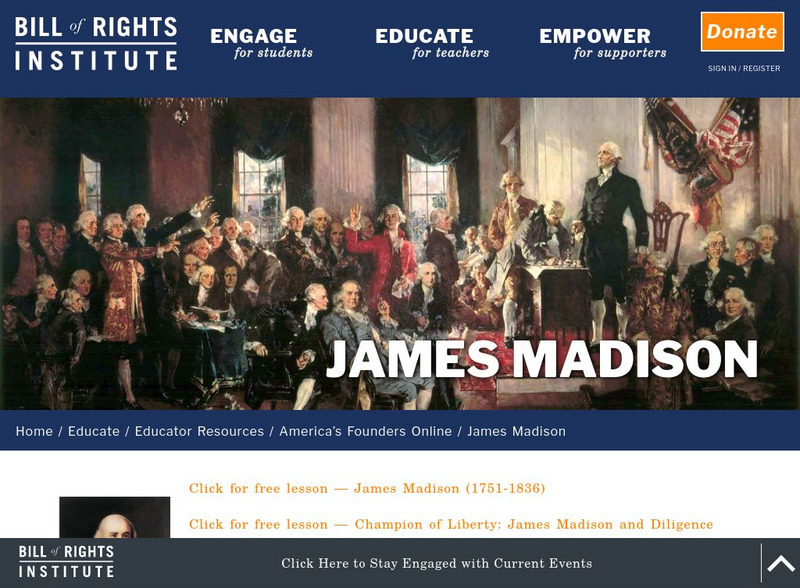
Bill of Rights Institute
Bill of Rights Institute: James Madison
James Madison's slight stature and reserved personality gave little indication of his keen intellect and shrewd nature. No other Founder had as much influence in crafting, ratifying, and interpreting the United States Constitution and...
Bill of Rights Institute
Bill of Rights Institute: George Mason
George Mason's ideas helped to shape the Founding documents of the United States, but few Americans remember him today. The words he used when writing the Virginia Declaration of Rights and the Virginia Constitution of 1776 inspired the...
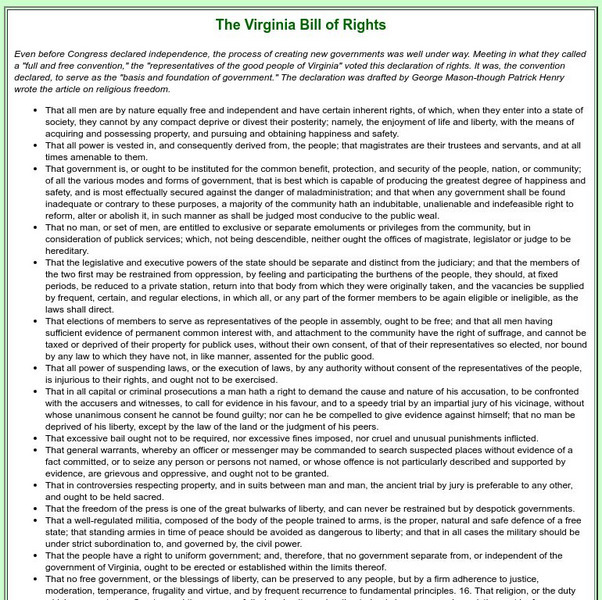
Henry J. Sage
Sage American History: The Virginia Bill of Rights
Primary source document establishing a basis and foundation of early American government. This document, adopted in Virginia and drafted by George Mason and Patrick Henry, precedes the Congressional call for independence.
Teaching American History
Teaching American History: The Federalist/antifederalist Debate Bill of Rights
Identify the role of the debates between the Federalists and Antifederalists during the creation of the ten amendments to the U.S. Constitution.
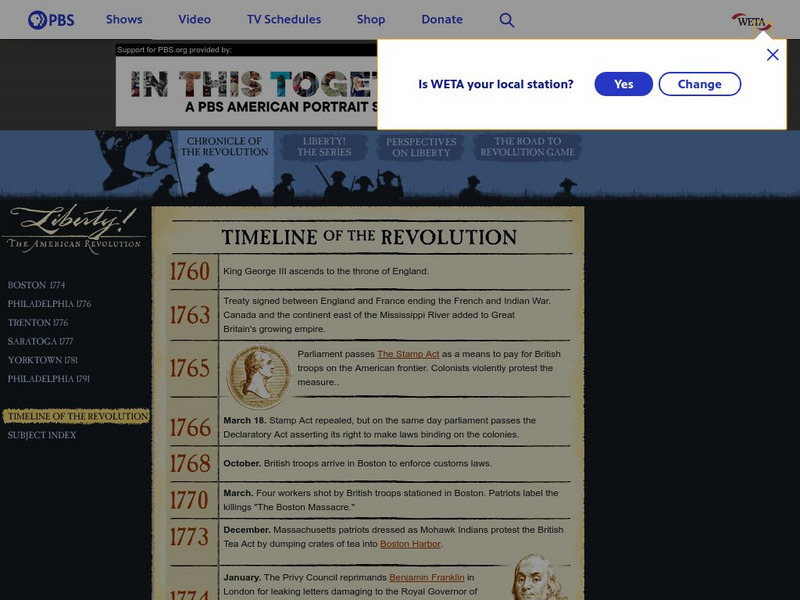
PBS
Pbs: Timeline of the Revolution
A timeline beginning at the ascension of King George of England in 1760 and ending at the passing of the US Bill of Rights, is brief but informative. A Revolutionary War game, as well as other educational sites are available.
Other
Semper Liber: American Rule of Law the American Way
American rule of law is based on the premise that increase in government means decrease in liberty. That being given, the underlying assumption about American rule of law is that limits must be placed on government, since the tendency of...
Other
American Civil Liberties Union: Constitution Day Activities
Six activities teach students about the U.S. Constitution. Learn about checks and balances, the Bill of Rights, some of the history of the document, and how each of the states became a state. The site also provides teacher resources,...