Hi, what do you want to do?





C3 Teachers
C3 Teachers: Inquiries: American Revolution
A learning module on the American Revolution that includes three supporting questions accompanied by formative tasks and source materials, followed by a summative performance task. Students investigate the question of whether the...

University of Florida
Florida Museum of Natural History: First Colony: Our Spanish Origins
This resource is a lesson plan from the University of Florida Natural History Museum. It is a lesson on the impact that the immigrants of Jamestown, VA had on American culture and the melting pot they created in the early colonial days.
Digital History
Digital History: How Were the Colonies Able to Win Independence?
A discussion of the several reasons the American colonies were able to defeat the head of the British Empire and become an independent country. See also a very brief description of how the Continental Congress paid for the war.

National Endowment for the Humanities
Neh: Edsit Ement: American Colonial Life in the Late 1700s
In this very detailed lesson plan, students will explore what life was like during colonial life in the late 1700s. Students will use what they have learned to write fictional letters to a cousin.

Other
About Famous People: The American Revolutionary War
A good, general summary of the political and military events of the American Revolutionary War in two clickable parts.
University of Groningen
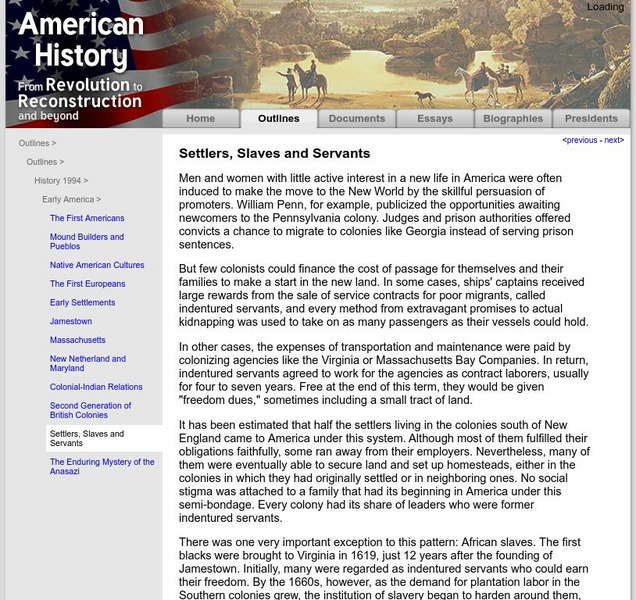
American History: Outlines: Settlers, Slaves and Servants
This resource provides a brief overview of how many settlers in the colonies were indentured servants and how the system of indentured servitude tied to slavery.
University of Groningen
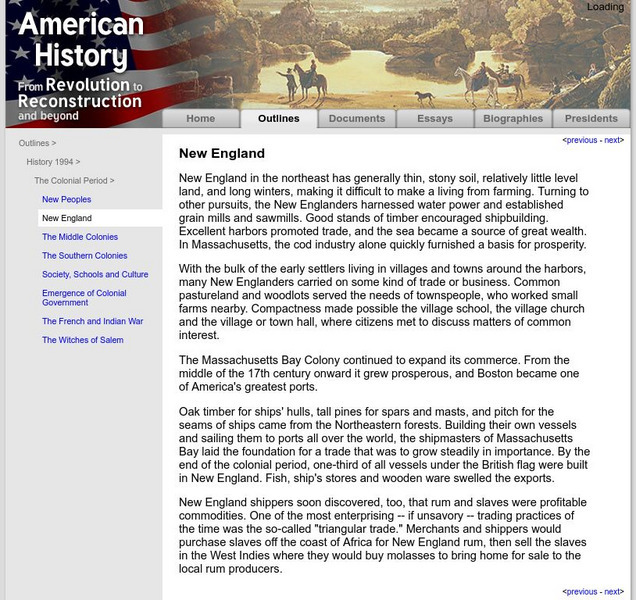
American History: Outlines: The Colonial Period of American History
Comprehensive information about the colonial period of American History. Includes information about New England, colonies, government, people, The French and Indian War, and the Salem Witch Trials.
State Library of North Carolina
N Cpedia: Stephen R. Claggett: Native American Settlement of North Carolina
The English began exploring and settling into the Carolina Colony in the late 1500-early 1600s. The land was already inhabited by Native American tribes. How did they all get along? Who were the Native Americans on the land?
National Humanities Center
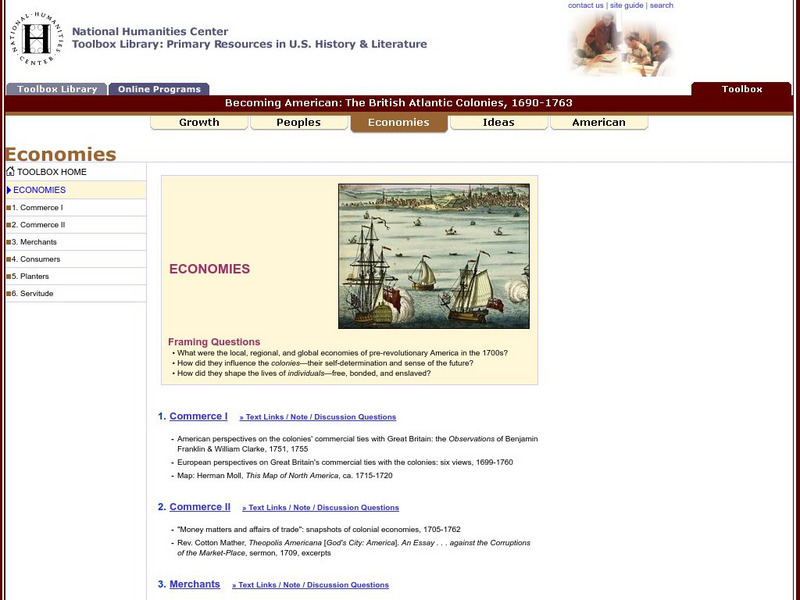
National Humanities Center: Toolbox Library: Becoming American: The British Atlantic Colonies, 1690 1763
Primary resource material on the economies of the New England colonies between 1690 and 1763.
Other
American Revolution: A Naval History of the American Revolution
This online reproduction of the original 1913 text by Gardner W. Allen is organized chronologically beginning in 1775 and ending with 1783. An appendix includes source citations, a list of vessels, officers, privateers and other...
Digital History
Digital History: The Southernmost Colonies: The Carolinas and Georgia
Read about the colonization of the Carolinas and Georgia, find out about the role of slavery in those colonies, and see how the Native Americans were treated.
Digital History
Digital History: The Middle Colonies: William Penn's Holy Commonwealth
The Quakers were persecuted in England and in many English colonies. Read about William Penn's establishment of the colony of Pennsylvania where Quakers and others could live with religious liberty.
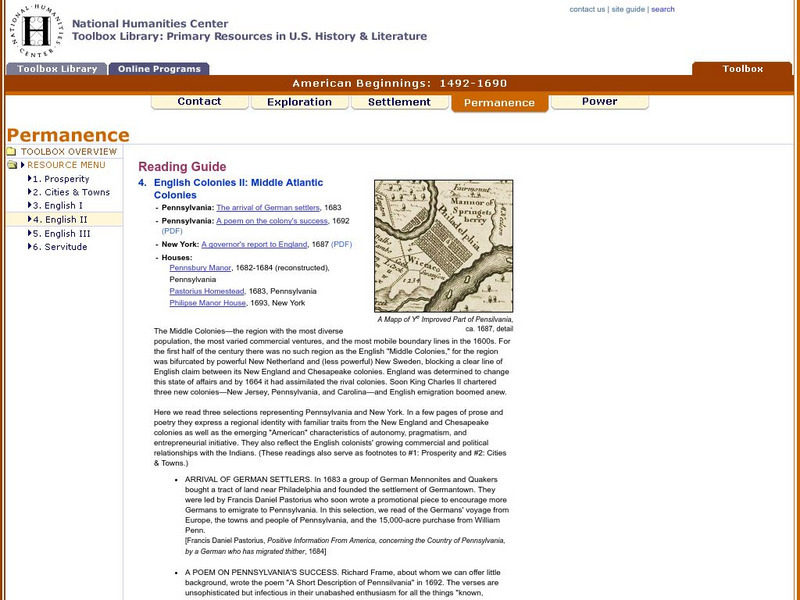
National Humanities Center
National Humanities Center: Toolbox Library: English Ii, American Beginnings: 1492 1690
Three seventeenth-century homes in Pennsylvania and New York and three accounts from those English colonies of the factors leading to prosperity and permanence.
San Jose State University
Sjsu: Agriculture in the Middle Colonies
An excerpt of a primary source, American Husbandry, a book from 1775, describing the crops of the Middle Colonies.
University of Groningen
American History: Outlines: Agriculture Rules the South
The essay describes the devlopment of the Southern colonies as agricultural centers and the cultural aspects associated with rural, agricultural life.
National Humanities Center
National Humanities Center: Toolbox Library: Africans I, American Beginnings: 1492 1690
Four accounts of the complex power relationships between slaves and slave holders within English colonies in Barbados, Virginia and Pennsylvania, as well as documents about slave revolts and anti-slavery agitation.
National Humanities Center
National Humanities Center: Toolbox Library: Rule, American Beginnings: 1492 1690
Three documents reflecting official views of how to rule and regulate a successful colony in New France, Jamaica, and the Spanish Indies. Includes teacher reasources for framing discussion.
University of Groningen
American History: Essays: The Sugar and Stamp Acts
Reasons for the Sugar Act and the Stamp Act are briefly described. The article also describes the colonial assemblies' reasons for fearing and speaking out against these taxes. The biggest question, Parliament's right to tax the...
Colonial Williamsburg Foundation
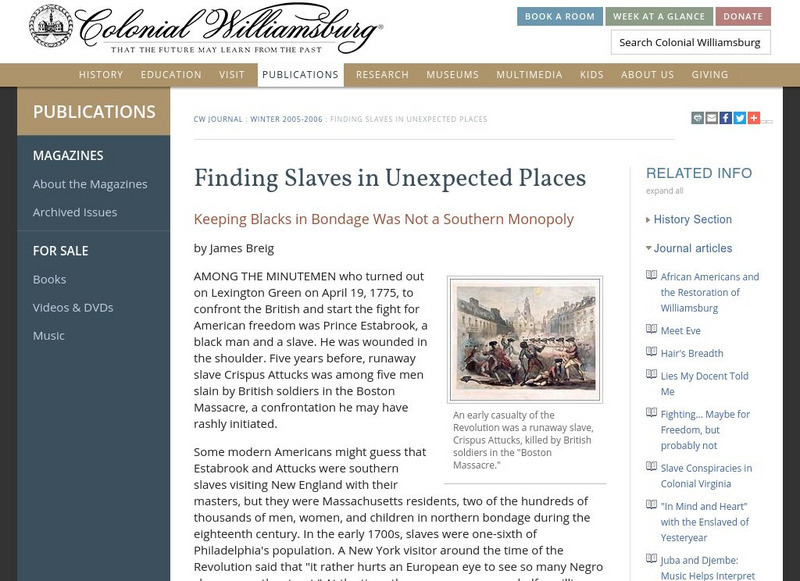
History: Slavery: Prince Estabrook
Read about the life of Revolutionary War soldier Prince Estabrook and his time as a slave in the northern colonies.
Tom Richey
Tom Richey: The American Revolution (1750 1783)
A unit picks up at the start of the French and Indian War and moves through the development of the new government of the United States. Find videos, slideshows, and primary sources.
National Endowment for the Humanities
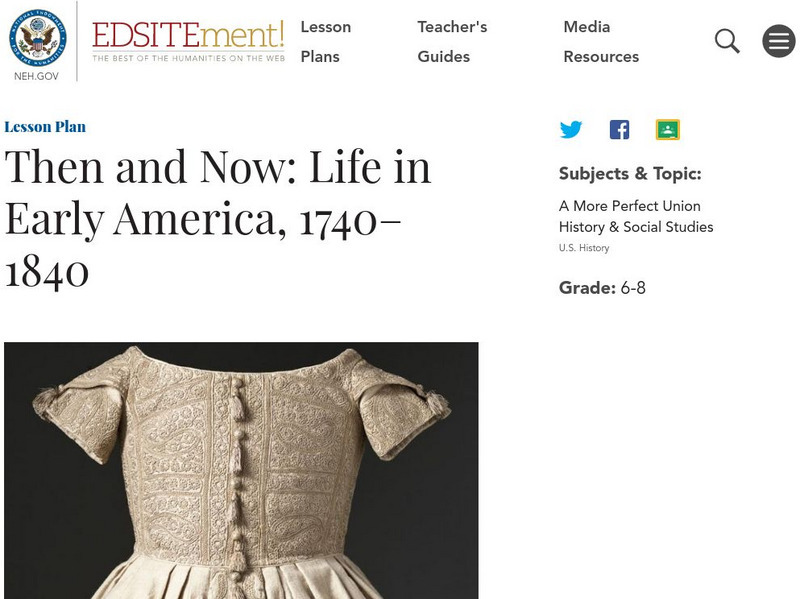
Neh: Edsit Ement: Then and Now Life in Early America
Select from lesson plans that challenge students to compare everyday objects from colonial times to present day objects. Links to sites with photos and other primary sources will assist students in their comparison.
The History Cat
The History Cat: Countdown to Revolution
Begins with a description of the British system of mercantilism that was imposed on the American colonies along with the taxes levied through the Stamp Act and the Sugar Act. The Americans complained that it was taxation without...
Other
Indigenous History: Indigenous Slavery in the American Southeast
It is fairly well-accepted that American slavery of the 19th century developed from three distinct traditions of slavery that were mutated into a new, racialized, institutionalized form: European indentured servitude, West African...
University of Groningen
American History: Outlines: The Land Is Settled
A brief look at the founding of the English colonies. This site is provided for by the University of Groningen.
Other popular searches
- 13 American Colonies
- American Colonies Map
- Early American Colonies
- Thirteen American Colonies
- The American Colonies
- American Colonies Project
- American Colonies Economy
- Growth of American Colonies
- Comparing American Colonies
- 13 American Colonies Slavery
- 13 American Colonies Map
- Life in the American Colonies