Hi, what do you want to do?





City University of New York
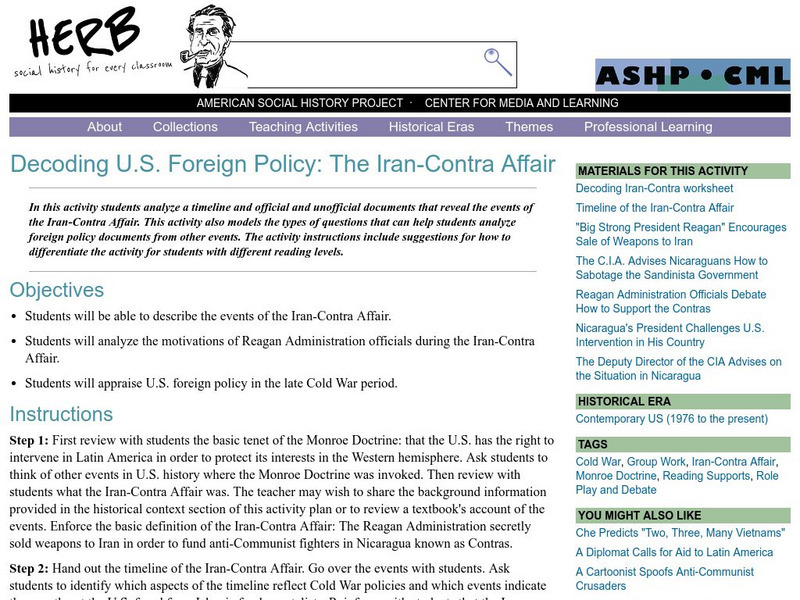
American Social History Proj.: Decoding u.s. Foreign Policy: Iran Contra Affair
Students explore the Iran-Contra Affair using a timeline and related documents, and practice critical thinking about US foreign policy during the late Cold War years, and about the actions of officials of Ronald Reagan's government. They...
Other
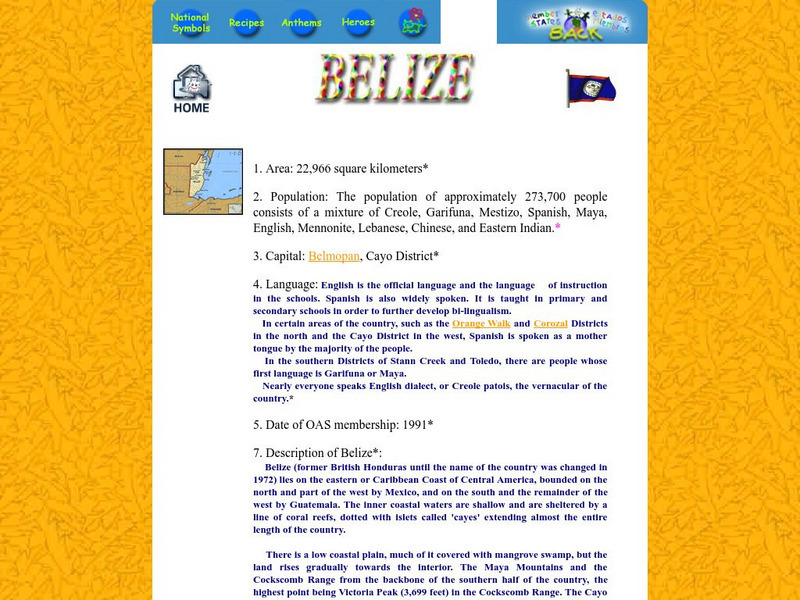
Organization of American States Children's Page: Belize
Full of useful information relating to the country of Belize. Topics covered include: population, language, geography, climate, government, history, economy, culture, agriculture, holydays, photos, national symbols, national anthem, and...
Department of Defense
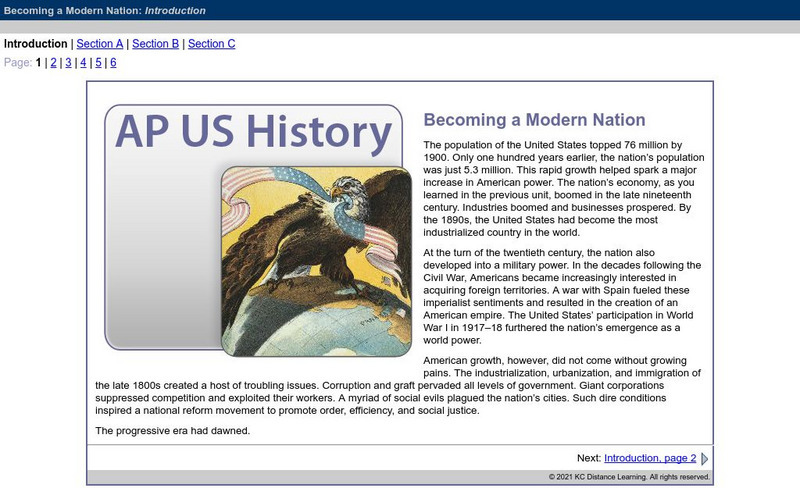
Do Dea: Ap Us History: Unit 6: Becoming a Modern Nation
This extensive learning module examines the role of large-scale industrialization, urbanization, and mass migrations in creating new demands on government and social organizations to design reforms, and looks at the global and domestic...

Tennessee History For Kids
Tennessee History for Kids: Andrew Johnson Historic Site
Andrew Johnson presided over the American government during the turbulent years immediately following the Civil War. He did not fare well, nearly becoming the first president removed from office by Congress. Today people still argue...
US National Archives
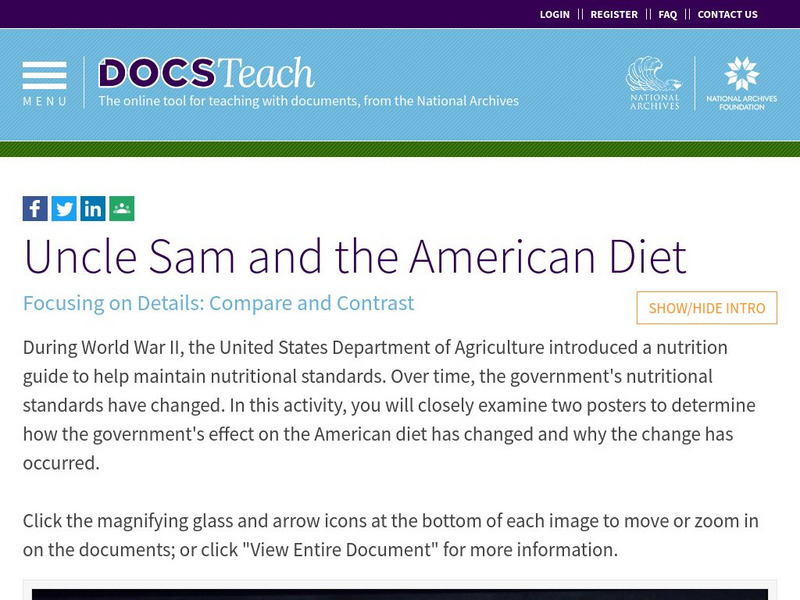
Docsteach: Uncle Sam and the American Diet
In this activity, learners will closely examine two food nutrition guideline posters from the USDA to determine the government's purpose in creating such guidelines and how they have changed over time. Students will also question how...
OpenStax
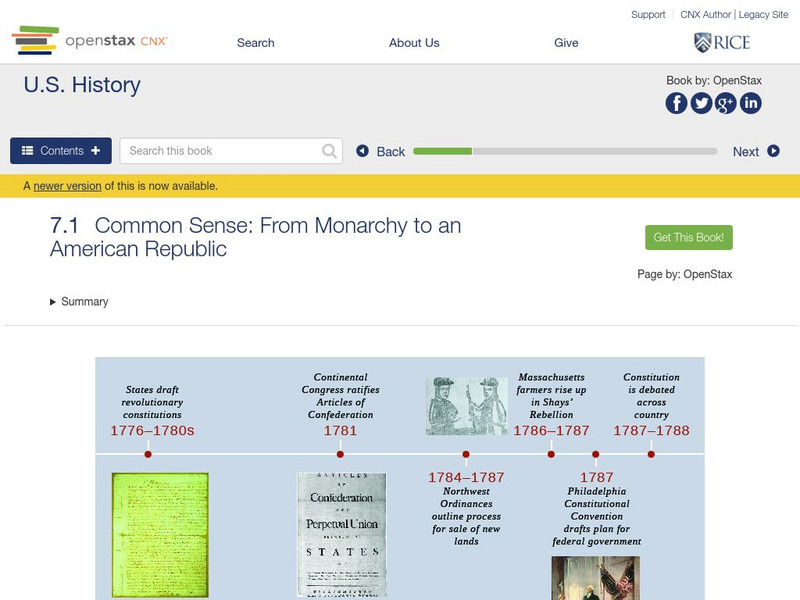
Open Stax: Common Sense: From Monarchy to an American Republic
After reading this section from a chapter on "Creating Republican Governments," students will be able to compare and contrast monarchy and republican government and describe the tenets of republicanism.
Read Works
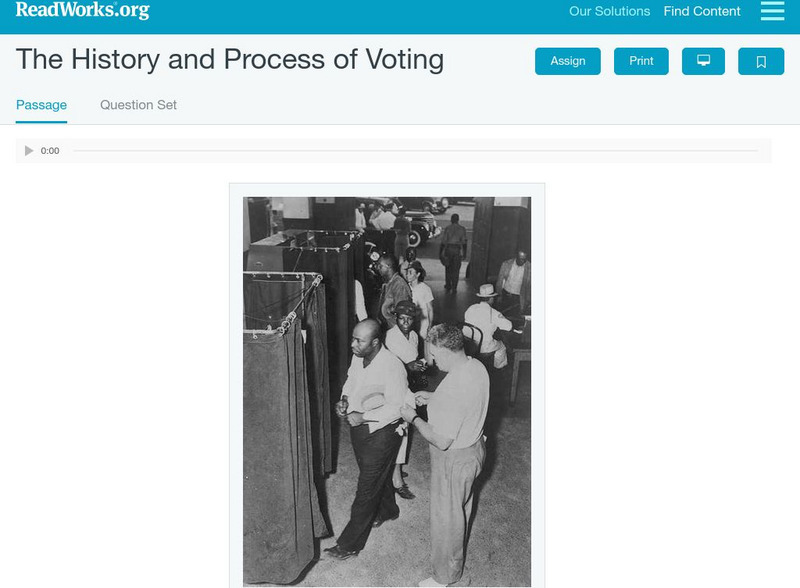
Read Works: The History and Process of Voting
[Free Registration/Login Required] This passage focuses on the American federal voting process including its history and how the process works. It is followed by a comprehension question set.
OpenStax
Open Stax: Disaffection: The First Continental Congress and American Identity
By reading this section from a chapter on "Imperial Reforms and Colonial Protests," students will be able to describe the state of affairs between the colonies and the home government in 1774 and explain the purpose and results of the...
US Government Publishing Office
Ben's Guide to u.s. Government: Declaration of Independence: 1776
Website with games and information on American government provides information on the Declaration of Independence and summarizes the history surrounding the document.
Stephen Byrne
History for Kids: Government of North America
Reference material for elementary students who are learning about U.S. Government provides an overview of the three branches of government outlined in the U.S. Constitution and a glimpse into the political party system.
Curated OER
History Matters: A Taos Pueblo Tries to Sell the Indian New Deal
The Indian Reorganization Act of 1934, which became known as the Indian New Deal, dramatically changed the federal government's Indian policy. This letter by Antonio Luhan to the then-Indian Commissioner gives an impression of its...
Teachnology
Teachnology: Social Studies Lesson Plans
Great lesson plans covering a wide-range of history-related subjects. A wonderful resource for wonderful teachers!
Stephen Byrne
History for Kids: United States Constitution
History for Kids provides an overview geared toward elementary age students of the history of the United States Constitution. Includes links to resources for teachers.
Independence Hall Association
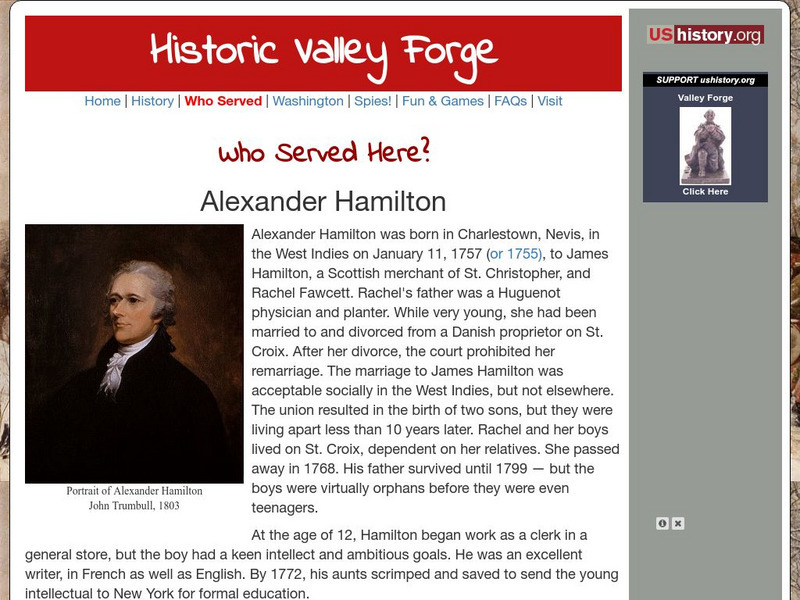
U.s. History: Historic Valley Forge: Major General Alexander Hamilton
A short biography of Alexander Hamilton containing information on his military service during the American Revolution as well as his later life in politics.
Digital History
Digital History: Years of Crisis
It's not surprising the United States would have challenges in its first years. Read about the problems with foreign countries, its own citizens who resisted taxes, and dealings with Native Americans.

Ducksters
Ducksters: Native Americans for Kids: Inuit Peoples
Explore the Native American Indian Inuit Peoples on this website. Learn about their history, language, clothing, food, homes, fun facts, and government.
Ducksters
Ducksters: Native Americans for Kids: Seminole Tribe
Investigate the history, language, clothing, food, homes, and government of the Seminole tribe on this site.
University of Groningen
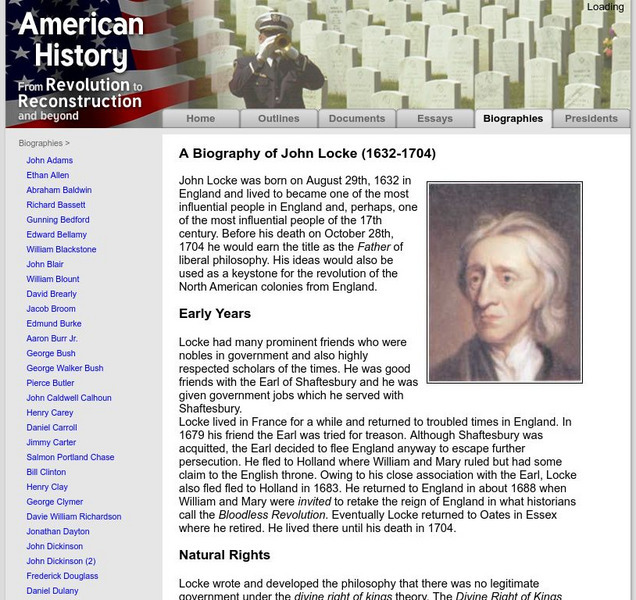
American History: Biographies: John Locke
The University of Groningen provides information about the 17th century British liberal philosopher. Includes concise biographical information and a link to the text of "A Letter Concerning Toleration." Read about what part of his...
PBS
Pbs Teachers: Theory of the American Founding: Why Government? (Lesson Plan)
A instructional activity that considers how the American founders answered the question, What is government? Examines why, from the point of view of the founders, government is not only necessary, but good for human beings.

OpenStax
Open Stax: How Much Revolutionary Change?
This section of a chapter on "Creating Republican Governments" describes the status of women and nonwhites in the new republic.
Ohio State University
Osu History Teaching Institute: Declaration of Independence
Lesson plan helps students understand the Declaration of Independence.
US Government Publishing Office
Ben's Guide to u.s. Government: Symbols of u.s. Government: The Liberty Bell (3 5)
Offers historical background information on our national symbol of freedom, the Liberty Bell, which still hangs in Philadelphia today and is rung each July 4th.
American Indian Heritage Foundation
Indians.org: Blackfoot Literature
Use this site to explore the literature of the Blackfeet Native Americans.
World InfoZone
World Info Zone: Chile
Great resource that is full of useful information about the South American country of Chile. Content includes geography, environment, architecture, religion, food, history, economy, arts, sports, and news. Be sure to look at the fact...