Hi, what do you want to do?





Khan Academy
Khan Academy: American Indian Culture of the Southwest
We can thank the Indian tribes from the Southwest for introducing us to corn. Corn was seen as a spiritual gift in Pueblo societies. Study more of the cultural characteristics of these tribes such as their irrigation system which allowed...
Khan Academy
Khan Academy: American Indian Culture of the West
The Western Indian tribes hit the lottery with the abundant natural resources in their area. The tribes that called this area home had diverse cultures depending on the geography of their specific location. Delve into these cultures and...
Other
Uintah Basin Tah Project: American Indians 101: Frequently Asked Questions
Provides answers to commonly asked questions about Native Americans, e.g., how they are defined, the proper terms to use, and what a reservation is, as well as questions about their relationship with the federal and state governments,...
Son of the South
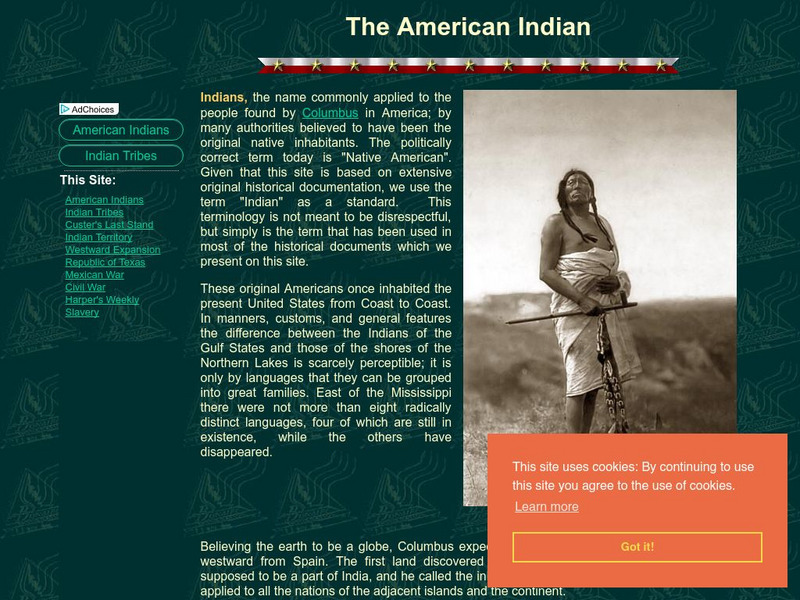
Son of the South: The American Indian
Discusses the way of life and geographical distribution of various Indian tribes that existed at the time that Columbus reached North America.
Khan Academy
Khan Academy: American Indian Culture of the Plains
The Plains Indians had a dynamic society that changed over time. See how the introduction of the horse changed their way of life. Read about their religion, societal structure, housing, and tools. Included are pictures, maps, critical...
Smithsonian Institution
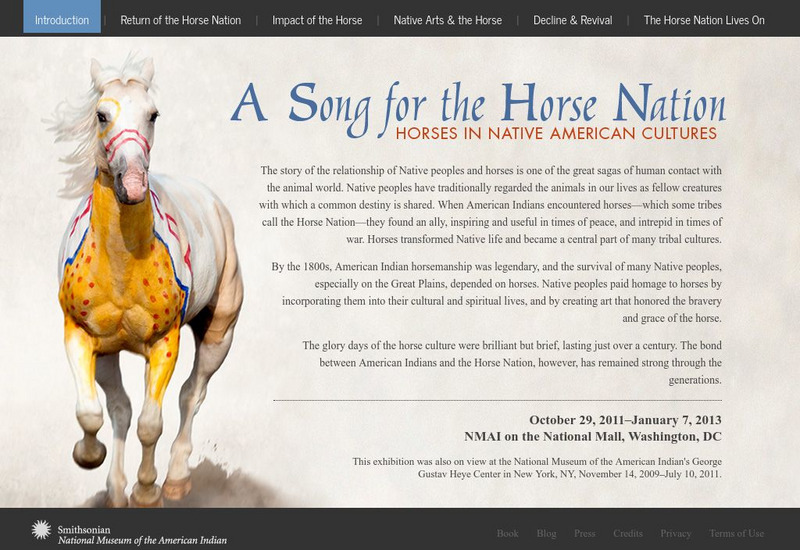
National Museum of the American Indian: Song for the Horse Nation
An exhibition about horses in Native American cultures takes a sweeping look at the ways in which Native peoples, past and present, regard horses and horsemanship. Learn how the horse transformed Native approaches to the hunt, warfare,...
Other
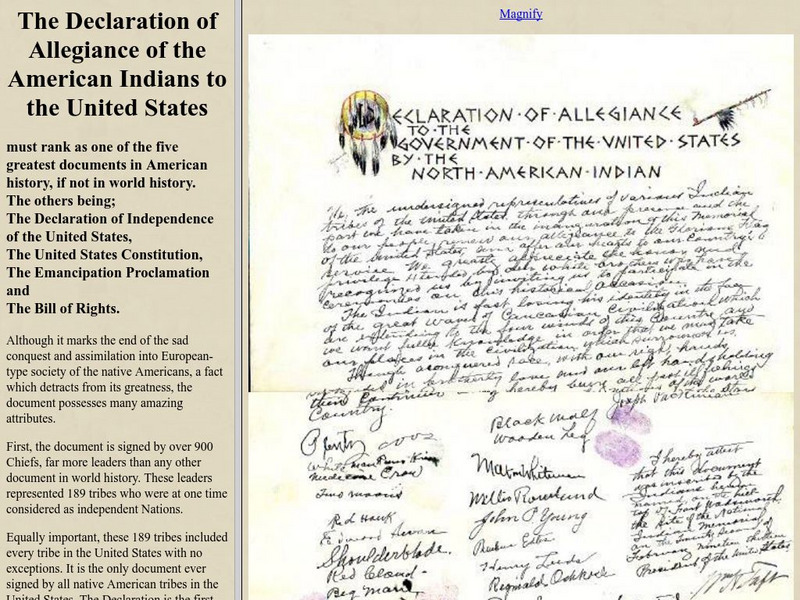
Karpeles Manuscript Library: Declaration of Allegiance of the American Indians
The front page and synopsis of the Declaration of Allegiance that was signed by all 189 tribes in the United States.
Other
Access Genealogy: Hupa Indian Tribe
This is a rather lengthy discourse on the Hupa tribe, and worth reading for all the interesting facts on their culture, location, housing, food, method of hunting, and clothing.
Other
Native American Facts for Kids
Website for younger readers presents resources on American Indians for children and teachers. Provides simple online information, pictures, and fact sheets for kids about each tribe.
Texas State Library and Archives Commission
Texas State Library and Archives Commission: Native American Relations in Texas: Spanish & Mexican Policy
How were the Native Americans of Texas affected by the Spanish rule from 1716 to 1821? How did Indian life change when Texas was led by Stephen F. Austin? This article addresses the relations between Indians and white settlers, as well...

Other
Standing Rock Sioux Tribe
Learn about the history and culture of this Native American tribe in North Dakota. Includes statistics on the tribal community.
Annenberg Foundation
Annenberg Learner: Interactives: Southeast Tribes
Interactive web site where students can learn about the development of the geography of the United States over the course of history. This section of the site focuses on the original inhabitants of North America, in particular the...

Northern Arizona University
People of the Colorado Plateau: The Ute Indians
A concise but detailed history and culture of the Ute Indians.

Other
Delaware Tribe of Indians
Resource provides much information about the Delaware or Lenape tribes of Native Americans. Find pictures of men and women's clothing, a migration map, the history of the Nation, dances, and Native American food.
Curated OER
National Park Service: Five Views: A History of American Indians in California
A history of five tribes in the California Native American culture area.

Khan Academy
Khan Academy: Ap Us History: 1865 1898: The American West: The Dawes Act
Explains what the impact of the Dawes Act of 1887 was on Native American Indians. Discusses the conflicts between whites and Native Americans that led to its passage and amendments made later. Includes questions for students at end.

Texas State Library and Archives Commission
Texas State Library and Archives Commission: Native American Relations in Texas: Indians and the Texas Revolution
Read about the importance of the support of various Indian tribes in the success of the Texas Revolution. See primary sources that explore this topic.
Other
Arkansas Archeological Survey: Indians of Arkansas Indians in the Old South
After the Louisiana Purchase, the status of the Native Americans changed from partners to a declining group whose presence conflicted with United States plans. Follow the events which changed and reshaped the lives of these Native peoples.
Other
Monticello: President Jefferson & the Indian Nations
This resource discusses how Thomas Jefferson sought to bind Native Americans to the United States through treaties for security reasons and how he tried to get the Indians to adapt to a way of life like the white settlers' way of life.
PBS
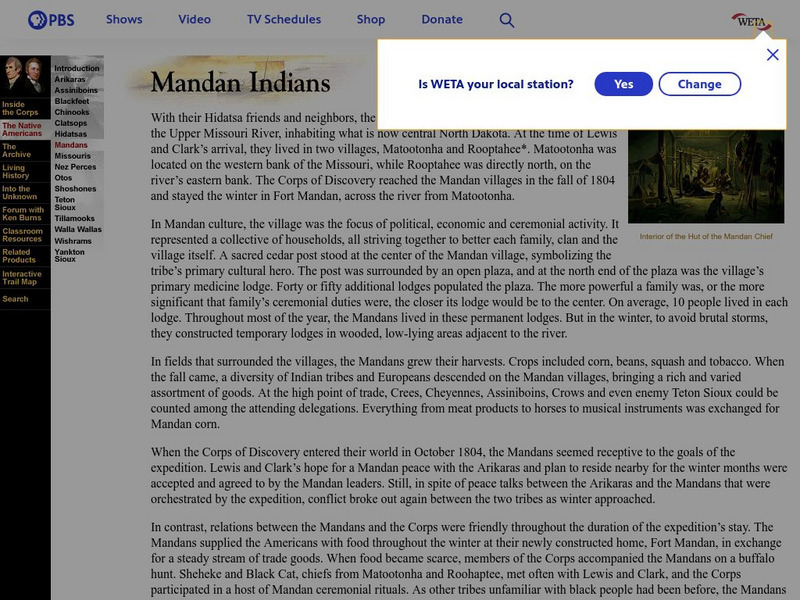
Pbs: Lewis and Clark: Mandan Indians
An informative look at the Mandans, the Indians with whom the Corps of Discovery spent their first winter. Read about their villages, ceremonies, and relations with other Indian tribes. From PBS.
Other
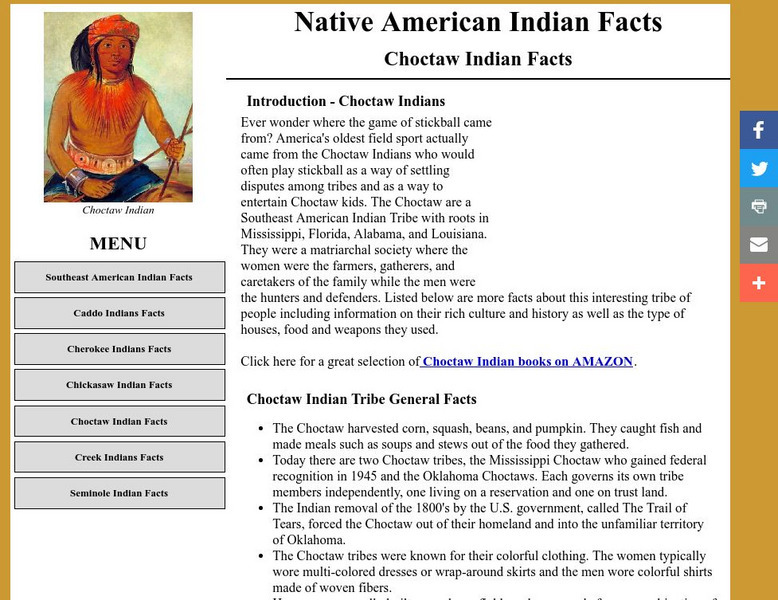
Southeast American Indian Facts: Choctaw Indian Facts
Presents some basic facts about the history and culture of the Choctaw people.

Digital History
Digital History: Indian Removal
The Indian Removal policy was inhumane and without empathy for the Native Americans who were forced from their lands. Read about the attempts to enforce federal treaties and the final removal of three major tribes from the Southeast.
Other
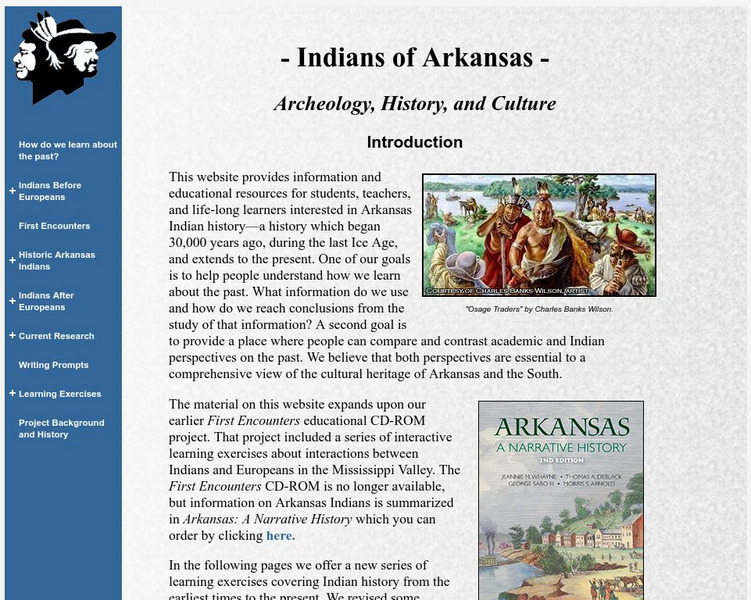
Arkansas Archeological Survey: Indians of Arkansas
A detailed view of the Native peoples who inhabited Arkansas, both pre- and post-European contact with history, archaeology, and culture addressed. The navigation menu on the left provides links to specific periods of time and to...
PBS
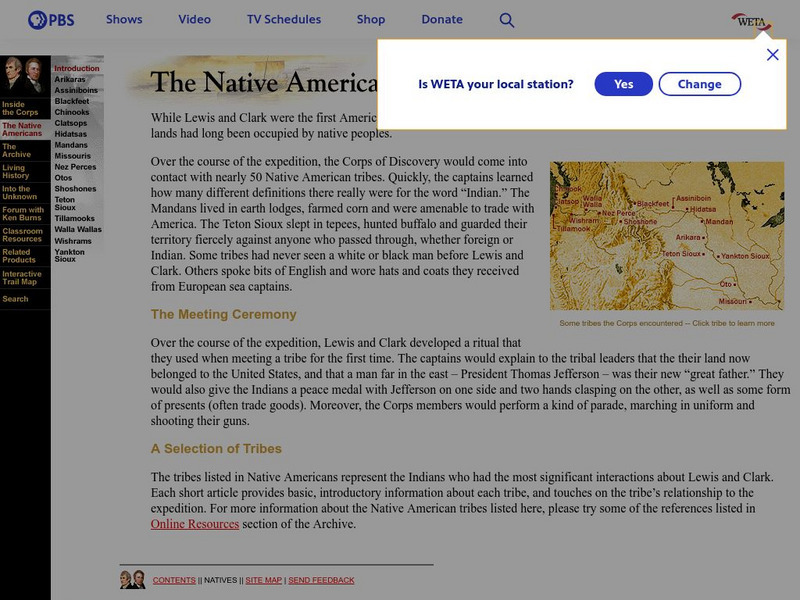
Pbs: The Native Americans
The Corps of Discovery came into contact with "Nearly 50 Native American tribes." This site from PBS discusses the tribes that had the most significant interactions with Lewis and Clark.