Hi, what do you want to do?






Curated OER
To Dig or Not to Dig: The Stadium Showdown
Students examine an ethical public dilemma. In this cultural resource lesson, students role play to examine their personal beliefs regarding the protection of cultural resources. They evaluate possible actions they can take to protect...

Curated OER
Reading Comprehension: Louisiana
In this reading comprehension worksheet, students read a 2-page article regarding Louisiana and respond to 10 true or false questions regarding the selection about the state.

Curated OER
Living in the Oak Woodlands: Early People of the Jewett Mine Area
Students are introduced to the early peoples living in the Jewett Mine area. After viewing transparencies, they view pictures of the mine today and its main area of production. For each picture, they develop symbols and captions about...

Curated OER
Improving Your Style Pronouns
In this writing style worksheet, students learn to improve their style by replacing nouns and noun phrases with pronouns. Students complete three activities to help them with pronouns.

Curated OER
Art Around the World
Eleventh graders explore the art styles of different cultures by researching and then creating a "museum exhibit".

Curated OER
The Buffalo Jump
Eighth graders investigate the disappearance of buffalo. They conduct research into the uses of buffalo by the Native Americans. There are resource links included in this lesson. They answer specific questions to help guide the research...

Curated OER
Why is the Past Important?
Students explore, examine and study why it's important to study the past and connect this importance with reasons why we should learn from the past and how cultures have changed over the years. They bring an object, photograph or a...

PBS
Pbs Learning Media: Writings of the Ancient Maya
Students are introduced to the ancient Mayan civilization through their writings. They explore a social studies focus on the destruction of many Mayan writings by the Spanish and what archaeologists have learned from the writings that...
Penn Museum
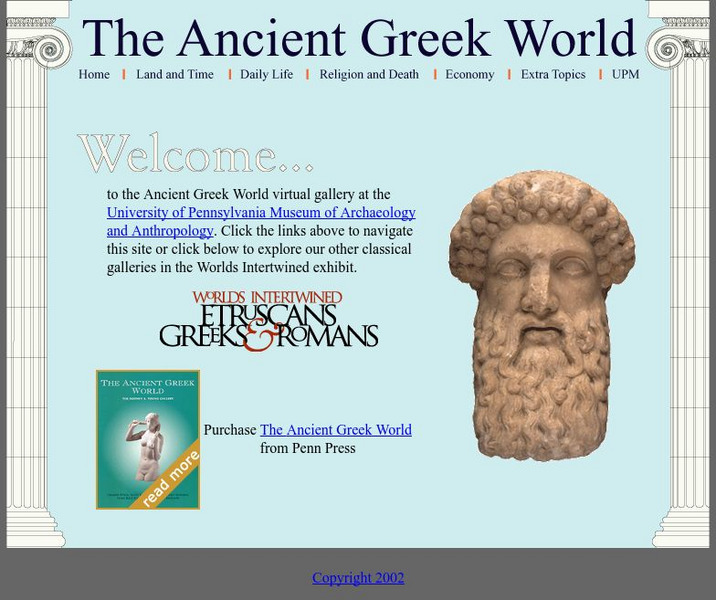
Penn Museum: Ancient Greek World
Massive site for information on the ancient Greek world. Follow the navigation at the top of the page for detailed sections on time periods, daily life, religion and death, economy, and more. Each section includes pictures of artifacts...
J. Paul Getty Trust
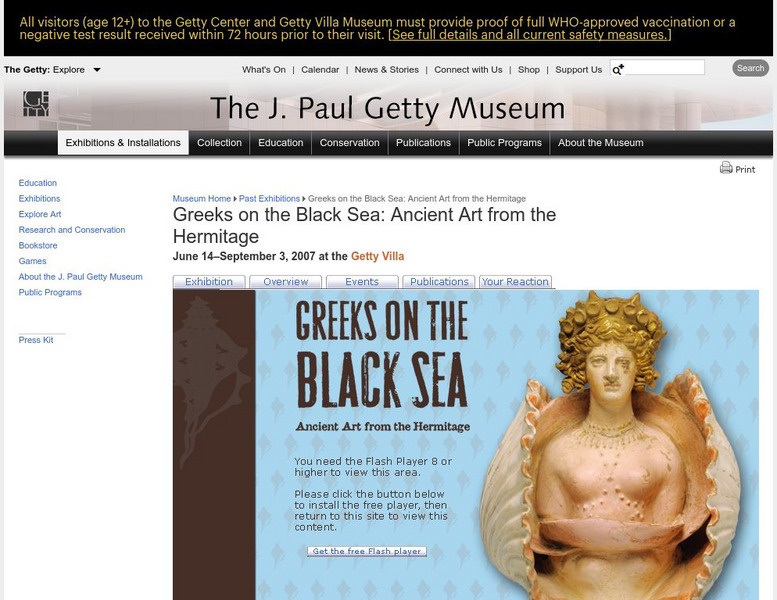
J. Paul Getty Museum: Greeks on the Black Sea: Ancient Art From the Hermitage
In the years before Christ the Greeks traveled westward to the Black Sea to establish early colonies. This online exhibition is a marvelous display of their ancient art and artifacts.

PBS
Pbs Nova Online: Be an Archaeologist
Ancient artifacts tell archaeologists a lot about the lives of prehistoric people. Sharpen your archaeological skills by reassembling broken pieces of a clay pot. See before and after photos of ruins, plus a film of a projected...
BBC
Bbc History: Archaeology: Hunt the Ancestors
Role-playing game lets players explore many facets of archaeology by attempting to rescue a prehistoric burial site from destruction. Players quarry and analyze artifacts and are constrained by both time and budget. Archived.
Penn Museum
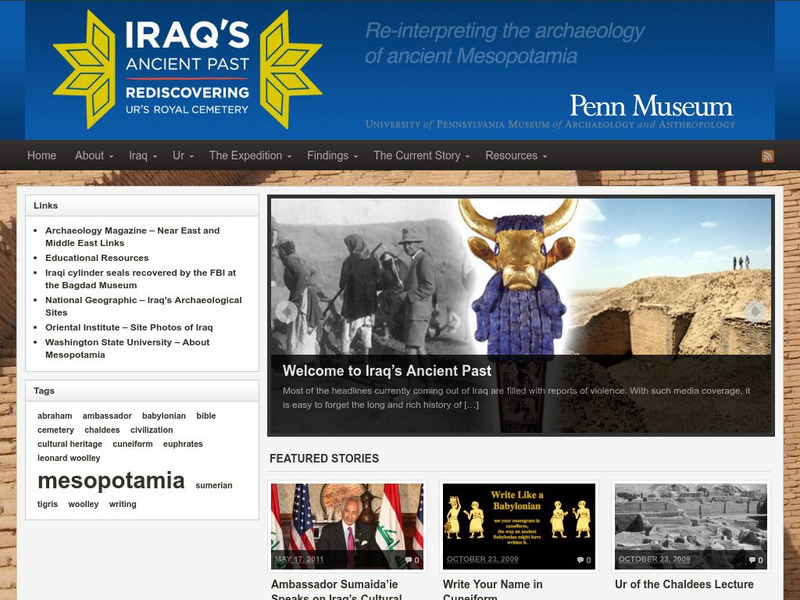
Penn Museum: Iraq's Ancient Past Ur's Royal Cemetery
A fascinating exhibition on early Mesopotamia which looks at the city of Ur located in Sumer, which is now part of Iraq. It discusses the history of Ur and its excavation. Most of the exhibition talks about the Royal Cemetery of Ur,...
Schools of California Online Resources for Education
Schools of California Online: The Ancient Hebrews
The virtual museum investigates the ancient Hebrews. Topics examined are the land, the common people, the Exodus, beliefs, archaeology, and artifacts. A glossary and additional links are included.
American Museum of Natural History
American Museum of Natural History: Inca Investigation
Be an archaeologist and examine maps and ancient artifacts relating to the Inca empire.
Smithsonian Institution
National Museum of Natural History: Archeology in the Classroom
Two different leveled lessons allow students to become archeologists as they interpret material remains left behind by ancient people.
Other
Alnpete Limited: Lepcis Magna Roman Empire in Africa
Lepcis Magna is an ancient Roman site in Libya, Africa that is being excavated. Site gives an excellent lesson in archaeological research with lots of pictures and narrative. Be sure to click on the 1996 Dig Season for a slide show of...
BBC
Bbc: Ancient History in Depth: Mesopotamia
A look at many aspects of the Mesopotamian culture. Click through the slide show to see the image and additional information and resources. A good overview of the contributions of an early civilization. Archived.
Other
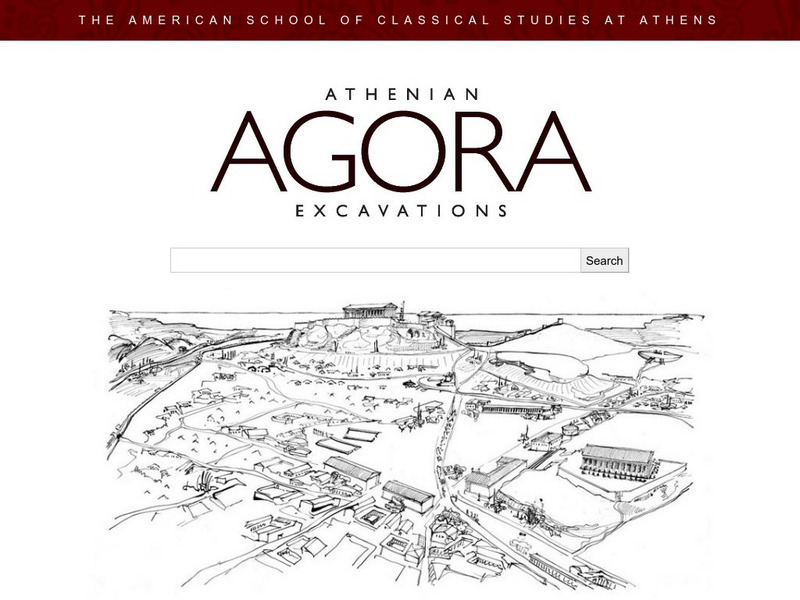
Athenian Agora Excavations
Based on excavations of the Athenian Agora, this site offers both photographs and diagrams of the Agora, as well as photographs of artifacts representative of ancient Greek/Aegean life. In addition, the texts of two books, The Birth of...
Other
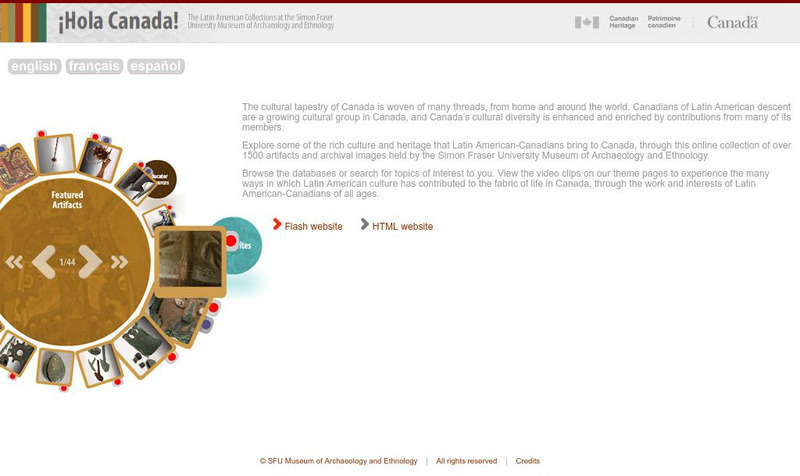
Sfu Museum of Archaeology and Ethnology: Hola Canada
An extraordinary collection of resources relating to the ancient heritage of Latin America. Includes detailed information and images of artifacts, educator resources, and much more.

Other
Institute of Egyptian Art and Archaeology
Take a tour of Egypt or visit the online exhibit of artifacts at this site. Descriptions and history of the artifacts are given and there is an impressive links page.
BBC
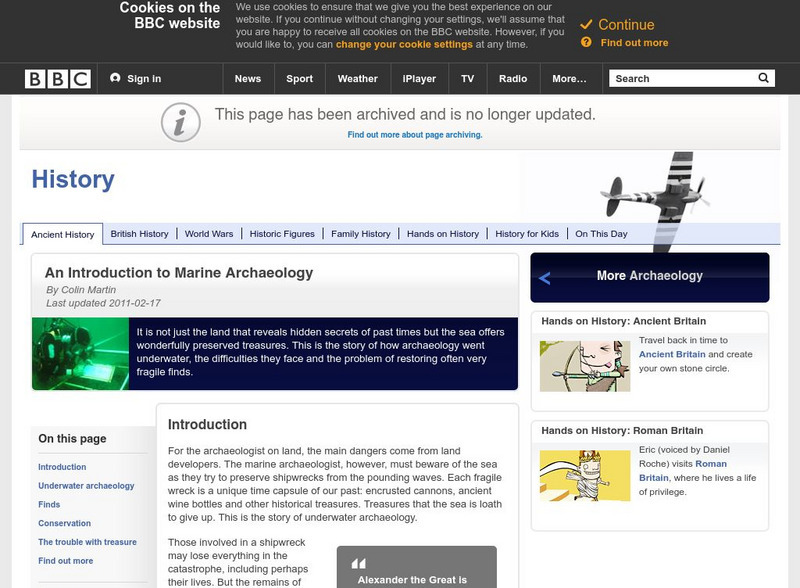
Bbc: History: An Introduction to Marine Archaeology
A very good introduction to the discipline. Provides details on how it is different from land-based archaeology, how wreck sites are investigated, issues regarding "treasure" wrecks, conservation, and much more.
University of Chicago
The Oriental Institute Museum: Life in Ancient Mesopotamia [Pdf]
The students will spend 4-5 days reading and discussing how archaeologists study artifacts, where the artifacts are found and how to investigate and interpret artifacts from their own lives. Videos and slides will be used to enhance...
University of Chicago
The Oriental Institute Museum: Life in Ancient Mesopotamia [Pdf]
Because archaeologists cannot take home all the objects they unearth, they must make detailed, accurate drawings of their finds, so that these artifacts can be studied in the future.