Hi, what do you want to do?






CK-12 Foundation
Ck 12: Episd: Genetic Variation
[Free Registration/Login may be required to access all resource tools.] How does genetic variation protect species from extinction? Understand sexual reproduction and the importance of both random fertilization and independent assortment.
Globio
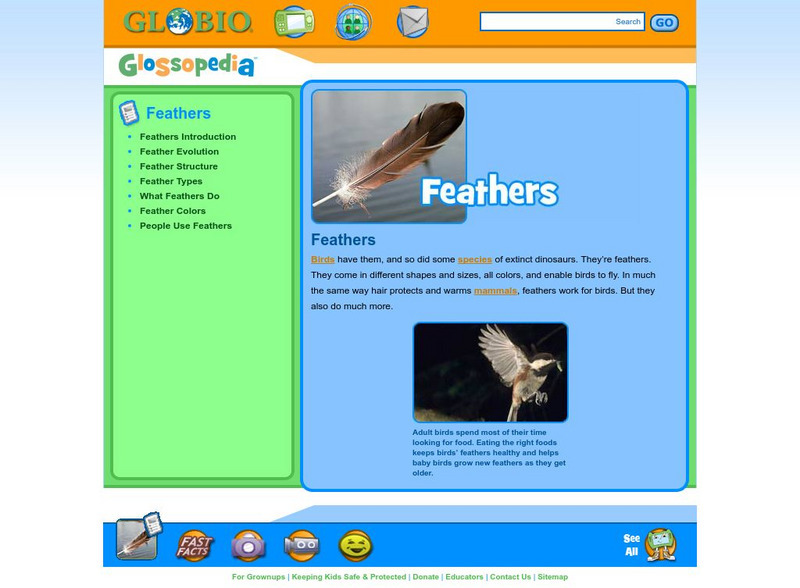
Glossopedia: Feathers
Birds have them, and so did some species of extinct dinosaurs. They're feathers. They come in different shapes and sizes, all colors, and they enable birds to fly. Lots of information can be found in this article.
CK-12 Foundation
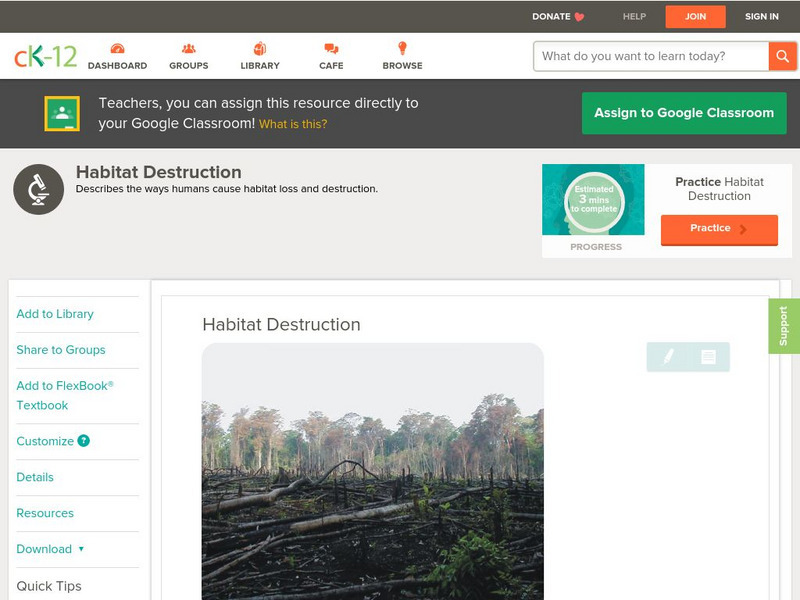
Ck 12: Life Science: Habitat Destruction
[Free Registration/Login may be required to access all resource tools.] From a human point of view, a habitat is where you live, go to school, and go to have fun. Your habitat can be altered, and you can easily adapt. Most people live in...

Curated OER
Ny Times Learning Network: Wild Wildlife
In this lesson, students investigate the moral, economic and ecological impacts of the extinction of various animal species. Students first assess how and why people support and refute actions that lead to the extinction of animals. They...
Curated OER
Ny Times Lesson Plan: Answering the Call of the Wild
In this New York Times lesson plan, students explore wildlife conservation by investigating the reintroduction of species into their natural habitats and researching a species nearing extinction. Studens then defend the protection of the...
Smithsonian Institution
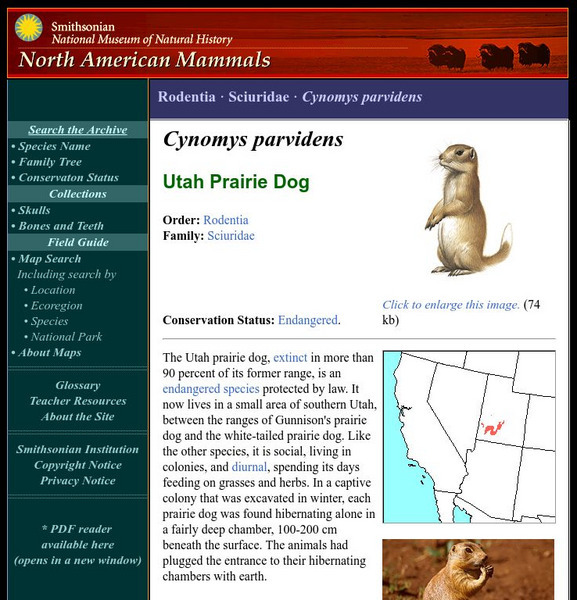
National Museum of Natural History: American Mammals: Utah Prairie Dog
The Utah prairie dog, extinct in more than 90 percent of its former range, is an endangered species protected by law. It now lives in a small area of southern Utah, between the ranges of Gunnison's prairie dog and the white-tailed...
Smithsonian Institution
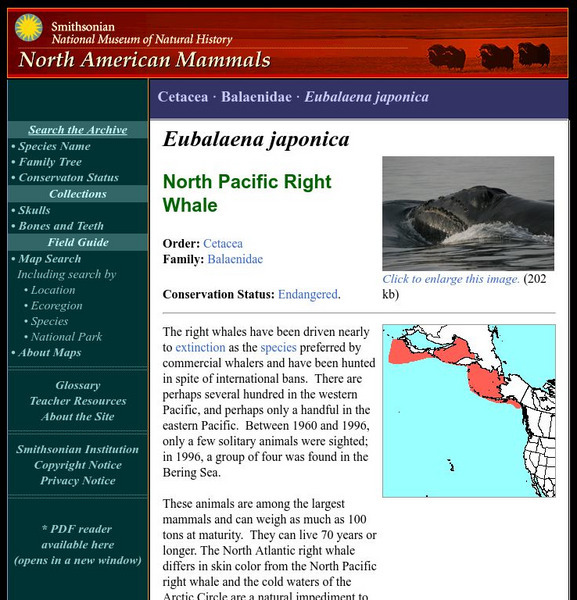
National Museum of Natural History: American Mammals: North Pacific Right Whale
The right whales have been driven nearly to extinction as the species preferred by commercial whalers and have been hunted in spite of international bans. There are perhaps several hundred in the western Pacific, and perhaps only a...
Smithsonian Institution
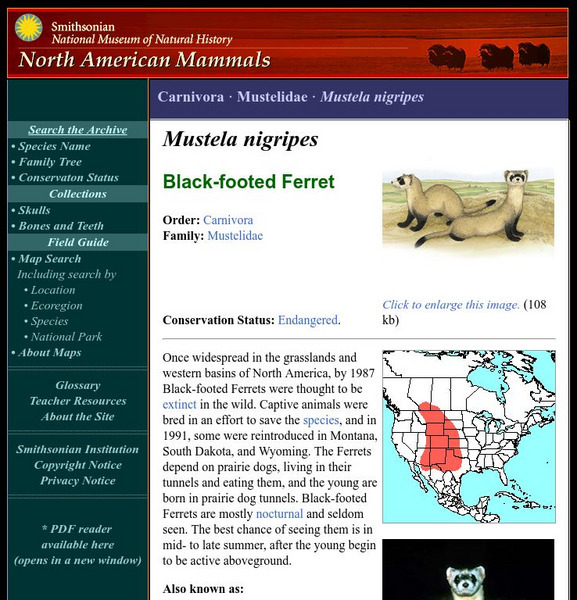
National Museum of Natural History: American Mammals: Black Footed Ferret
Once widespread in the grasslands and western basins of North America, by 1987 Black-footed Ferrets were thought to be extinct in the wild. Captive animals were bred in an effort to save the species, and in 1991, some were reintroduced...
Smithsonian Institution
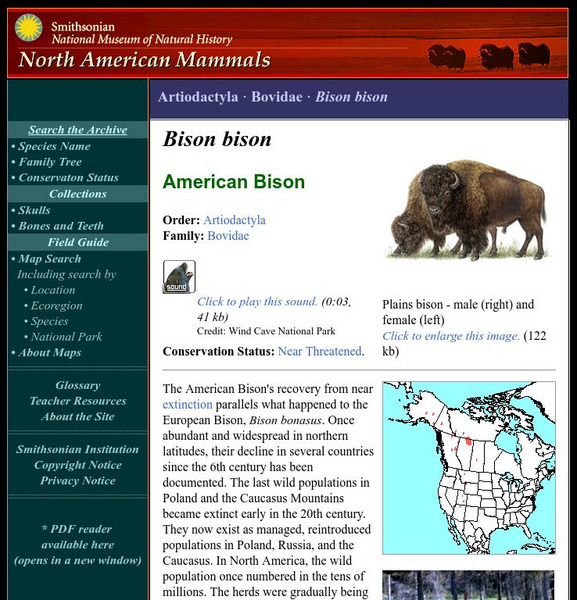
National Museum of Natural History: American Mammals: American Bison
The American Bison's recovery from near extinction parallels what happened to the European Bison, Bison bonasus. Once abundant and widespread in northern latitudes, their decline in several countries since the 6th century has been...
Smithsonian Institution
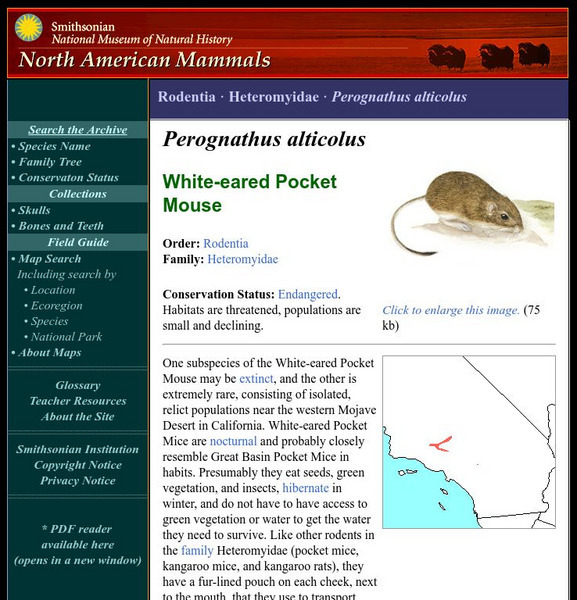
National Museum of Natural History: American Mammals: White Eared Pocket Mouse
One subspecies of the White-eared Pocket Mouse may be extinct, and the other is extremely rare, consisting of isolated, relict populations near the western Mojave Desert in California. White-eared Pocket Mice are nocturnal and probably...
Other
Earth Sky: When Did Humans Start Altering Earth?
The ArchaeoGlobe Project assessed knowledge on human land use over the past 10,000 years, through the contributions of more than 200 archaeologists. It concluded that, by 3,000 years ago, most of Earth was already transformed by...