Hi, what do you want to do?





CPALMS
Cpalms: Home Is Where the Heart Is: Researching Habitats
[Free Registration/Login Required] In this lesson, students will learn about different types of habitats as they gather information based on provided research questions. Students will summarize the information from their research in an...

PBS
Pbs Kids: Plum Landing: Map Animal Habitats
In this Plum Landing activity, students will write or draw descriptions of where animals live in their neighborhoods. Students can publish their descriptions online.

Utah Education Network
Uen: Plant and Animal Communities
Learn about the six main classes of the animal kingdom.
Royal Canadian Geographical Society
Canadian Geographic: Animal Facts: Great Blue Heron
Learn fast facts, the physiology, habitats, behaviors and range of the great blue heron.
Royal Canadian Geographical Society
Canadian Geographic: Animal Facts: Ladybug
Learn fast facts, physiology, habitats, behaviors, and range of the ladybug.
Royal Canadian Geographical Society
Canadian Geographic: Animal Facts: Porcupine
Learn fast facts, physiology, habitats, behaviors, and range of the porcupine.
Royal Canadian Geographical Society
Canadian Geographic: Animal Facts: Killer Whale
Learn fast facts, the physiology, habitats, behaviors and range of the killer whale.
Royal Canadian Geographical Society
Canadian Geographic: Animal Facts: Spotted Owl
Learn fast facts, the physiology, habitats, behaviors and range of the spotted owl.
Utah Education Network
Uen: Life's Different Seasons
Recognize changes in bears and insects and compare them.
Science Buddies
Science Buddies: M&m Survival Challenge
In the wild, there are two types of animals: the hunters and the hunted. A good predator is always on the prowl for fresh prey. What can an animal do to stay off of the menu? Find out how some animals use camouflage, and why sometimes it...
The Wonder of Science
The Wonder of Science: K Ess3 1: Environmental Relationships
This NSTA vetted source includes resources to teach about the relationship between the needs of different plants and animals and the places they live. Included are assessment ideas, videos, examples, lesson plans, and photos of student...
The Wonder of Science
The Wonder of Science: K Ess2 2: Environmental Change
This NSTA vetted source includes resources to teach how plants and animals (including humans) can change the environment to meet their needs. Included are assessment ideas, videos, examples, lesson plans, and photos of student work.
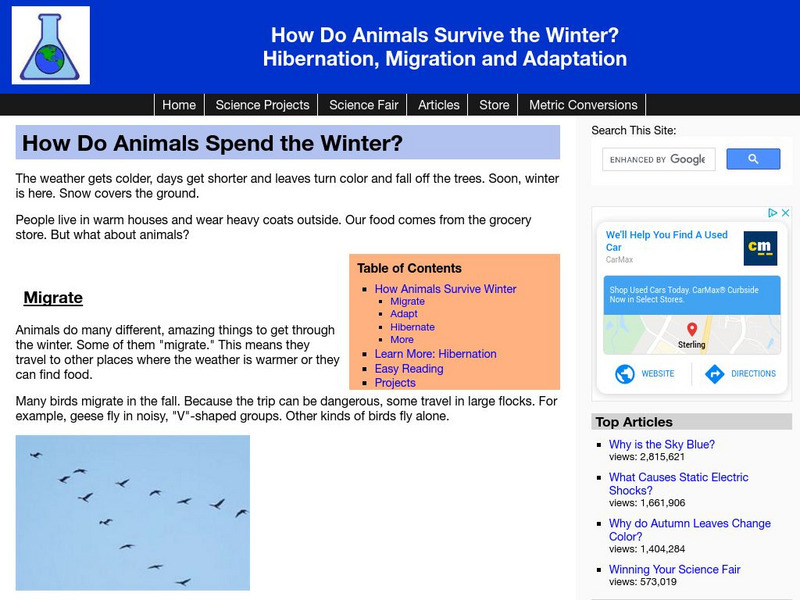
Science Made Simple
Science Made Simple: How Do Animals Spend the Winter?
Use this site to learn how animals use hibernation, adaptation, and migration to overcome the difficulties of winter.
PBS
Pbs Teachers:namib: Patagonia or Namib, Where Do I Belong?
Compare and contrast the African ostrich and the rhea in regard to appearance and behavior. Compare and contrast the biomes in which the two species exist, one in Namib and one in Patagonia.
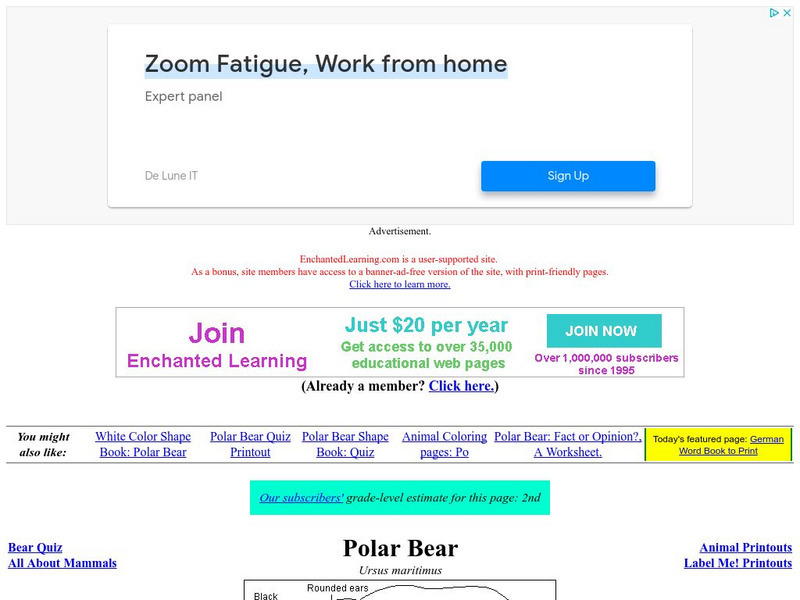
Enchanted Learning
Enchanted Learning: Polar Bears
Learn more about the polar bear when you visit this informative site that features a diagram of the polar bear and information on its diet, habitat, anatomy, reproduction and so on.
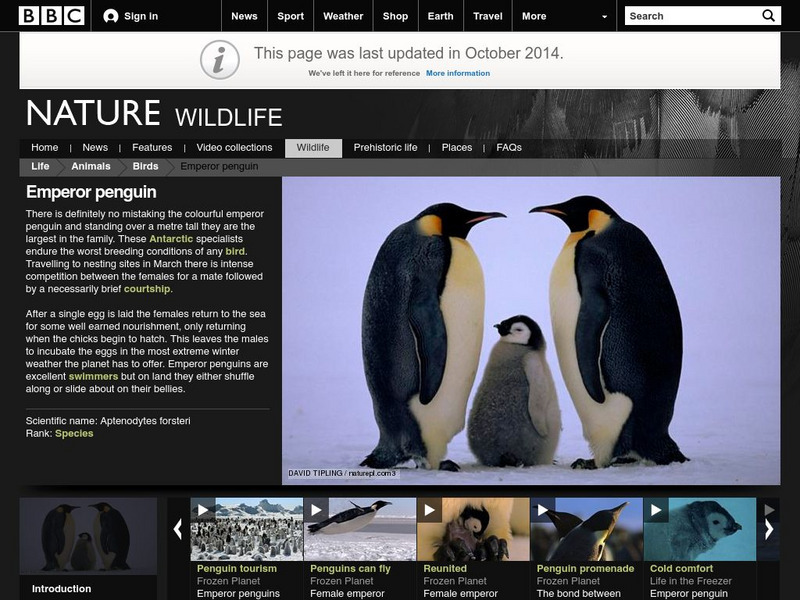
BBC
Bbc Science & Nature: Emperor Penguin
BBC Wildlife profiles the largest penguin species, the Emperor penguin of Antarctica, with facts and photographs.
Other
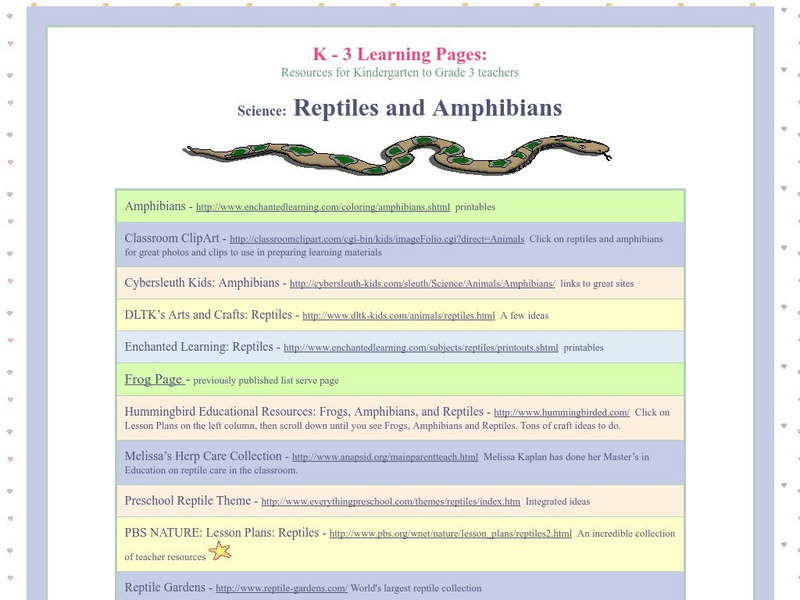
K 3 Learning Pages: Reptiles and Amphibians
Come and discover more about reptiles and amphibians when you explore this awesome resource. This site is filled with useful links.
Other popular searches
- Powerpoint Animal Habitats
- Animal Habitats in Georgia
- Animal Habitats Math Games
- Animal Habitats Kindergarten
- Plant and Animal Habitats
- Lessons on Animal Habitats
- Animal Habitats Adaptation
- Math Animal Habitats
- Animal Habitats and Zoos
- Animal Habitats Bear
- Animal Habitats Webquest
- Australian Animal Habitats