Hi, what do you want to do?






Curated OER
Wildlife Habitat
Students explain what a habitat is and describe its four elements. They see how an area's habitat suitability varies with different species of wildlife. They name factors that affect habitat suitability.

Curated OER
Geology
Fourth graders devise a workable inch-to-inch scale for a geologic timeline sequencing the eras covered in the unit. They hypothesize from descriptions of dinosaur fossil evidence.

Curated OER
Noah's Ark, Revisited
Fourth graders do a visual presentation for a specific endangered species.

Curated OER
Can You Hear It?
Students work together to discover the concept of echolocation. They examine dolphins and their behaviors. They discuss how humans could use this information to help them in their everyday lives as well.

Curated OER
Venom!
Students examine the nature of venom. They conduct an experiment to demonstrate how proteins such as venoms can be denatured using raw eggs, beakers, heated water, and compresses.

Curated OER
Get Out in the Field
Students visit a shoreline--of an ocean, a lake, a pond, a riverbank, etc., survey it and record what they find there. They map the shoreline and surrounding area and conclude where potential waterfront projects could occur.

Curated OER
Biodiversity: El Imposible National Park, El Salvador
Fifth graders explore the concept of how the more diverse an ecosystem is, the more interdependence of species exists within that system. The complex relationships among diverse species are difficult to identify. As species disappear or...

Curated OER
Classification of Living Things
In this biology worksheet, learners identify and locate various vocabulary terms relating to the classification of living things. There are 28 biology terms located in the word search.

Curated OER
The Giant Giraffe: Reading Comprehension
In this comprehension worksheet, students read a selection about the giant giraffe, then answer 5 multiple choice questions. Answers provided.

Curated OER
Cardinals
In this cardinals worksheet, students explore facts about cardinals and practice their number reasoning. Students read about cardinals and solve word problems involving cardinals.

Curated OER
ESL-Homonyms #2
In this ESL homonym instructional activity, students complete a set of 20 multiple choice questions, choosing the homonym that correctly completes a set of sentences. Worksheet is labeled as a quiz, but is appropriate for practice.

Curated OER
Water Quality Survey: Monitoring the Sustainability of Pigeon Creek
Pupils research the History of Pigeon Creek (or any watershed in your area). In this environmental science lesson, students conduct field tests such as pH and nitrates. They collect data and compare what they collected with other groups.
San Diego Zoo Global
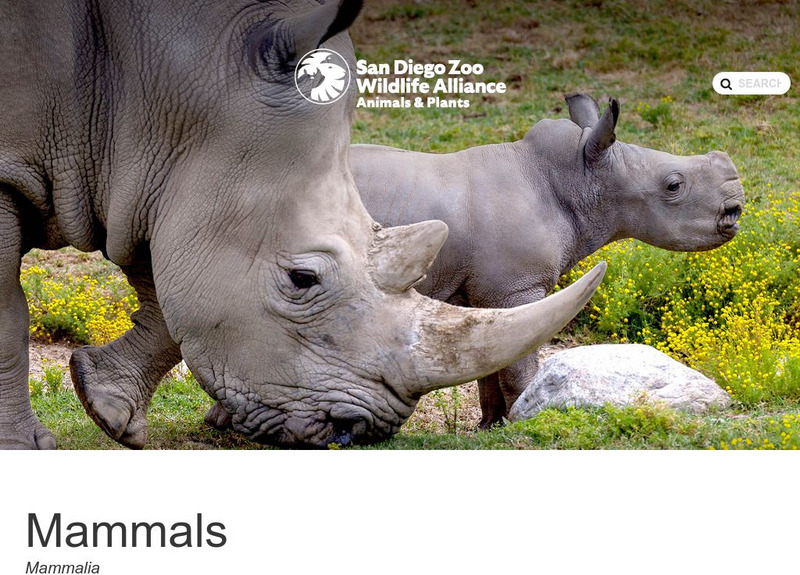
San Diego Zoo: Mammals
This resource provides extensive information about mammals.

BBC
Bbc Science & Nature: The Life of Mammals
Students can watch vivid pictures change before their eyes, from lions to monkeys to dolphins. Authors provide interactive games that aid in learning the behavior of animals. Continue to explore by investigating the habitat, diet, and...
Smithsonian Institution
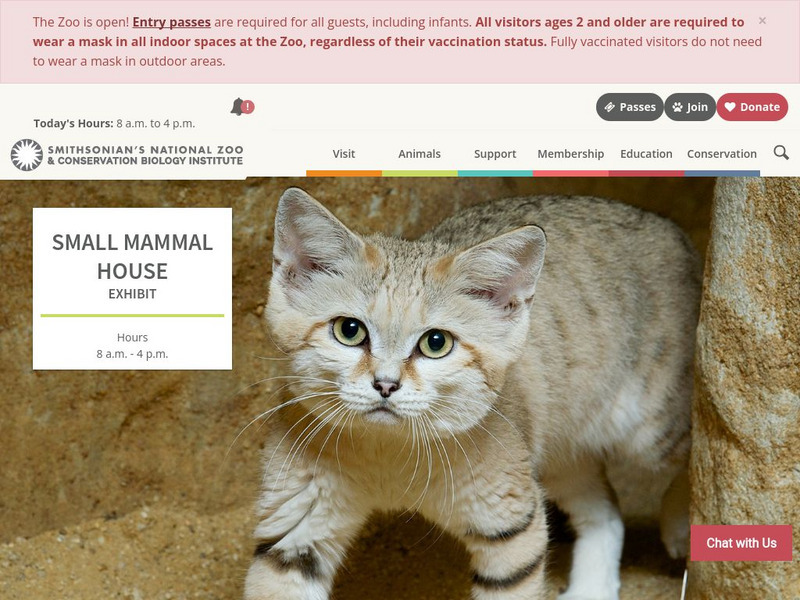
Smithsonian National Zoo: Small Mammals
The Smithsonian National Zoological Park explores the lives of small mammals, both in the wild and in captivity. Choose a webcam to view a variety of small mammals live and up-close, learn about current conservation efforts, access an...

Other
Science4 Us: Animals
In online and offline activities, students broaden their understanding of animals by learning to identify and classify animals into six categories: mammals, birds, fish, amphibians, reptiles, and invertebrates.
Curated OER
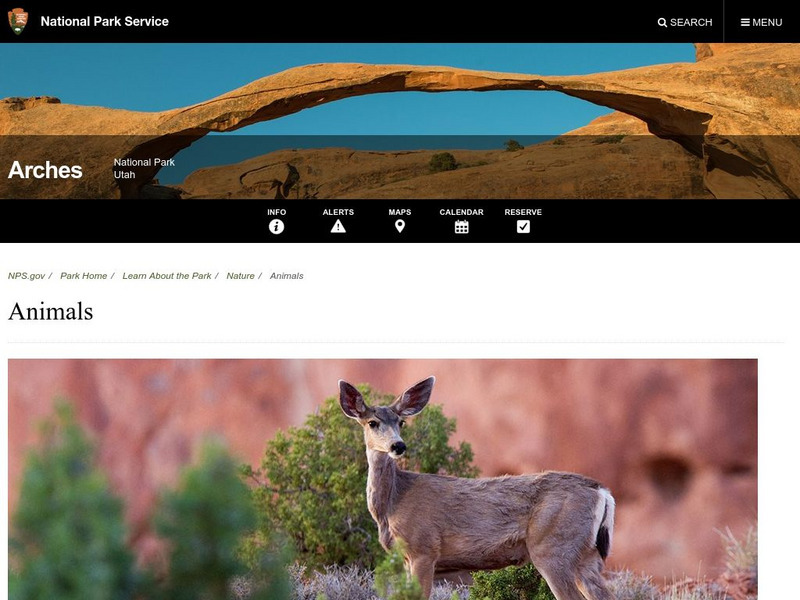
National Park Service: Arches National Park: Animals
A resource where you'll learn about amphibians, birds, mammals, and reptiles at Arches National Park in Moab, Utah. A good look at how animals live, sleep, eat, and stay active in a desert habitat.

University of Florida
Florida Museum of Natural History: Animals 1: Fur, Fins, Feathers, and More
This teacher's guide focuses on familiar animals such as mammals, birds, reptiles, amphibians, and fish.
Smithsonian Institution
Smithsonian National Zoo: Animals at the Zoo From a to Z.
Get information about a variety of mammals using this online alphabetical index. Information includes facts about their classification, habitat, diet, behavior and conservation status.
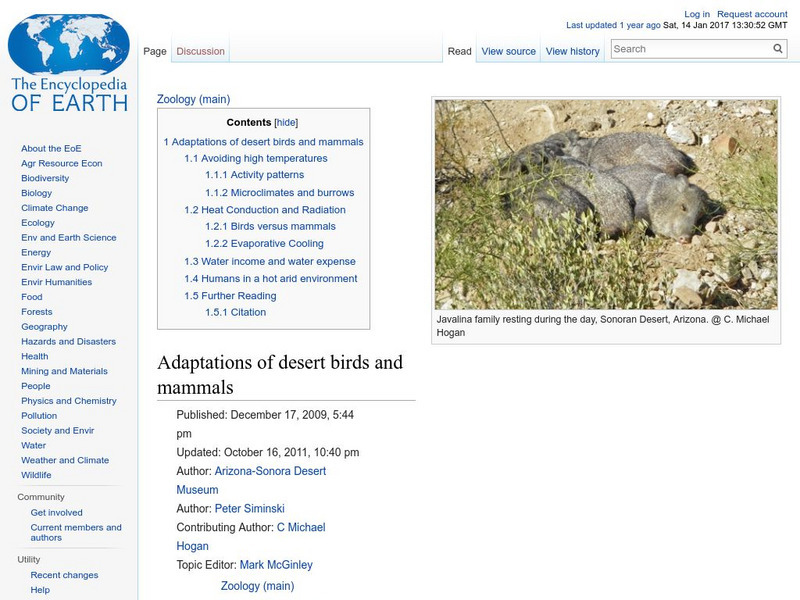
Encyclopedia of Earth
Encyclopedia of Earth: Adaptations of Desert Birds and Mammals
The ways in which animals have adapted so as to survive in a desert environment are described in this article. Mechanisms that humans have to help them cool themselves in a desert are also explained. (Published: December 17, 2009)
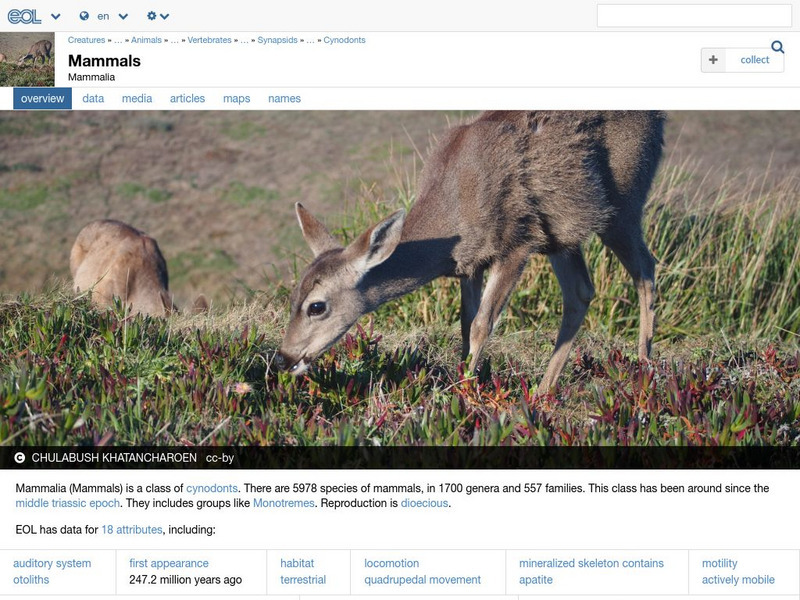
Encyclopedia of Life
Encyclopedia of Life: Mammals
Thorough reference tool explores mammals with a description, pictures, and maps. Includes facts on ecology, behavior, habitat, conservation, and external links.
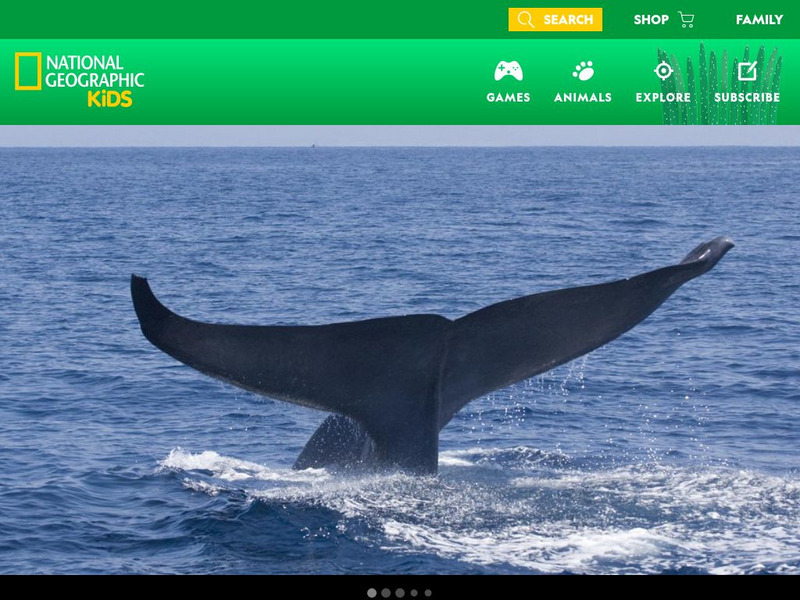
National Geographic Kids
National Geographic Kids: Animals: Blue Whales
Do you know that the blue whale is the largest animal to ever live on Earth? Take an exciting look at this mammal with easy to read facts including habitat, appearance, young, mating, diet, enemies, as well as colorful photos. Links to...
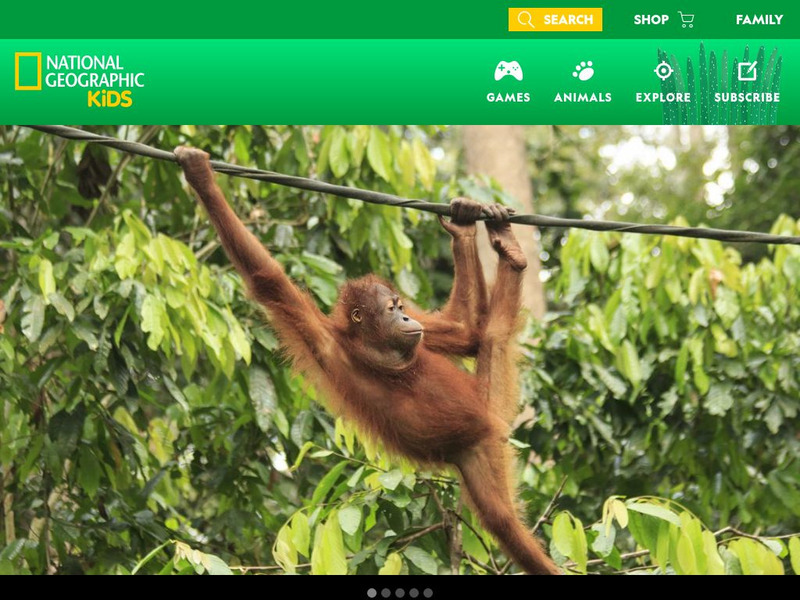
National Geographic Kids
National Geographic Kids: Animals: Orangutans
This multimedia site includes video and audio clips. The maps and fun facts will be very beneficial to students doing research projects.
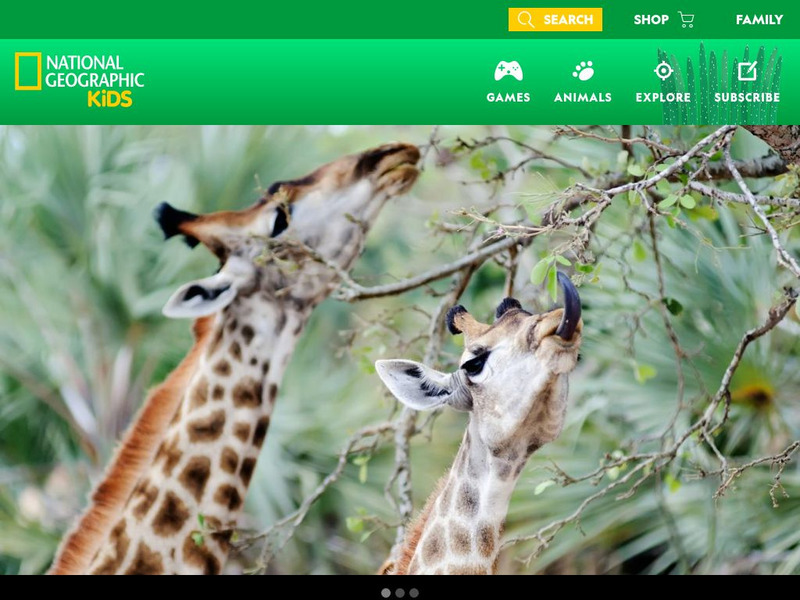
National Geographic Kids
National Geographic Kids: Animals: Giraffes
This multi-media National Geographic site includes video and audio clips and fun facts all about giraffes. Students can even send a postcard to a friend.
Other popular searches
- Classify Animals and Mammals
- Australian Animals Mammals
- Science Animals Mammals
- Animals Mammals Activities
- Animals Mammals Reproduction