Hi, what do you want to do?






American Museum of Natural History
What is Marine Biology?
A marine environment covers the majority of the earth but is arguably the least understood. Teach young scientists about the characteristics of oceans and ocean species using an interactive online lesson. The in-person or remote learning...

American Museum of Natural History
Tornadoes Spinning Thunderstorms
Tornado winds can reach more than 200 miles per hour. Learners explore wind speeds and more characteristics of tornadoes with an online lesson. They learn how tornadoes form and how scientists attempt to predict them. Can be used as an...

American Museum of Natural History
What's This?: Mythic Creatures
Fantastic beasts, and where to find them, are featured in a resource that offers images of real animals that just might have given rise to some of mythic creatures of legend.

American Museum of Natural History
Climate Change
It actually is possible to have too much of a good thing when it comes to climate change. A slide show lesson describes how burning fossil fuels contributes to climate change. Individuals read about the scientific process and the...
Other
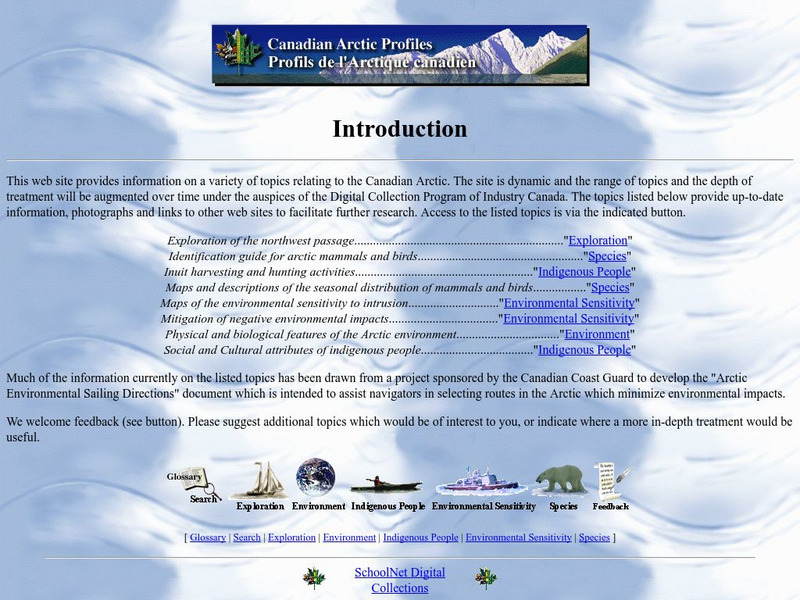
Canadian Arctic Profiles
Detailed sections providing further information on the Canadian Arctic's exploration, climate, maps, migration, and indigenous people, make this resource useful for many topics. Put together with images, this resource is useful for high...
Smithsonian Institution
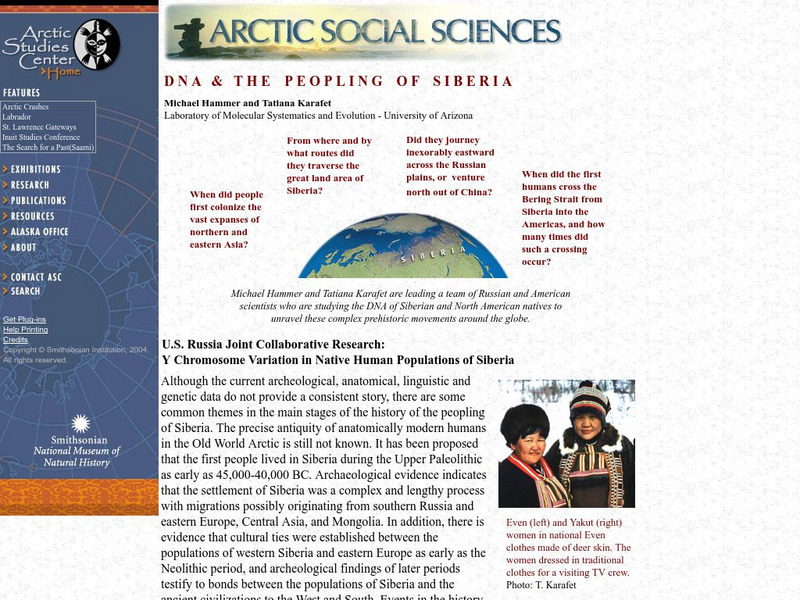
National Museum of Natural History: Arctic Science: Dna and the Peopling of Siberia
Scientists from the University of Arizona are conducting Y chromosome research on native Siberians to try to determine whether there is a genetic affinity to North American native people. The rationale and direction of this research are...

Carnegie Museum of Natural History
Carnegie Museum of Natural History: Needle to the North
Online exhibit explores Arctic expeditions of the twentieth-century via the photos and field notes of researchers who experienced the "alien landscape rife with cold, darkness, and isolation."

Other
Polar Continental Shelf Project for Kids!
Visit this resource to learn about the geography, wild life, plants and people of Polar Continental Shelf in Canada's Arctic. Students can take a quiz to see how much they have learned.
Other
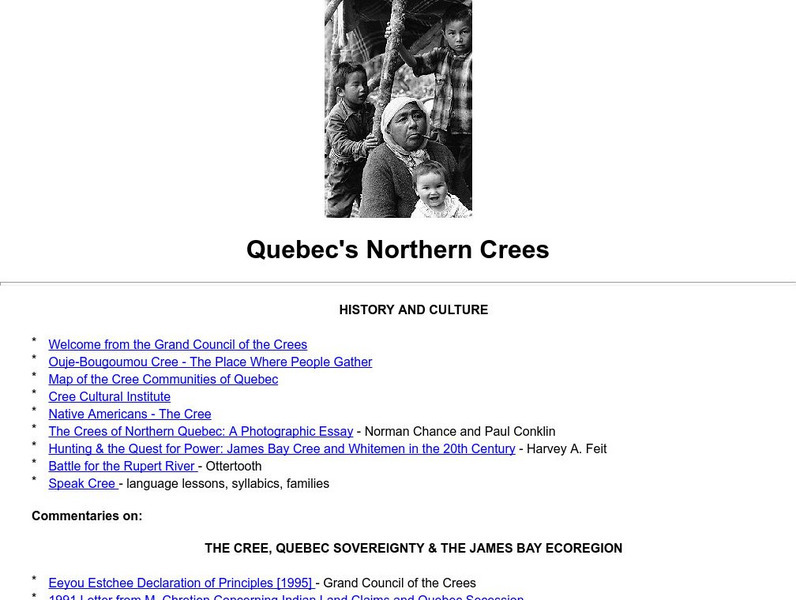
Arctic Circle: Quebec's Northern Crees
This page provides links to articles and resources on the history, culture and current circumstances of the Crees of Northern Quebec.
Other
Arctic Natives, Wildlife Threatened by Pollution
An article about the industrial chemicals and pesticides that are threatening life in the Arctic. Explains which species are more vulnerable to the pollutants.
Hudson's Bay Company
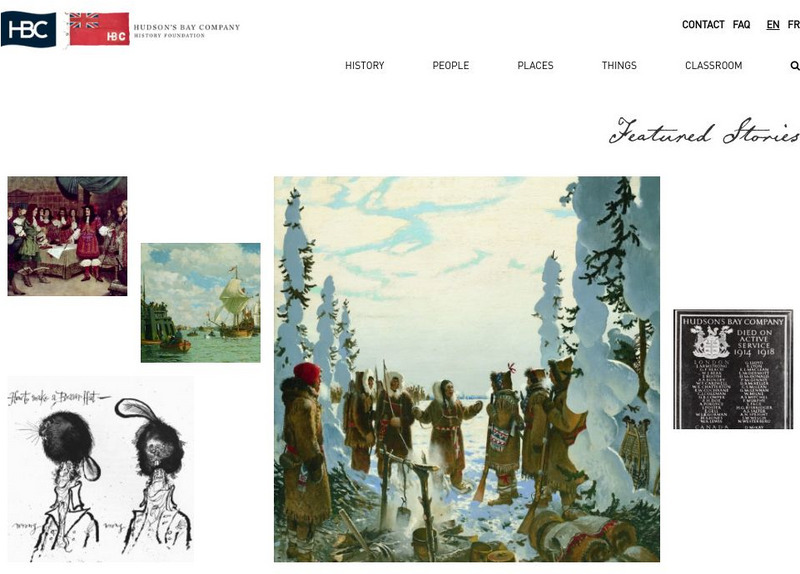
Hudson's Bay Company: Our History: James Houston
James Houston was a devoted arctic naturalist and writer. His life and accomplishments as well as his dedication to the Inuit people are profiled in this article.
Smithsonian Institution
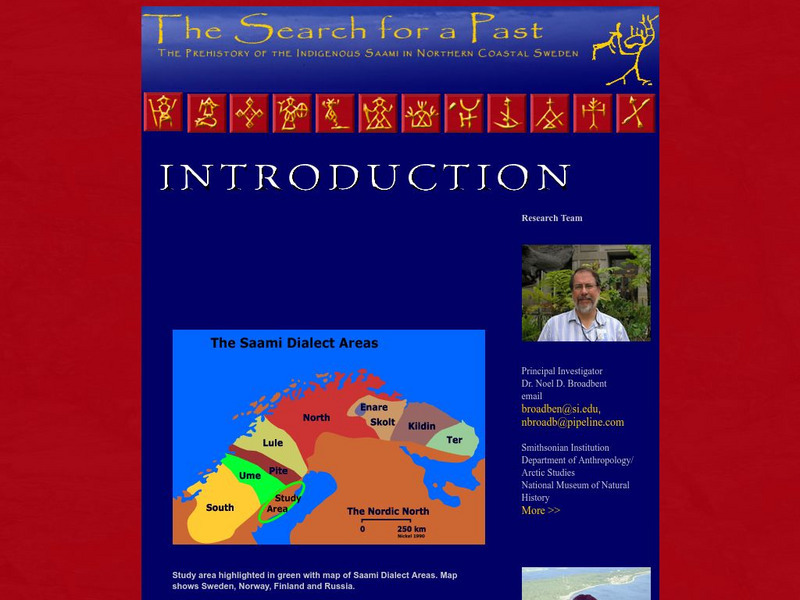
National Museum of Natural History: Indigenous Saami in Northern Coastal Sweden
The Saami people of Sweden are the focus of study for this Smithsonian research team. There are photos of Saami archaeological sites and descriptions of their cultural practices. Links for further research are provided.
Other
Natural Resources Canada: Polar Continental Shelf Project
This resource presents an overview of the Arctic - its animals, plants, people and geography.
Other
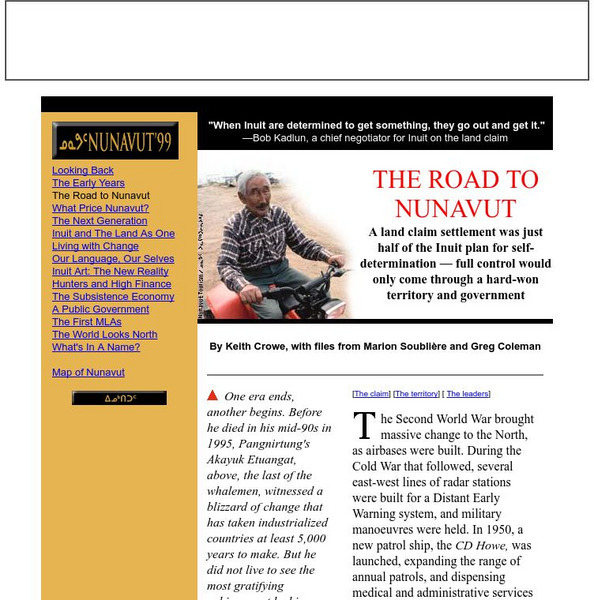
The Road to Nunavut
This web page sources the creation of Nunavut to the land claims made by aboriginals as it traces the evolution of people and communities in the Northwest Territories. The ultimate establishment of Nunavut is accounted for by the...
Virtual Museum of Canada
Virtual Museum of Canada: Community Stories: Tuhaalruuqtut Ancestral Sounds
With the use of Inuit Art, photograph, and audio accounts (in the languages of the Inuit Peoples), the suffering, culture, and perseverance of Aboriginal settlements in the Canadian North is explored in an in-depth manner.

Smithsonian Institution
National Museum of Natural History: Arctic Studies Center: Aleut
The Arctic Studies Center at the Smithsonian provides general notes on the Aleut people of Alaska. Includes a picture of a painting of an Aleut Hunter.
Smithsonian Institution
National Museum of Natural History: Crossroads of Continents
Very interesting Smithsonian web exhibition on the culture of the peoples surrounding the Bering Strait. Enter the museum to find lost cultures due to the Cold War. Fun museum to click around in!

Smithsonian Institution
National Museum of Natural History: The Living Yamal
A Smithsonian site that tells of the history and culture of the Yamal people of Siberia.
PBS
Pbs Learning Media: A Subsistence Culture Impacted by Climate Change
This short video explains how warmer temperatures in the Arctic are transforming the ecosystem and affecting the Athabaskan people, threatening their way of life. [2:59]
Other
Inuit Gallery of Vancouver: Inuit Art
View stone and musk ox horn carvings and ceramic art of the Arctic.
Smithsonian Institution
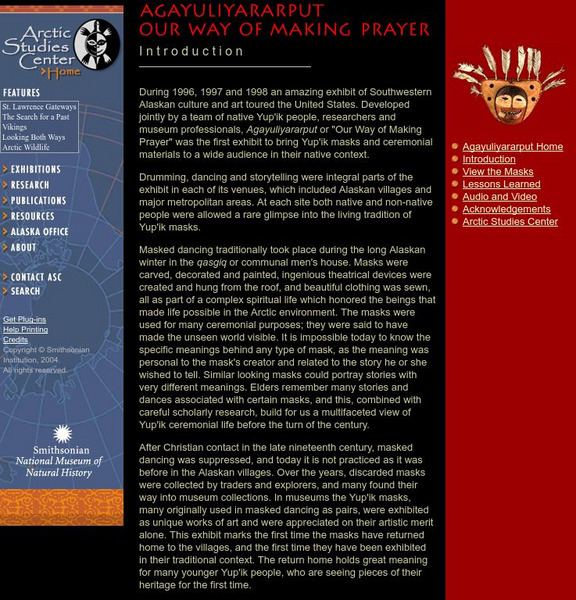
National Museum of Natural History: Our Way of Making Prayer
The native Yup'ik people of Alaska, like many other Native American tribes, once used decorative masks for ceremonial purposes. Here you can read a short introductory piece about the masks, view the masks, and watch several short video...
Other
Images Canada: Picturing Canadian Culture
This site contains images of Canadian events, people, places and things. Search for images as well for more pictures on Canadian culture at this site.

Ducksters
Ducksters: Geography for Kids: Greenland
A site that is dedicated to the history, capital, flag, climate, terrain, people, economy, and population of Greenland.
Smithsonian Institution
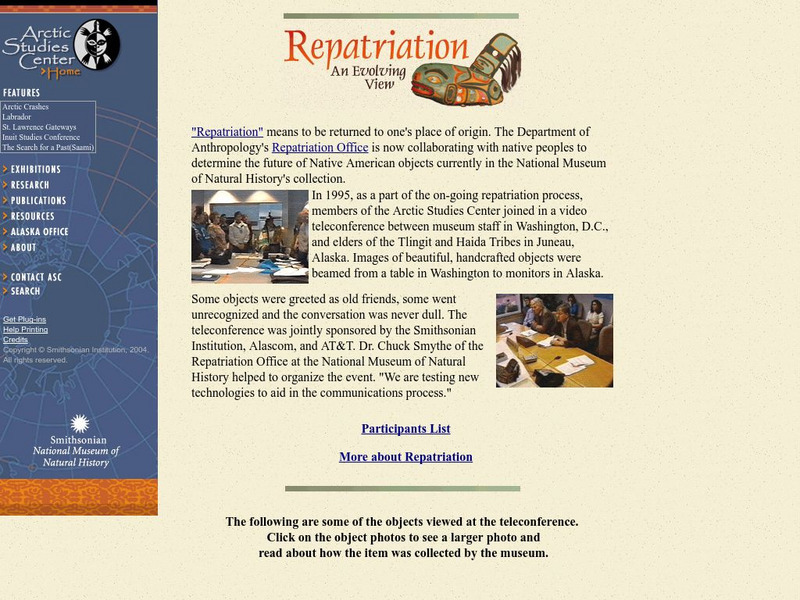
National Museum of Natural History: Repatriation
"Repatriation", returning to one's origin, is a program running through the Smithsonian examining Native American artifacts.