Hi, what do you want to do?






Ducksters
Ducksters: Astronomy for Kids: The Planet Saturn
Kids learn about the planet Saturn of the Solar System including its rings, mass, day, year, and distance from the Sun. Astronomy for kids and teachers.

Ducksters
Ducksters: Astronomy for Kids: The Planet Earth
This site is astronomy for kids and teachers! Here students can learn about the planet Earth of the Solar System including fun facts, mass, day, year, and distance from the Sun.

NASA
Nasa: Astronomy Picture of the Day: Gamma Ray Quasar
A photograph and description of quasar 3C279 viewed in gamma-rays. It was unexpectedly discovered and was one of the brightest objects in the gamma-ray sky until it suddenly faded.

Science Buddies
Science Buddies: Kinesthetic Astronomy: Longer Days, Shorter Nights
This kinesthetic activity demonstrates to students that the Earth's tilt is what is responsible for shifting light patterns and the change in seasons.
NASA
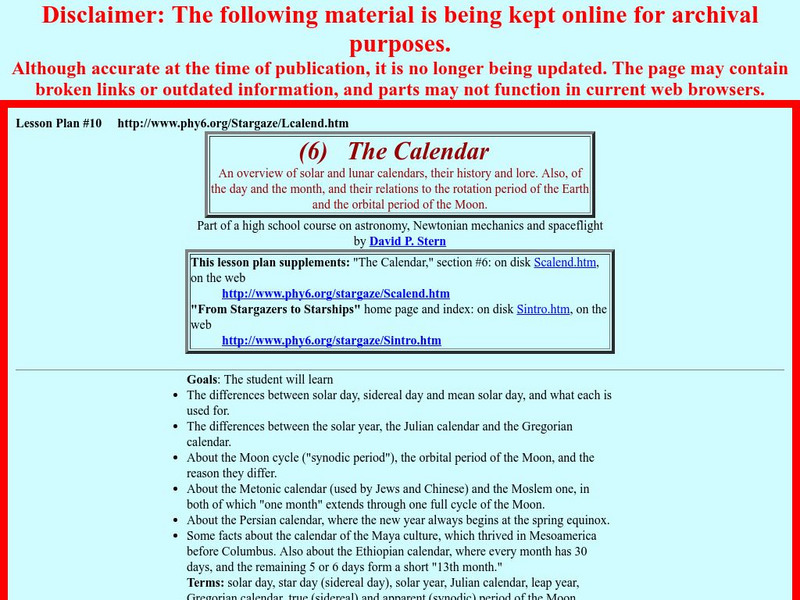
Nasa: From Stargazers to Starships: The Calendar
A lesson plan that gives an overview of solar and lunar calendars, their history and lore. Also, of the day and the month, and their relations to the rotational period of the Earth and the orbital period of the Moon.For versions in...
NASA
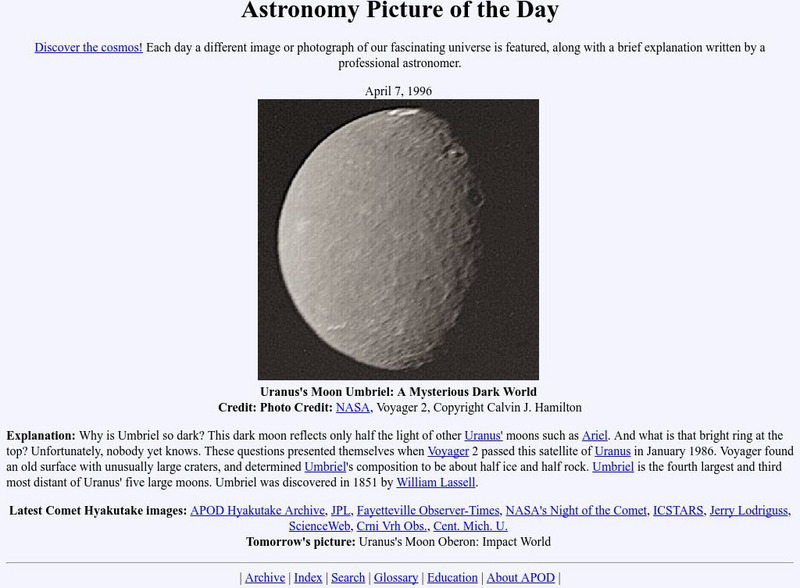
Nasa: Astronomy Picture of the Day: Uranus's Moon Umbriel
Brief overview of Umbriel from NASA. Answers the question "why is the moon so dark"? Provides additional links for more information. A NASA picture of the day.

NASA
Nasa: Astronomy Picture of the Day: Titania, Uranus's Largest Moon
A brief overview of Titania, Uranus's largest moon. Includes a very good description of the moon's surface. A NASA picture of the day.
Science Buddies
Science Buddies: Changing Constellations
Do you like to look up into the night sky? There are so many stars, it can be mind boggling. Some ancient people marked time by the changes in star patterns. We still use changes in constellation patterns to mark astronomical time. This...
Enchanted Learning
Enchanted Learning: All About Space: Mercury
The planet Mercury is profiled with information about its size, mass, atmosphere, length of day, and the like. Features include interactive activities and learning exercises.
NASA
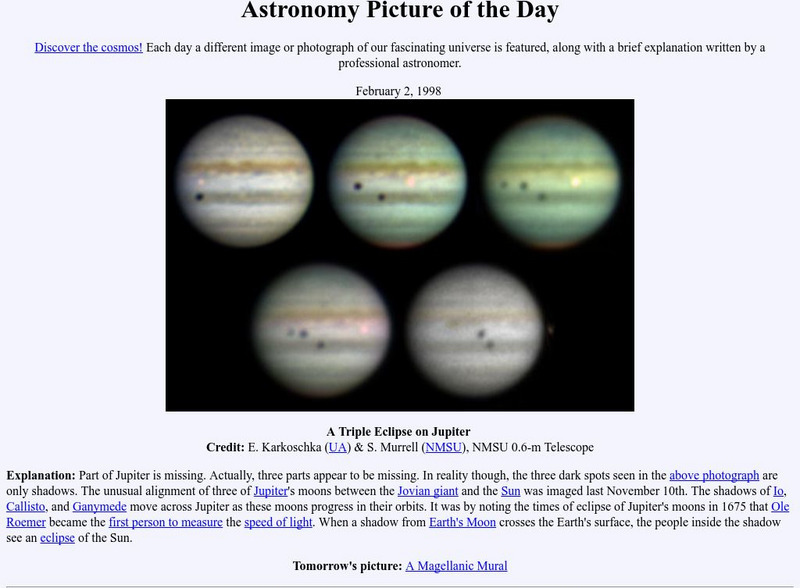
Nasa: Astronomy Picture of the Day: Jupiter
A triple eclipse crossing the face of Jupiter on 2 Feb 98. This set of five images captures the passage of the shadows of Io, Callisto, and Ganymede across the face of Jupiter.

NASA
Nasa: Astronomy Picture of the Day: Jupiter's Great Red Spot
This collage of images by the Hubble Space Telescope captured the changes in Jupiter's Great Red Spot over a period of several years.
NASA
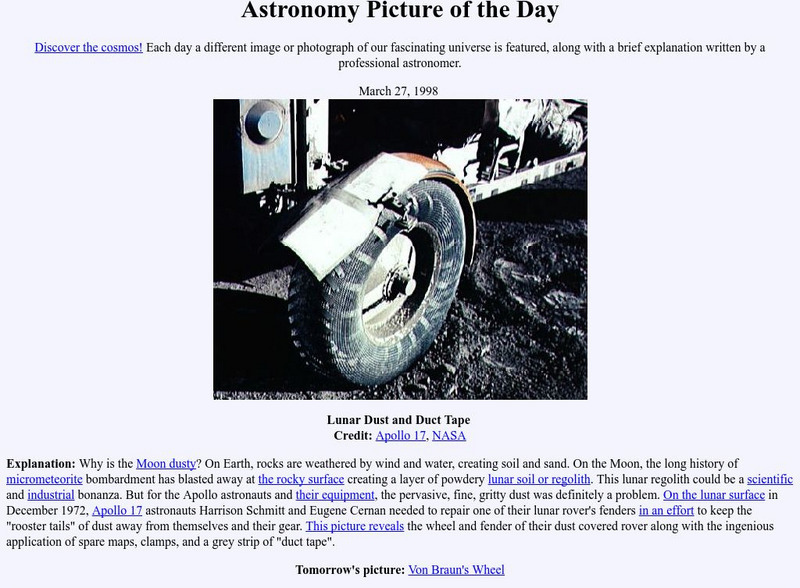
Nasa: Astronomy Picture of the Day: Lunar Dust and Duct Tape
Dust, a common and usually minor problem on Earth, presented a major challenge for the Apollo astronauts on the Moon. Here's an interesting solution created by the Apollo 17 crew.
NASA
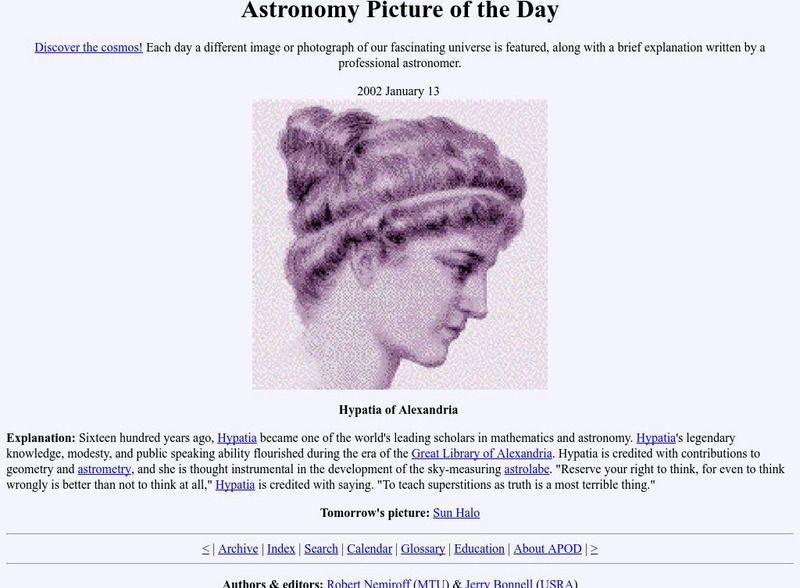
Nasa: Astronomy Picture of the Day: Hypatia
Learn more about Hypatia when you check out this resource. This site features a picture and a brief synopsis of this famous scientist.
Other
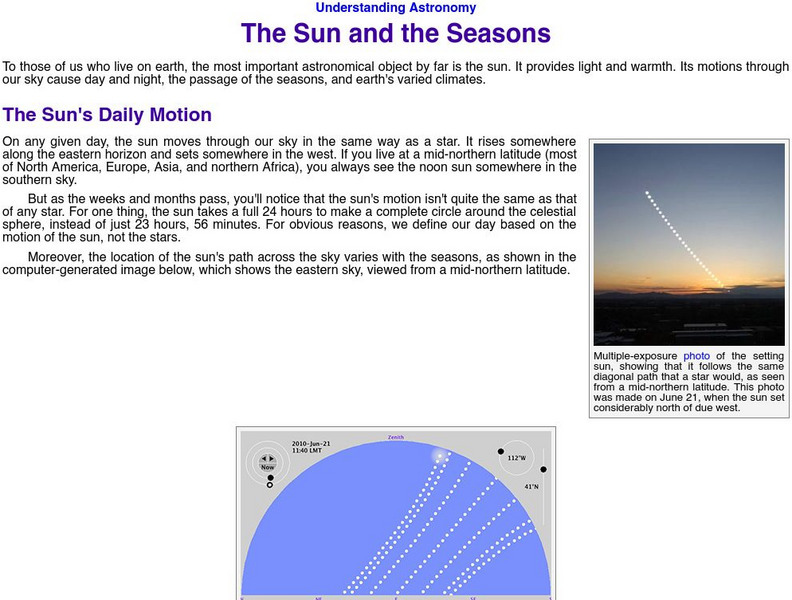
Weber State University: The Sun and the Seasons
To those of us who live on earth, the most important astronomical object by far is the sun. This article explains how the motion of the sun through our sky cause day and night, the passage of the seasons, and earth's varied climates.
Other
Quiz: Tides, Eclipses, Day and Night, Seasons
Take this 15 question multiple choice quiz on tides, eclipses and seasons.
Enchanted Learning
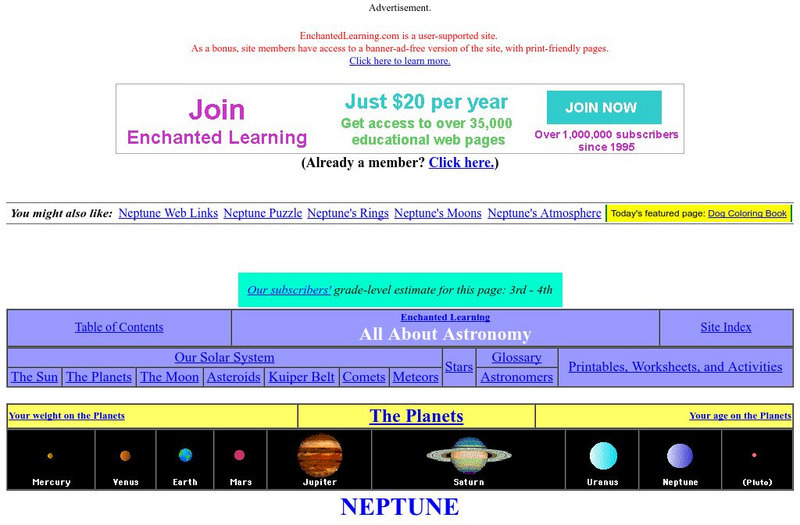
Enchanted Learning: Neptune
A wealth of facts await you on this complete site. Topics include size, mass and gravity, length of day, orbit, distance from the sun, and more. A coloring page, quiz, fill-in-the-blanks activity, and interactive puzzle will challenge...
NASA
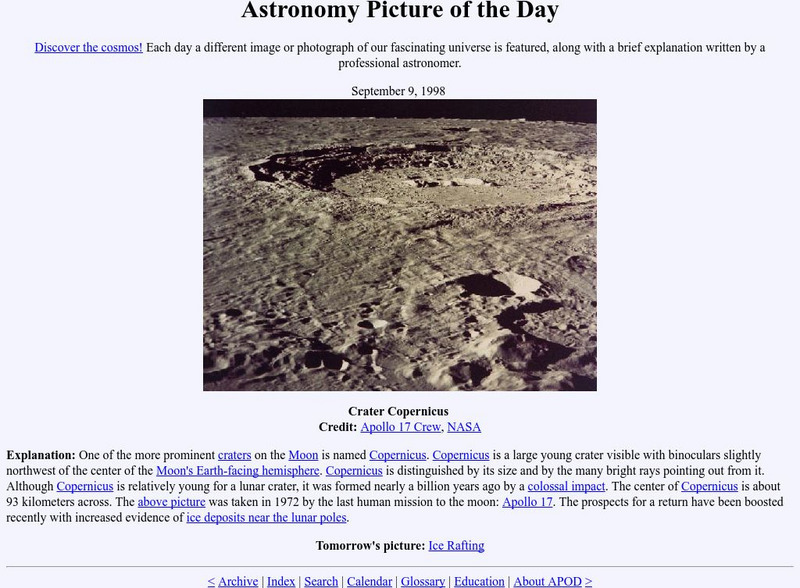
Nasa: Astronomy Picture of the Day: Crater Copernicus
This Astronomy Picture of the Day is of Crater Copernicus, taken by the Apollo 17 crew in 1972.
NASA
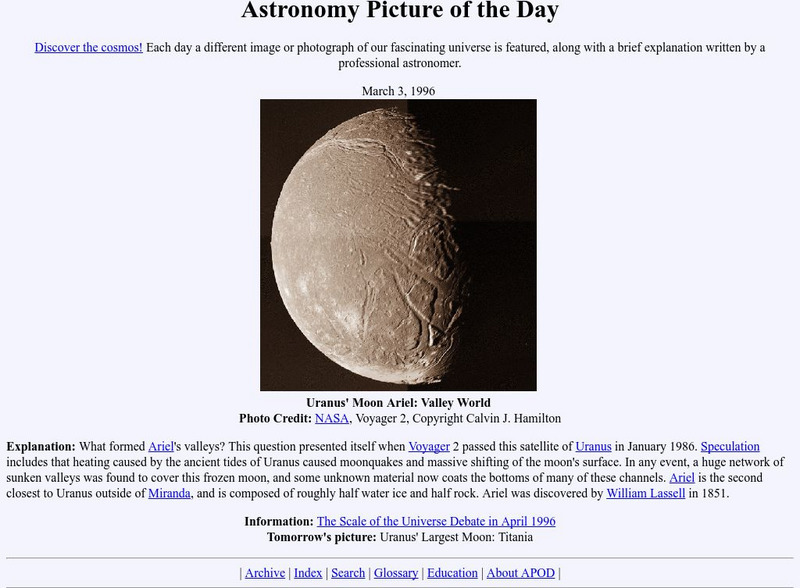
Nasa: Astronomy Picture of the Day: Uranus's Moon Ariel
Provides a brief overview of Ariel, one of Uranus's moons. Details how its deep valleys were formed. A NASA astronomy picture of the day.

NASA
Nasa: Astronomy Picture of the Day: Uranus's Moon Oberon
Brief overview of Oberon, the most distant and second largest moon of Uranus. Includes its discovery and also a few pictures. A NASA picture of the day.
PBS
Pbs Learning Media: The Pattern of the Moon's Changing Appearance
Students use an interactive model to gather evidence about the visible Moon's changing pattern over 30 days in this resource from Astronomy Education at the University of Nebraska-Lincoln. They use this evidence to record and make...
American Association of Physics Teachers
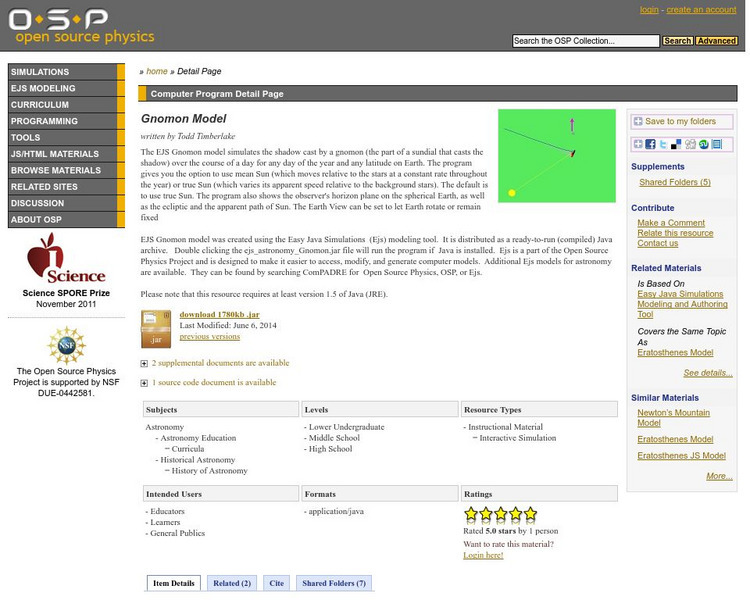
Com Padre Digital Library: Open Source Physics: Gnomon Model
A gnomon is the part of a sundial that casts the shadow. This simulated experiment illustrates the gnomon over the course of a day.

University of St. Andrews (UK)
University of St. Andrews: Mac Tutor History of Mathematics Archive
The University of St. Andrews, Scotland, presents hundreds of biographies of famous mathematicians, histories of math in various cultures, and interesting facts on the development of important math concepts. This is a huge reference....
NASA
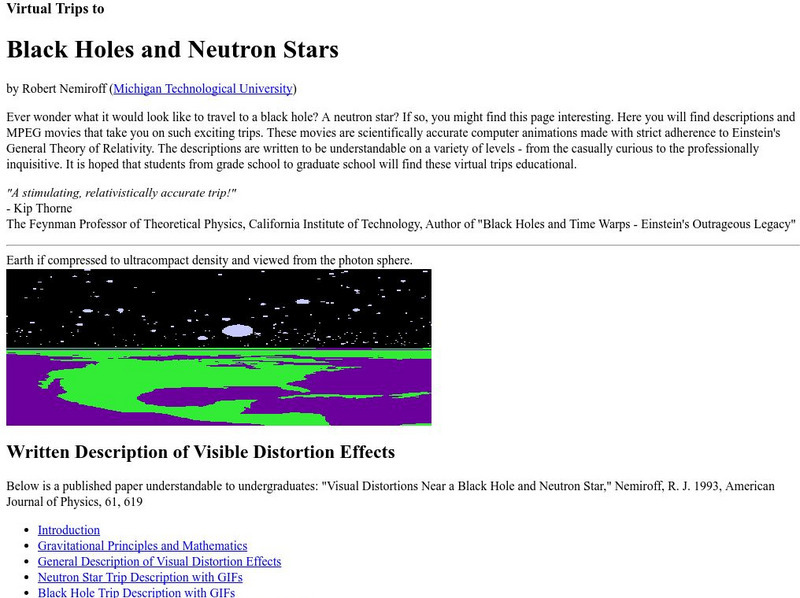
Nasa: Astronomy Picture of the Day: Virtual Trips to Black Holes. Neutron Stars
Learn more about black holes and neutron stars. View the MPEG video of a virtual trip into a black hole.
Ministerio de Educación (Spain)
Observaciones Y Modelos en Astronomia
How does the length of the day change? How does the height of the sun change? Do we always see the same star? The answer to these questions and different observations about the sun, the moon and the stars that we can do from earth can be...