Hi, what do you want to do?






Curated OER
Soil Comparison and Analysis
High schoolers perform tests on different soil samples. In this earth science lesson, students classify the soil into groups according to test results. They write a lab report following a certain criteria.
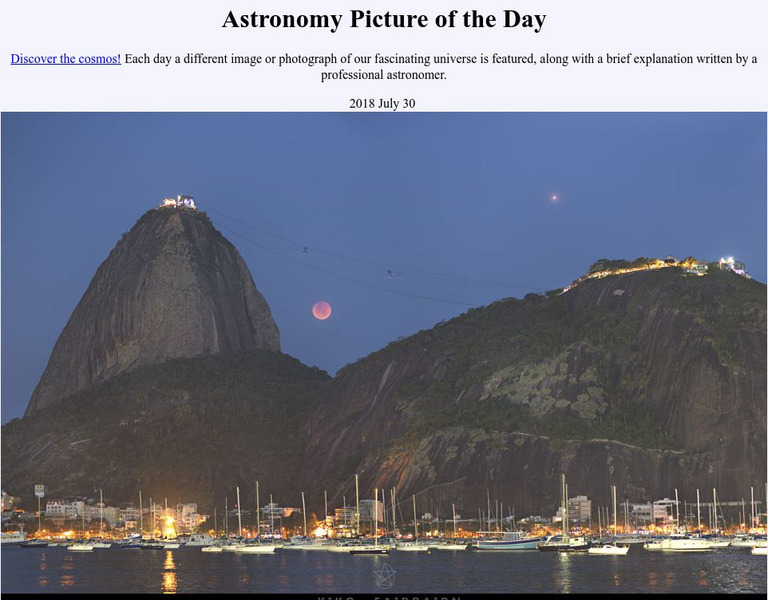
NASA
Nasa: Astronomy Picture of the Day:
A different image is featured each day along with descriptive narrative. NASA offers different and sometimes unexpected views of our Earth and the universe.

NASA
Nasa: Astronomy Picture of the Day: Edwin Hubble 1889 1953
Part of the NASA website, this is a reprint of an article in the Journal of the Royal Astronomical Society of Canada about Edwin Hubble's life and accomplishments, stressing his role in the development of modern astronomy.

NASA
Nasa: Astronomy Picture of the Day: A Milestone Quasar
An image of a typical quasar and a star. An explanation written by a professional astronomer is included. There are also many embedded links within the text to related topics.
NASA
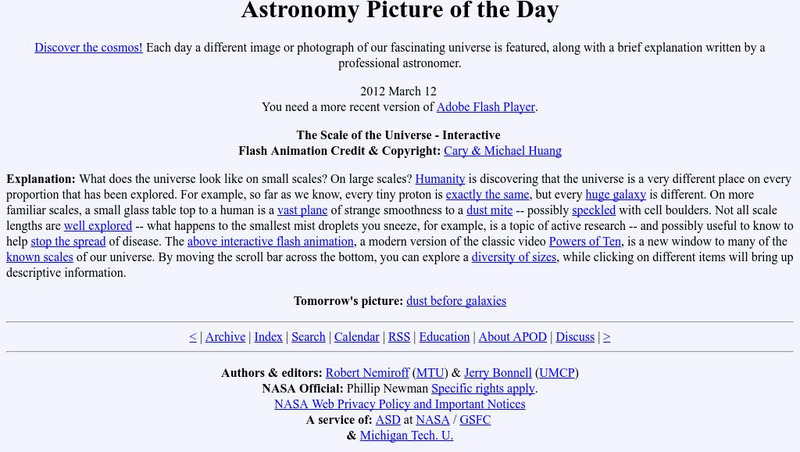
Nasa: Astronomy Picture of the Day: Scale of the Universe 2
This stunning interactive allows you to explore everything in this universe by zooming into different objects, organisms, and microscopic matter.
NASA
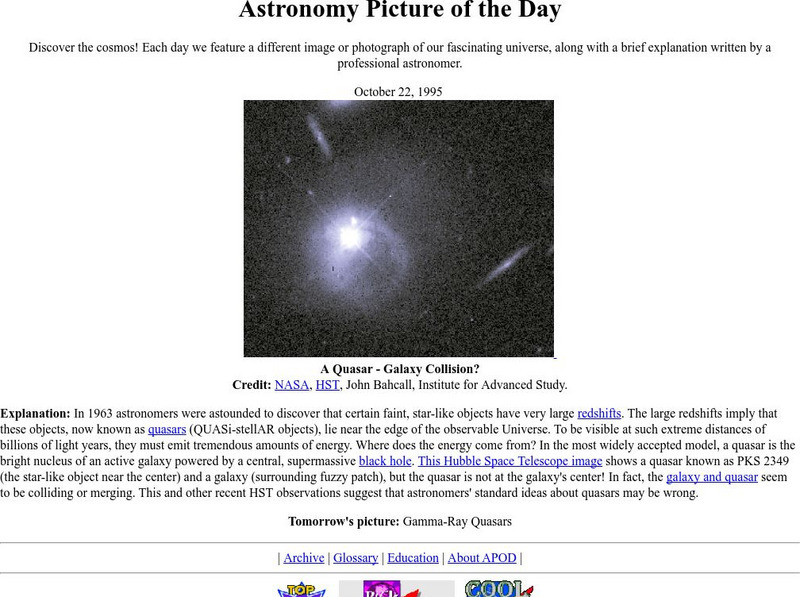
Astronomy Picture of the Day: Quasar Galaxy Collision
An image of a quasar. The large redshifts imply that quasars lie near the edge of the observable universe and must emit tremendous amounts of energy. There are also many embedded links to related topics.
NASA
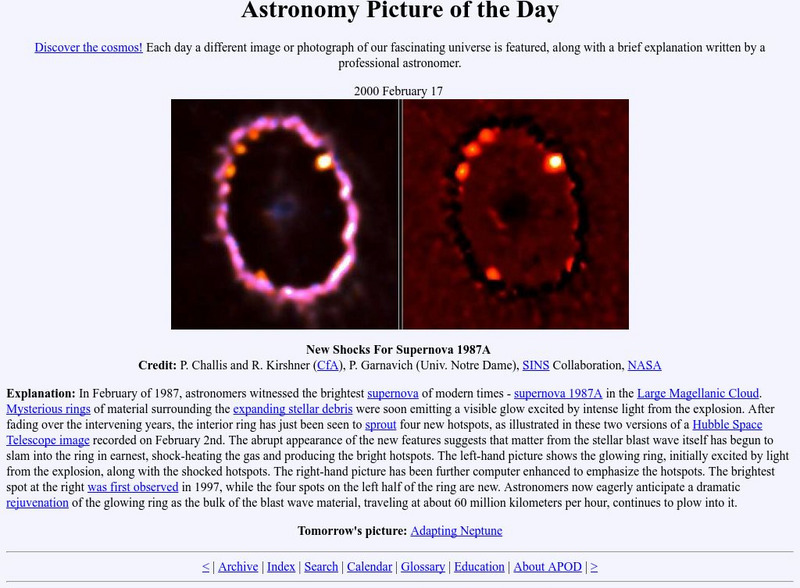
Astronomy Picture of the Day: Supernova 1987 A
Details of the brightest supernova of modern times - supernova 1987A in the Large Magellanic Cloud. There are many links for additional information.
Enchanted Learning
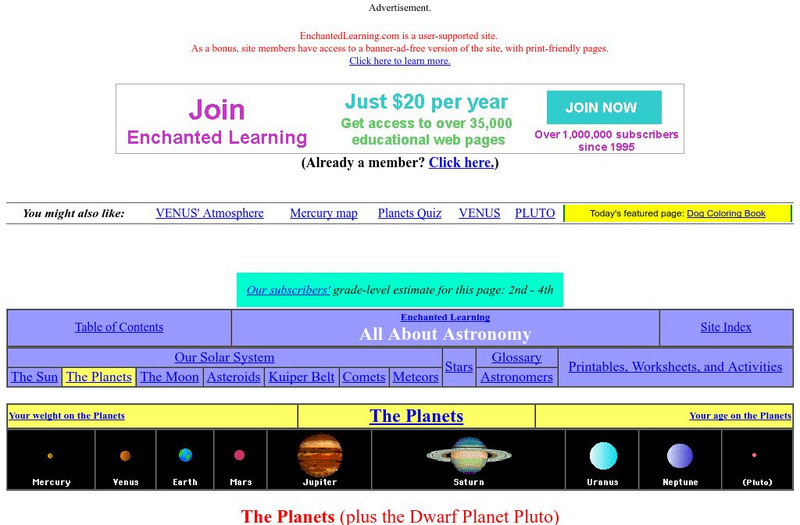
Enchanted Learning: The Planets
This survey of the planets includes all the basics, size, mass, atmosphere, length of day, and the like. It features interactive activities and learning exercises and compares all of the planets in colorful tables.
American Association of Physics Teachers
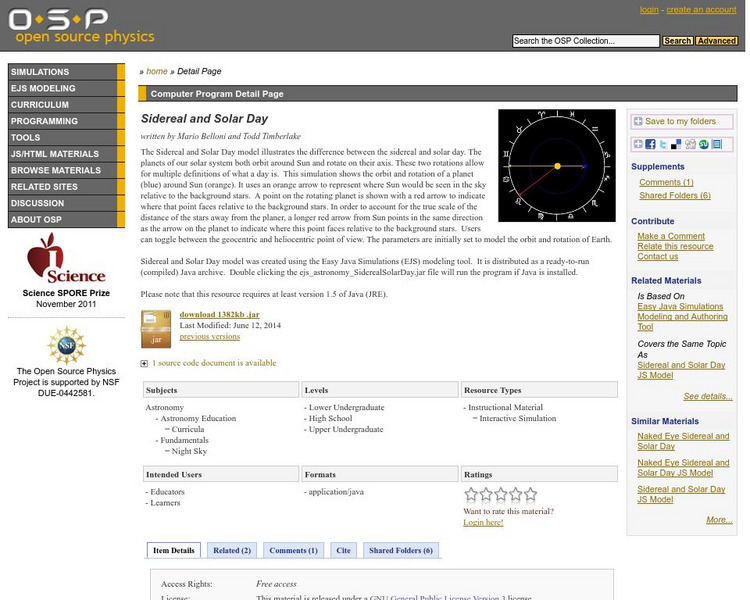
Com Padre Digital Library: Open Source Physics: Astronomy: Sidereal Solar Day
A computer based simulation demonstrating the difference between a sidereal day and a solar day.
NASA
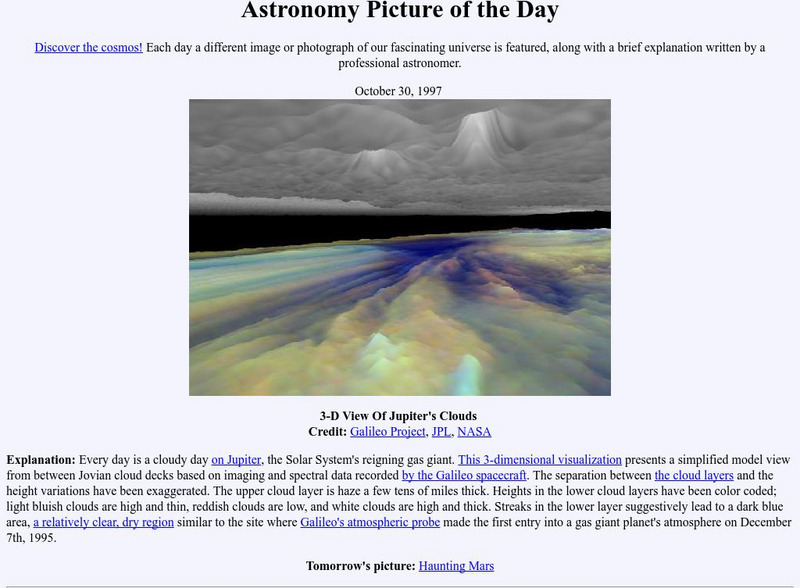
Nasa: Astronomy Picture of the Day: Jupiter's Clouds 3 D
Every day is a cloudy day on Jupiter, the Solar System's reigning gas giant. This 3-dimensional visualization presents a simplified model view from between Jovian cloud decks based on imaging and spectral data recorded by the Galileo...
Other
Bad Astronomy/phil Plait: Tides and Why Our Days Are Getting Longer
Why does the Moon always shows the same face to the Earth? Why is the Moon's rotation period the same as the length of time it takes to orbit the Earth? Why are there two tides a day? These questions and more are answered here.

TED Talks
Ted: Ted Ed: Why Does February Only Have 28 Days?
Why does February have 28 days when all the other months get 30 or 31? The answer is part superstition, part politics, and part astronomy.

Ducksters
Ducksters: Astronomy for Kids: The Planet Uranus
Kids learn about the ice giant planet Uranus of the Solar System including fun facts, mass, day, year, and distance from the Sun. Astronomy for kids and teachers.

Ducksters
Ducksters: Astronomy for Kids: The Planet Venus
Kids learn about the planet Venus of the Solar System including fun facts, mass, day, year, and distance from the Sun. Astronomy for kids and teachers.

NASA
Nasa: Astronomy Picture of the Day: Crab Nebula and Geminga in Gamma Rays
Explains that pulsars would be the brightest objects in the sky if we could see gamma-rays.
NASA
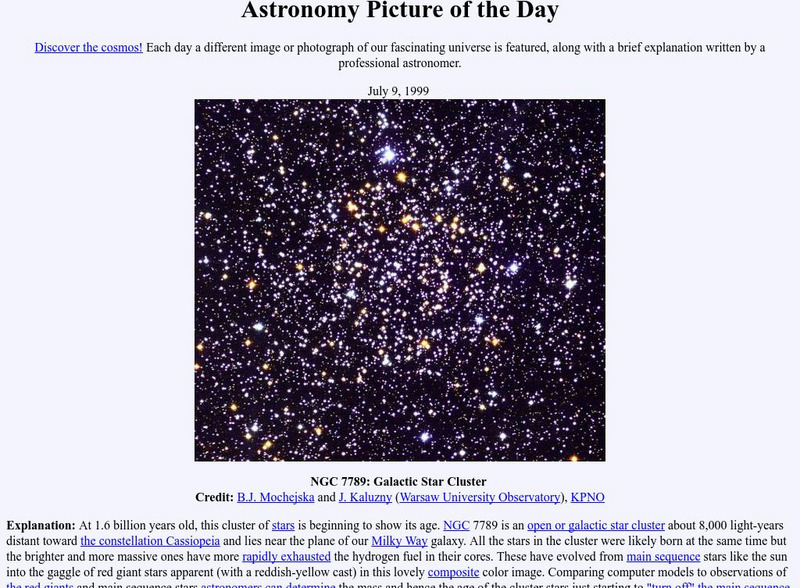
Nasa: Astronomy Picture of the Day: Giant Stars
Image of a group of red giant stars are seen in an image from the edge of the plane of the Milky Way. The evolution of these stars is explained. Many embedded links contained in the text to related topics.
NASA
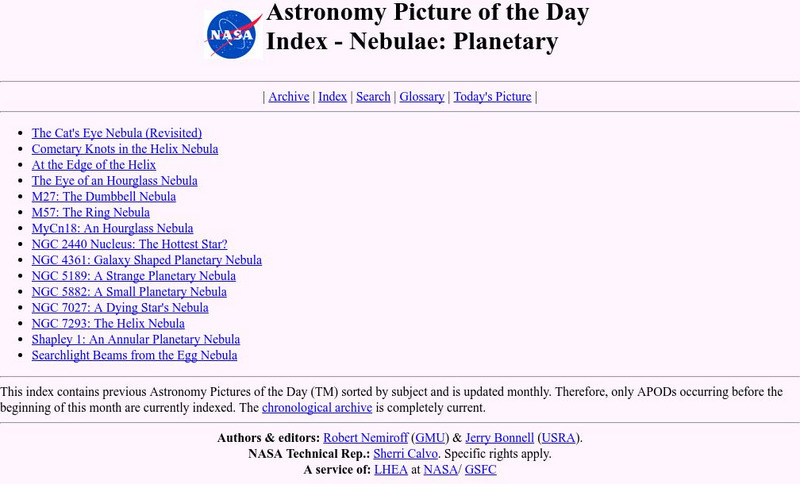
Nasa: Astronomy Picture of the Day: Nebulae Planetary
At this resource several pictures of nebulae are available with informative caption. Related links and other resources.
NASA
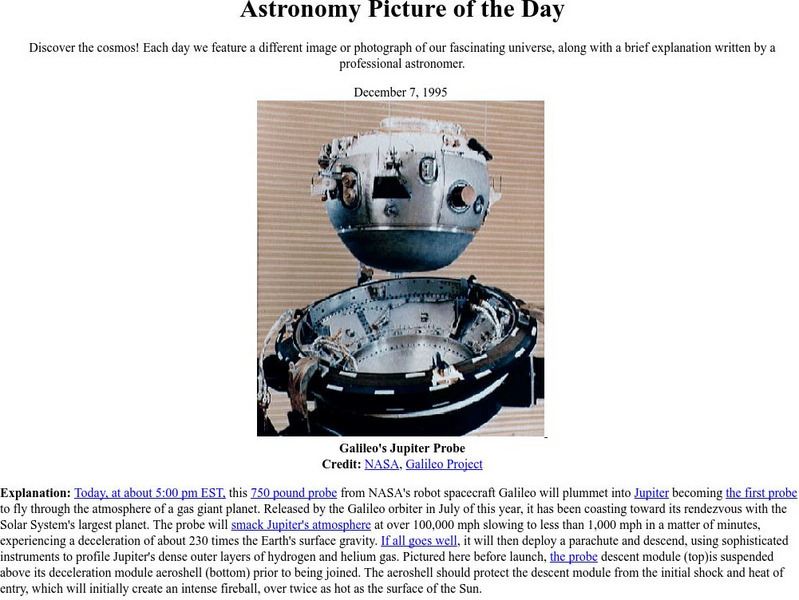
Nasa: Astronomy Picture of the Day:galileo Probe
This image, taken before Galileo left Earth in 1989, was chosen for December 7, 1995, the day that the probe entered Jupiter's Atmosphere.
Georgia Department of Education
Ga Virtual Learning: Astronomy: The Earth
In this interactive tutorial students will learn what causes the seasons, diurnal cycles and how the constellations move through the sky. Learn we are able to see other planets and how astronomical events affected life on the Earth.
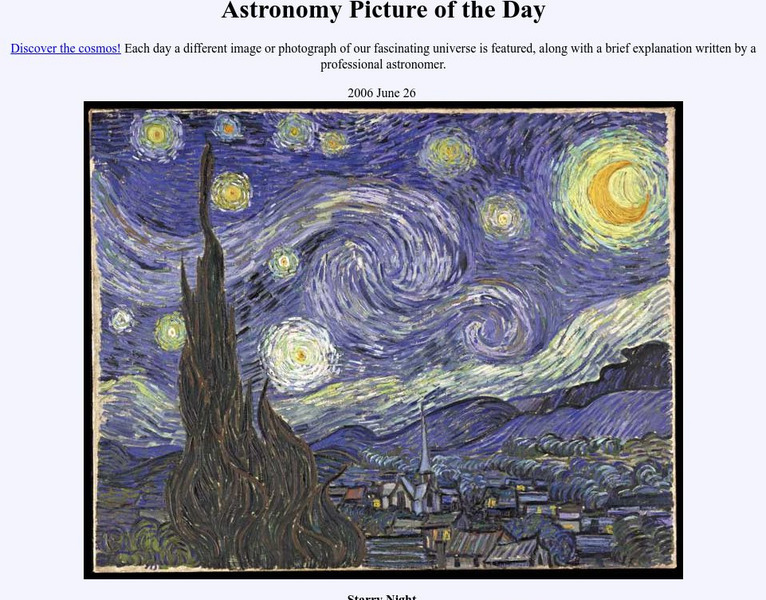
NASA
Nasa: Astronomy Picture of the Day: "The Starry Night" by Vincent Van Gogh
Discover why the scientists at NASA awarded Van Gogh's famous painting of the night sky, "The Starry Night," a spot on its astronomy-picture-of-the-day site.

Ducksters
Ducksters: Astronomy for Kids: The Planet Jupiter
Kids learn about the planet Jupiter of the Solar System including fun facts, mass, day, year, and distance from the Sun. Astronomy for kids and teachers.

Ducksters
Ducksters: Astronomy for Kids: The Planet Mars
Kids learn about the planet Mars of the Solar System including fun facts, mass, day, year, and distance from the Sun. Astronomy for kids and teachers.

Ducksters
Ducksters: Astronomy for Kids: The Planet Mercury
Kids learn about the planet Mercury of the Solar System including fun facts, mass, day, year, and distance from the Sun. Astronomy for kids and teachers.

Ducksters
Ducksters: Astronomy for Kids: The Planet Neptune
Kids learn about the ice giant planet Neptune of the Solar System including fun facts, mass, day, year, and distance from the Sun. Astronomy for kids and teachers.