Hi, what do you want to do?






American Museum of Natural History
American Museum of Natural History: O Logy: How Did the Universe Begin?
Bite-size introduction to two scientists-Hubble and Lemaitre-who played key roles in formulating the theory of the origin of the universe known as the big bang. Includes an interactive timeline on which you can plot out the approximate...
NASA
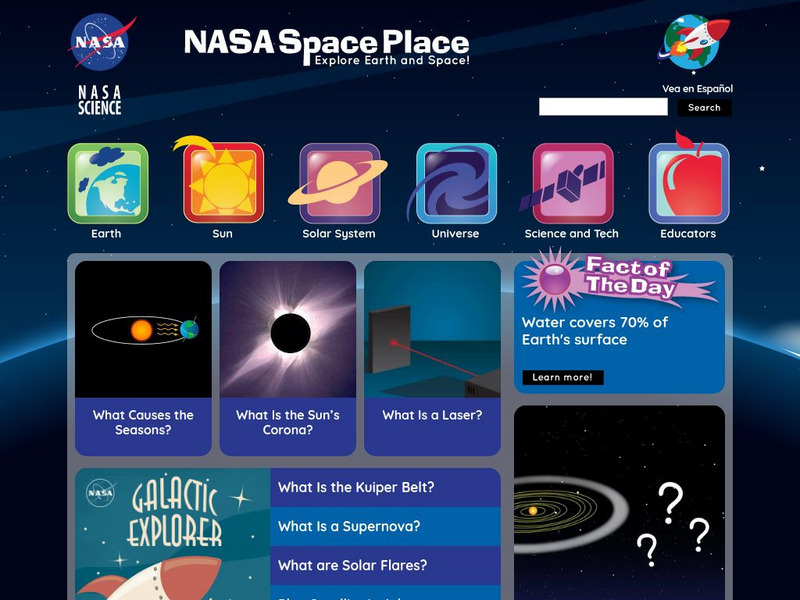
Nasa: The Space Place
This site from NASA's Space Place is geared towards early elementary learners. It offers detailed instructions for crafts and activities related to space, games and a teacher resource area. Students can also ask an expert at this site.

NASA
Nasa: Imagine the Universe: "Nasa Detects One of Closest"
Site provides the article, "NASA Detects One Of Closest And Brightest Gamma Ray Bursts." Provides links to learn more about gamma rays and black holes as well as other resources.
NASA
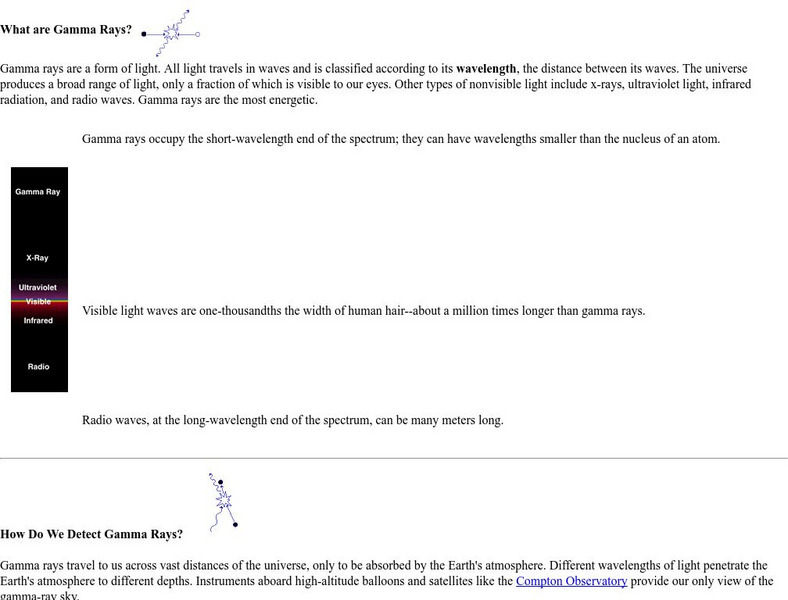
Viewing the Violent Universe: What Are Gamma Rays?
The universe produces a broad range of light, only a fraction of which is visible to our eyes. Gamma rays are nonvisible light, which also includes x-rays, ultraviolet light, infrared radiation, and radio waves.
Other
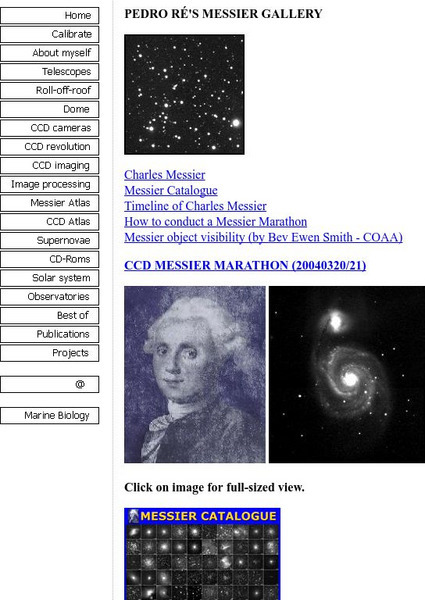
Pedro Re's Messier Gallery
Are you looking for information on Charles Messier? This site includes a detailed biography of his life along with a timeline, how to conduct a Messier Marathon, and photographs of the astronomical objects in Messier's catalog.
American Association of Physics Teachers
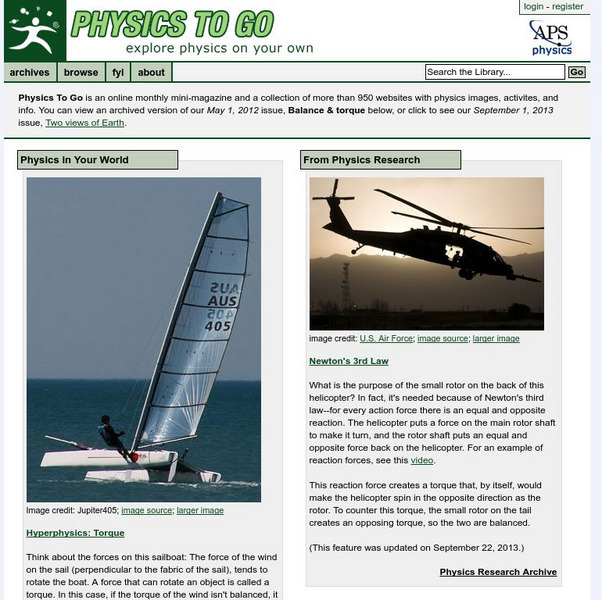
Com Padre Digital Library: Physics to Go: Explore Physics on Your Own
Contains a full physics curriculum with links to games, webcasts, and activities. By creating a free account, students and teachers can create their own personal collection of resources.