Hi, what do you want to do?






Other
A Republic, if You Can Keep It
An essay by U.S. Congressional Representative Ron Paul of Texas on the state of the American republic delivered at the dawn of the twenty-first century. He argues for the strong separation of powers among the three branches of government...

Scholastic
Scholastic: Role of the Supreme Court
This essay describes the power of the Supreme Court to 'check' the actions of both the President and Congress, with some historic documentation.
Harry S. Truman Library and Museum
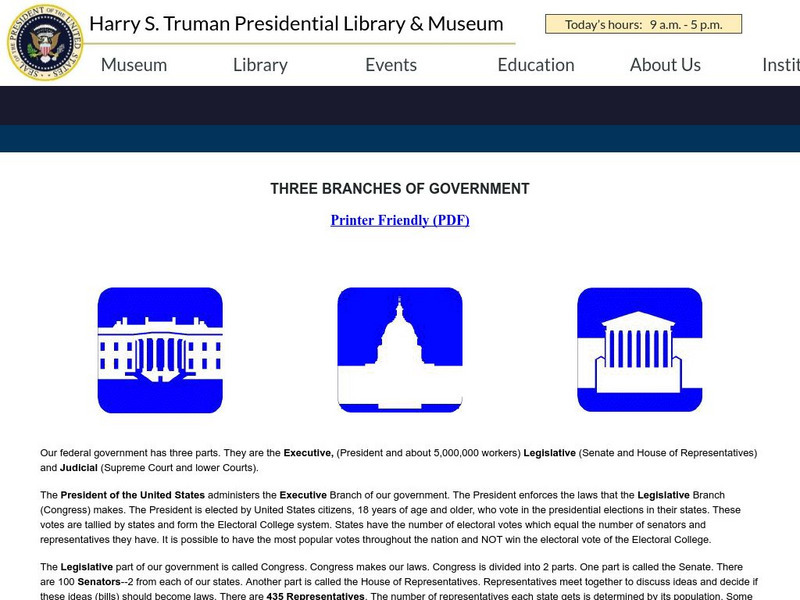
Harry S. Truman Library & Museum: Three Branches of Our Government
This slide and the six that follow it (use the advance button near the bottom of the screen) offer an explanation of each of the three branches of government and the duties they perform, including discussion of the tensions arising from...
Other
Suffolk County Community College: Congress of Vienna
Describes the goals of the countries at the Congress of Vienna in 1815, how realistic they were, and to what extent they were achieved. The goals were intended to create a new balance of power that could prevent both the spread of...
University of Groningen
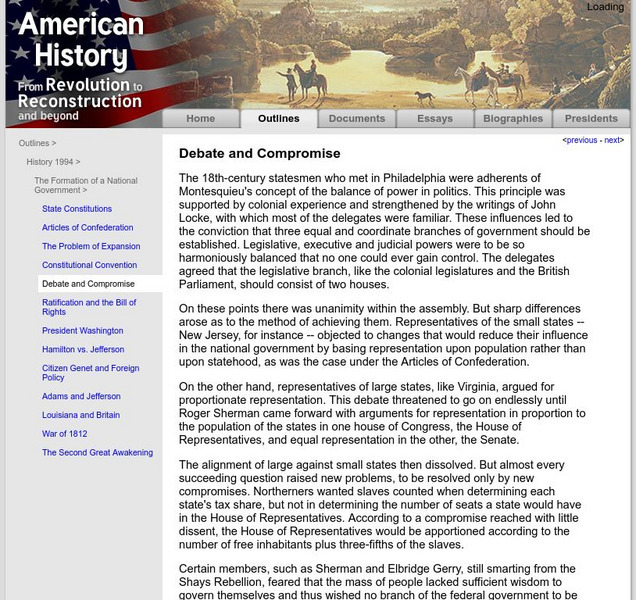
American History: Outlines: Debate and Compromise
The 18th-century statesmen who met in Philadelphia were adherents of Montesquieu's concept of the balance of power in politics. This principle was supported by colonial experience and strengthened by the writings of John Locke, with...
Bill of Rights Institute
Bill of Rights Institute: Constitutional Principles
James Madison knew that a key challenge of maintaining just government was framing it in such a way that the government would be forced to control itself. How does a system of separated powers-and the checks and balances built into those...
Annenberg Foundation
Annenberg Learner: Democracy in America: The Constitution: Fixed or Flexible?
This unit explores the timeless qualities of The U.S. Constitution, the opportunities to amend it, and how it is a pillar of the American identity, through these activities, videos, and outside resources.
US National Archives
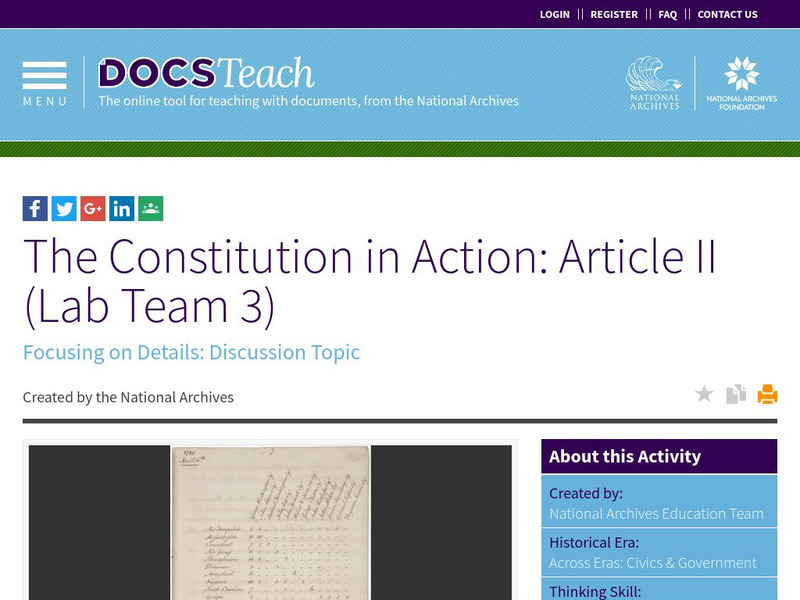
National Archives: The Constitution in Action: Article Ii
This activity can be used during a unit on the U.S. Constitution. Students will analyze the Senate Journal of the First Congress and identify how the document demonstrates content contained within Article II of the Constitution in...

University of Chicago
The Founders' Constitution: Federal v. Consolidated Government: Virginia Plan
The original text of The Virginia Plan presented at the Constitutional Convention. Discusses federal versus consolidated government.
CPALMS
Florida State University Cpalms: Florida Students: Enlightenment Ideas and the Founding Fathers
A tutorial that looks at the ideas from the Enlightenment that influenced the Founding Fathers, particularly those of John Locke and Montesquieu. A PDF file of the tutorial is available.
iCivics
I Civics: Constitutional Principles
The Founding Fathers created a government based on a set of fundamental principles carefully designed to guarantee liberty. This lesson lets students look at the Constitution from the perspective of its foundational principles and make...

Siteseen
Siteseen: Government and Constitution: Checks and Balances
Learn about checks and balances, limits and controls imposed on all branches of a government by giving each branch of government the right to amend or void certain acts of the other branches.
Siteseen
Siteseen: Government and Constitution: Branches of Government
This article contains a useful guide to the functions of the three US Branches of Government that make, enforce, or interprets laws.

The Dirksen Congressional Center
Congress for Kids: Checks and Balances
The system of checks and balances in place for maintaining the power relationships within the United States government is explained in kid-friendly terms. Suggestions for research projects, resource links and some activities are...
Digital History
Digital History: The Crisis of 1850
A preview of will prompt the passage of the Compromise of 1850. Read about California's bid for statehood as a free state.
Center For Civic Education
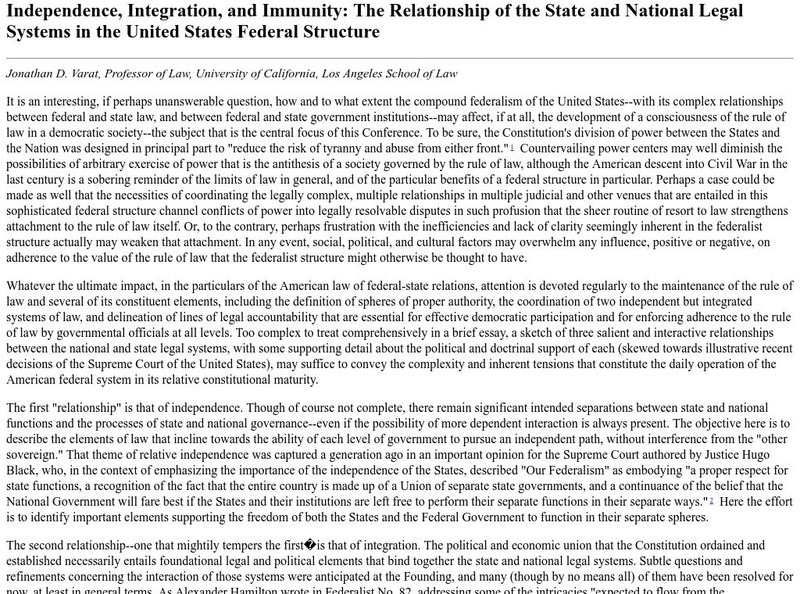
Center for Civic Education: Relationship of State and National Legal Systems
This lengthy essay describes the balance between state and federal judiciary courts and touches on independence, integration, power limits and immunities.
This Nation
This nation.com: Executive Order 13132 of August 4, 1999
This Executive Order signed by President Bill Clinton on 8/4/99 is an order that describes the balance between state and federal governments, as warranted by the Framers of the Constitution and federalism.

Constitutional Rights Foundation
Constitutional Rights Foundation: The u.s. Supreme Court: Fdr Tries to "Pack" the Supreme Court
Lesson and activity in which young scholars learn about the importance of the Supreme Court, balance of power, and judicial reform.
Schools of California Online Resources for Education
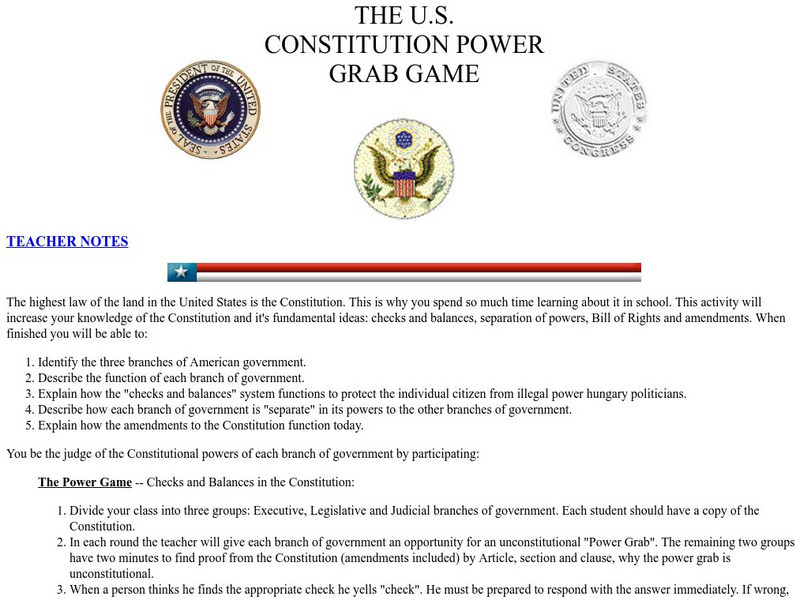
Score: The u.s. Constitution Power Grab Game
Politicians like power, but who actually gets to use their powers in different situations? Take this quiz to sort out the checks and balances that are used on the various power plays.
Annenberg Foundation
Annenberg Classroom: Tenth Amendment
Annenberg Classroom resource on the 10th Amendment which attempts to create a balance of power between federal and state government. With links to related news articles and resources.
Boise State University
Boise State: World at War: Set the Stage
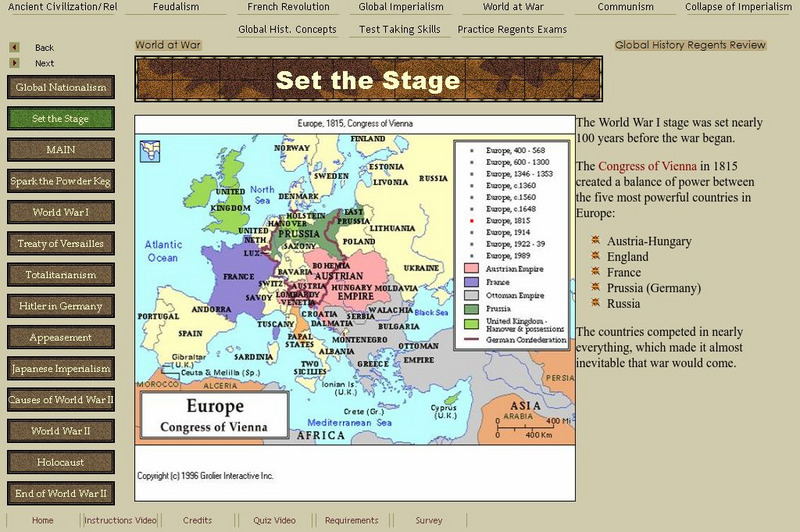
This 1815 map of Europe is a result of the Congress of Vienna creating a balance of power between the five most powerful countries in Europe. The countries competed in nearly everything, which made it almost inevitable that war would come.
University of Groningen
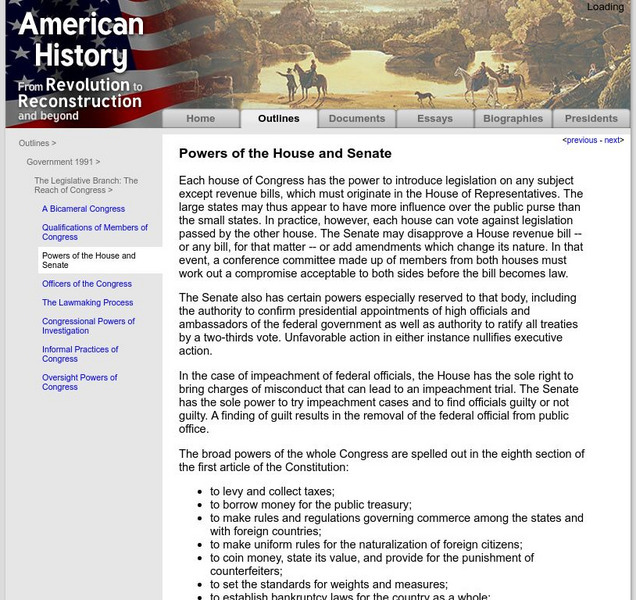
American History: Outlines: The Legislative Branch: The Reach of Congress
This well-written and well-organized site from The Legislative Branch provides a thorough overview of congressional powers, inherent checks and balances, as well as links to related information.
A&E Television
History.com: How the u.s. Constitution Has Changed and Expanded Since 1787
Through amendments and legal rulings, the Constitution has transformed in some critical ways. The U.S. Constitution, written in 1787 and ratified by nine of the original 13 states a year later, is the world's longest-surviving written...
Digital History
Digital History: America Goes to War [Pdf]
President Woodrow Wilson tried to maintain American neutrality in World War I. Find out why he decided that the U.S. needed to join the war and read a portion of his message to Congress asking for a declaration of war against Germany....