Hi, what do you want to do?






Curated OER
Changing How Things Look
Third graders use a literature study in order to investigate how organisms effect an ecosystem. They are asked questions about change taken from the book. Students also take a nature walk to make field observations.

Curated OER
Winer Survival
Students study how animals need water, food, shelter, and space to survive. They also study what animals need to survive in the winter. They play the part of animals and winter "threats" in a game of tag to reinforce concepts.

Curated OER
Pre-European Cultures of the Upper Mississippi River Valley
Fifth graders locate the Mississippi River Valley on a map. In groups, they use the internet to research the prehistoric periods of this area. They also examine artifacts and pictures and place them into chronological order. They...

Curated OER
The Biggest Dam in the World
Students recognize that the Three Gorges Dam is now being constructed in China on the upper Yangtze River. They build a dam in an empty fish tankusing common materials they have at home or can easily find, such as twigs and leaves, food...

Curated OER
Make Sense of Nature
Students participate in this program that heightens their awareness and curiosity of nature as well as their sense of adventure and exploring new surroundings. They identify and choose an object from nature after exploring it with other...

Curated OER
Think-a-Verb
In this language arts worksheet, students make 10 sentences complete by thinking of a verb to insert in each. There is no word bank.

Curated OER
Quiz: Mammal Tracks
In this science worksheet, 3rd graders will focus on the tracks left by mammals. Students will respond to ten questions, writing in the number of toes that each animal has.

Curated OER
Name Scramble: Mammals
In this language arts and science worksheet, learners analyze 10 pictures of common mammals with scrambled names. Students unscramble the names and write them correctly under each picture.

Curated OER
A Pumpkin Surprise: Connect-the-Dots Game
In this math worksheet, students count from 1 to 50 as they connect the dots in a Halloween picture of a cat and Jack O'Lantern. Students color their picture.

Curated OER
Scrambled Animals
In this word scramble worksheet, students unscramble each animal name and write the name on the line. All the words begin with the letter B.

Curated OER
Using the Suffix 'ly'
In this suffix instructional activity, students spell words using the 'ly' suffix and then write the 'ly' words into sentences. Students write their own sentences for the last set of 'ly' words.

Curated OER
Identifying Wetlands
Pupils describe three major categories of indicators that are used to delineate wetlands. In this wetlands lesson plan students visit a wetland and make observations then complete an activity using the soil.

Curated OER
ESL: Homonyms Quiz
For this homonyms worksheet, students complete a set of 20 multiple choice questions, choosing the correct homonym. Students may click on an "answer" button for immediate feedback. Labeled a quiz, but suitable for practice.
Regents of the University of Michigan
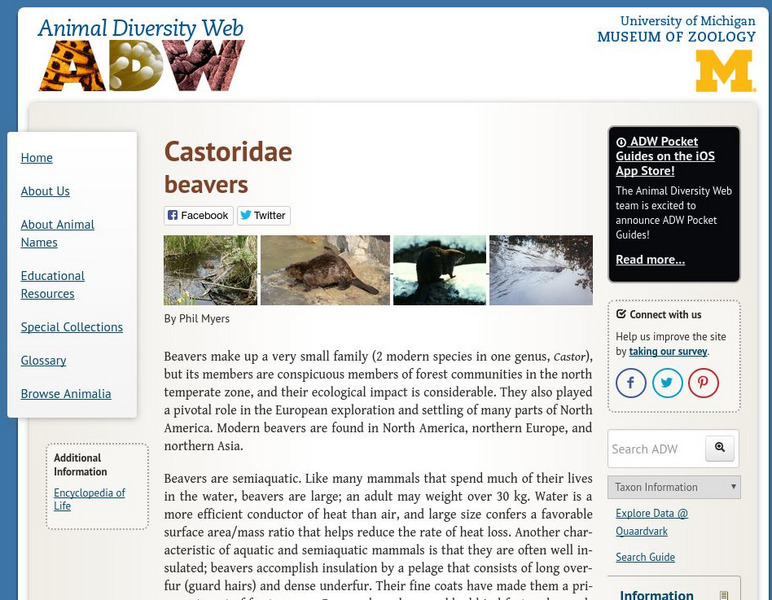
Animal Diversity Web: Beavers
A good overview of the beaver's characteristics, physical features and how it lives. Included are many good photos and detailed classification information.
PBS
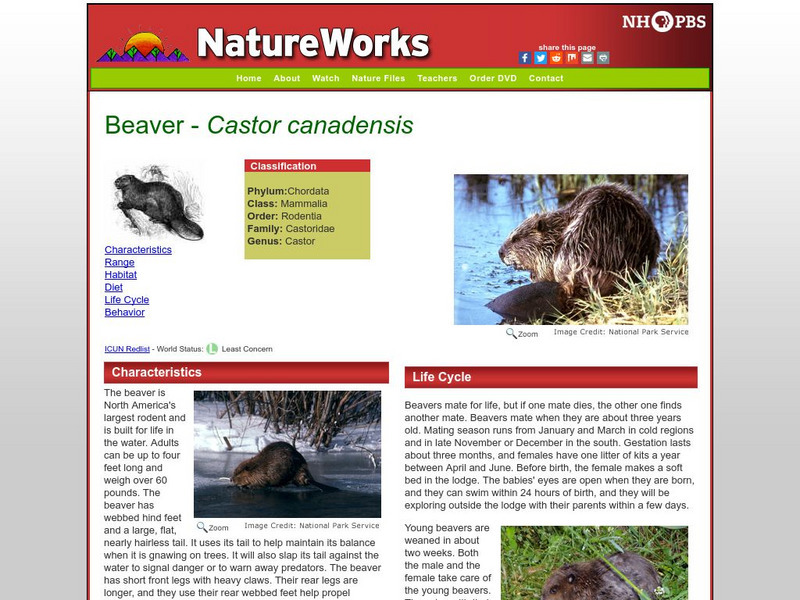
Nh Pbs: Nature Works: Beaver
Come and check out this site about beavers. It features information on the characteristics, range, habitat, reproduction, range, food and more of this fascinating rodent.
PBS
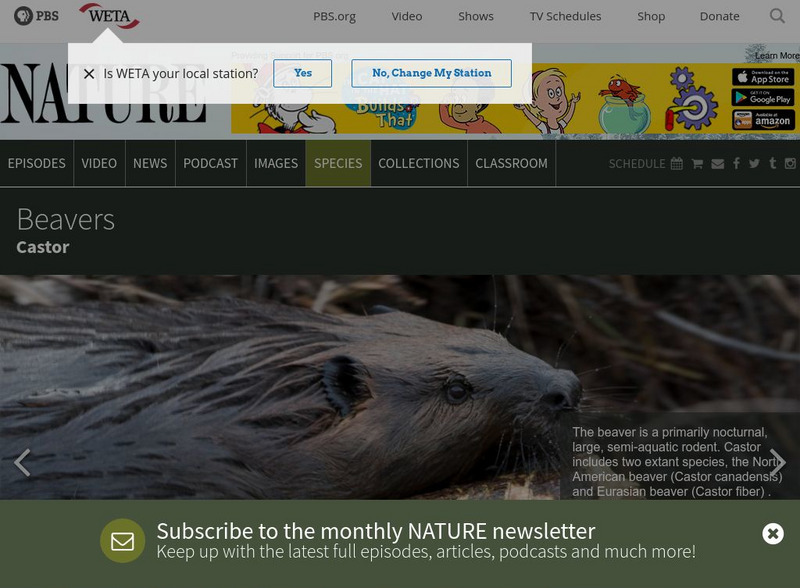
Pbs Nature: Beavers
Can you name the largest rodent that lives in North America? The beaver happens to be the correct answer. Explore this brief but interesting resource to learn where beavers live, what they eat and how they socialize.
Other
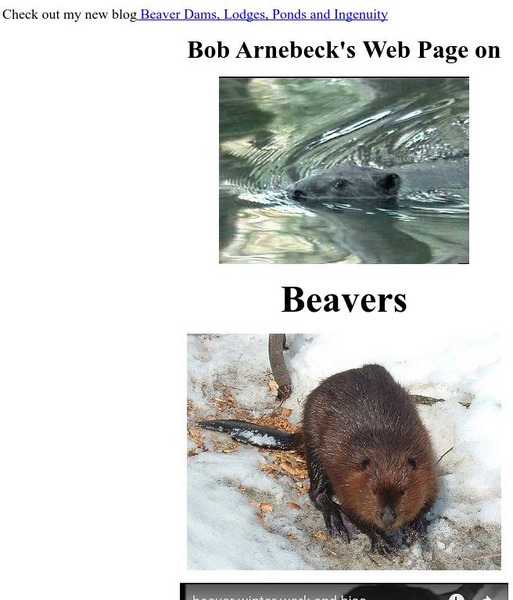
Bob Arnebeck's Web Page on Beavers
This colorful and comprehensive contains a wealth of beaver information and pictures. A number of links are provided to beaver related topics ranging from behavior behavior to beaver lore and stories.

University of Massachusetts
Beavers in Massachusetts
Physical characteristics, distribution, food, life cycle, and dam and lodge building are the topics featured in this effective beaver site.
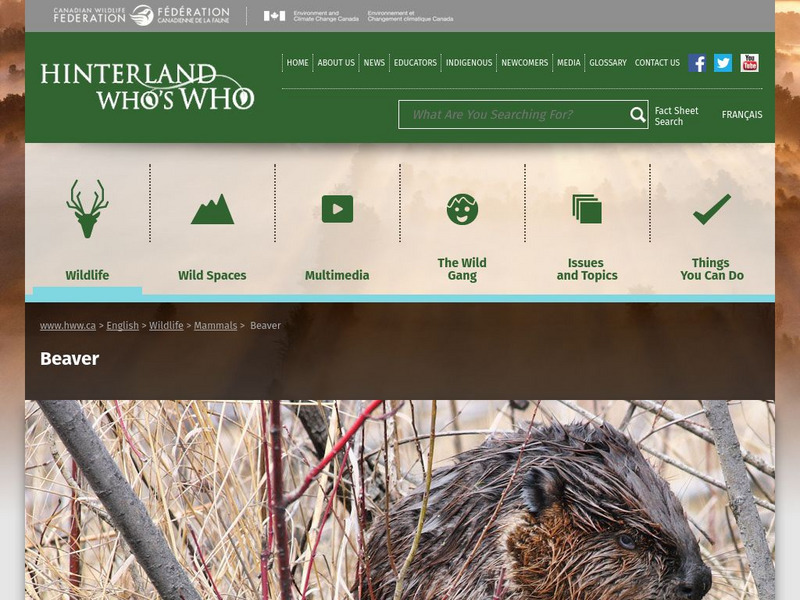
Canadian Wildlife Federation
Hinterland Who's Who: Beaver
Canadian Wildlife site features the beaver. Highlights its habitats and habits, range, feeding and breeding characteristics.
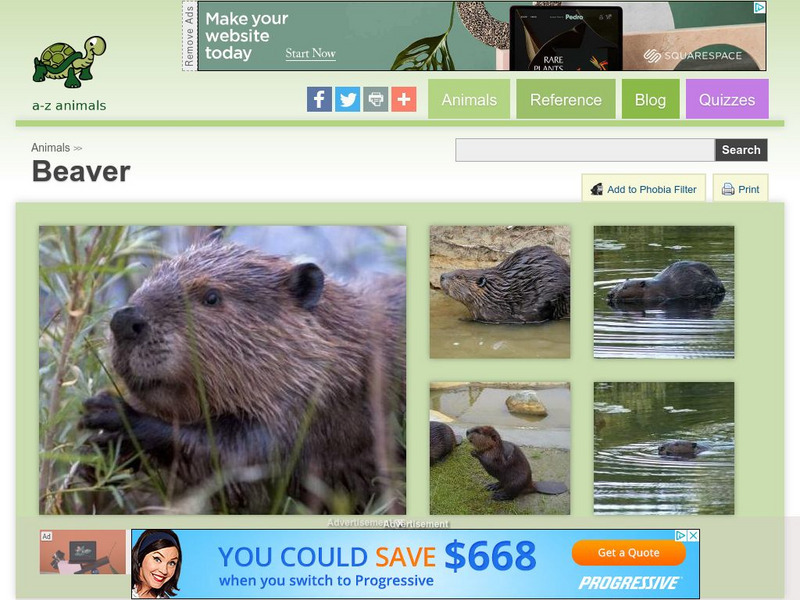
A-Z Animals
A Z Animals: Animal Facts: Beaver (Castor Canadensis)
Explore the world of the Beaver and discover information on the physical characteristics, habitat, and behaviour of this nocturnal rodent. Includes images and statistics.
Royal Canadian Geographical Society
Canadian Geographic: Animal Facts: Beaver
Learn fast facts, the physiology, habitats, behaviors and range of the beaver.

Missouri Botanical Garden
Missouri Botanical Garden: Eurasian Beaver
Here you can learn all about the Eurasian beaver, a large European rodent that lives in the taiga biome. Content includes information on this animal's appearance, diet, behavior, and more.
Text Project
Text Project: Fyi for Kids: Vol. 3, Issue 10: Beavers and the Environment [Pdf]
Read this magazine article to learn how beavers both help and hurt the environment they live it.
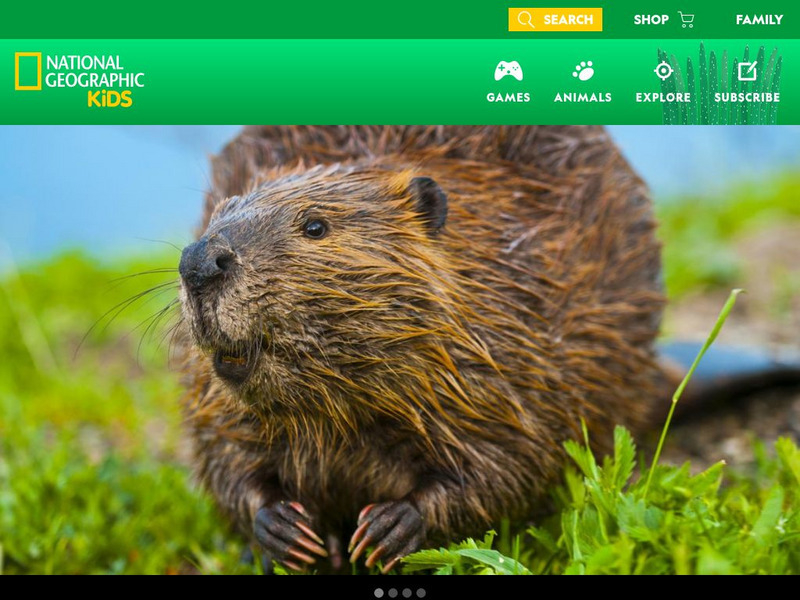
National Geographic Kids
National Geographic Kids: Animals: Beavers
Click-through facts-and-photo file about beaver characteristics, diet, and habitat. Includes a map of the countries that pinpoint its range and a video that shows these large rodents in their habitat.
Other popular searches
- Beavers Dams
- Ecology & Beavers
- Beavers and Turtles
- Beavers Habitats
- Beavers Lessons
- Beavers Build Dams
- Building Beavers
- Beavers Native Americans
- Beavers in South Carolina
- Indians Beavers