Hi, what do you want to do?






Biology in Motion
Organize-It
Many pupils struggle to categorize and organize related content. Multiple quizzes on a variety of topics offer practice for these specific skills. Scholars move items around until they think each is placed in the proper position....
Ducksters
Ducksters: Biology for Kids: Carbohydrates
Kids learn about the carbohydrates in the science of biology. These organic molecules make up starches and sugars which provide energy for plants and animals.
University of Arizona
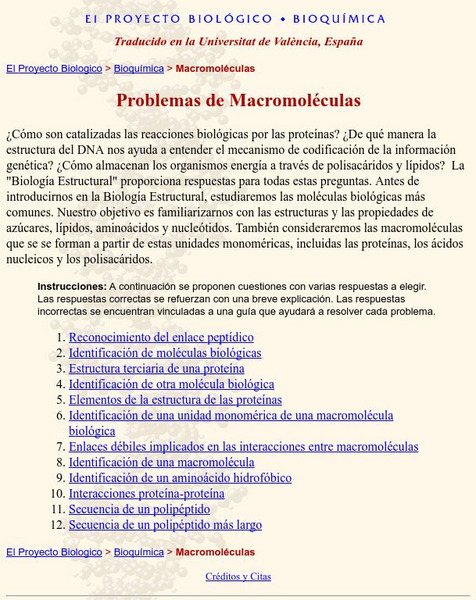
University of Arizona: Problemas De Macromoleculas
This unit will look at the most common biological molecules. The objective is for you to become familiar with the structures and properties of sugars, lipids, amino acids and nucleotides.

Other
Woodrow Wilson Leadership Program in Biology: Populations to Molecules
A large collection of lesson and labs developed by high school biology teachers. Lesson plans cover the topics of Drosophila, population genetics, gene, molecular genetics, chromosomes, genetic disease, genetic counseling, and bioethics....
Ducksters
Ducksters: Biology for Kids: Dna and Genes
On this site, students learn about DNA and genes in the science of biology including the deoxyribonucleic acid molecule, nucleotides, codons, and interesting facts.
Ducksters
Ducksters: Biology for Kids: Lipids and Fats
Investigate the organic molecules lipids which include fats, steroids, and waxes including saturated and unsaturated fats as well as interesting facts on this site.
University of Arizona
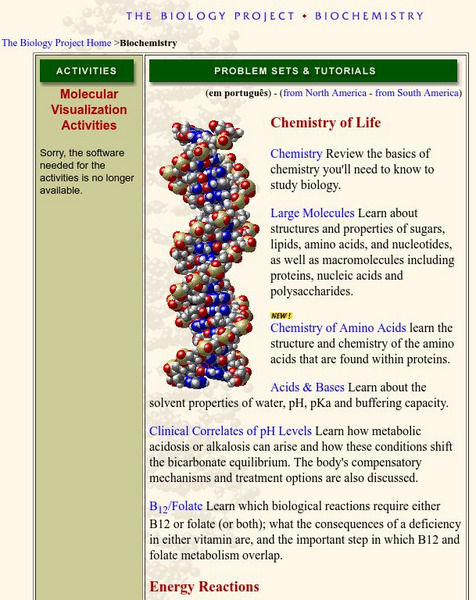
University of Arizona: Biochemistry
Problem sets, tutorials, and activities related to biochemistry.
Nobel Media AB
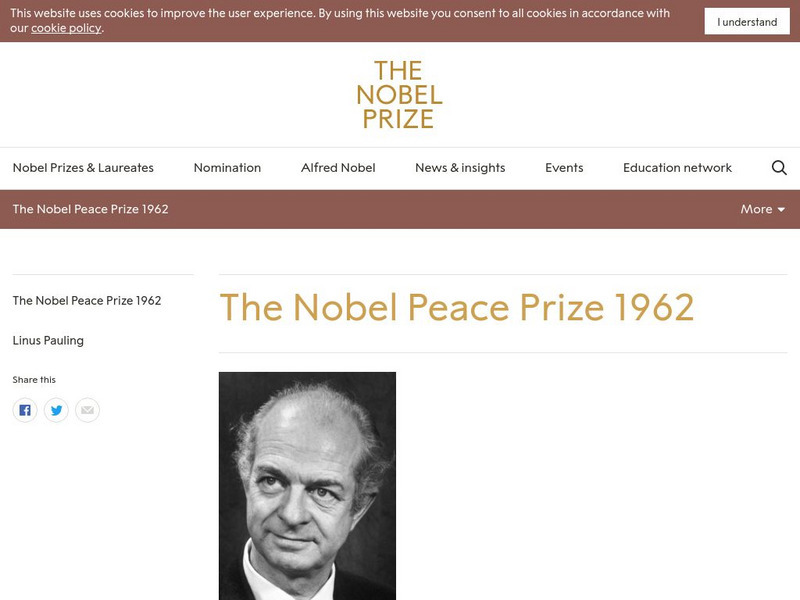
The Nobel Prize: The Nobel Peace Prize 1962
Read about Linus Carl Pauling, the winner of the 1962 Nobel Peace Prize. This website is organized into the following sections: "Presentation Speech," "Biography," "Nobel Lecture," "Other Resources," and "The Nobel Chemistry Prize 1954."