Hi, what do you want to do?





TeachEngineering
Teach Engineering: Designing Medical Devices for the Ear
Students are introduced to biomedical engineering and the engineering design process through a short lecture and an activity in which they design their own medical devices for retrieving foreign bodies from the ear canal. They learn...
TeachEngineering
Teach Engineering: The Artificial Bicep
Students learn more about how muscles work and how biomedical engineers can help keep the muscular system healthy. Following the engineering design process, they create their own biomedical device to aid in the recovery of a strained...
TeachEngineering
Teach Engineering: Design a Bicycle Helmet
The goal of the activities is for students to understand the basics of engineering associated with safety products. Using a bicycle helmet helps to protect the brain and neck during a crash. In order to do this effectively, helmets must...
TeachEngineering
Teach Engineering: Living With Your Liver
Students learn the function of the liver and how biomedical engineers can use liver regeneration to help people. Students test the effects of chemical toxins on a beef liver and how salt changes the liver's ability to break down these...
TeachEngineering
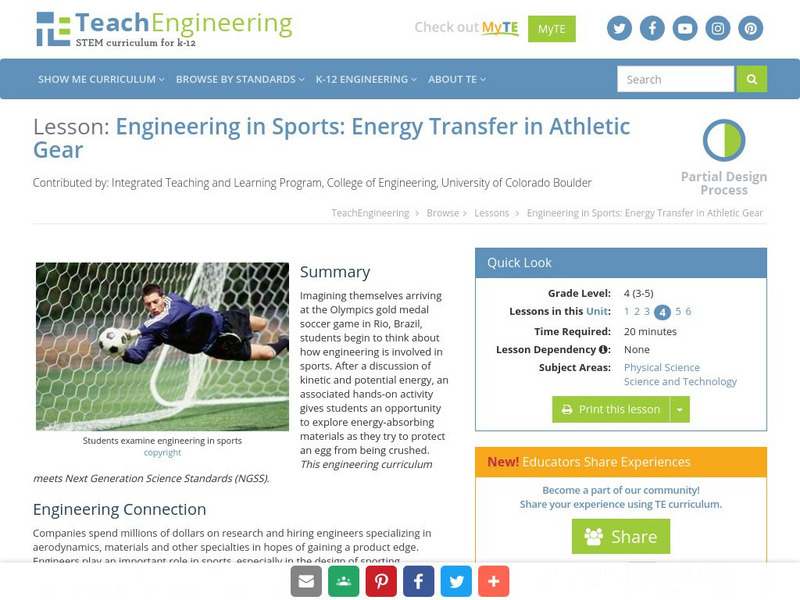
Teach Engineering: Engineering in Sports
Imagining themselves arriving at the Olympic gold medal soccer game in Beijing, learners begin to think about how engineering is involved in sports. After a discussion of kinetic and potential energy, an associated hands-on activity...
TeachEngineering
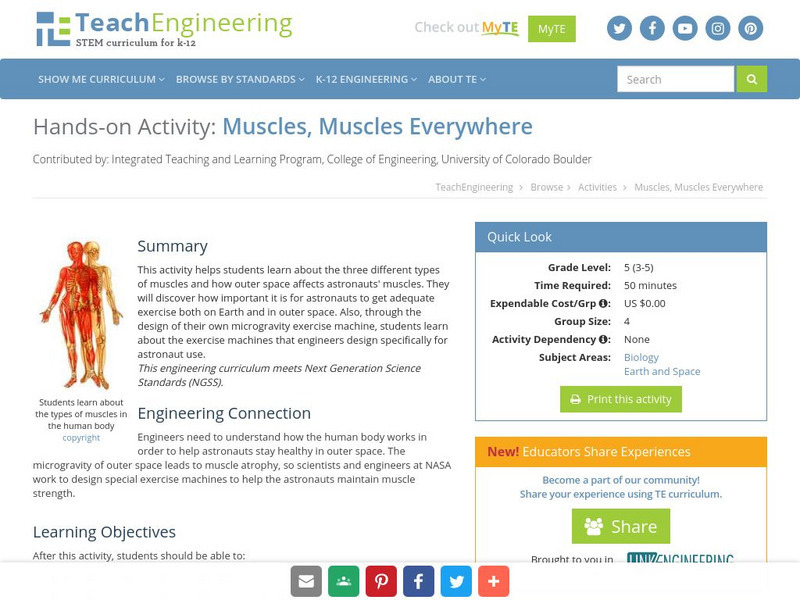
Teach Engineering: Muscles, Muscles Everywhere
This activity helps students learn about the three different types of muscles and how outer space affects astronauts' muscles. They will discover how important it is for astronauts to get adequate exercise both on Earth and in outer...
TeachEngineering
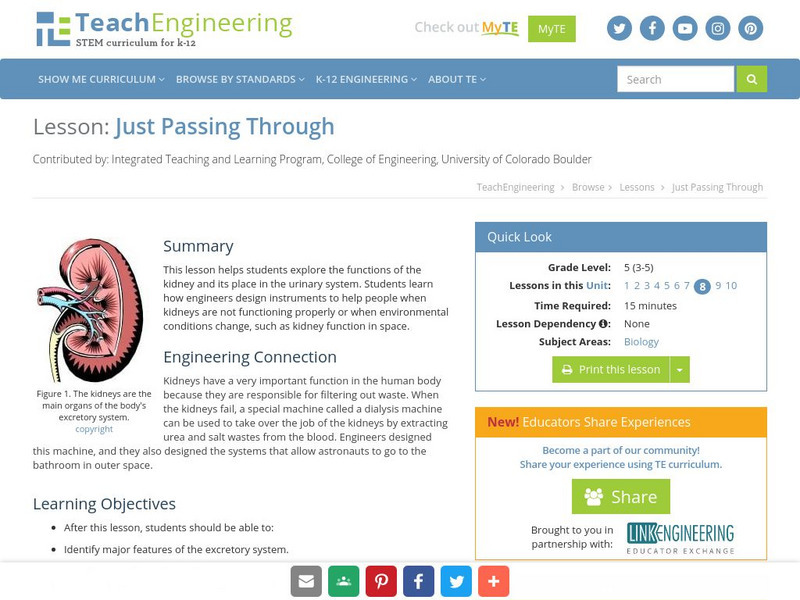
Teach Engineering: Just Passing Through
This lesson helps students explore the functions of the kidney and its place in the urinary system. Students learn how engineers design instruments to help people when kidneys are not functioning properly or when environmental conditions...
TeachEngineering
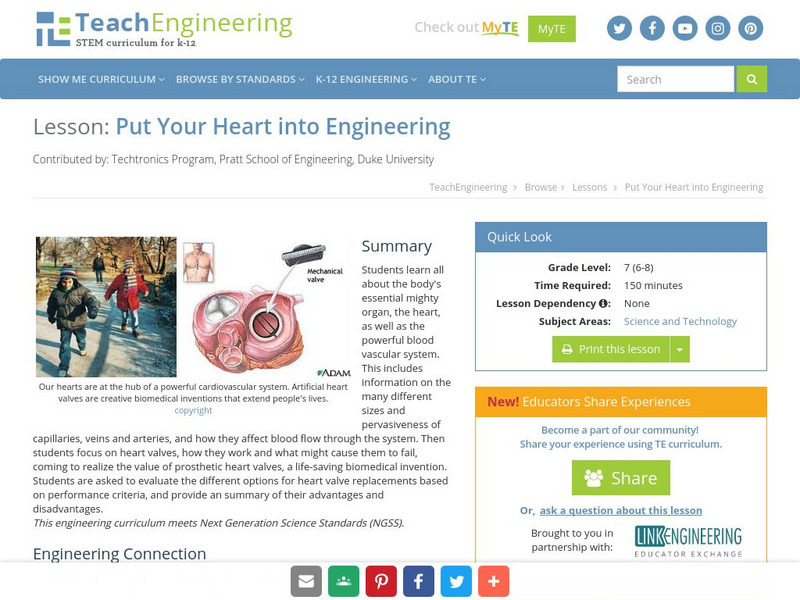
Teach Engineering: Put Your Heart Into Engineering
This activity contains background about the blood vascular system and the heart. Also, the different sizes of capillaries, veins, and arteries, and how they affect blood flow through the system. We will then proceed to talk about the...
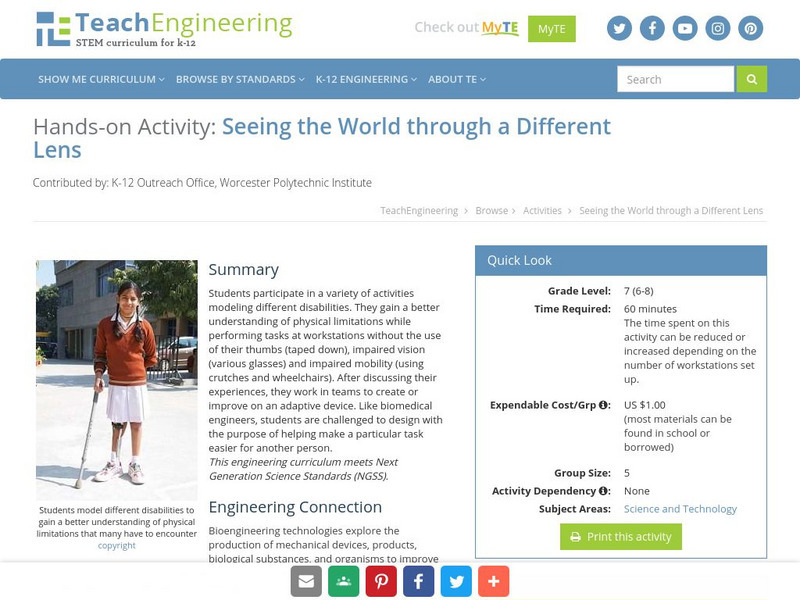
TeachEngineering
Teach Engineering: Seeing the World Through a Different Lens
Students will participate in a variety of activities modeling different disabilities. After discussing their experiences, students work in teams to devise or improve on an adaptive device.
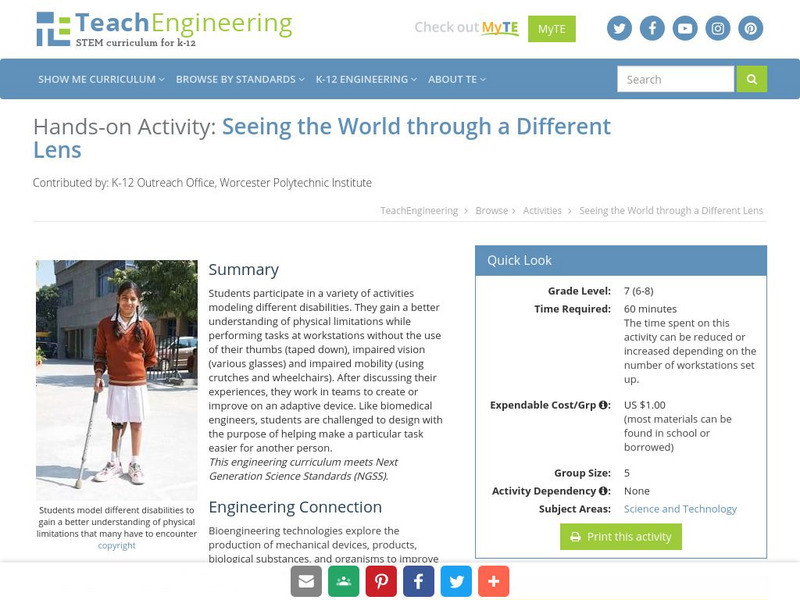
TeachEngineering
Teach Engineering: Seeing the World Through a Different Lens
Students will participate in a variety of activities modeling different disabilities. After discussing their experiences, students work in teams to devise or improve on an adaptive device.
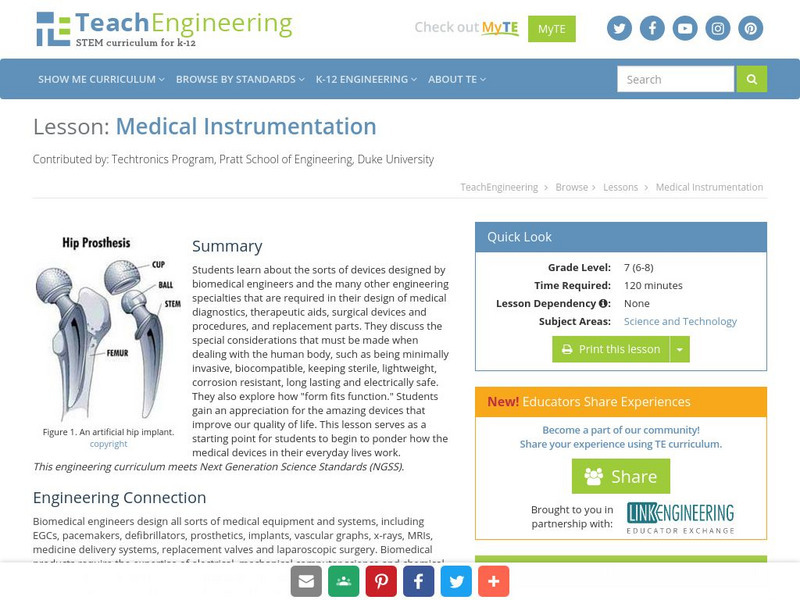
TeachEngineering
Teach Engineering: Medical Instrumentation
Students will discuss the special considerations that must be made when dealing with the human body, and will gain an appreciation for the amazing devices that have improved our quality of life. They will also explore how 'Form Fits...
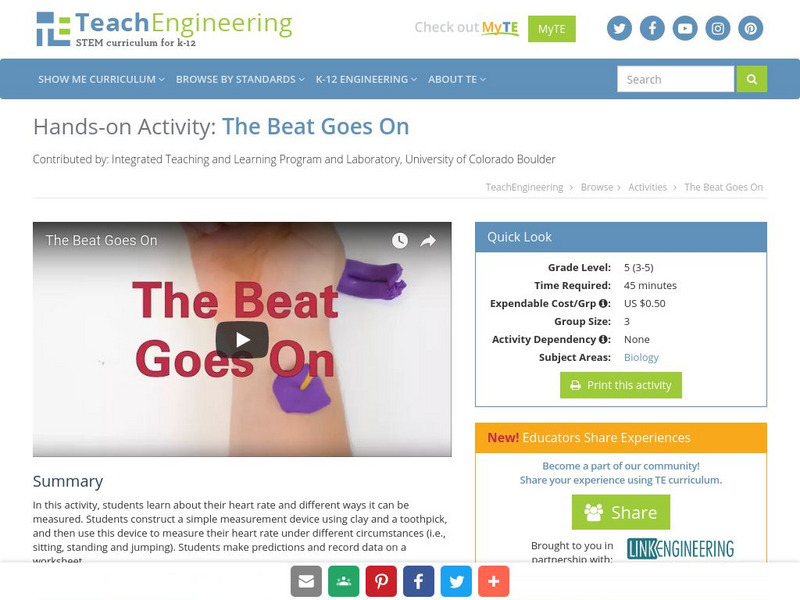
TeachEngineering
Teach Engineering: The Beat Goes On
In this activity, students learn about their heart rate and different ways it can be measured. Students construct a simple measurement device using clay and a toothpick, and then use this device to measure their heart rate under...
TeachEngineering
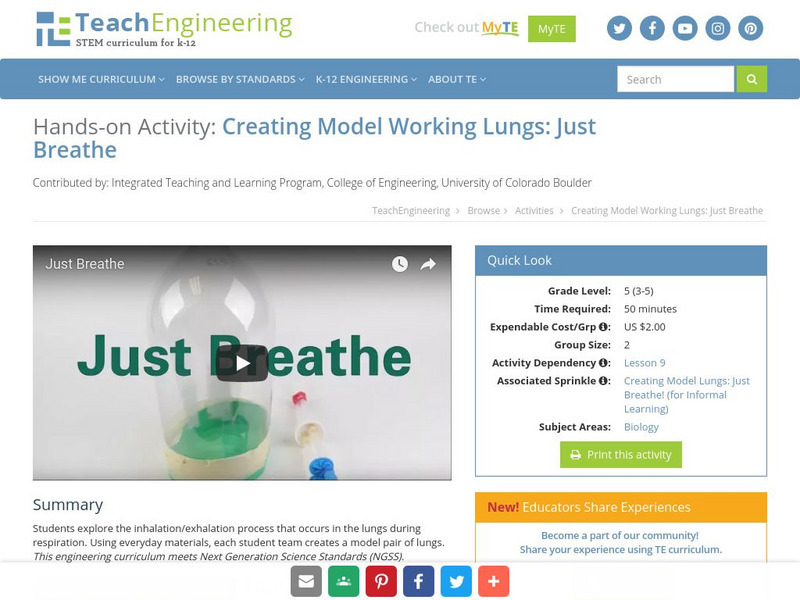
Teach Engineering: Just Breathe
Students explore the inhalation/exhalation process that occurs in the lungs during respiration. Using everyday materials, they create a model pair of lungs.
TeachEngineering
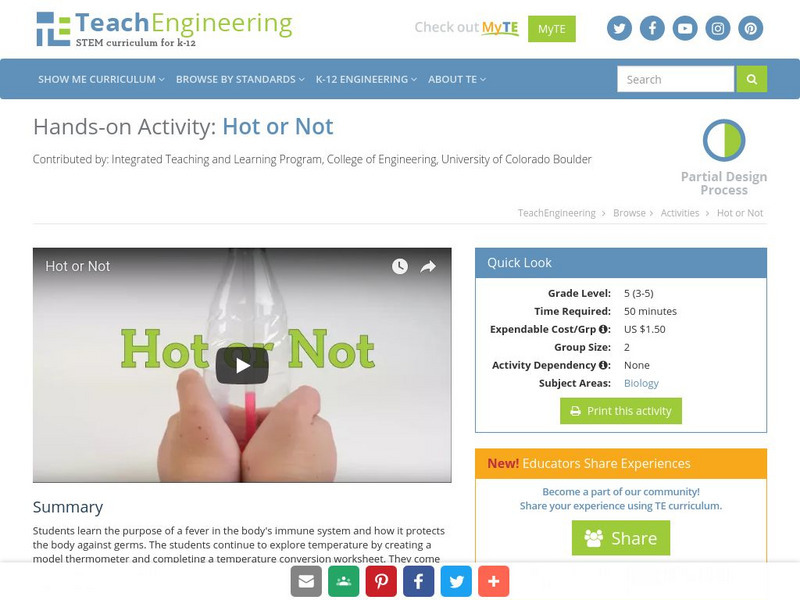
Teach Engineering: Hot or Not
This activity explains what a fever is and how the immune system uses it to try and protect the body against germs. The students then explore temperature further by creating a model of a thermometer and completing a temperature...
TeachEngineering
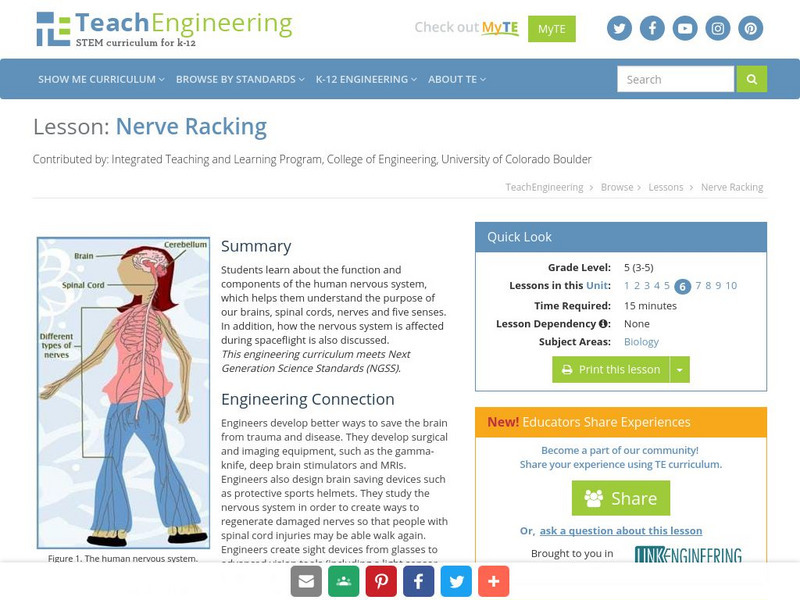
Teach Engineering: Nerve Racking
This lesson describes the function and components of the human nervous system. It helps young scholars understand the purpose of our brain, spinal cord, nerves and the five senses. How the nervous system is affected during spaceflight is...

Cosmo Learning
Cosmo Learning: Introduction to Bioengineering
A collection of video lectures from a course introducing students to the bioengineering field. Webpage includes sixteen videos from professors at Massachusetts Institute of Technology. Lectures vary in length and include an introduction...