Hi, what do you want to do?





TeachEngineering
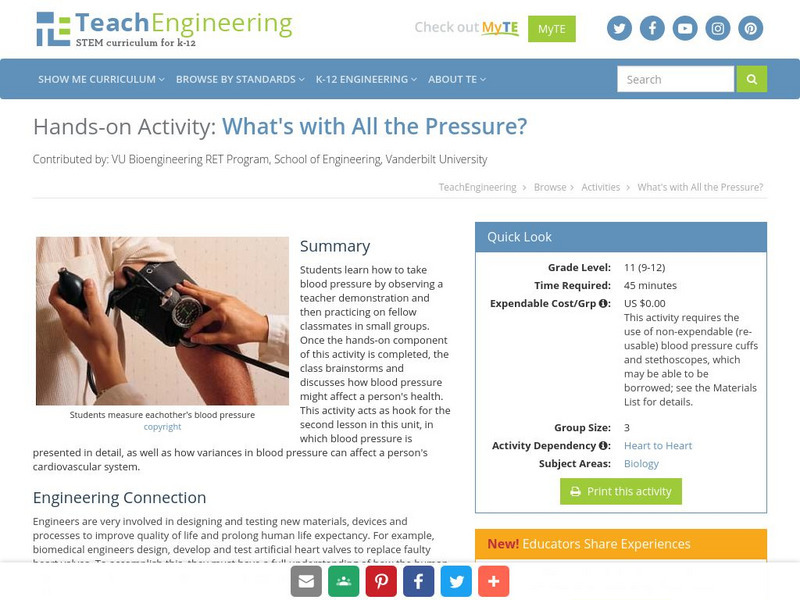
Teach Engineering: What's With All the Pressure?
Students learn how to take blood pressure by observing a teacher demonstration and then practicing on fellow classmates in small groups. Once the hands-on component of this activity is completed, the class brainstorms and discusses how...
TeachEngineering
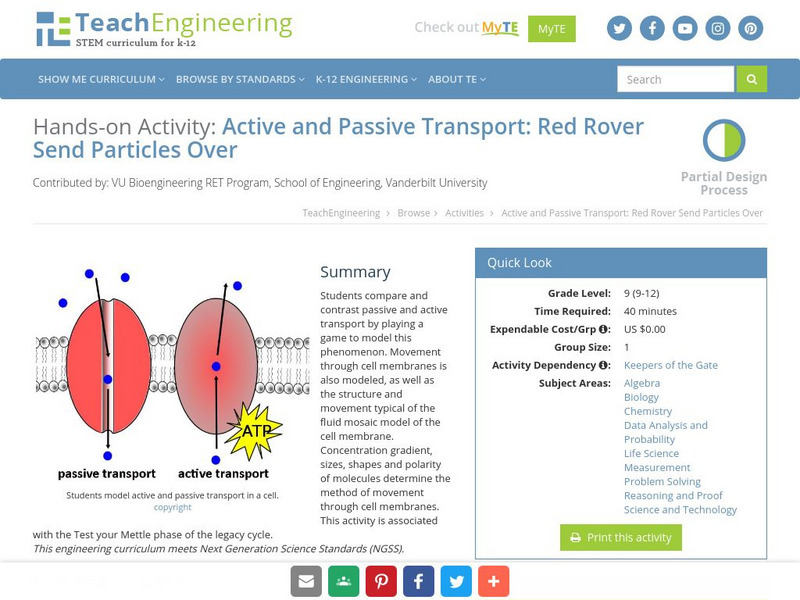
Teach Engineering: Active and Passive Transport: Red Rover Send Particles Over
Students compare and contrast passive and active transport by playing a game to model this phenomenon. Movement through cell membranes is also modeled, as well as the structure and movement typical of the fluid mosaic model of the cell...
TeachEngineering
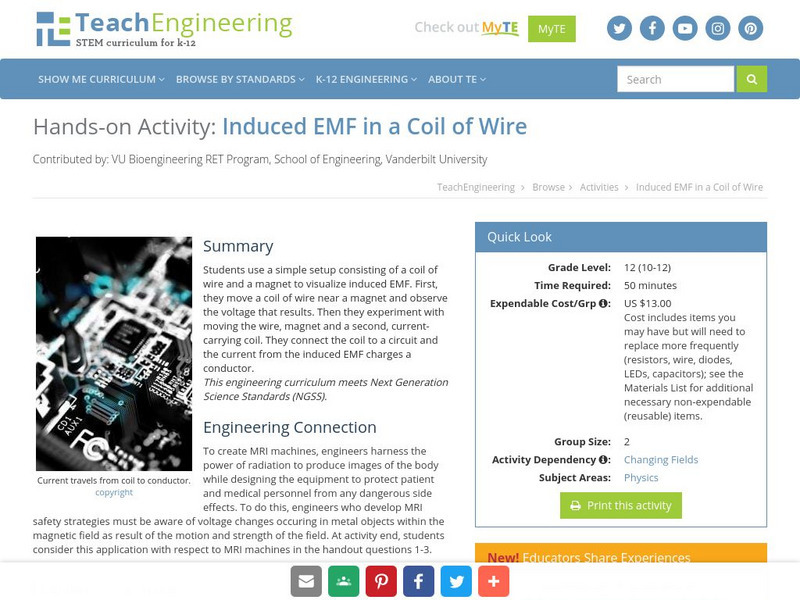
Teach Engineering: Induced Emf in a Coil of Wire
Students use a simple set up consisting of a coil of wire and a magnet to visualize induced EMF. First, students move a coil of wire near a magnet and observe the voltage that results. They then experiment with moving the wire, magnet,...
TeachEngineering
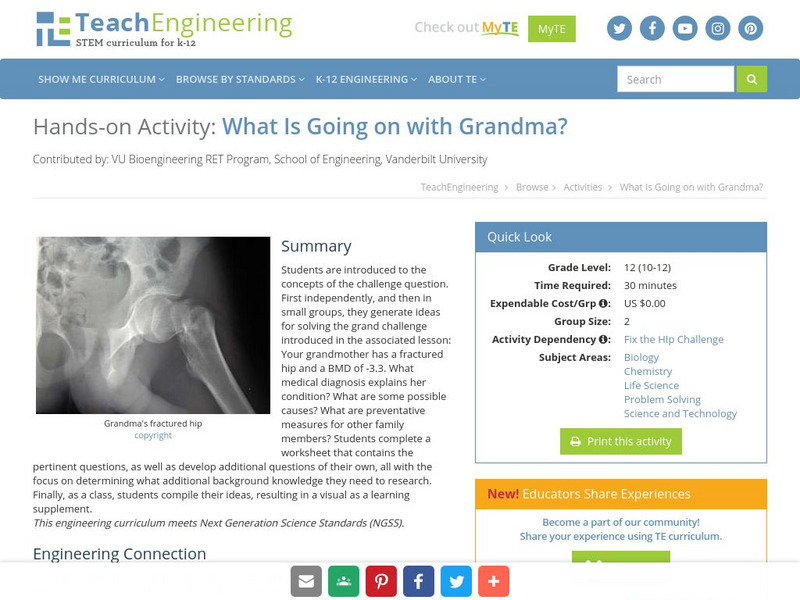
Teach Engineering: What Is Going on With Grandma?
Students are introduced to the concepts of the challenge question. First independently, and then in small groups, they generate ideas for solving the grand challenge introduced in the associated lesson: Your grandmother has a fractured...
TeachEngineering
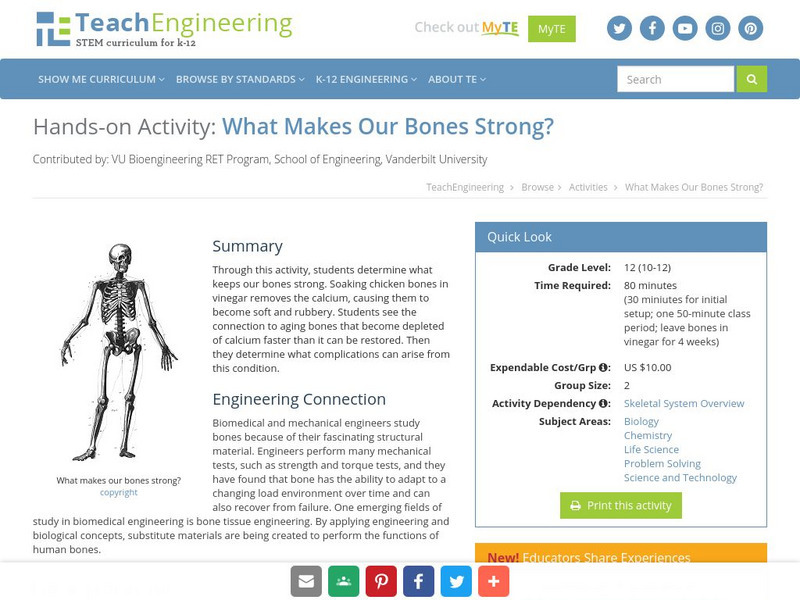
Teach Engineering: What Makes Our Bones Strong?
Students will use this activity to determine what keeps our bones strong. Soaking the bones in vinegar will remove the calcium from the bones causing them to become soft and rubbery. Students will find that when we age, calcium is...
TeachEngineering
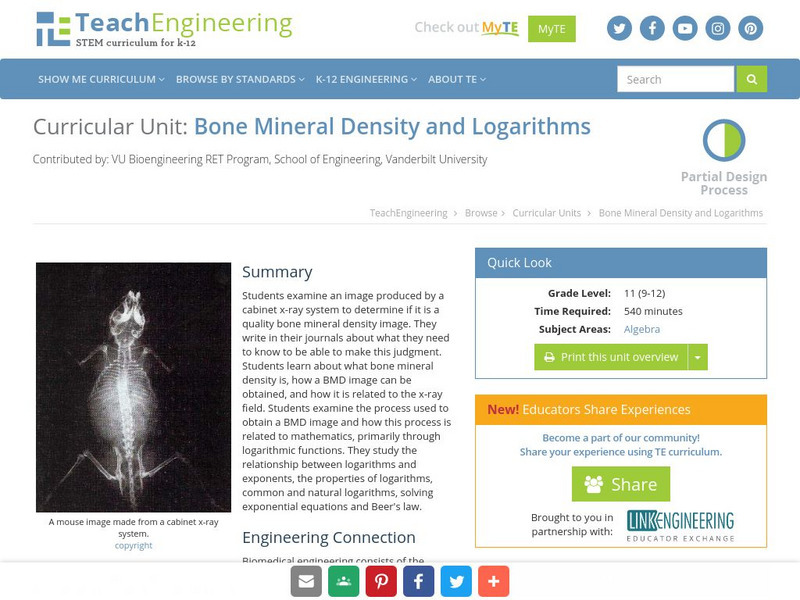
Teach Engineering: Bone Mineral Density and Logarithms
Students examine an image produced by a cabinet x-ray system to determine if it is a quality bone mineral density image. Students write in their journals about what they need to know to be able to make this judgment. Students learn about...

TeachEngineering
Teach Engineering: Biosensors for Food Safety
How can you tell if harmful bacteria are in your food or water that might make you sick? What you eat or drink can be contaminated with bacteria, viruses, parasites and toxins pathogens that can be harmful or even fatal. Students learn...
TeachEngineering
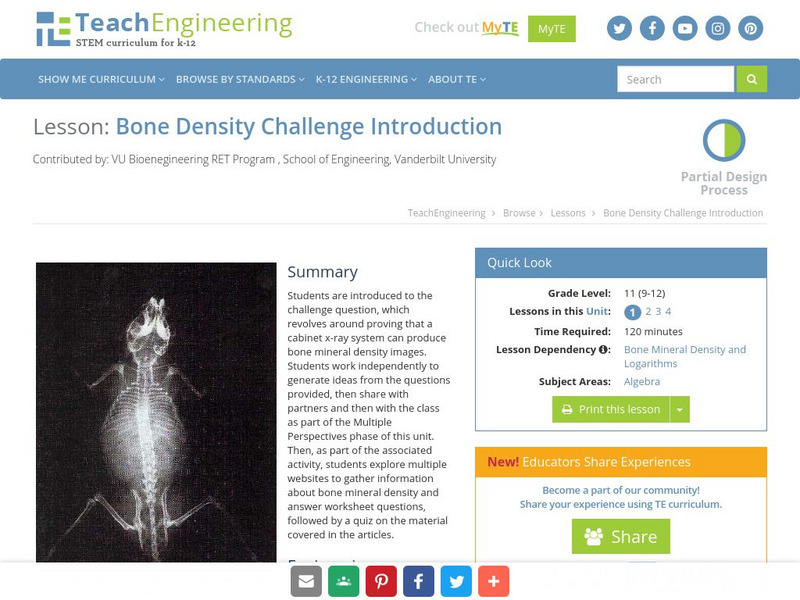
Teach Engineering: Bone Density Challenge Introduction
Learners are introduced to the challenge question, which revolves around proving that a cabinet X-ray system can produce bone mineral density images. Students work independently to generate ideas from the questions provided then share...
TeachEngineering
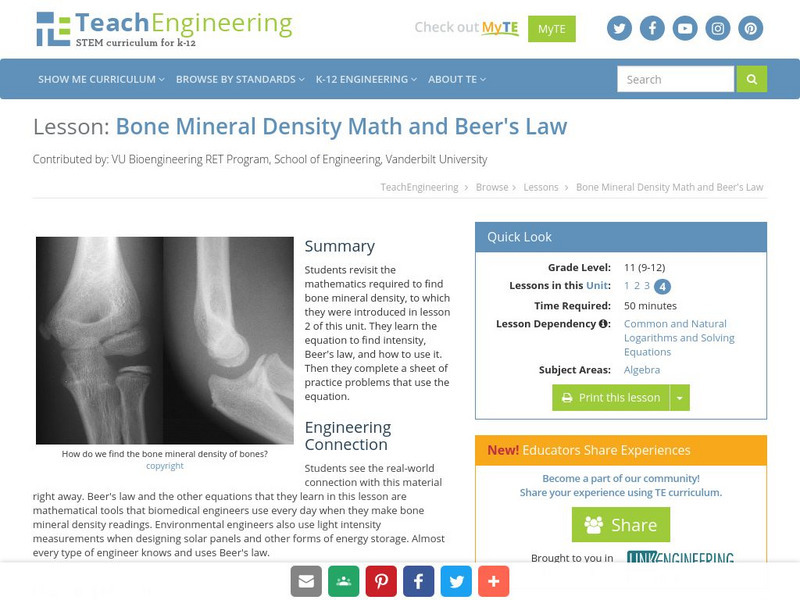
Teach Engineering: Bone Mineral Density Math and Beer's Law
In this lesson students revisit the mathematics required to find bone mineral density, to which they were introduced in Lesson 2. They will learn the equation to find intensity and how to use it. There is a sheet of practice problems...
TeachEngineering
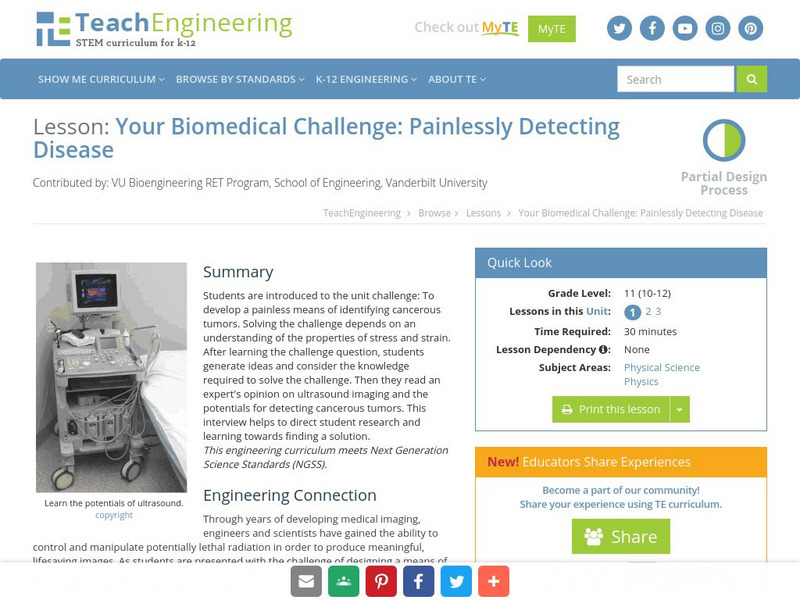
Teach Engineering: Detecting Breast Cancer
This lesson introduces students to their task of developing a painless means of identifying cancerous tumors. Solving the challenge will depend on an understanding of the properties of stress and strain. After being introduced to the...
TeachEngineering
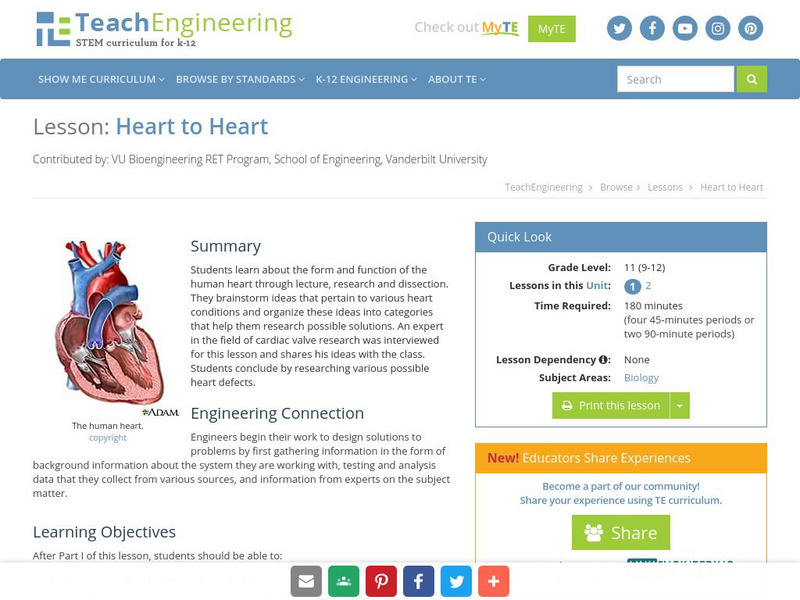
Teach Engineering: Heart to Heart
Young scholars learn about the form and function of the human heart through lecture, research and dissection. They brainstorm ideas that pertain to various heart conditions and organize these ideas into categories that help them research...
TeachEngineering
Teach Engineering: It's Tiggerific!
In Lesson 3, as part of the Research and Revise step, young scholars investigate potential energy held within springs (elastic potential energy). Class begins with a video of either spring shoes or bungee jumping. Students then move on...
TeachEngineering
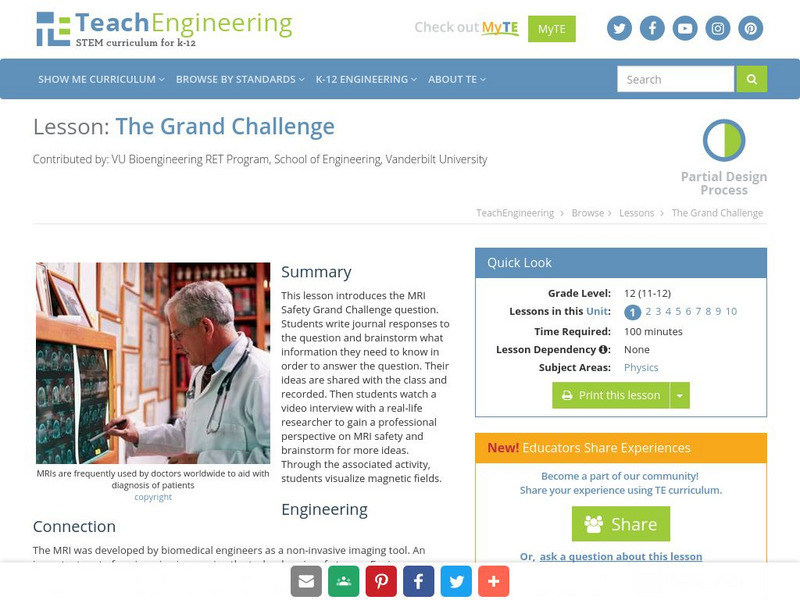
Teach Engineering: The Grand Challenge
This activity introduces the MRI Safety Grand Challenge question. Students are asked to write journal responses to the question and brainstorm what information they will need to answer the question. The ideas are shared with the class...
TeachEngineering
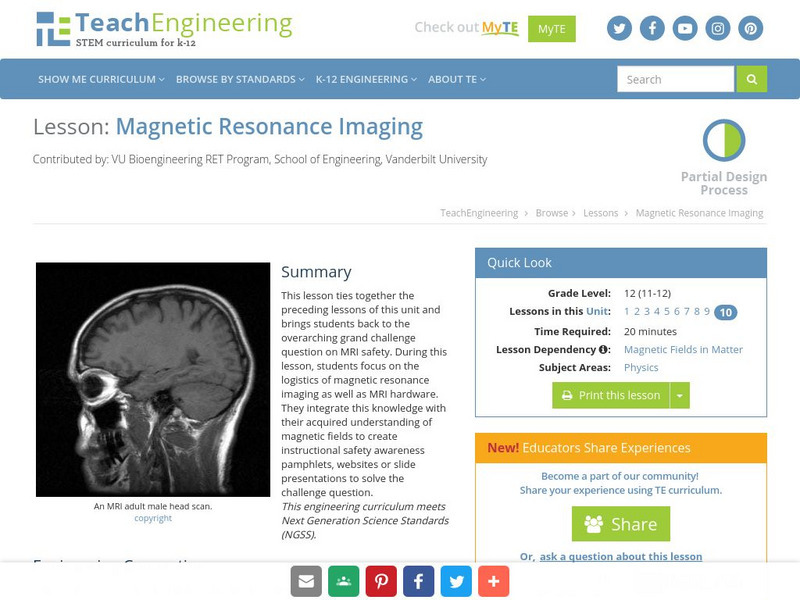
Teach Engineering: Magnetic Resonance Imaging
This lesson ties the preceding lessons together and brings learners back to the grand challenge question on MRI safety. During this lesson, students focus on the logistics of magnetic resonance imaging as well as the MRI hardware....
TeachEngineering
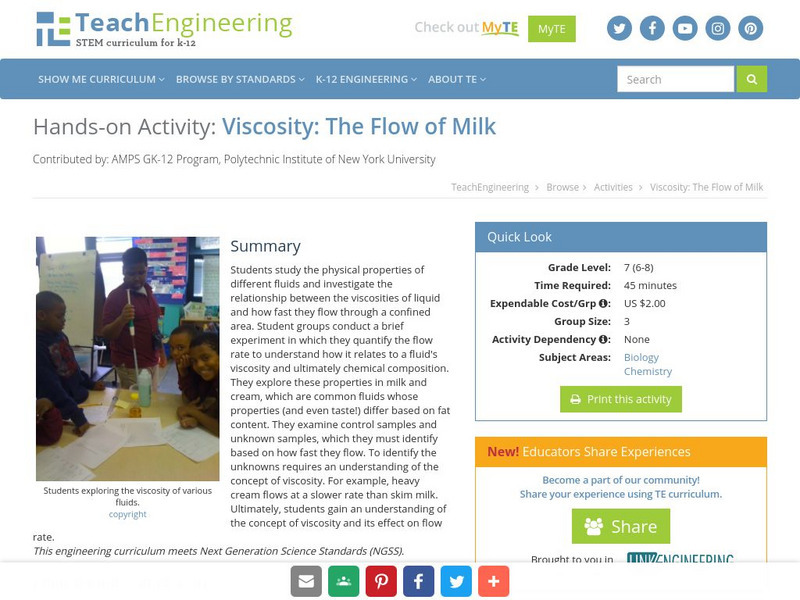
Teach Engineering: Viscosity: The Flow of Milk
Students study the physical properties of different fluids and investigate the relationship between the viscosities of liquid and how fast they flow through a confined area. Student groups conduct a brief experiment in which they...
TeachEngineering
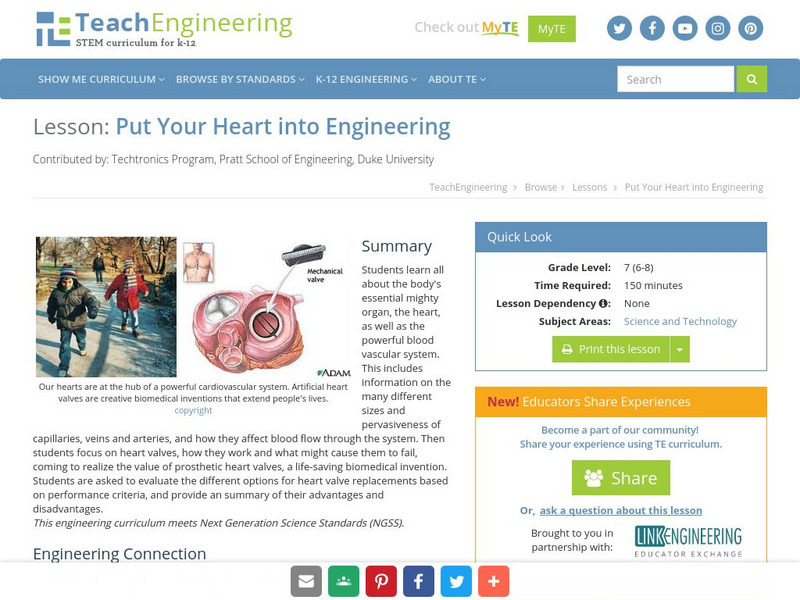
Teach Engineering: Put Your Heart Into Engineering
This lesson contains background about the blood vascular system and the heart. Also, the different sizes of capillaries, veins, and arteries, and how they affect blood flow through the system. We will then proceed to talk about the...
TeachEngineering
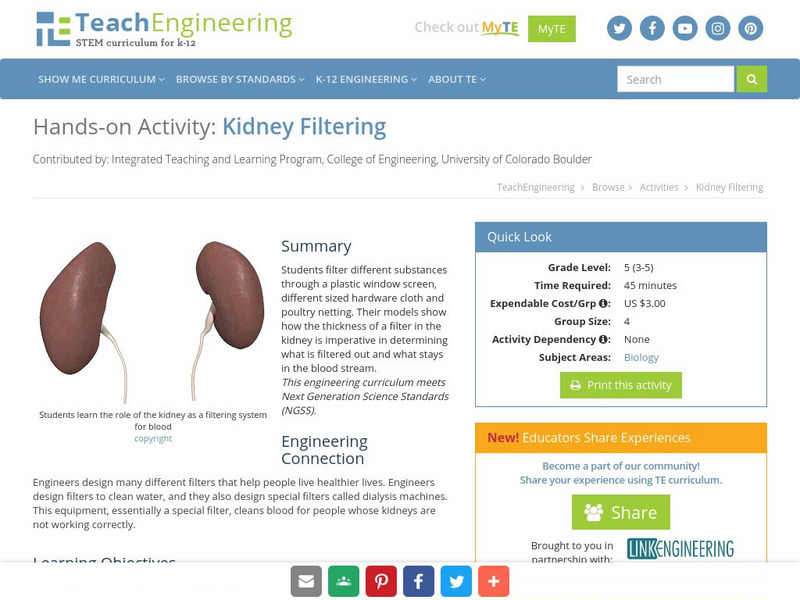
Teach Engineering: Kidney Filtering
In this activity, students filter different substances through a plastic window screen, different sized hardware cloth and poultry netting. Their model shows how the thickness of a filter in the kidney is imperative in deciding what will...
TeachEngineering
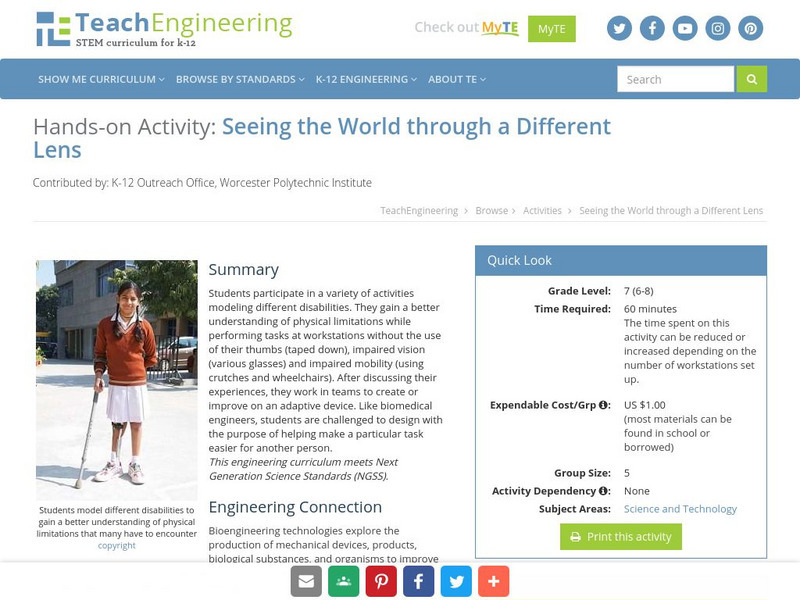
Teach Engineering: Seeing the World Through a Different Lens
Students will participate in a variety of activities modeling different disabilities. After discussing their experiences, students work in teams to devise or improve on an adaptive device.
TeachEngineering
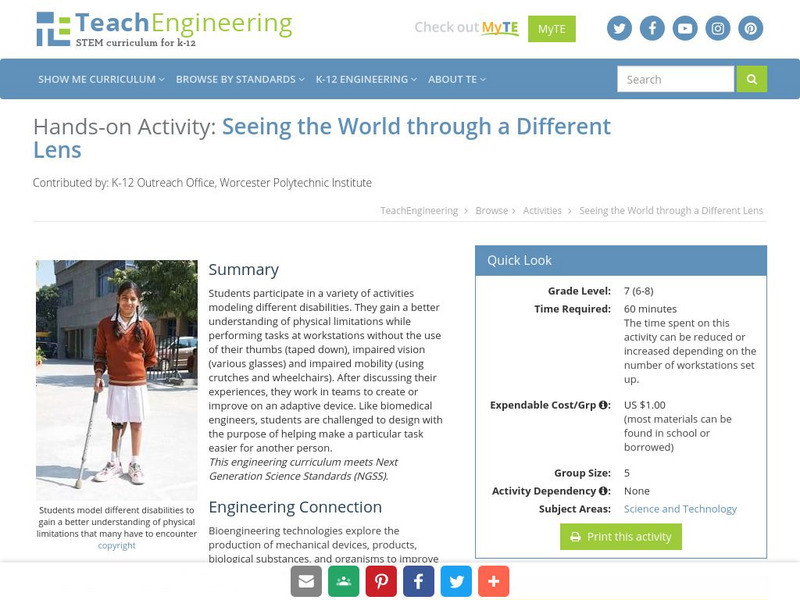
Teach Engineering: Seeing the World Through a Different Lens
Students will participate in a variety of activities modeling different disabilities. After discussing their experiences, students work in teams to devise or improve on an adaptive device.
TeachEngineering
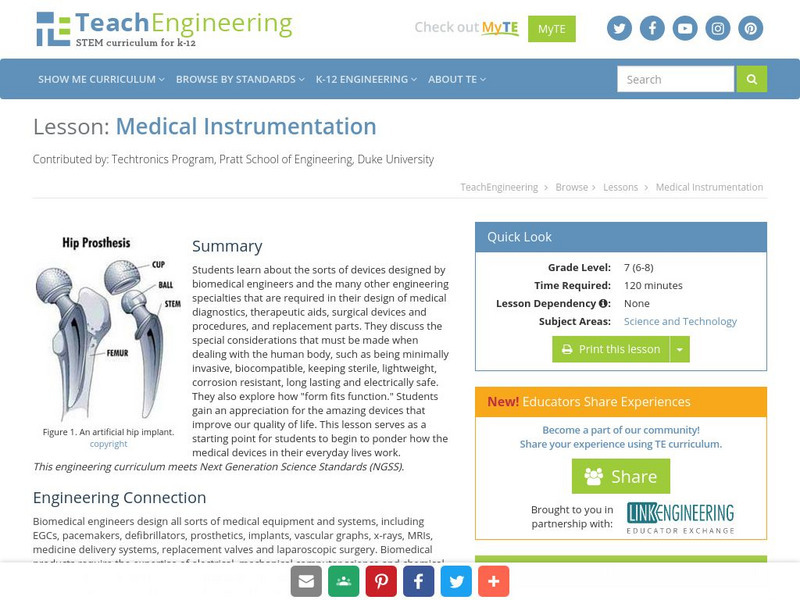
Teach Engineering: Medical Instrumentation
Learners will discuss the special considerations that must be made when dealing with the human body, and will gain an appreciation for the amazing devices that have improved our quality of life. They will also explore how 'Form Fits...
TeachEngineering
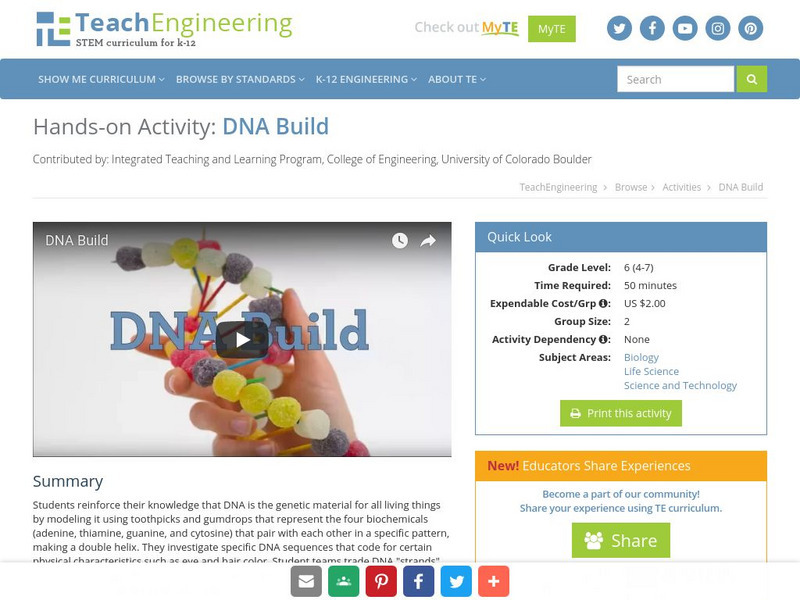
Teach Engineering: Dna Build
Students reinforce their knowledge that DNA is the genetic material for all living things by modeling it using toothpicks and gumdrops that represent the four biochemicals (adenine, thiamine, guanine, and cytosine) that pair with each...
TeachEngineering
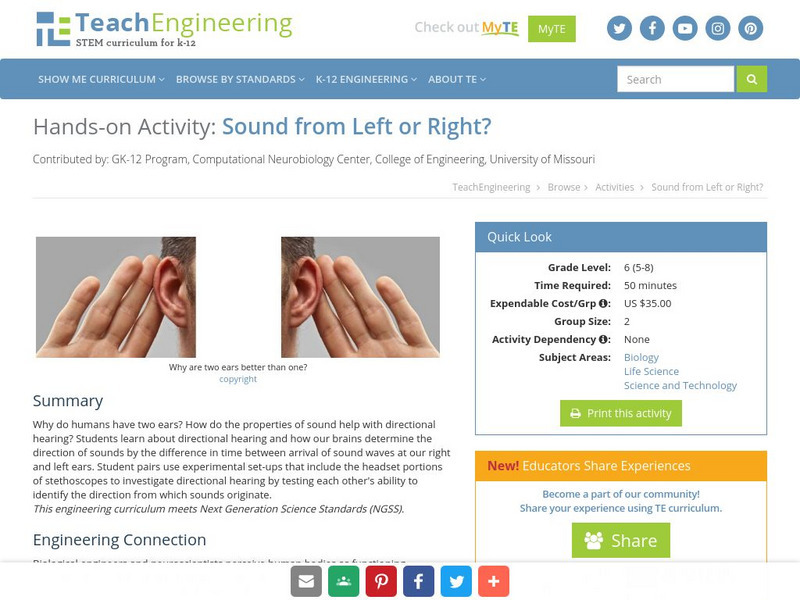
Teach Engineering: Sound From Left or Right?
Why do humans have two ears? How do the properties of sound help with directional hearing? Students learn about directional hearing and how our brains determine the direction of sounds by the difference in time between arrival of sound...
TeachEngineering
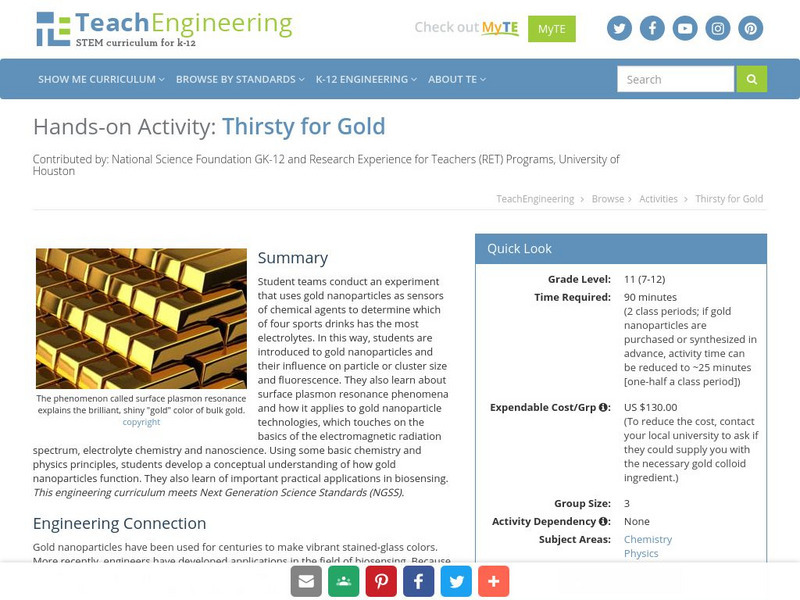
Teach Engineering: Thirsty for Gold
Student teams conduct an experiment that uses gold nanoparticles as sensors of chemical agents to determine which of four sports drinks has the most electrolytes. In this way, students are introduced to gold nanoparticles and their...
TeachEngineering
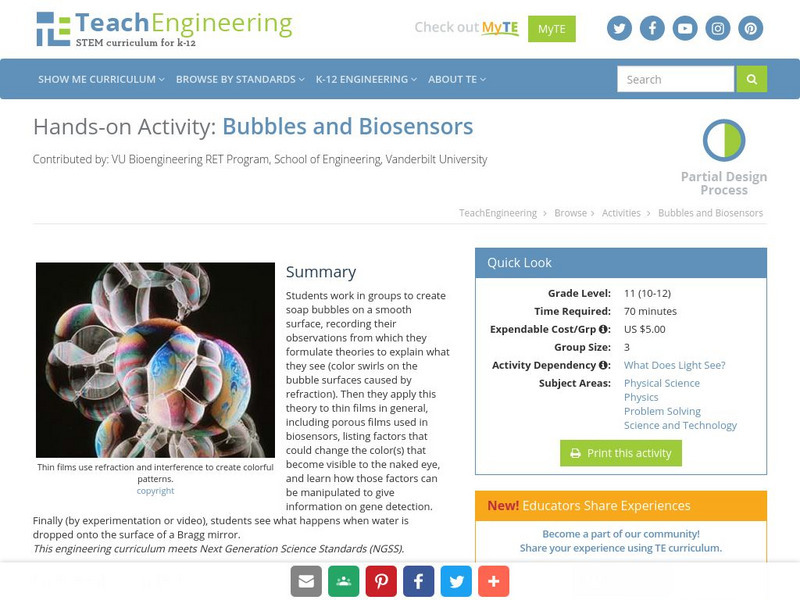
Teach Engineering: Bubbles and Biosensors
Students learn that color swirls on the bubble surfaces are caused by refraction. Then they apply this theory to thin films in general, including porous films used in biosensors, listing factors that could change the color that become...