Hi, what do you want to do?






Curated OER
What Do Bread and Beer Have in Common?
Young scholars listen to an explanation of yeast cells and how they effect bread and beer. They discuss the ways alcohol affects the human body and participate in an indirect observation about cell respiration in yeast-molasses cultures.

Curated OER
TE Activity: Yeast Cells Respire, Too (But Not Like Me and You)
Student observe and quantify the respiration that occurs in yeast-molasses cultures. They complete an effective experiment in order to examine how to think critically about the results.

Curated OER
Newton's Laws: Making Simple Rockets
Students can use rocketry to understand Newton's Three Laws of Motion.

Curated OER
Micro-controller Principles
Learners research micro-controllers and complete this 20 question instructional activity on micro-controller circuits using schematics. This instructional activity is printable and the answers are revealed online.
TeachEngineering
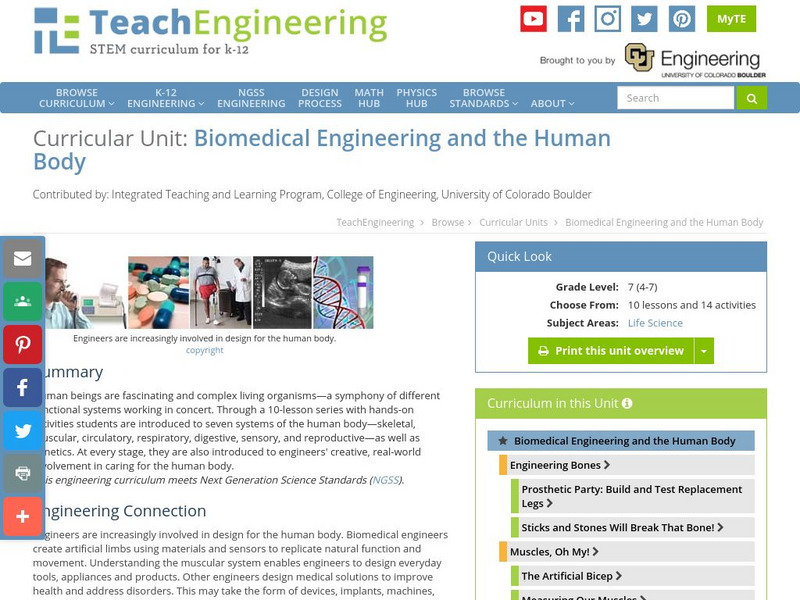
Teach Engineering: Biomedical Engineering and the Human Body
Human beings are fascinating and complex living organisms-a symphony of different functional systems working in concert. Through a 10-lesson series with hands-on activities students are introduced to seven systems of the human...
TeachEngineering
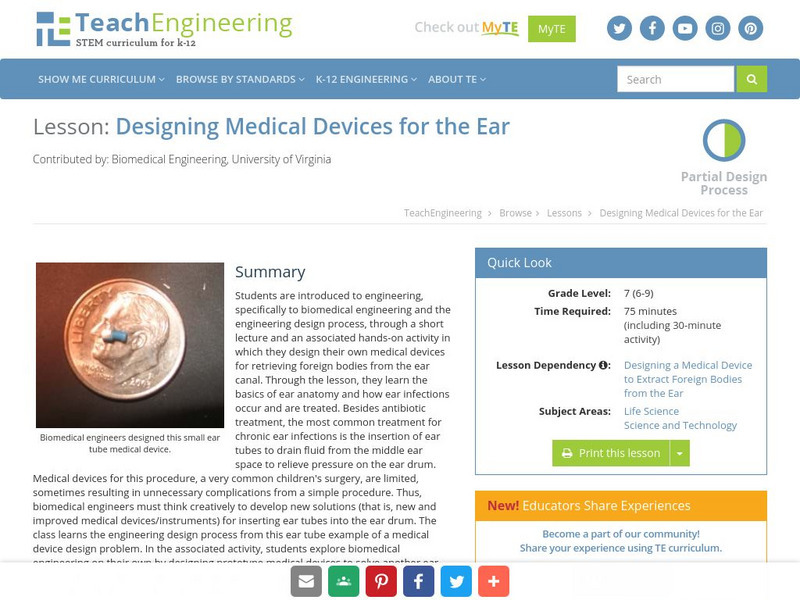
Teach Engineering: Designing Medical Devices for the Ear
Students are introduced to biomedical engineering and the engineering design process through a short lecture and an activity in which they design their own medical devices for retrieving foreign bodies from the ear canal. They learn...
TeachEngineering
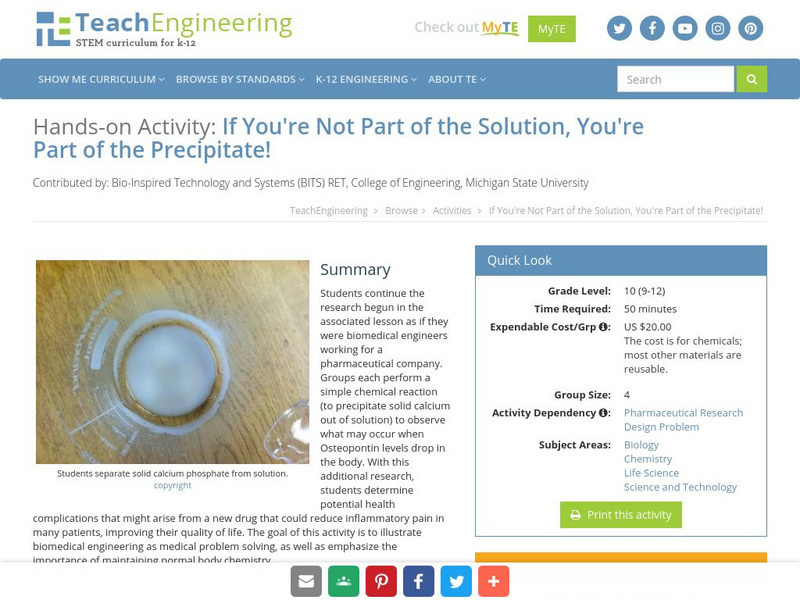
Teach Engineering: If You're Not Part of the Solution!
Students continue the research begun in the associated lesson as if they were biomedical engineers working for a pharmaceutical company. Groups each perform a simple chemical reaction (to precipitate solid calcium out of solution) to...
TeachEngineering
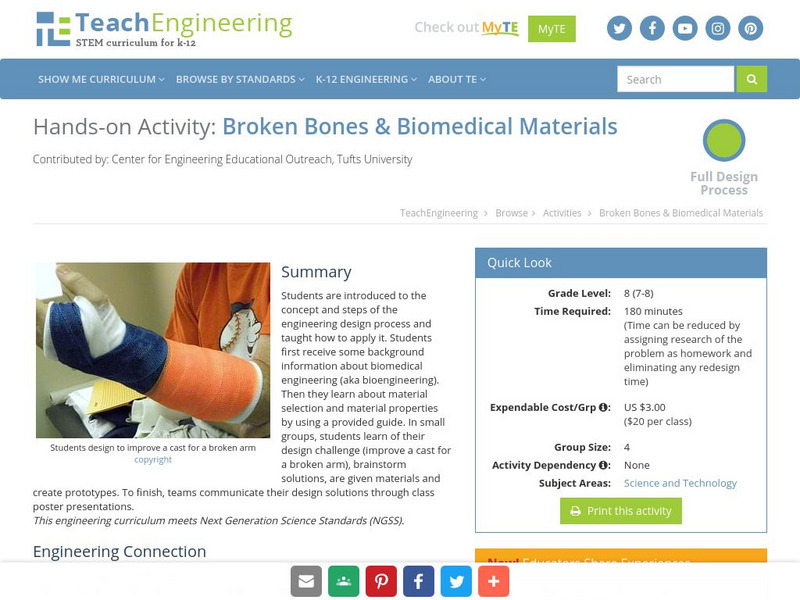
Teach Engineering: Broken Bones
The purpose of this activity is to introduce students to the concept of the engineering design process and to teach them how to apply it. In "Broken Bones," students will explore the steps of the engineering design process. They will...
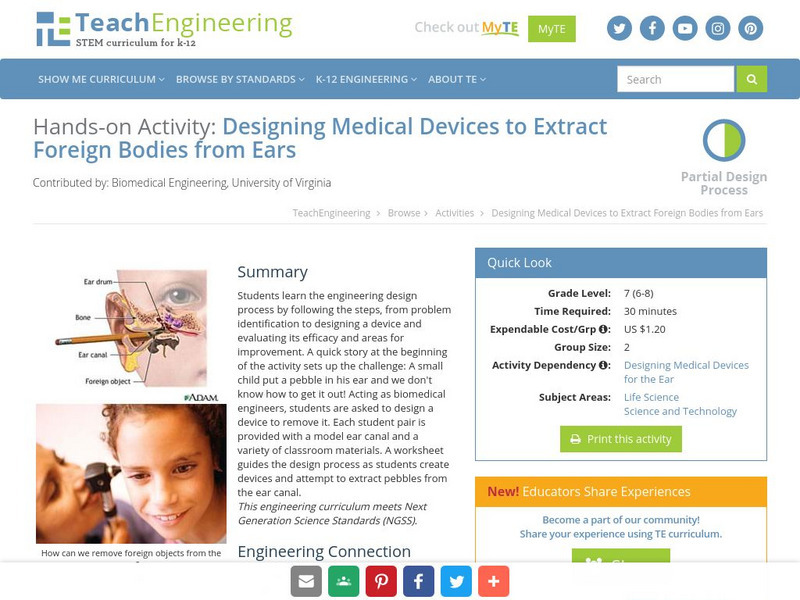
TeachEngineering
Teach Engineering: Designing a Medical Device
Students learn the engineering design process by following the steps, from problem identification to designing a device and evaluating its efficacy and areas for improvement. A quick story at the beginning of the activity sets up the...
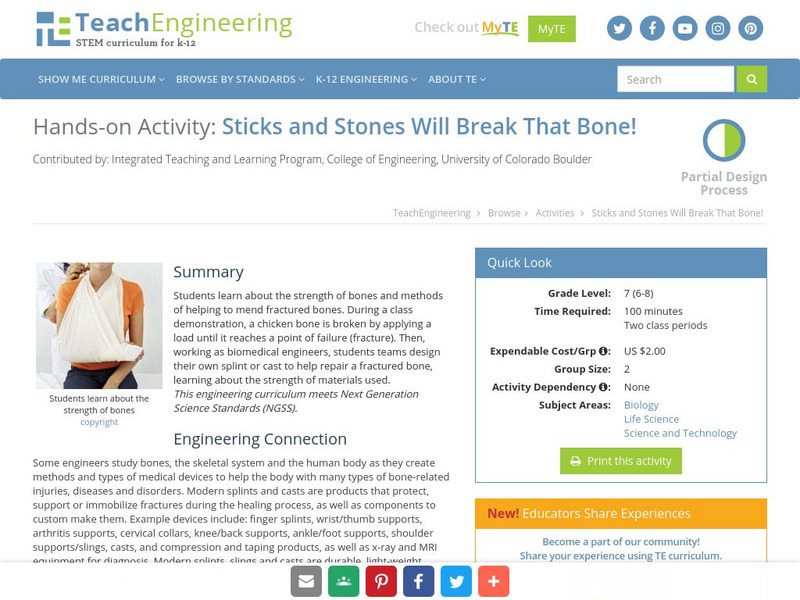
TeachEngineering
Teach Engineering: Sticks and Stones Will Break That Bone!
Students learn about the strength of bones and methods of helping to mend fractured bones. During a class demonstration, a chicken bone is broken by applying a load until it reaches a point of failure (fracture). Then, working as...
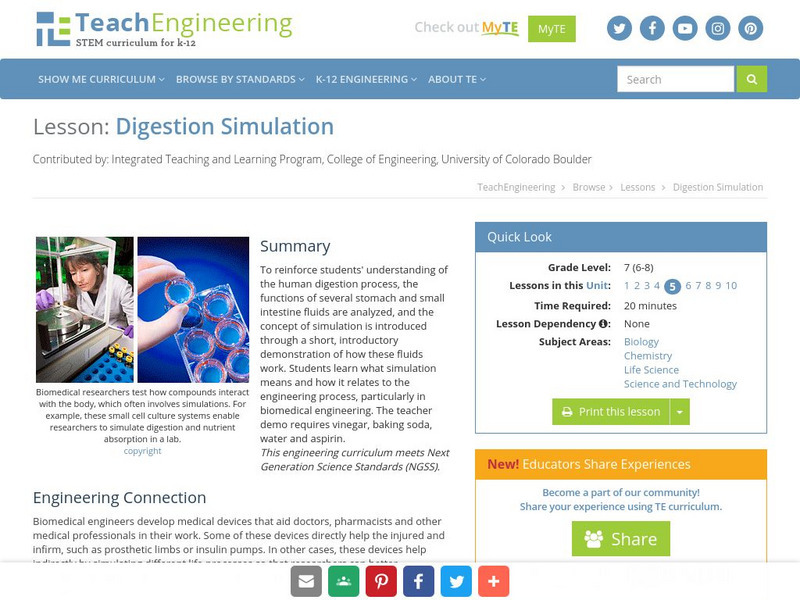
TeachEngineering
Teach Engineering: Digestion Simulation
To reinforce students' understanding of the human digestion process, the functions of several stomach and small intestine fluids are analyzed, and the concept of simulation is introduced through a short, introductory demonstration of how...
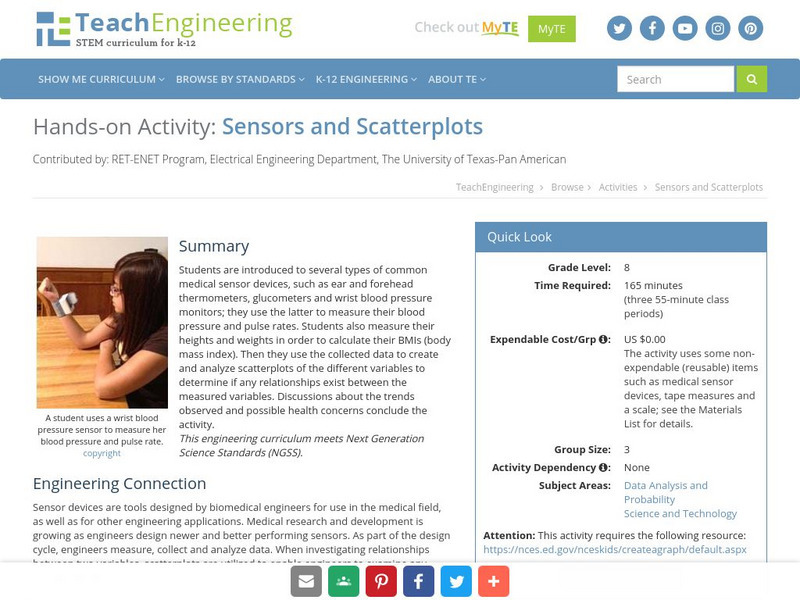
TeachEngineering
Teach Engineering: Sensors and Scatterplots
Students explore the use of several biomedical engineering sensor devices, and then use the collected data to create and analyze scatterplots of the different variables to determine if any relationships exist between the measured...
TeachEngineering
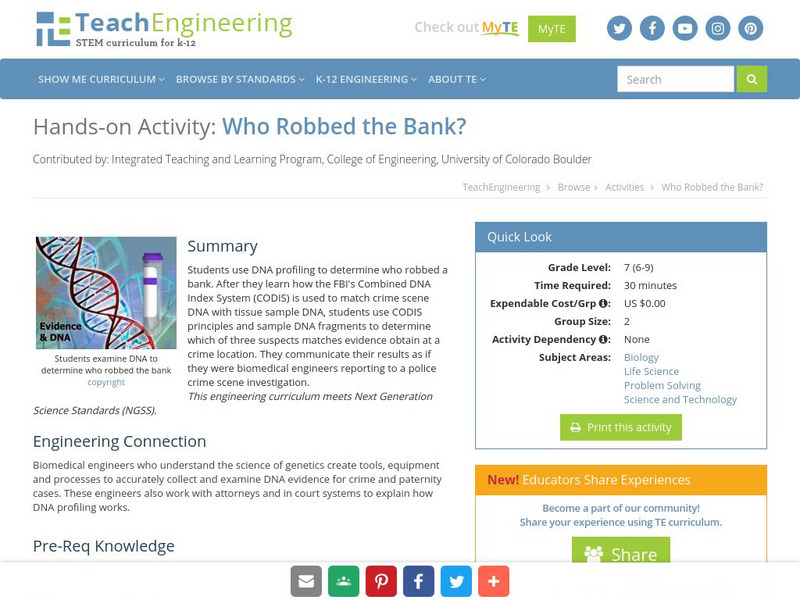
Teach Engineering: Who Robbed the Bank?
Students use DNA profiling to determine who robbed a bank. After they learn how the FBI's Combined DNA Index System (CODIS) is used to match crime scene DNA with tissue sample DNA, students use CODIS principles and sample DNA fragments...
TeachEngineering
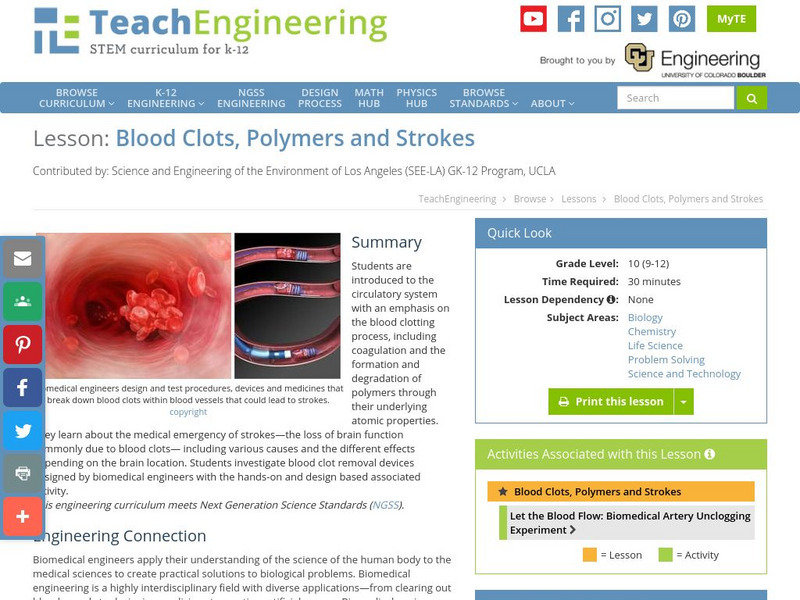
Teach Engineering: Blood Clots, Polymers and Strokes
Students are introduced to the circulatory system with an emphasis on the blood clotting process, including coagulation and the formation and degradation of polymers through their underlying atomic properties. They learn about the...
TeachEngineering
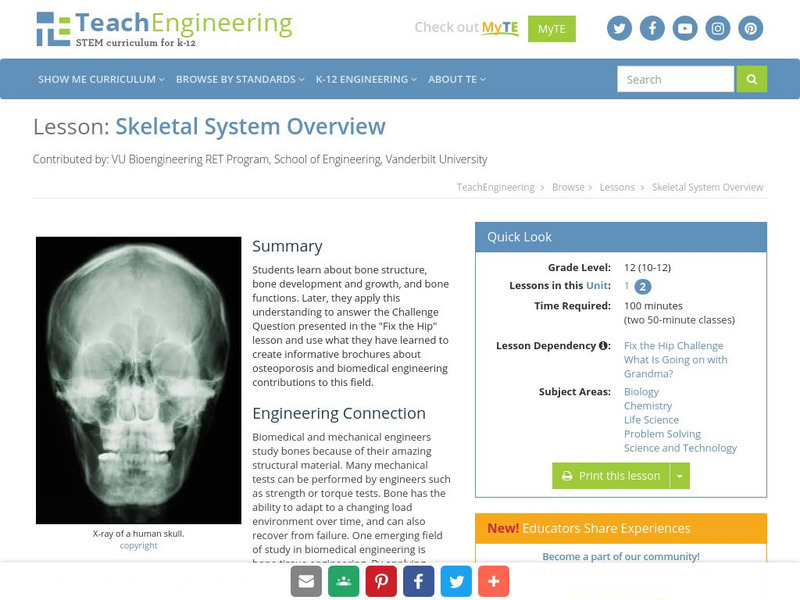
Teach Engineering: Skeletal System Overview
Students will learn about bone structure, bone development and growth, and bone functions. Later, students will apply this understanding to answer the Challenge Question presented in the "Fix the Hip" lesson and use the acquired learning...
TeachEngineering
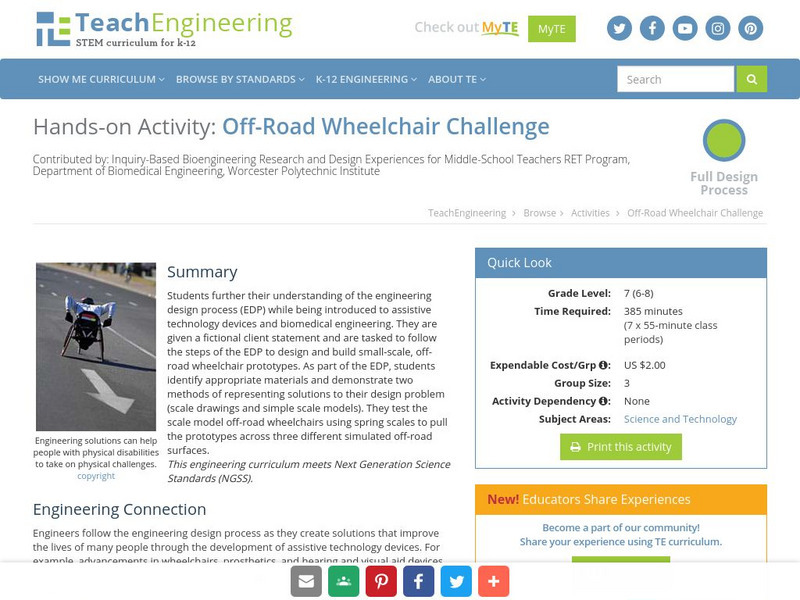
Teach Engineering: Off Road Wheelchair Challenge
Students further their understanding of the engineering design process (EDP) while being introduced to assistive technology devices and biomedical engineering. They are given a fictional client statement and are tasked to follow the...
TeachEngineering
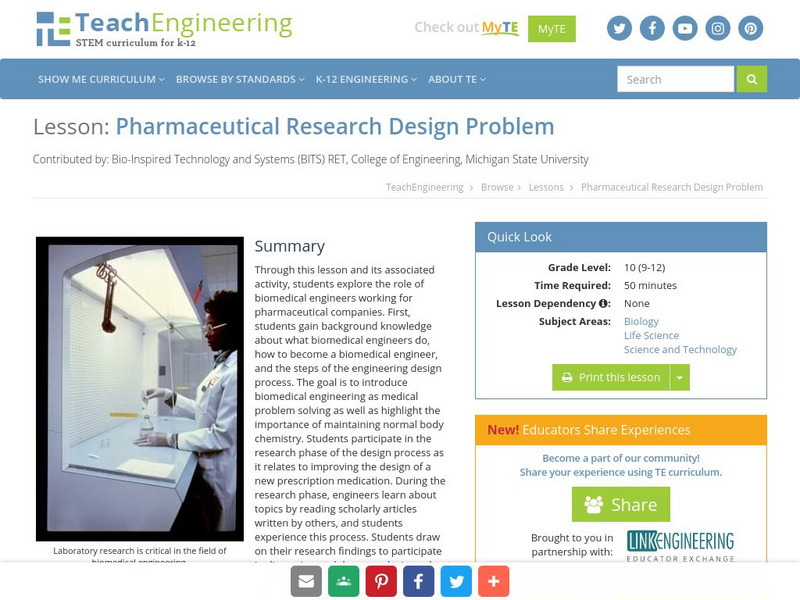
Teach Engineering: Pharmaceutical Research Design Problem
Through this lesson and its associated activity, students explore the role of biomedical engineers working for pharmaceutical companies. First, students gain background knowledge about what biomedical engineers do, how to become a...

TeachEngineering
Teach Engineering: Teaching the Engineering Design Process
Students follow the steps of the engineering design process (EDP) while learning about assistive devices and biomedical engineering. They first go through a design-build-test activity to learn the steps of the cyclical engineering design...
TeachEngineering
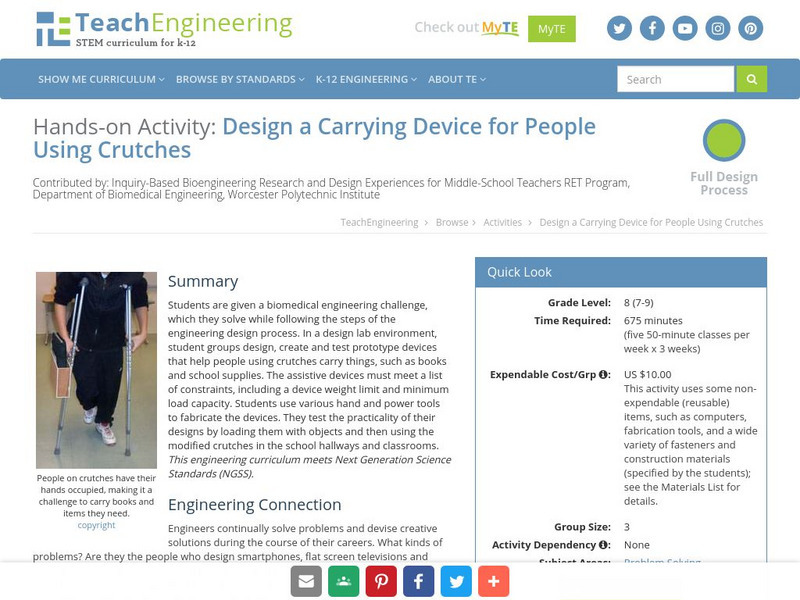
Teach Engineering: Design a Carrying Device for People Using Crutches
Students are given a biomedical engineering challenge, which they solve while following the steps of the engineering design process. In a design lab environment, student groups design, create, and test prototype devices that help people...
TeachEngineering
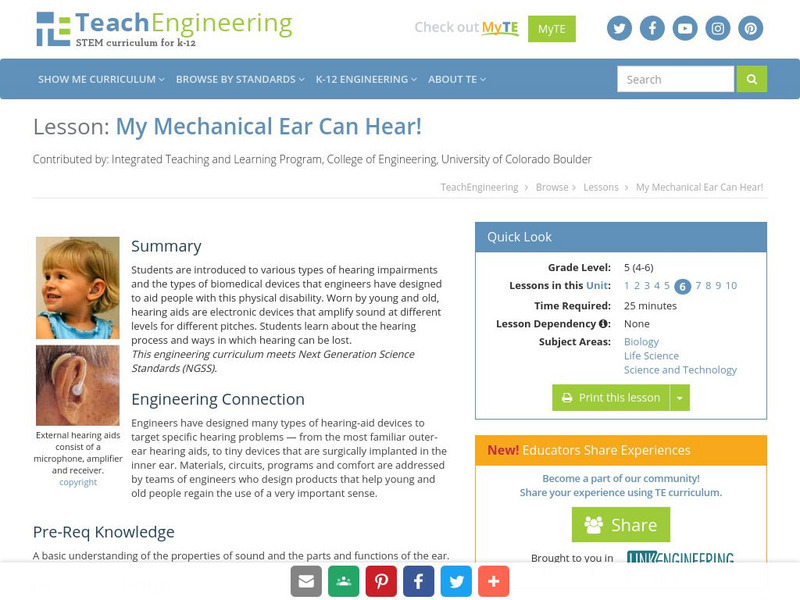
Teach Engineering: My Mechanical Ear Can Hear!
Students are introduced to various types of hearing impairments and the types of biomedical devices that engineers have designed to aid people with this physical disability.
TeachEngineering
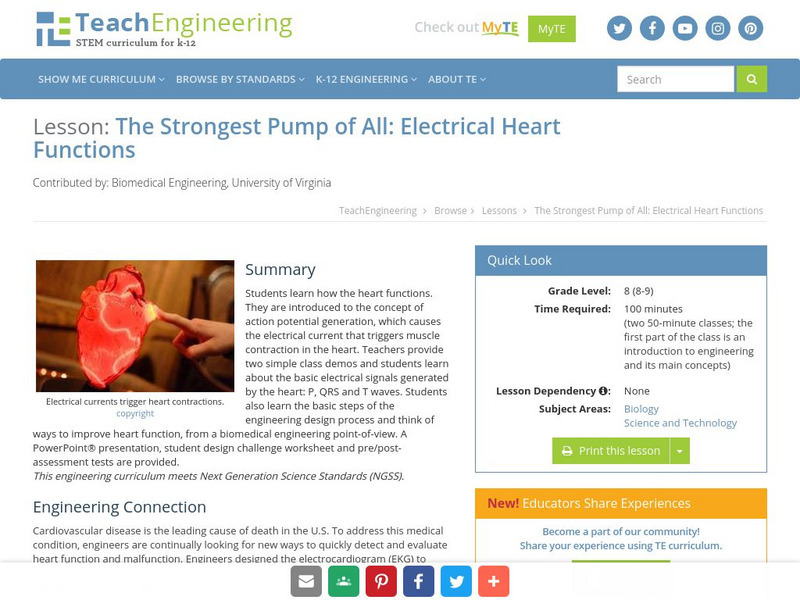
Teach Engineering: The Strongest Pump of All
In this lesson the students will learn how the heart functions. Students will be introduced to the concept of action potential generation. The lesson will explain how action potential generation causes the electrical current that causes...
TeachEngineering
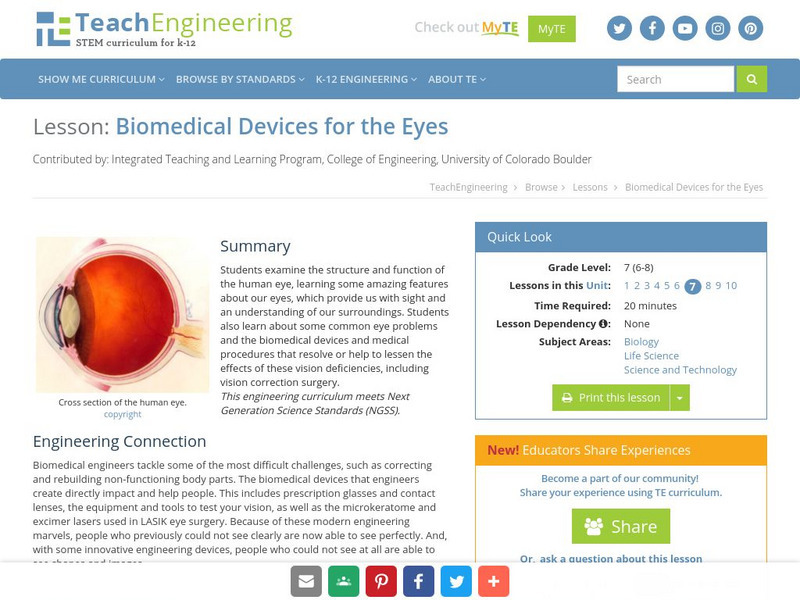
Teach Engineering: Biomedical Devices for the Eyes
Learners examine the structure and function of the human eye, learning some amazing features about our eyes, which provide us with sight and an understanding of our surroundings. Students also learn about some common eye problems and the...
TeachEngineering
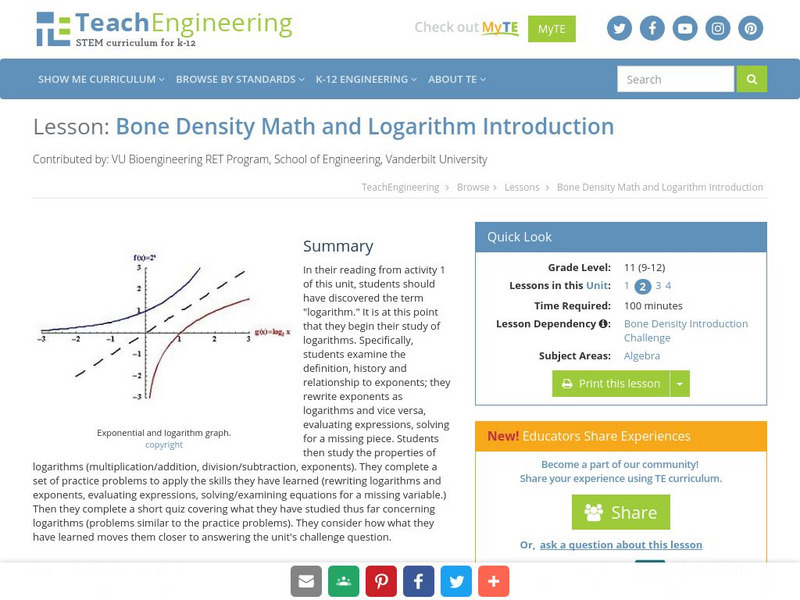
Teach Engineering: Bone Density Math and Logarithm Introduction
This project shows the connection between engineering, science and math by having students learn the equation needed to calculate bone mineral density. Lesson includes an explanation of the equation as well as practice problems and a quiz.
TeachEngineering
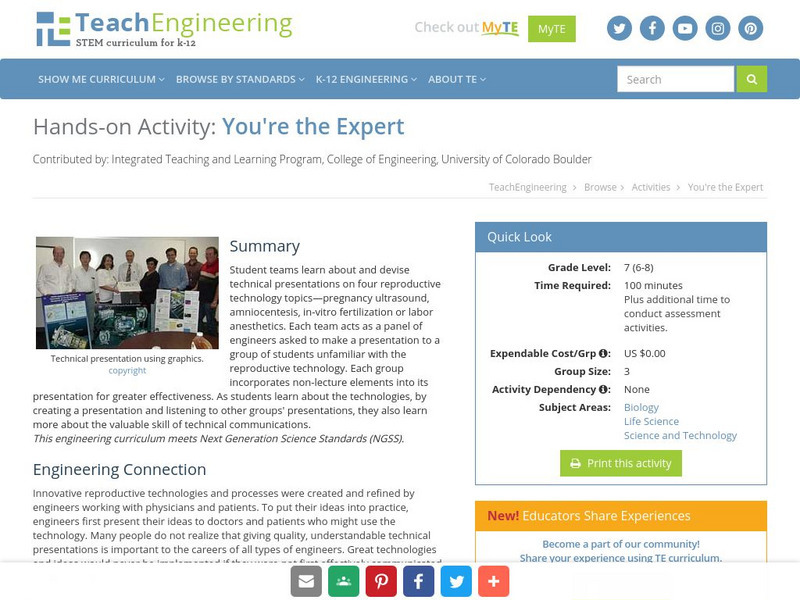
Teach Engineering: You're the Expert
Student teams learn about and devise technical presentations on four reproductive technology topics pregnancy ultrasound, amniocentesis, in-vitro fertilization or labor anesthetics. Each team acts as a panel of engineers asked to make a...