Hi, what do you want to do?





TeachEngineering
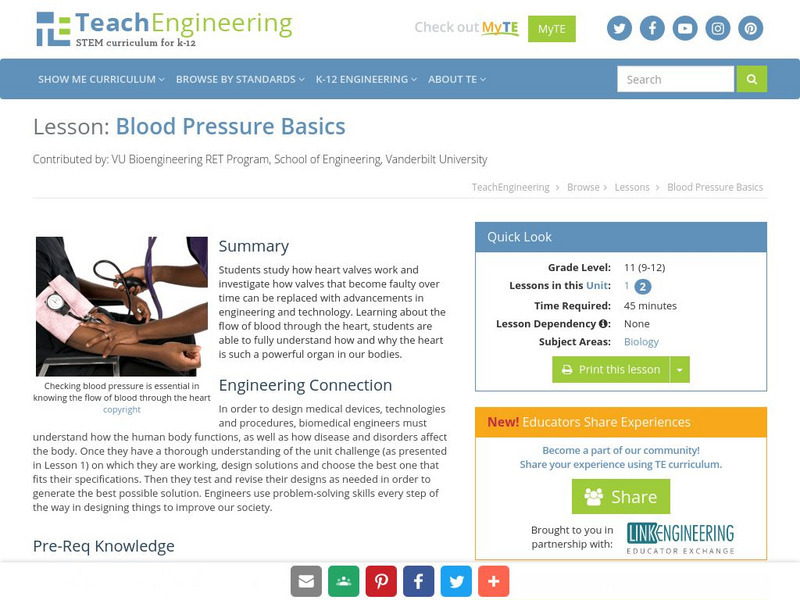
Teach Engineering: Blood Pressure Basics
Students study how heart valves work and investigate how valves that become faulty over time can be replaced with advancements in engineering and technology. Learning about the flow of blood through the heart, students are able to fully...
TeachEngineering
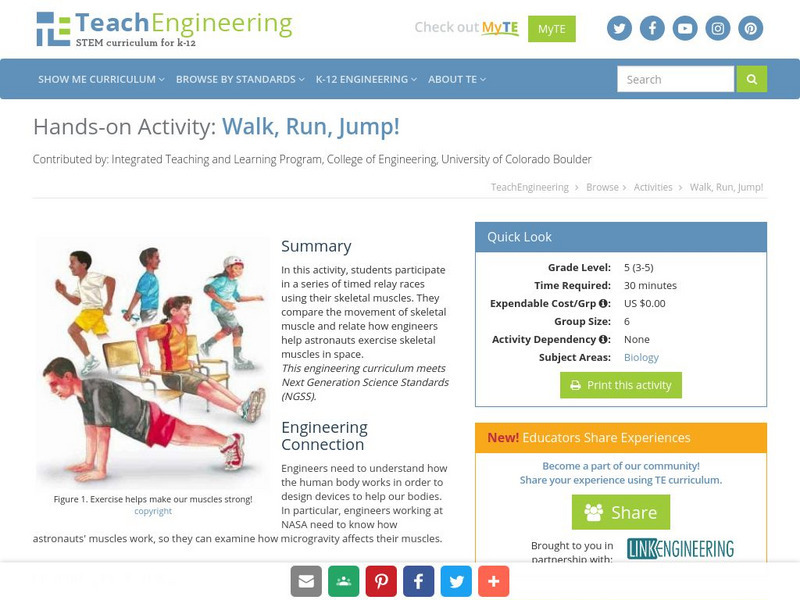
Teach Engineering: Walk, Run, Jump!
In this activity, students participate in a series of timed relay races using their skeletal muscles. The compare the movement of skeletal muscle and relate how engineers help astronauts exercise skeletal muscles in space.
TeachEngineering
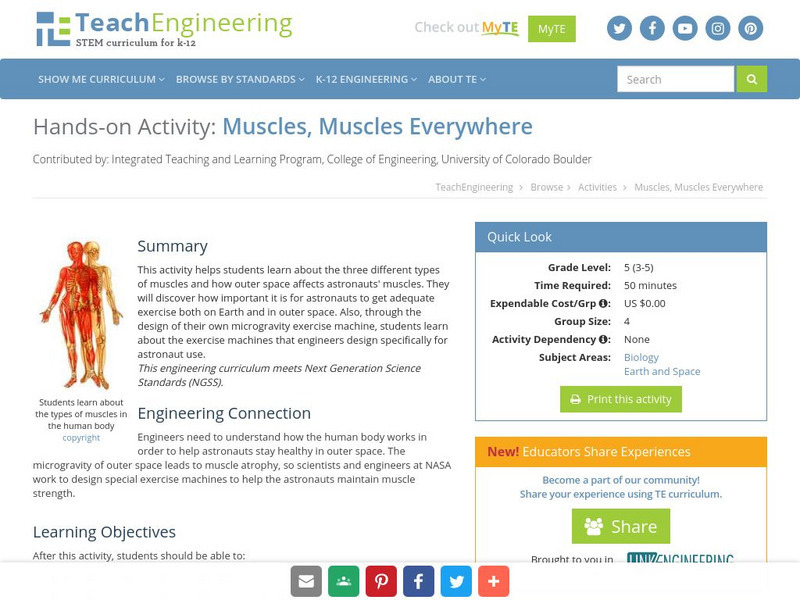
Teach Engineering: Muscles, Muscles Everywhere
This activity helps students learn about the three different types of muscles and how outer space affects astronauts' muscles. They will discover how important it is for astronauts to get adequate exercise both on Earth and in outer...
TeachEngineering
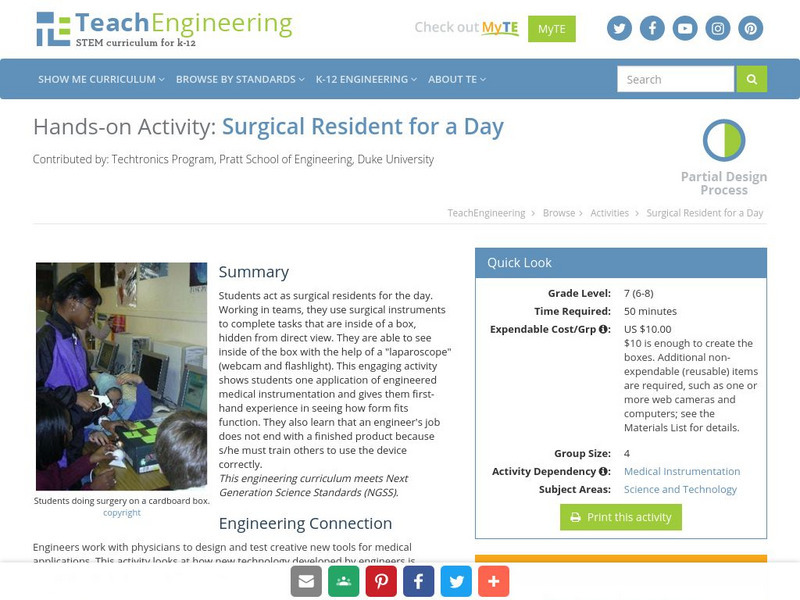
Teach Engineering: Surgical Resident for a Day
In this activity, students will become surgical residents for the day. As a team, they will be asked to use surgical instruments to complete a task inside of a black box. They will be able to see inside of the box with the help of a...
TeachEngineering
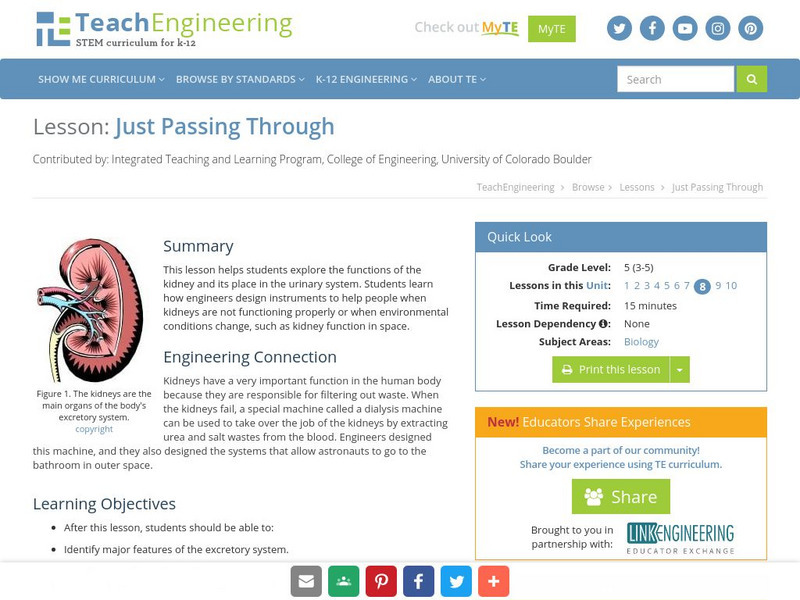
Teach Engineering: Just Passing Through
This lesson helps young scholars explore the functions of the kidney and its place in the urinary system. Students learn how engineers design instruments to help people when kidneys are not functioning properly or when environmental...
TeachEngineering
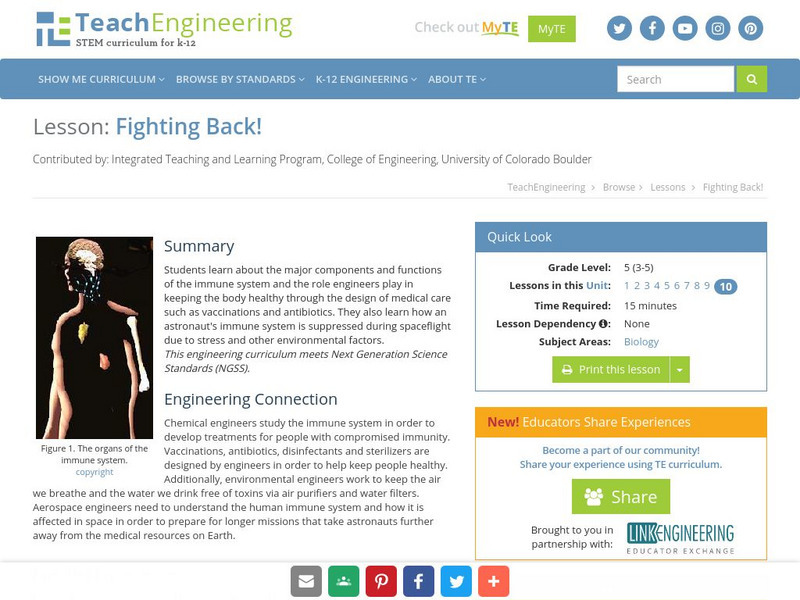
Teach Engineering: Fighting Back!
This lesson describes the major components and functions of the immune system and the role of engineers in keeping the body healthy (e.g., vaccinations and antibiotics, among other things). This lesson also discusses how an astronaut's...
TeachEngineering
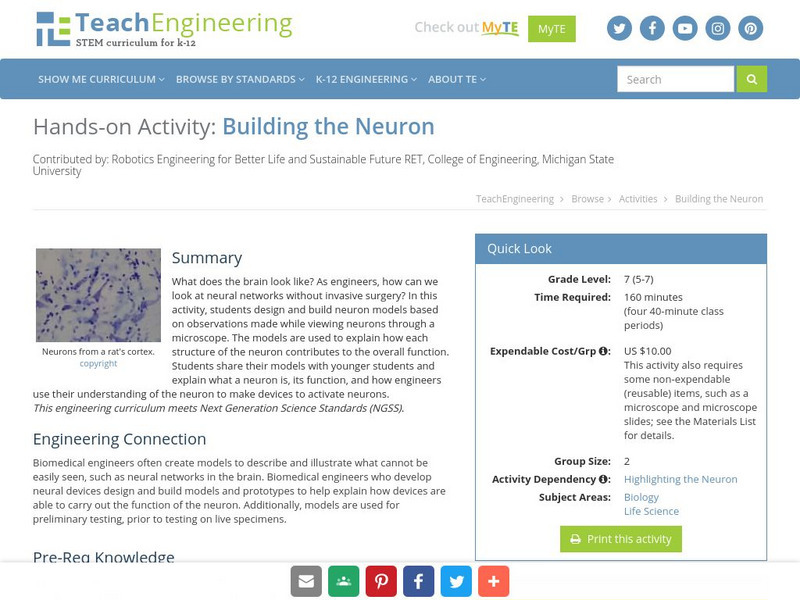
Teach Engineering: Building the Neuron
In this activity, students design and build neuron models based on observations made while viewing neurons through a microscope.
TeachEngineering
Teach Engineering: Stress, Strain and Hooke's Law
This lesson offers an introduction to Hooke's Law as well as stress-strain relationships. Students will first learn the governing equations. Then students will work through several example problems first individually, then as a class. In...
TeachEngineering
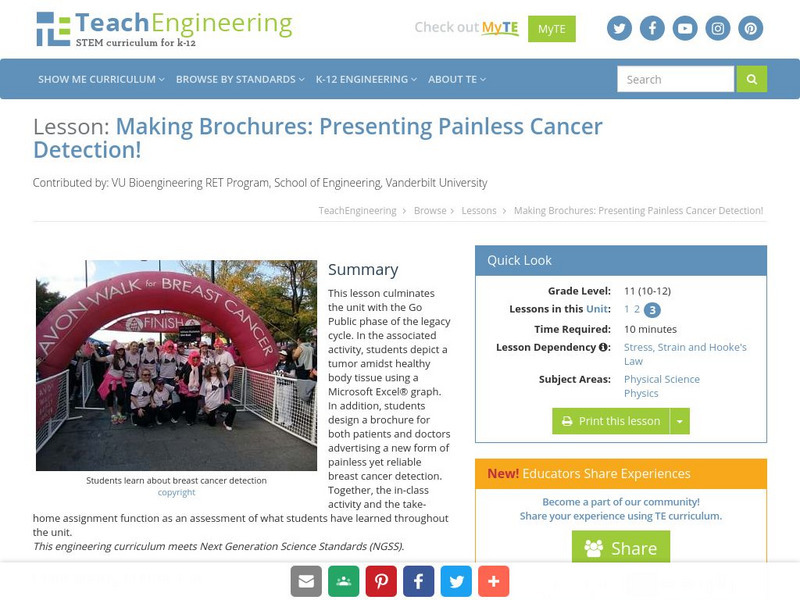
Teach Engineering: Presenting Painless Breast Cancer Detection!
This lesson culminates the unit with the Go Public phase of the legacy cycle. In the associated activity, young scholars must depict a tumor amidst healthy body tissue using a graph in Microsoft Excel. In addition, students will design a...
TeachEngineering
Teach Engineering: Protect That Pill
Students reinforce their knowledge of the different parts of the digestive system and explore the concept of simulation by developing a pill coating that can withstand the churning actions and acidic environment found in the stomach....
TeachEngineering
Teach Engineering: Convertible Shoes: Function, Fashion and Design
Students teams design and build shoe prototypes that convert between high heels and athletic shoes. They apply their knowledge about the mechanics of walking and running as well as shoe design (as learned in the associated lesson) to...
TeachEngineering
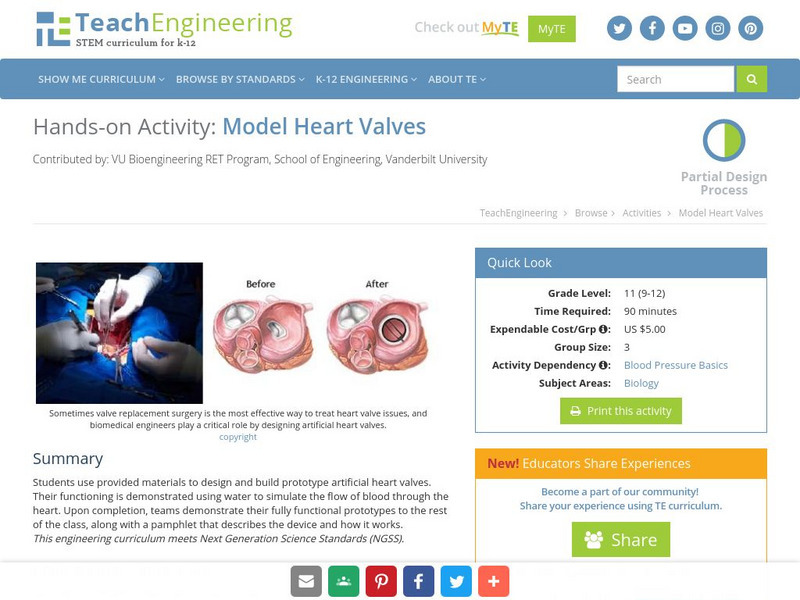
Teach Engineering: Model Heart Valves
Students use provided materials to design and build prototype artificial heart valves. Their functioning is demonstrated using water to simulate the flow of blood through the heart. Upon completion, teams demonstrate their fully...
TeachEngineering
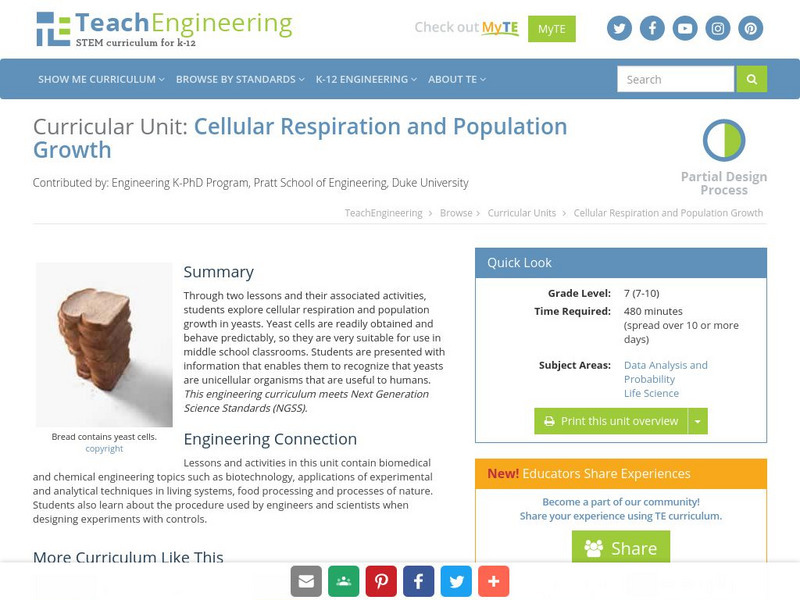
Teach Engineering: Cellular Respiration and Population Growth
Two lessons and their associated activities explore cellular respiration and population growth in yeasts. Yeast cells are readily obtained and behave predictably, so they are very appropriate to use in middle school classrooms. In the...
TeachEngineering
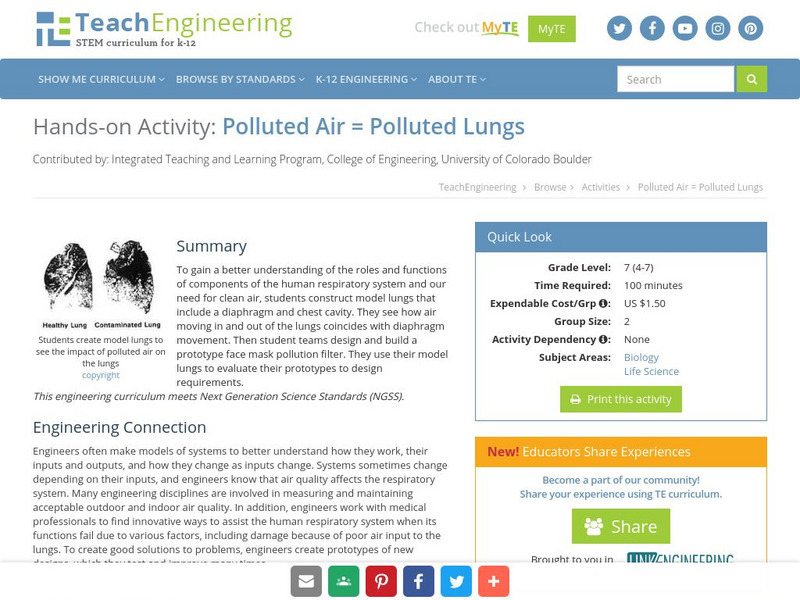
Teach Engineering: Polluted Air = Polluted Lungs
To gain a better understanding of the roles and functions of components of the human respiratory system and our need for clean air, students construct model lungs that include a diaphragm and chest cavity. They see how air moving in and...
TeachEngineering
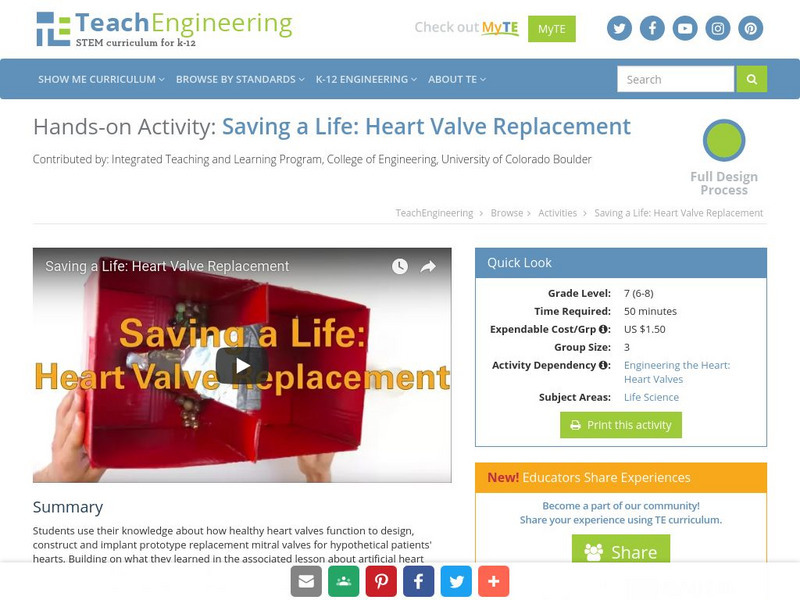
Teach Engineering: Saving a Life: Heart Valve Replacement
Students use their knowledge about how healthy heart valves function to design, construct and implant prototype replacement mitral valves for hypothetical patients' hearts. Building on what they learned in the associated lesson about...
TeachEngineering
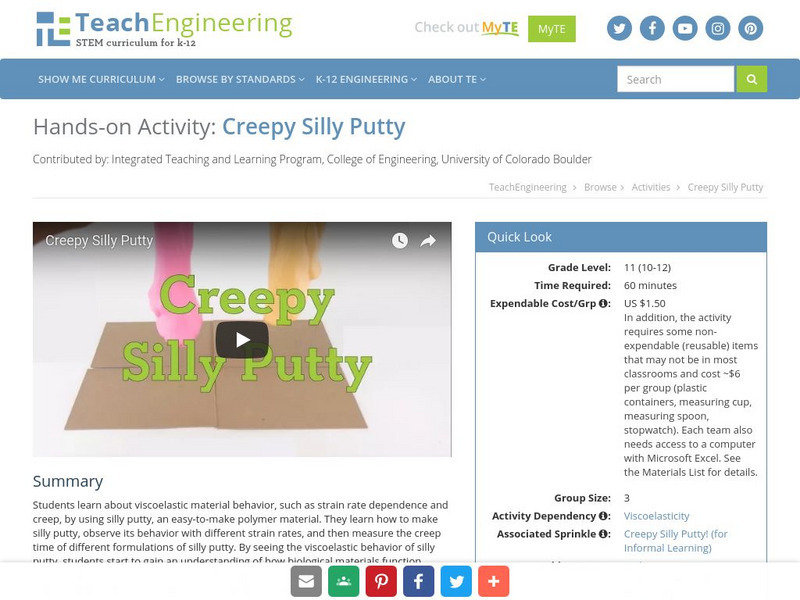
Teach Engineering: Creepy Silly Putty
Students learn about viscoelastic material behavior, such as strain rate dependence and creep, by using silly putty, an easy-to-make polymer material. They learn how to make silly putty, observe its behavior with different strain rates,...
TeachEngineering
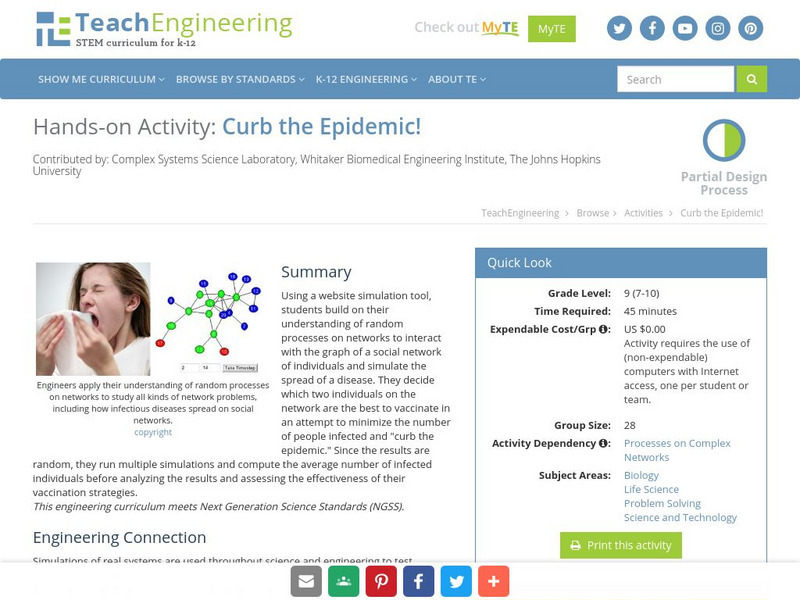
Teach Engineering: Curb the Epidemic!
Using a website simulation tool, students build on their understanding of random processes on networks to interact with the graph of a social network of individuals and simulate the spread of a disease. They decide which two individuals...
TeachEngineering
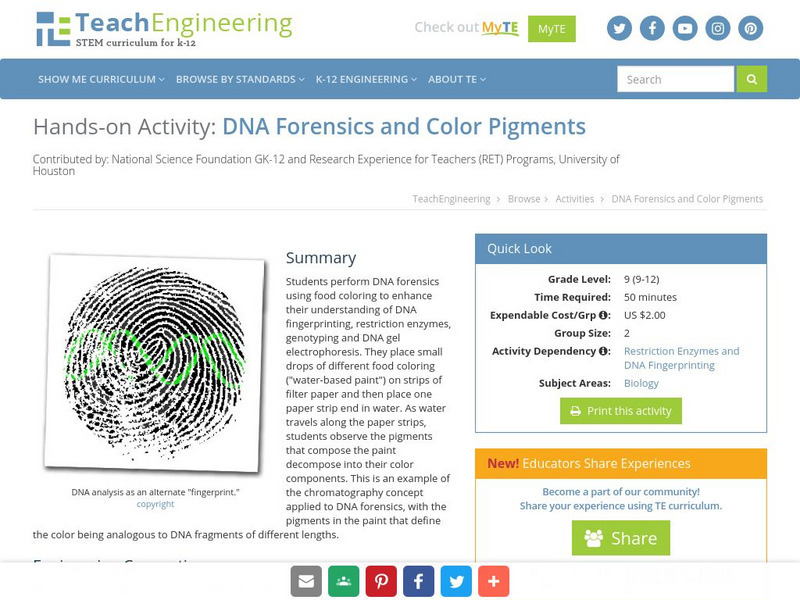
Teach Engineering: Dna Forensics and Color Pigments
Students perform DNA forensics using food coloring to enhance their understanding of DNA fingerprinting, restriction enzymes, genotyping and DNA gel electrophoresis. They place small drops of different food coloring ("water-based paint")...
TeachEngineering
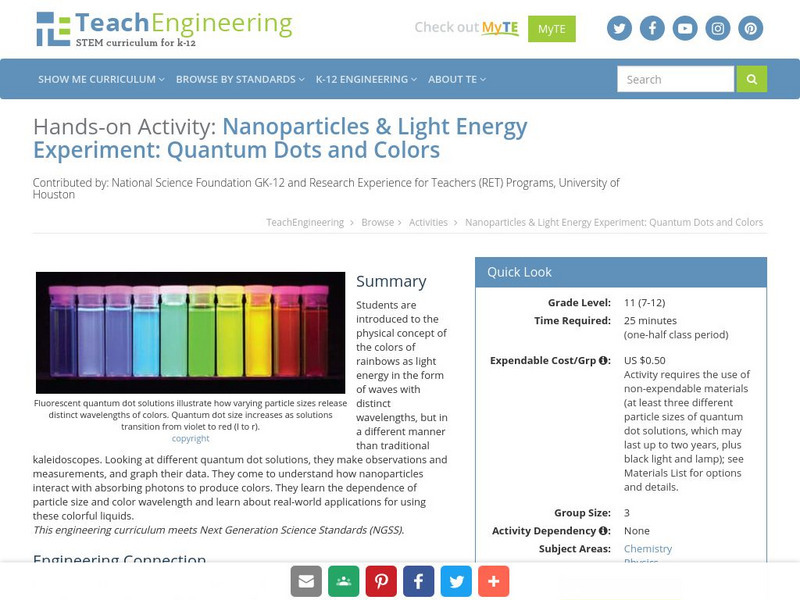
Teach Engineering: Quantum Dots and Colors
Students are introduced to the physical concept of the colors of rainbows as light energy in the form of waves with distinct wavelengths, but in a different manner than traditional kaleidoscopes. Looking at different quantum dot...
TeachEngineering
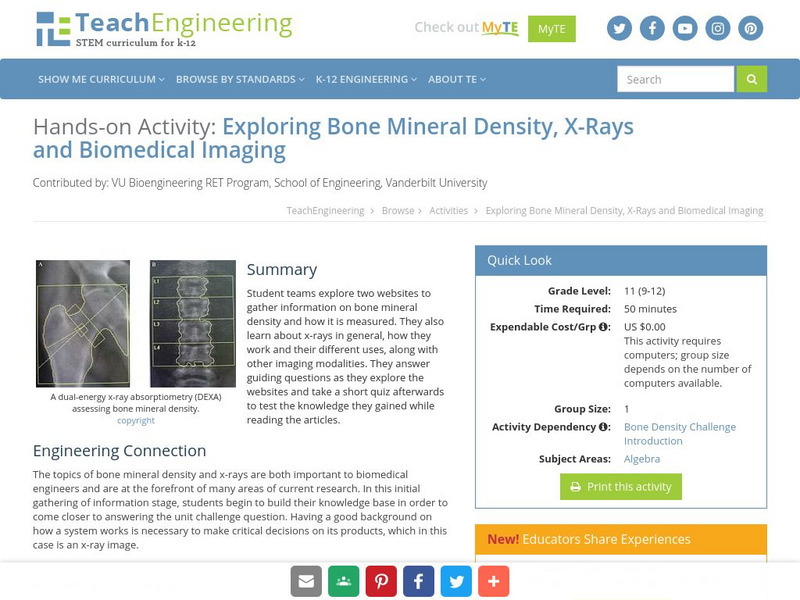
Teach Engineering: Exploring Bone Mineral Density
In this activity, students will explore two given websites to gather information on Bone Mineral Density and how it is measured. They will also learn about X-rays in general, how they work and their different uses, along with other...

TeachEngineering
Teach Engineering: Applying Hooke's Law to Cancer Detection
Students explore Hooke's law while working in small groups at their lab benches. They collect displacement data for springs with unknown spring constants, k, by adding various masses of known weight. After exploring Hooke's law and...
TeachEngineering
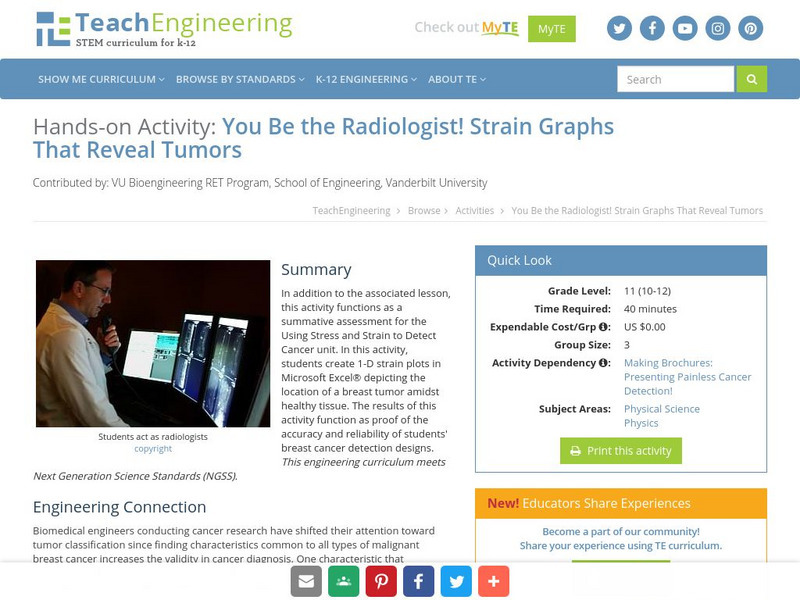
Teach Engineering: You Be the Radiologist!
In addition to the associated lesson, this activity functions as a summative assessment for the Using Stress and Strain to Detect Cancer unit. In this activity, students will create a 1-D strain plot in Microsoft Excel depicting the...
TeachEngineering
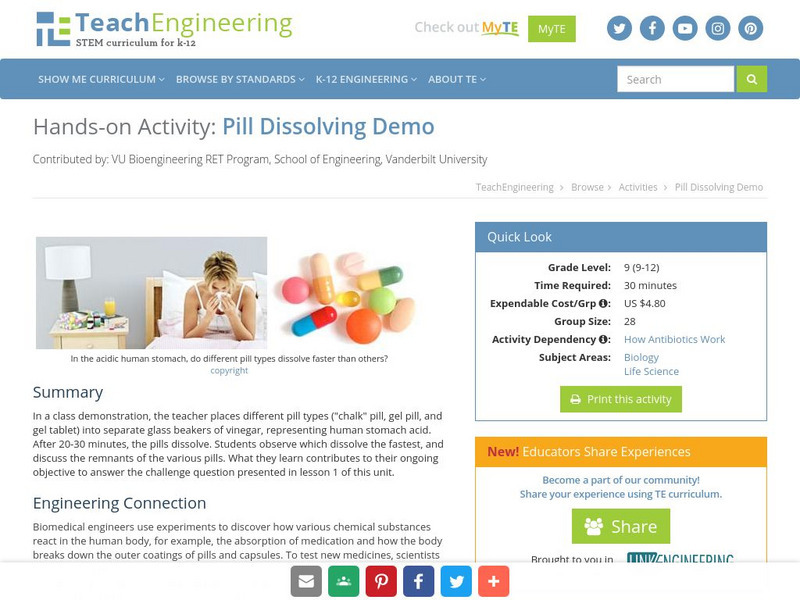
Teach Engineering: Pill Dissolving Demo
In a class demonstration, the teacher places different pill types ("chalk" pill, gel pill, and gel tablet) into separate glass beakers of vinegar, representing human stomach acid. After 20-30 minutes, the pills dissolve. Students observe...
TeachEngineering
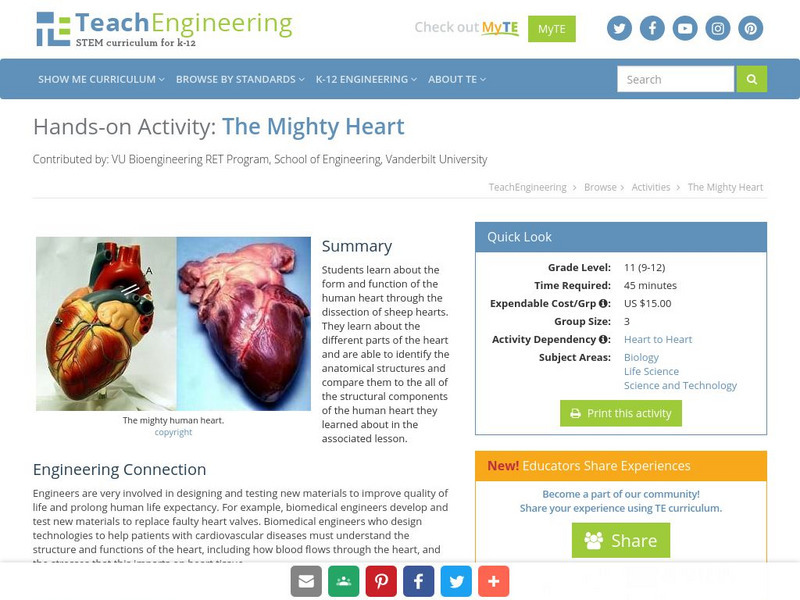
Teach Engineering: The Mighty Heart
Students learn about the form and function of the human heart through the dissection of sheep hearts. They learn about the different parts of the heart and are able to identify the anatomical structures and compare them to the all of the...