Hi, what do you want to do?






Kenan Fellows
Unit 1: Introduction to Pharmacology
Learn about the study of medications, including those found in nature and those made synthetically. The first of four lessons in a series on pharmacology includes lectures, hands-on experiments, research, and more.
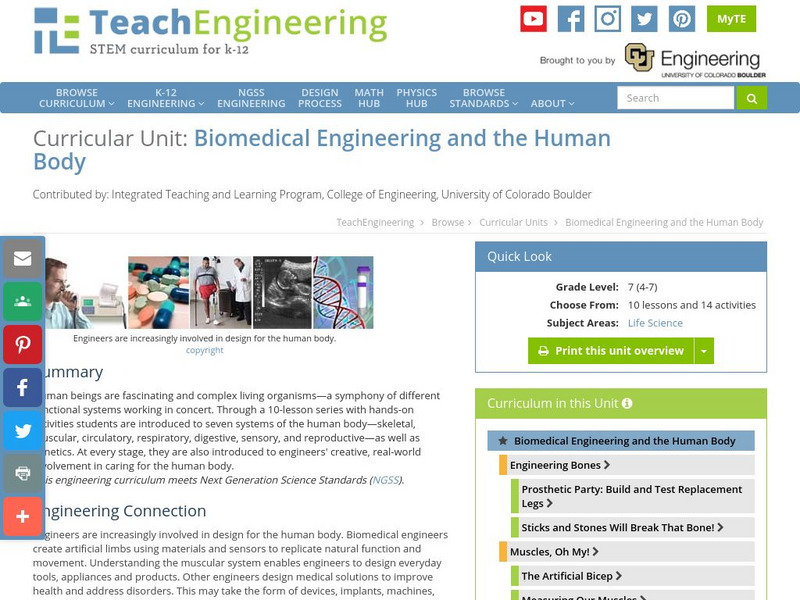
TeachEngineering
Teach Engineering: Biomedical Engineering and the Human Body
Human beings are fascinating and complex living organisms-a symphony of different functional systems working in concert. Through a 10-lesson series with hands-on activities students are introduced to seven systems of the human...

TeachEngineering
Teach Engineering: Teaching the Engineering Design Process
Students follow the steps of the engineering design process (EDP) while learning about assistive devices and biomedical engineering. They first go through a design-build-test activity to learn the steps of the cyclical engineering design...
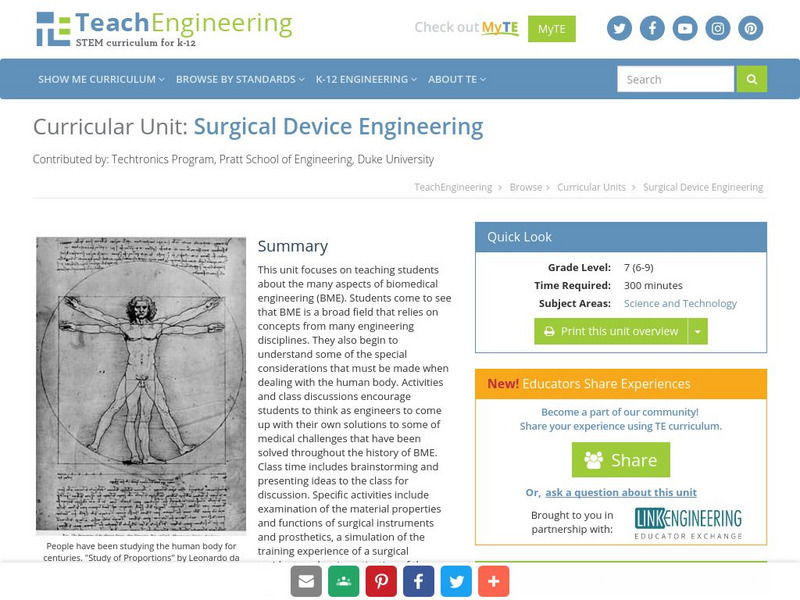
TeachEngineering
Teach Engineering: Surgical Device Engineering
This unit focuses on teaching students about the many aspects of biomedical engineering (BME). Students will see that it is a broad field that relies on concepts from each of the other disciplines of engineering. They will also begin to...
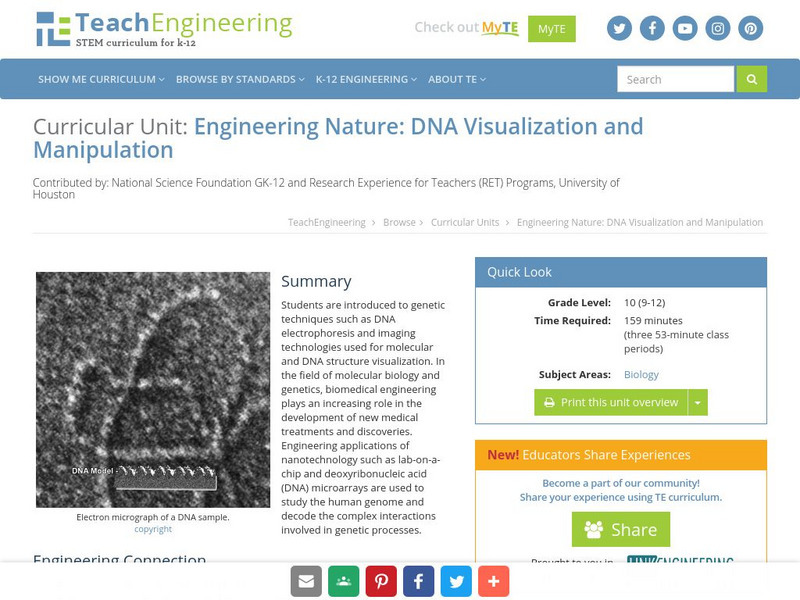
TeachEngineering
Teach Engineering: Engineering Nature: Dna Visualization and Manipulation
Students are introduced to genetic techniques such as DNA electrophoresis and imaging technologies used for molecular and DNA structure visualization. In the field of molecular biology and genetics, biomedical engineering plays an...
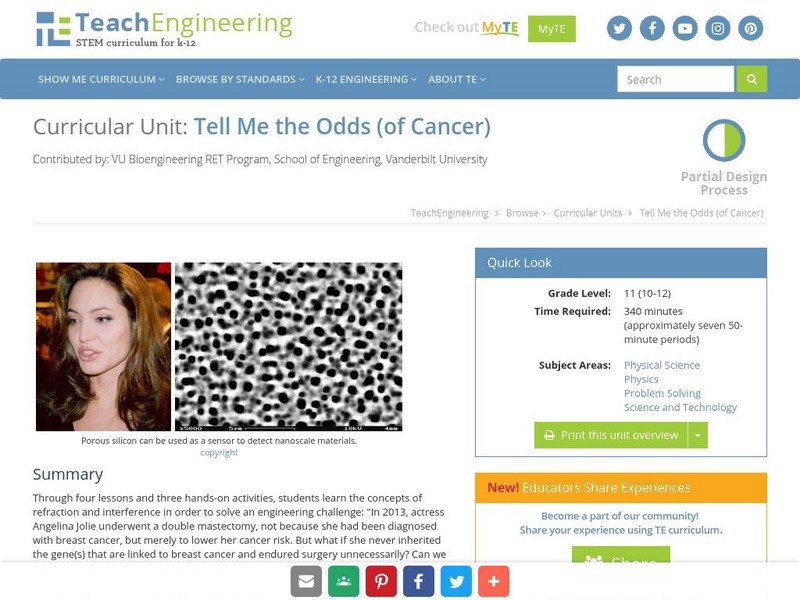
TeachEngineering
Teach Engineering: Tell Me the Odds (Of Cancer)
A seven-lesson unit where students learn the concepts of refraction and interference in order to solve this engineering challenge: In 2013, actress Angelina Jolie underwent a double mastectomy, not because she had been diagnosed with...

TeachEngineering
Teach Engineering: Using Stress and Strain to Detect Cancer
In this project, students are challenged to answer the question "Is there a way to detect the presence of tumors that isn't as painful as mammography but more reliable and quantifiable than a breast-self exam or clinical breast-exams?"....
TeachEngineering
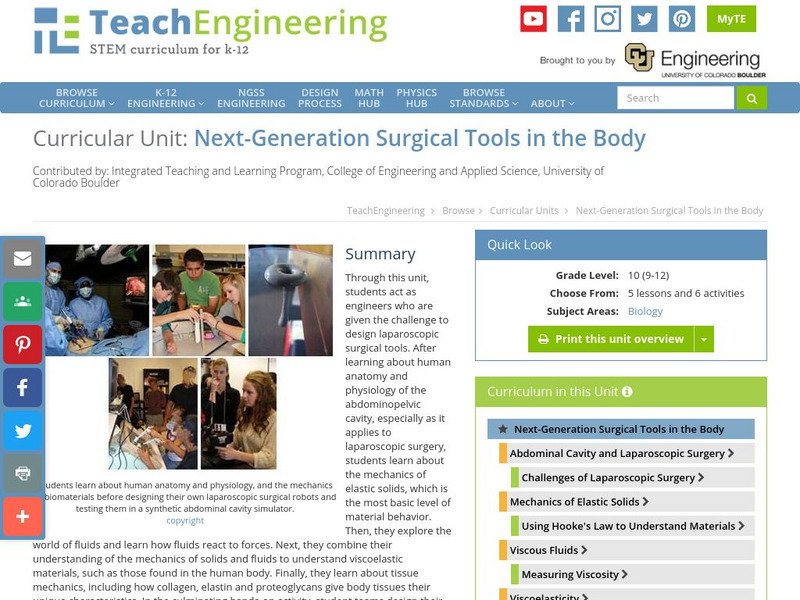
Teach Engineering: Next Generation Surgical Tools in the Body
Through this unit, students act as engineers who are given the challenge to design laparoscopic surgical tools. After learning about human anatomy and physiology of the abdominopelvic cavity, especially as it applies to laparoscopic...
TeachEngineering
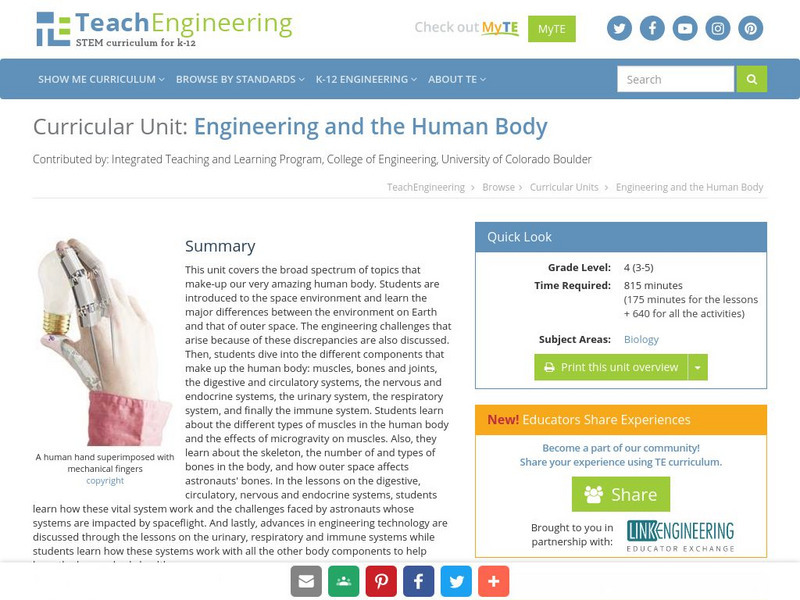
Teach Engineering: Engineering and the Human Body
The Engineering and the Human Body unit covers the broad spectrum of topics that make up our very amazing human body. Students are introduced to the space environment and learn the major differences between the environment on Earth and...
TeachEngineering
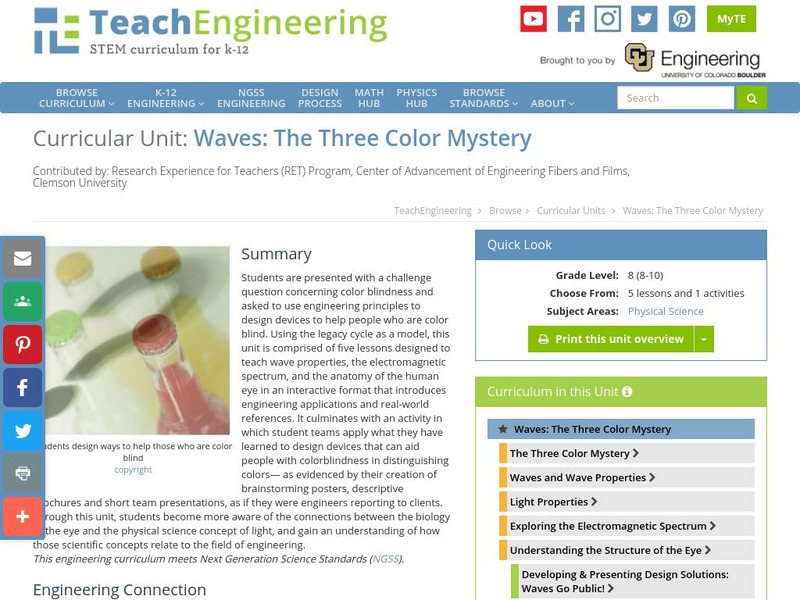
Teach Engineering: Waves: The Three Color Mystery
Students are presented with a challenge question concerning color blindness and asked to use engineering principles to design devices to help people who are color blind. Using the legacy cycle as a model, this unit is comprised of five...
TeachEngineering
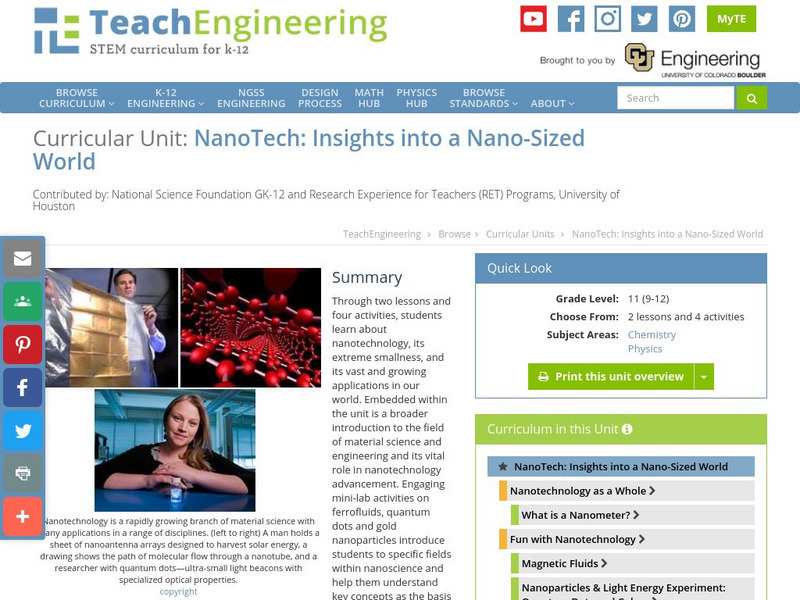
Teach Engineering: Nano Tech: Insights Into a Nano Sized World
Through two lessons and four activities, students learn about nanotechnology, its extreme smallness, and its vast and growing applications in our world. Embedded within the unit is a broader introduction to the field of material science...
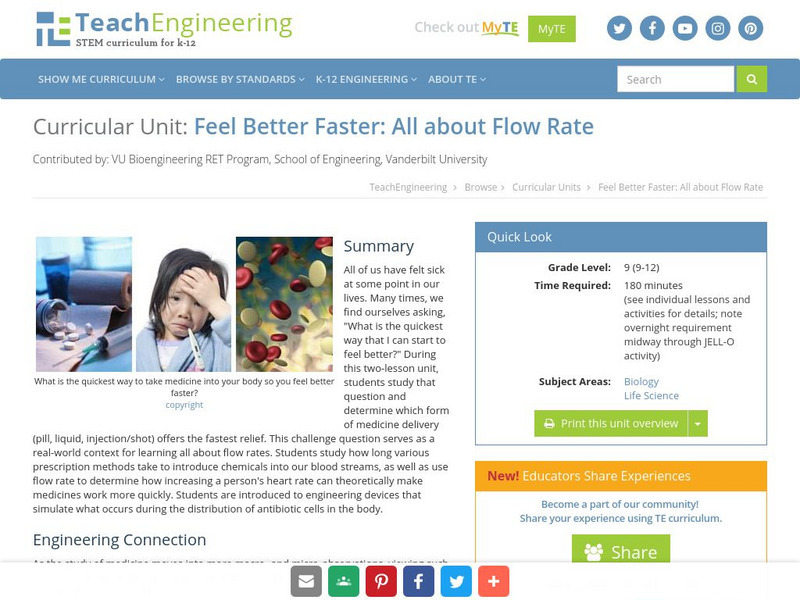
TeachEngineering
Teach Engineering: Feel Better Faster: All About Flow Rate
All of us have felt sick at some point in our lives. Many times, we find ourselves asking, "What is the quickest way that I can start to feel better?" During this two-lesson unit, students study that question and determine which form of...
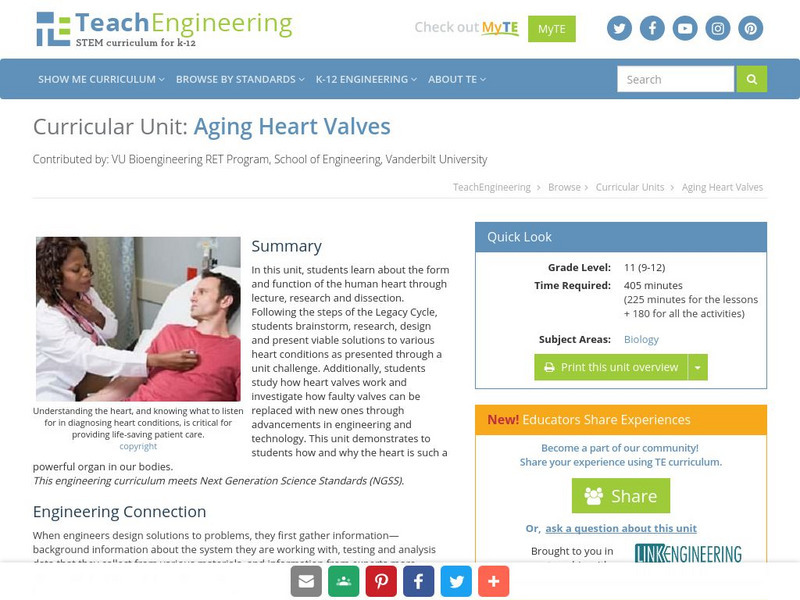
TeachEngineering
Teach Engineering: Aging Heart Valves
In this unit, students learn about the form and function of the human heart through lecture, research and dissection. Following the steps of the Legacy Cycle, students brainstorm, research, design and present viable solutions to various...
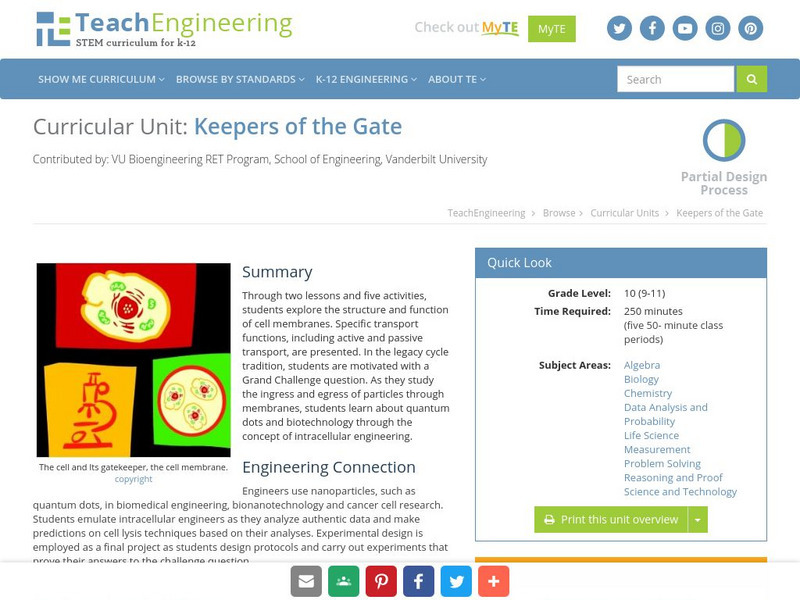
TeachEngineering
Teach Engineering: Keepers of the Gate
Through two lessons and five activities, students explore the structure and function of cell membranes. Specific transport functions, including active and passive transport, are presented. In the legacy cycle tradition, students are...
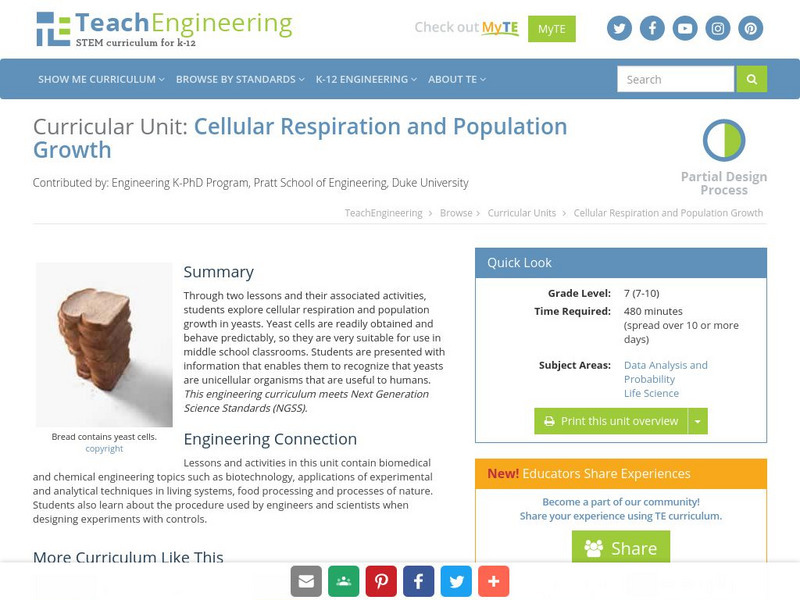
TeachEngineering
Teach Engineering: Cellular Respiration and Population Growth
Two lessons and their associated activities explore cellular respiration and population growth in yeasts. Yeast cells are readily obtained and behave predictably, so they are very appropriate to use in middle school classrooms. In the...
TeachEngineering
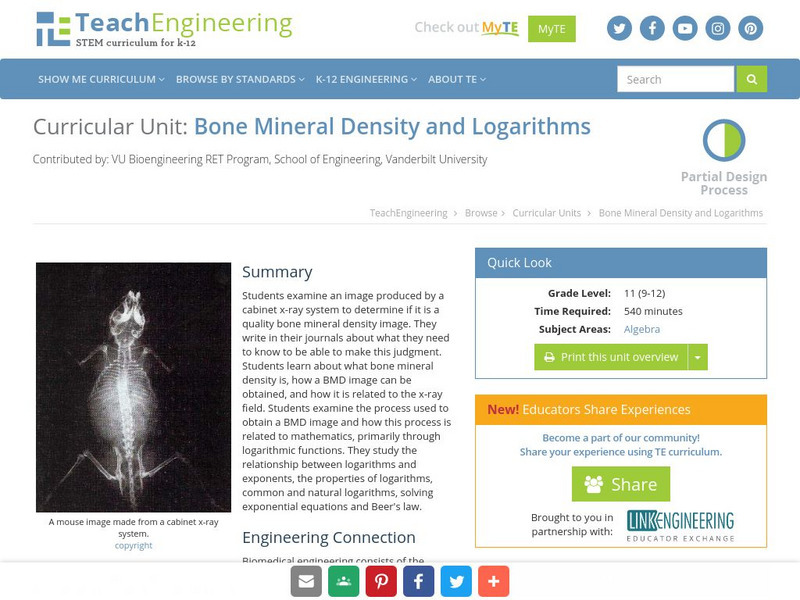
Teach Engineering: Bone Mineral Density and Logarithms
Students examine an image produced by a cabinet x-ray system to determine if it is a quality bone mineral density image. Students write in their journals about what they need to know to be able to make this judgment. Students learn about...
TeachEngineering
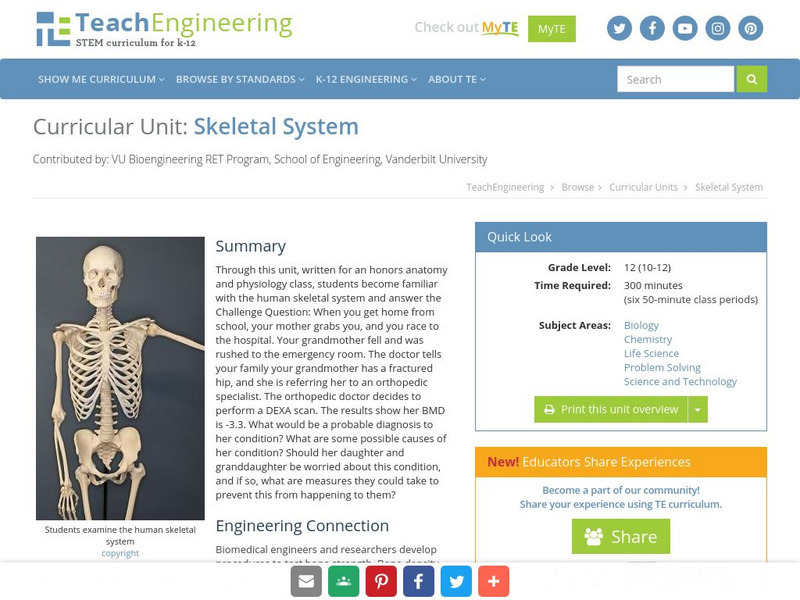
Teach Engineering: Skeletal System
Through this unit, written for an honors anatomy and physiology class, students become familiar with the human skeletal system and answer the Challenge Question: When you get home from school, your mother grabs you, and you race to the...
TED Talks
Ted: Ted Ed: Earth's Mass Extinction
Asteroid strikes get all the coverage, but "Medea Hypothesis" author Peter Ward argues that most of Earth's mass extinctions were caused by lowly bacteria. The culprit, a poison called hydrogen sulfide, may have an interesting...
TED Talks
Ted: Ted Ed: What Are Mini Brains?
Shielded by our thick skulls and swaddled in layers of protective tissue, the human brain is extremely difficult to observe in action. Madeline Lancaster shares how to make a brain in a lab.