Hi, what do you want to do?





TeachEngineering
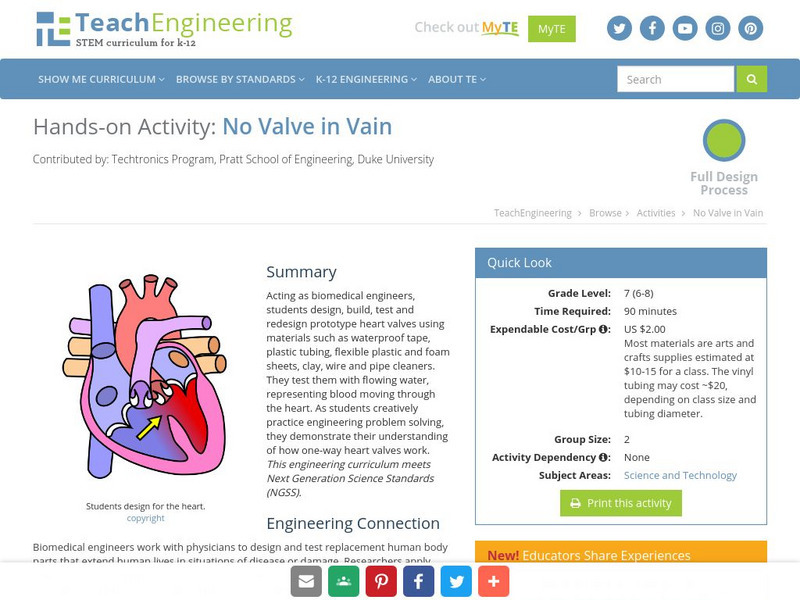
Teach Engineering: No Valve in Vain
In this activity, students will design and create their own heart valves out of a variety of materials given to them, including: waterproof tape, plastic tubing, flexible plastic sheets, foam sheets, scissors, clay, etc. This activity...
TeachEngineering
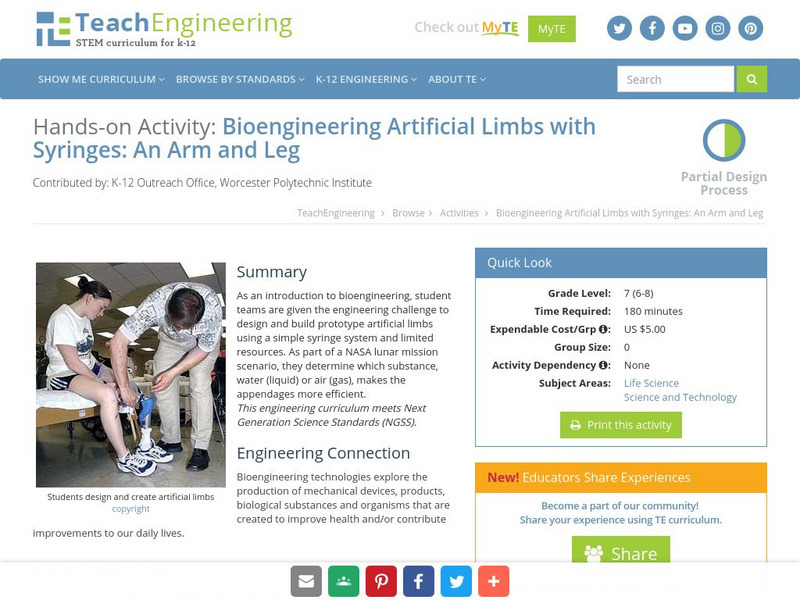
Teach Engineering: An Arm and a Leg
Students will design and build a prototype of an artificial limb using a simple syringe system as an introduction to bioengineering. Students will determine which substance water (liquid) or air (gas) will make the appendage more efficient.
TeachEngineering
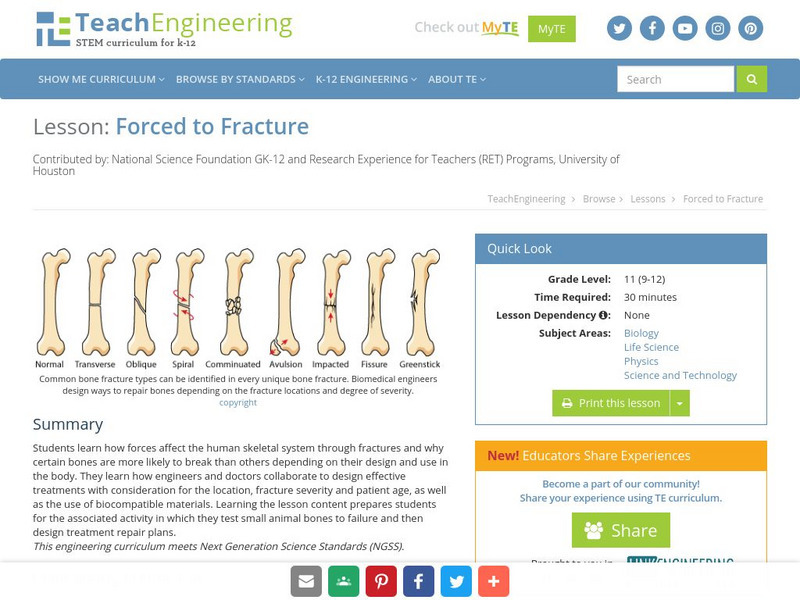
Teach Engineering: Forced to Fracture
Students learn how forces affect the human skeletal system through fractures, and why certain bones are more likely to break than others depending on their design and use in the body. They learn how engineers and doctors collaborate to...
TeachEngineering
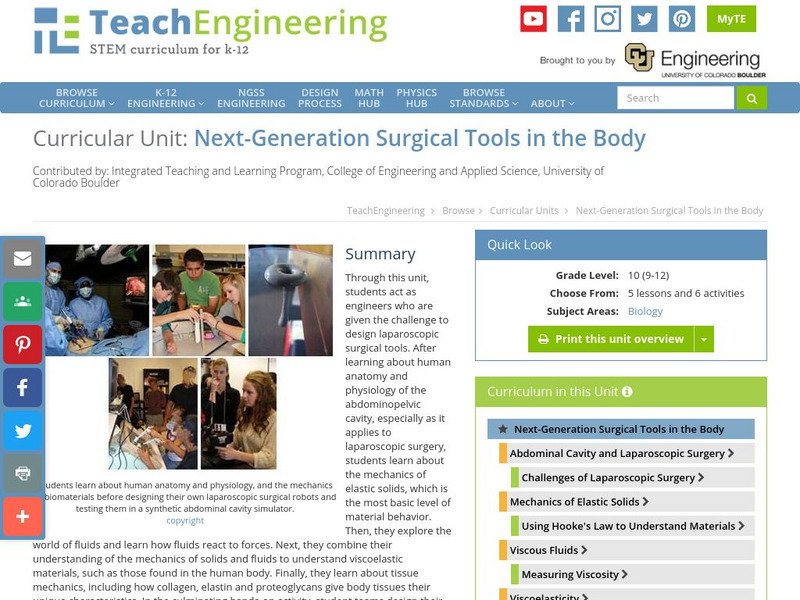
Teach Engineering: Next Generation Surgical Tools in the Body
Through this unit, students act as engineers who are given the challenge to design laparoscopic surgical tools. After learning about human anatomy and physiology of the abdominopelvic cavity, especially as it applies to laparoscopic...
TeachEngineering
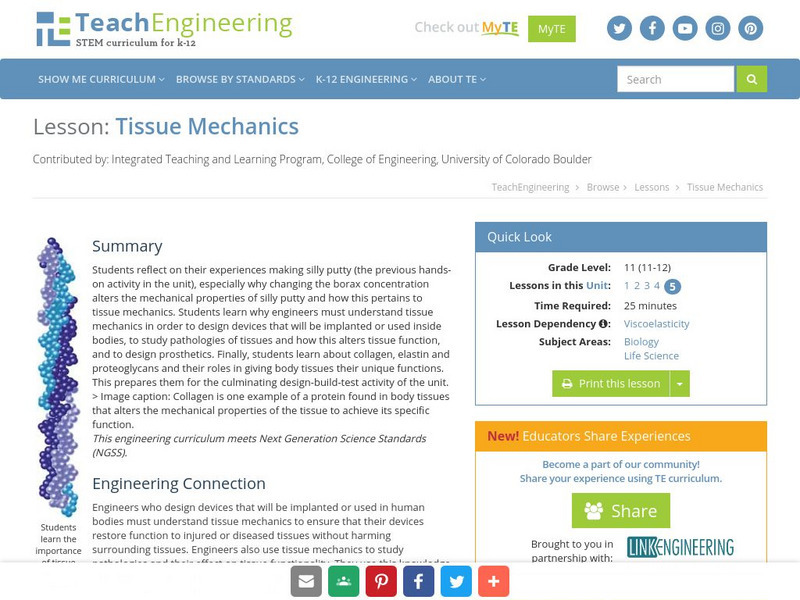
Teach Engineering: Tissue Mechanics
Students reflect on their experiences making silly putty (the previous hands-on activity in the unit), especially why changing the borax concentration alters the mechanical properties of silly putty and how this pertains to tissue...
TeachEngineering
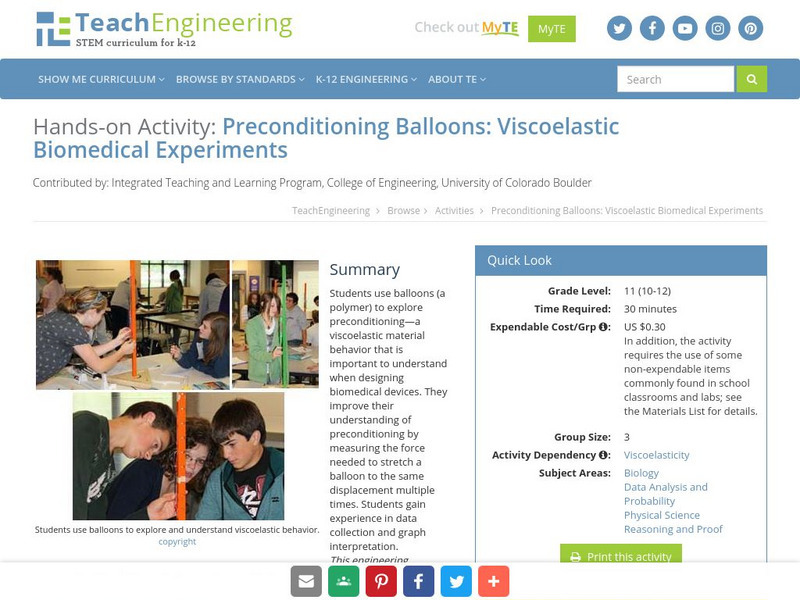
Teach Engineering: Preconditioning Balloons
Students use balloons (a polymer) to explore preconditioning a viscoelastic material behavior that is important to understand when designing biomedical devices. They improve their understanding of preconditioning by measuring the force...
TeachEngineering
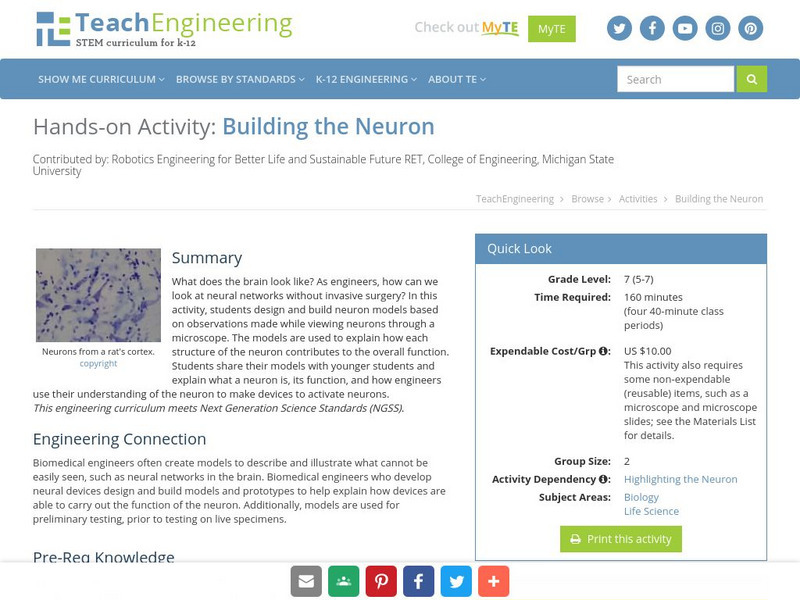
Teach Engineering: Building the Neuron
In this activity, students design and build neuron models based on observations made while viewing neurons through a microscope.
TeachEngineering
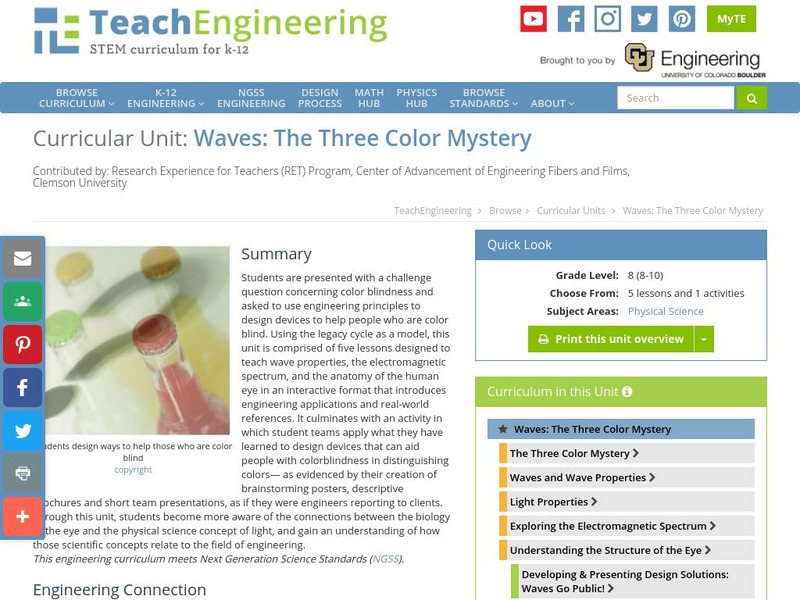
Teach Engineering: Waves: The Three Color Mystery
Students are presented with a challenge question concerning color blindness and asked to use engineering principles to design devices to help people who are color blind. Using the legacy cycle as a model, this unit is comprised of five...
TeachEngineering
Teach Engineering: Convertible Shoes: Function, Fashion and Design
Students teams design and build shoe prototypes that convert between high heels and athletic shoes. They apply their knowledge about the mechanics of walking and running as well as shoe design (as learned in the associated lesson) to...
TeachEngineering
Teach Engineering: High Arches, Low Arches
A main concern of shoe engineers is creating shoes that provide the right amount of arch support to prevent (or fix) common gait misalignments that lead to injury. During this activity, students look at their own footprints and determine...
TeachEngineering
Teach Engineering: Abdominal Cavity and Laparoscopic Surgery
For students interested in studying biomechanical engineering, especially in the field of surgery, this lesson serves as an anatomy and physiology primer of the abdominopelvic cavity. Students are introduced to the abdominopelvic...
TeachEngineering
Teach Engineering: Presenting Painless Breast Cancer Detection!
This lesson plan culminates the unit with the Go Public phase of the legacy cycle. In the associated activity, students must depict a tumor amidst healthy body tissue using a graph in Microsoft Excel. In addition, students will design a...
TeachEngineering
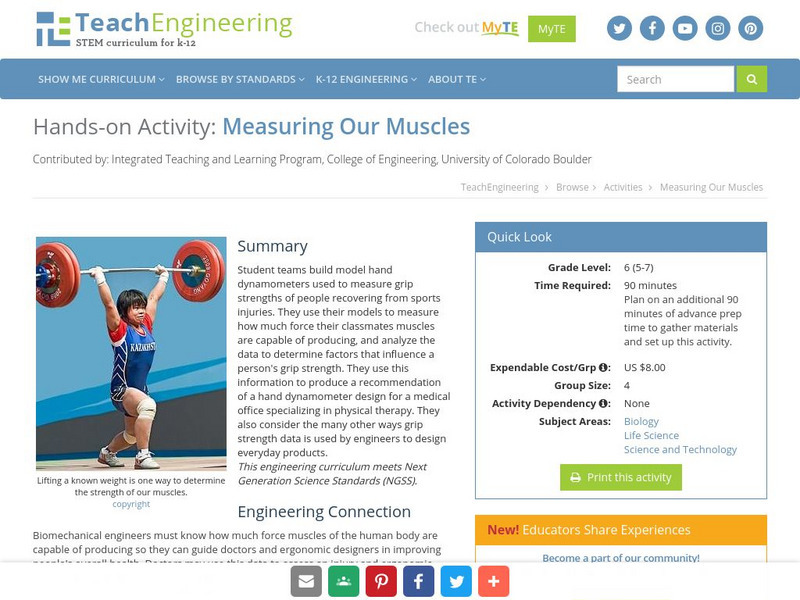
Teach Engineering: Measuring Our Muscles
Student teams build model hand dynamometers used to measure grip strengths of people recovering from sports injuries. They use their models to measure how much force their classmates muscles are capable of producing, and analyze the data...
TeachEngineering
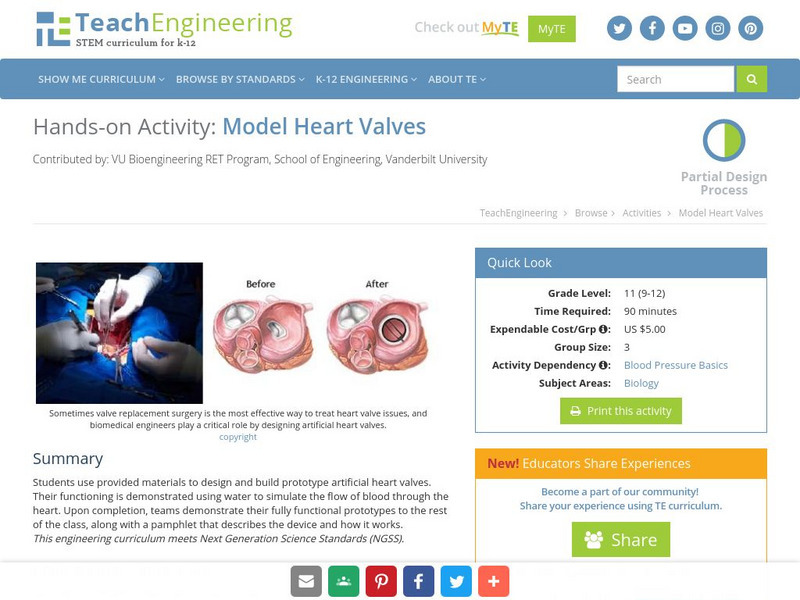
Teach Engineering: Model Heart Valves
Students use provided materials to design and build prototype artificial heart valves. Their functioning is demonstrated using water to simulate the flow of blood through the heart. Upon completion, teams demonstrate their fully...
TeachEngineering
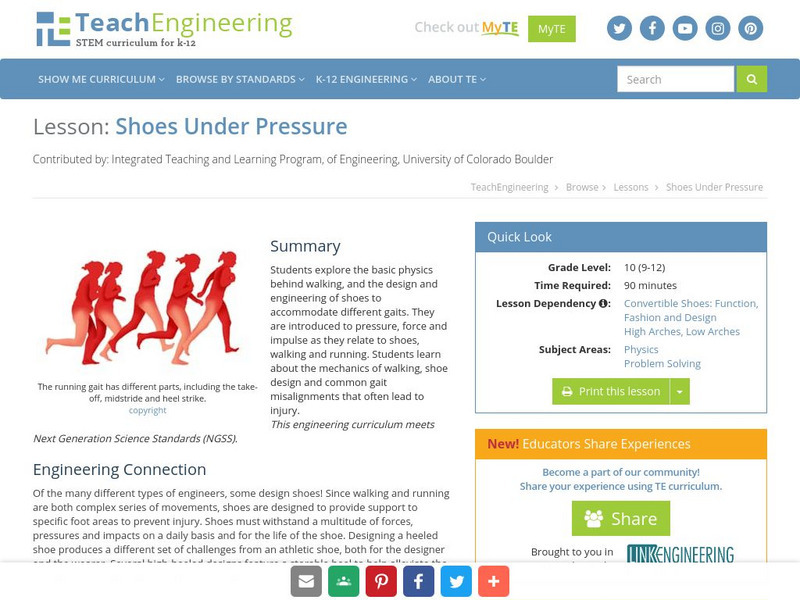
Teach Engineering: Shoes Under Pressure
Students explore the basic physics behind walking, and the design and engineering of shoes to accommodate different gaits. They are introduced to pressure, force and impulse as they relate to shoes, walking and running. Students learn...
TeachEngineering
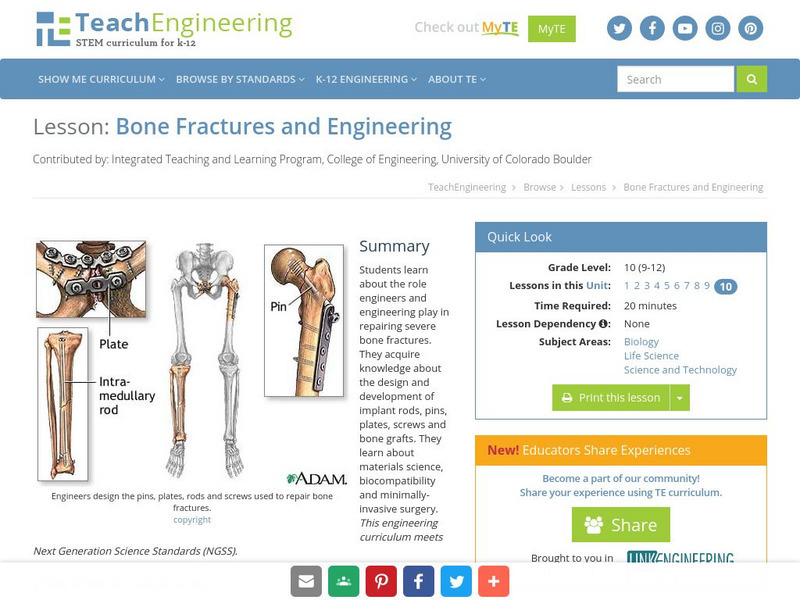
Teach Engineering: Bone Fractures and Engineering
Students learn about the role engineers and engineering play in repairing severe bone fractures. They acquire knowledge about the design and development of implant rods, pins, plates, screws and bone grafts. They learn about materials...
TeachEngineering
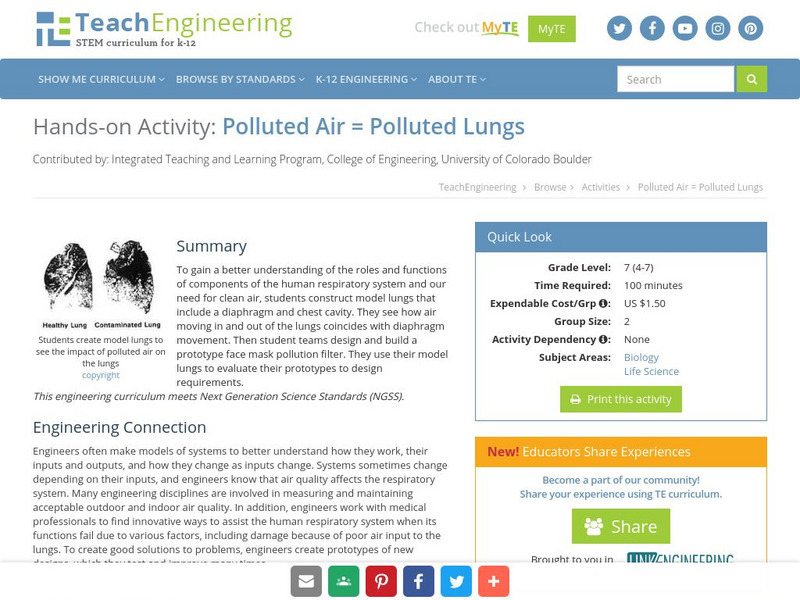
Teach Engineering: Polluted Air = Polluted Lungs
To gain a better understanding of the roles and functions of components of the human respiratory system and our need for clean air, students construct model lungs that include a diaphragm and chest cavity. They see how air moving in and...
TeachEngineering
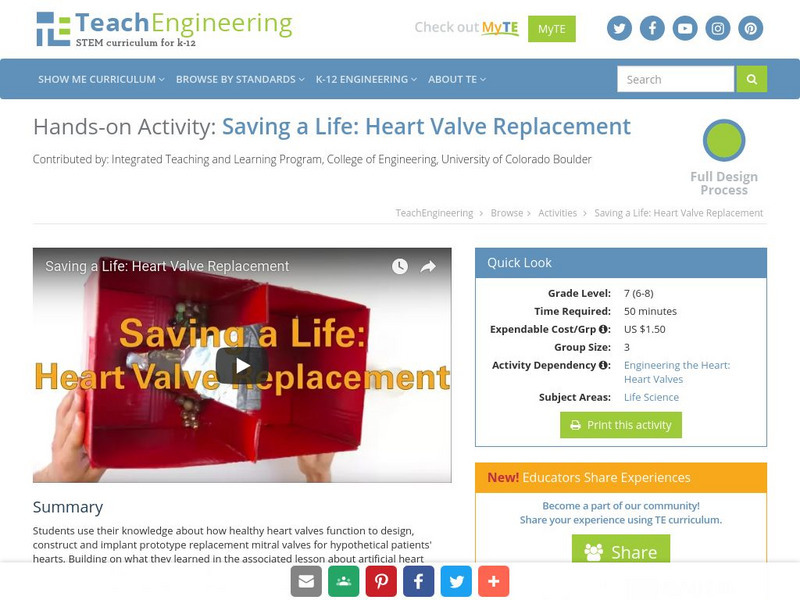
Teach Engineering: Saving a Life: Heart Valve Replacement
Students use their knowledge about how healthy heart valves function to design, construct and implant prototype replacement mitral valves for hypothetical patients' hearts. Building on what they learned in the associated lesson about...
TeachEngineering
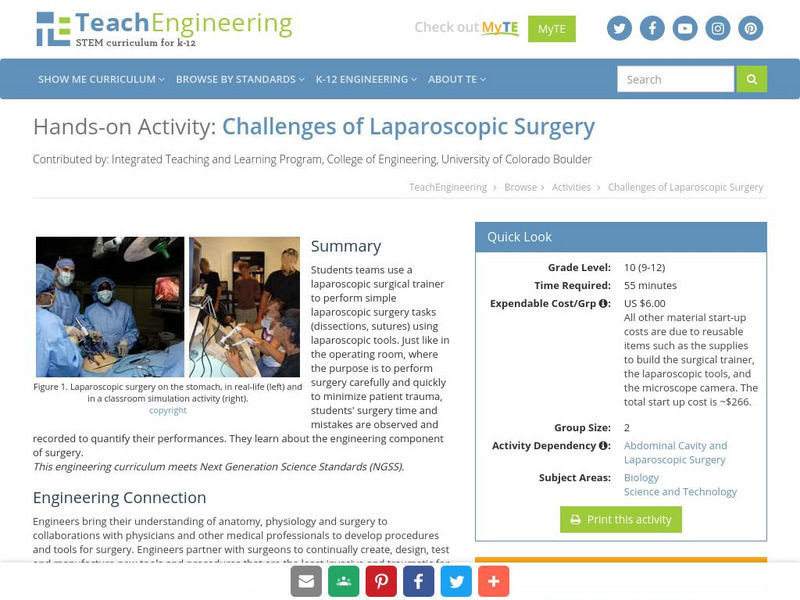
Teach Engineering: Challenges of Laparoscopic Surgery
Students teams use a laparoscopic surgical trainer to perform simple laparoscopic surgery tasks (dissections, sutures) using laparoscopic tools. Just like in the operating room, where the purpose is to perform surgery carefully and...
TeachEngineering
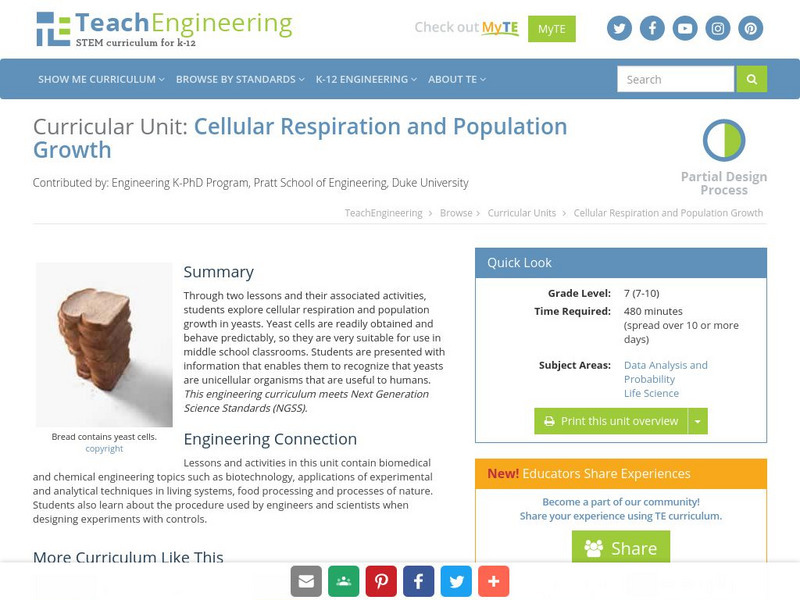
Teach Engineering: Cellular Respiration and Population Growth
Two lessons and their associated activities explore cellular respiration and population growth in yeasts. Yeast cells are readily obtained and behave predictably, so they are very appropriate to use in middle school classrooms. In the...
TeachEngineering
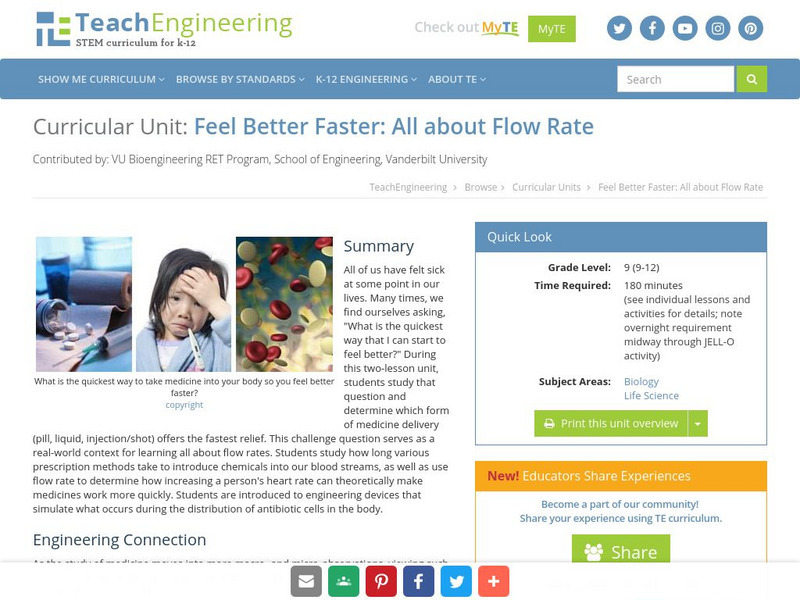
Teach Engineering: Feel Better Faster: All About Flow Rate
All of us have felt sick at some point in our lives. Many times, we find ourselves asking, "What is the quickest way that I can start to feel better?" During this two-lesson unit, students study that question and determine which form of...
TeachEngineering
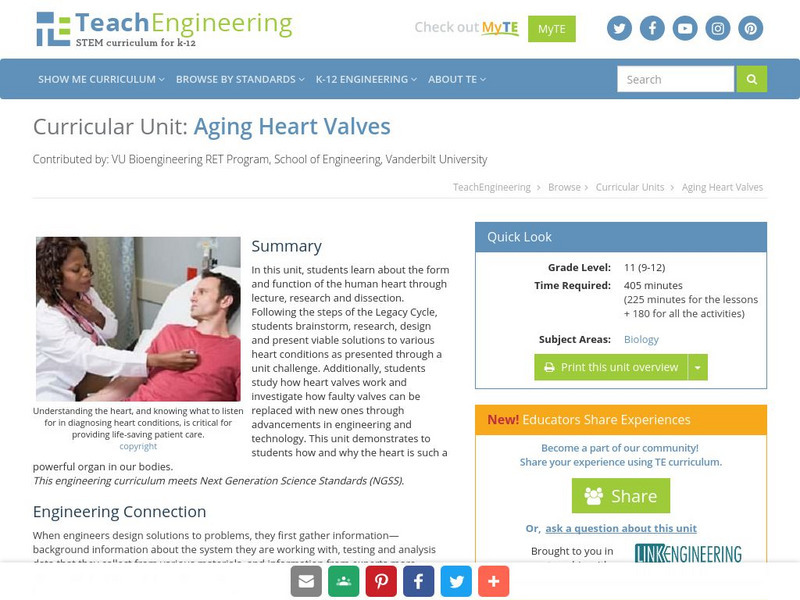
Teach Engineering: Aging Heart Valves
In this unit, students learn about the form and function of the human heart through lecture, research and dissection. Following the steps of the Legacy Cycle, students brainstorm, research, design and present viable solutions to various...
TeachEngineering
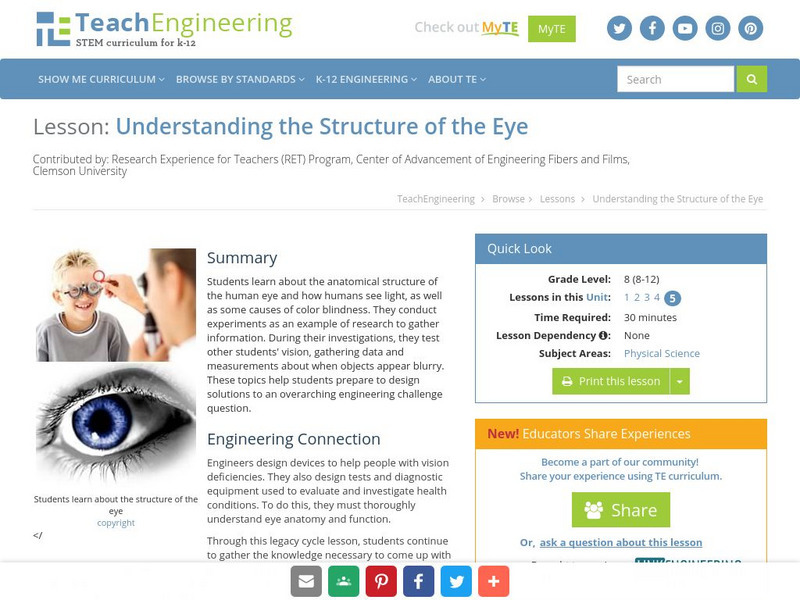
Teach Engineering: Understanding the Structure of the Eye
Students learn about the anatomical structure of the human eye and how humans see light, as well as some causes of color blindness. They conduct experiments as an example of research to gather information. During their investigations,...

TeachEngineering
Teach Engineering: Breathe In, Breathe Out
Students are introduced to the respiratory system, the lungs and air. They learn about how the lungs and diaphragm work, how air pollution affects lungs and respiratory functions, some widespread respiratory problems, and how engineers...