Hi, what do you want to do?






BioEd Online
Bio Ed Online: The Senses
In the following activities students can learn about the basic characteristics and structures of the brain, skull and sensory system; investigate sight, hearing, smell, taste and touch; and discover how the brain and the senses are...
TeachEngineering
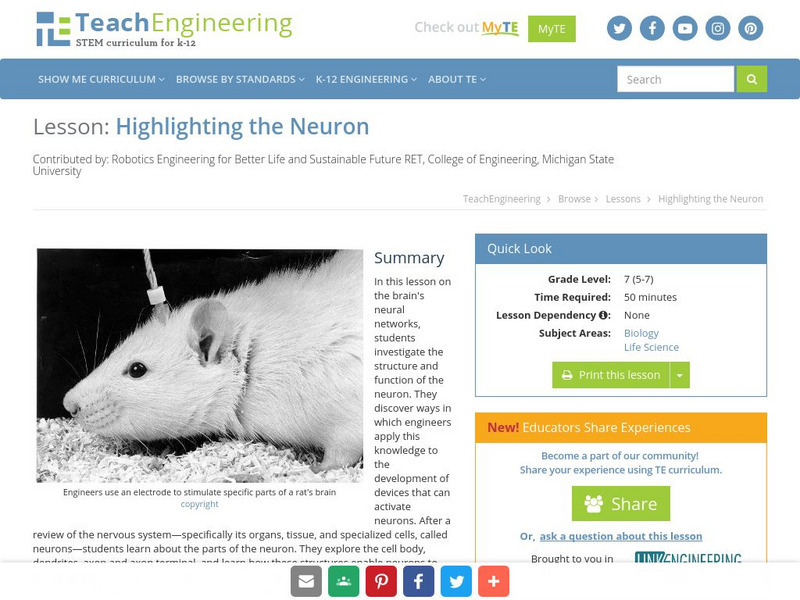
Teach Engineering: Highlighting the Neuron
In this lesson on the brain's neural networks, young scholars investigate the structure and function of the neuron. They discover ways in which engineers apply this knowledge to the development of devices that can activate neurons....
TeachEngineering
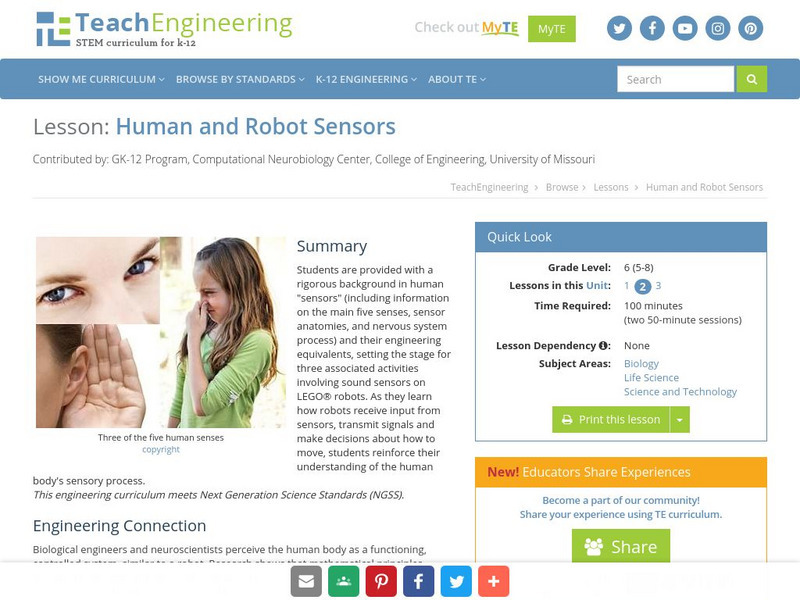
Teach Engineering: Human and Robot Sensors
Students are provided with a rigorous background in human "sensors" (including information on the main five senses, sensor anatomies, and nervous system process) and their engineering equivalents, setting the stage for three associated...
Better Lesson
Better Lesson: Shake It in Shades Game
Make every moment count! Utilize a brain break to learn shades of meaning among verbs at the same time! Included in this lesson plan is a video of the activity, a reference chart, and a list of fun verbs to act out.
PBS
Pbs: Misunderstood Minds
A wonderful spotlight on scientific explanations behind learning differences and strategies to aid success in school. Includes profiles of the students in the documentary as well as interactive activities designed to give site visitors a...
University of Washington
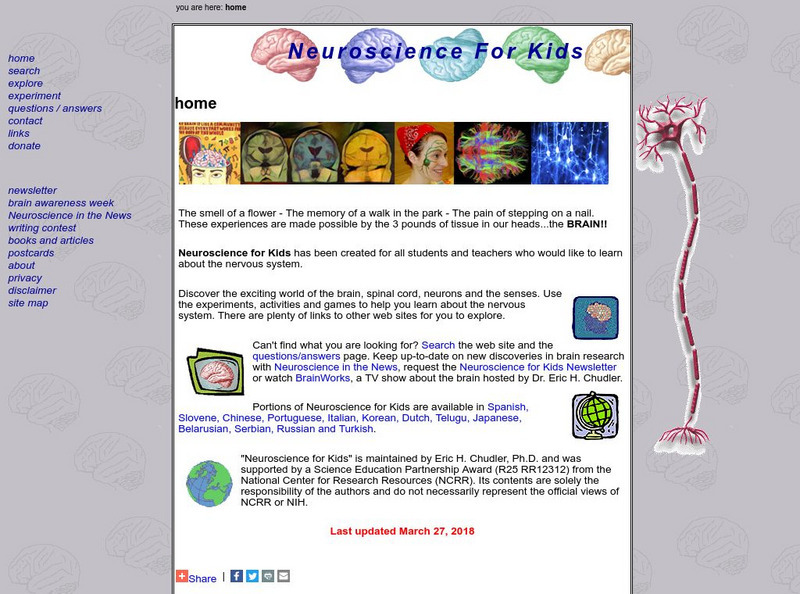
University of Washington: Neuroscience for Kids
Created for all students and teachers who would like to learn more about the nervous system, this extensive University of Washington site offers information, resources, games, and activities galore. Offers dozens of links to related sites.

National Cancer Institute at the National Institutes of Health
Seer Training Modules: Introduction to the Nervous System
Self-guided learning activity where students learn about the structure and function of the human nervous system. There is a short quiz at the end of the lesson to check for understanding.
BBC
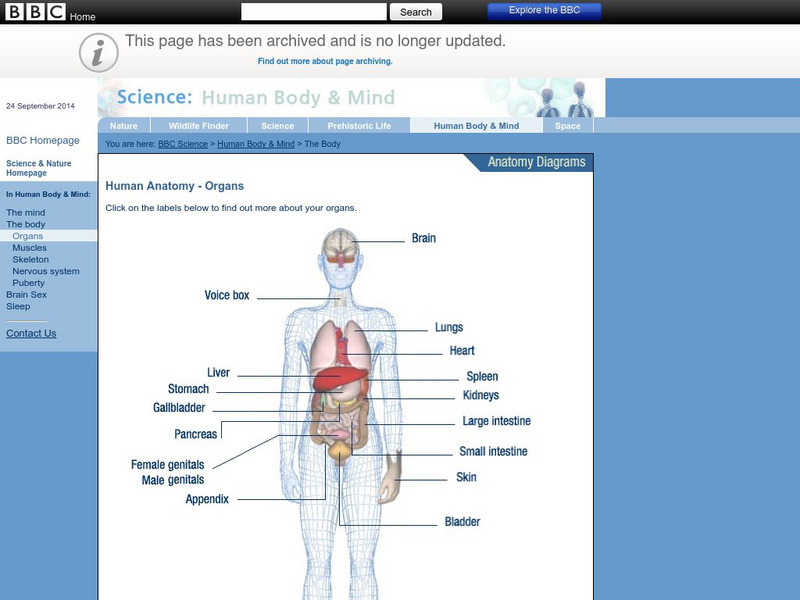
Bbc: Human Anatomy: Organs
Explore the anatomy of the human body. Click on an organ or other body part to read more about its structure and function, and then try out an interactive activity for that organ.

Georgia Department of Education
Ga Virtual Learning: Anatomy and Physiology: Nervous System
Through informational text, interactive activities, self-checking practice problems, and more, students learn about the human nervous system.
University of Washington
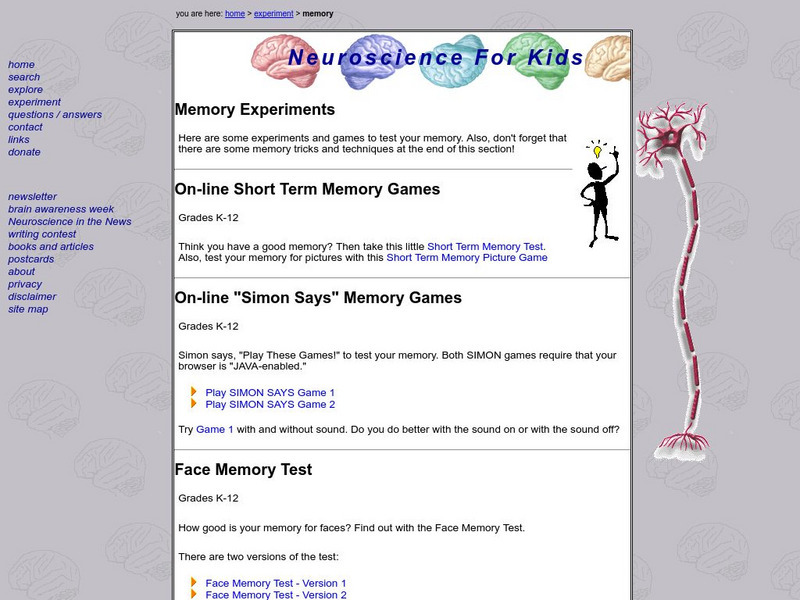
University Washington: Memory and Learning for Kids
This University of Washington site includes interactive java-based games to test your memory. There are also lots of in-class activities for testing concentration and memory.
TeachEngineering
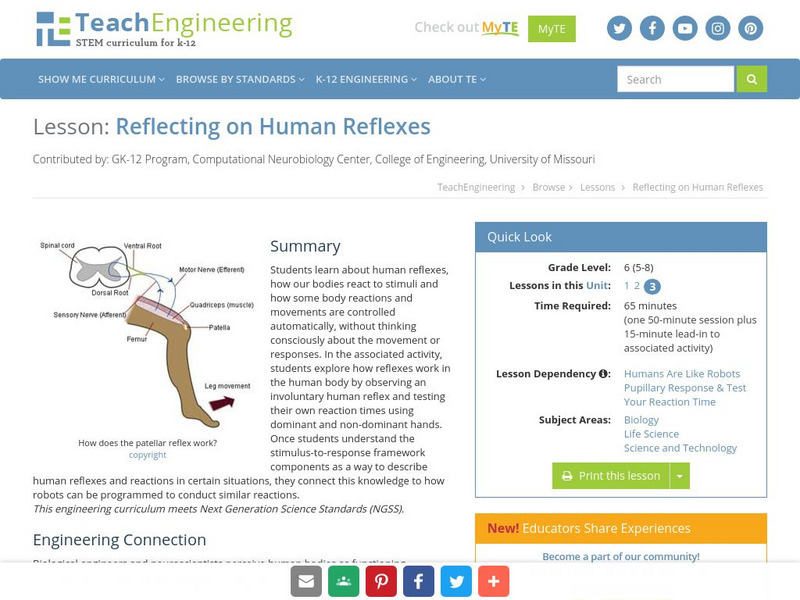
Teach Engineering: Reflecting on Human Reflexes
Students learn about human reflexes, how our bodies react to stimuli and how some body reactions and movements are controlled automatically, without thinking consciously about the movement or responses. In the associated activity,...
TeachEngineering
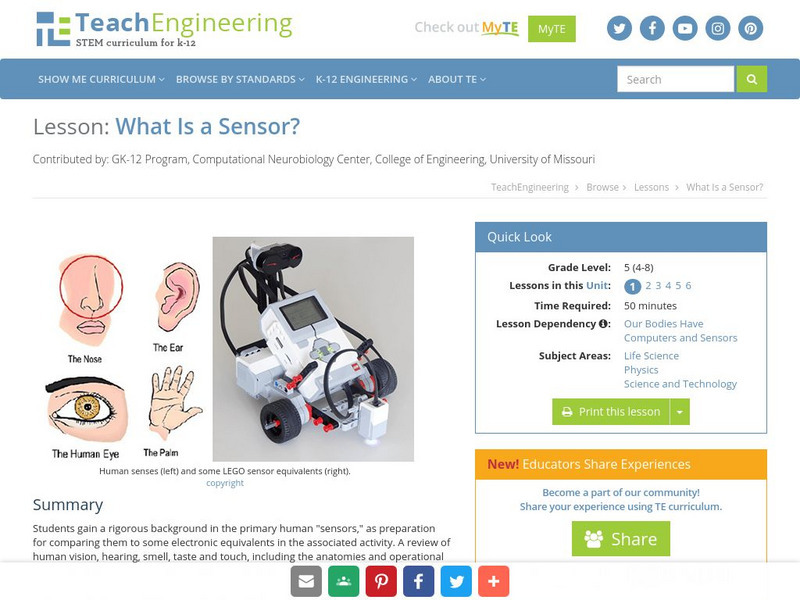
Teach Engineering: What Is a Sensor?
Students gain a rigorous background in the primary human sensors, as preparation for comparing them to some electronic equivalents in the associated activity.

PBS
Pbs Nova: Sleep
These materials supplement a video and teaching activities by providing additional background on the science of sleep.
PBS
Pbs Learning Media: Memory Lane Fitness Lesson Plan
With this lesson, students get a brain and body workout! Students work in pairs as the teacher calls out physical tasks such as high fives and tunnel tens. As the teacher is calling out these partner exercises, students must listen...
Curated OER
Ny Times: Testing Well Known Product Names Lesson Plan
In this lesson, students learn about the advent of neuromarketing as a means to assess the effects of certain brands on the brain activity of prospective buyers. They then design their own experiments that test the power of certain...

Khan Academy
Khan Academy: Connect: Supercharge Your Goals
Trying challenging things is the best way to grow your brain. At the end of this activity, students will be able to make SMART goals that can help guide growth.

Khan Academy
Khan Academy: Connect: The Growth Mindset
An important part of growing your brain is understanding common obstacles that can get in your way or throw you off track when learning and how to overcome them. There are 3 parts to this LearnStorm growth mindset activity.

Khan Academy
Khan Academy: Reflect: Mistakes Are Opportunities
This article describes three types of mistakes and some strategies for transforming them into opportunities to grow your brain. Reflection questions are included.

Khan Academy
Khan Academy: Connect: Mistakes Are Opportunities
At the end of this activity, students will understand that mistakes are a key part of the learning process. There are 3 parts to this LearnStorm growth mindset activity.

Khan Academy
Khan Academy: Connect: Keep Going Keep Growing
This activity will help students understand why working through frustration will help them grow.

Khan Academy
Khan Academy: Connect: The Path Forward
This culminating activity will help students identify ways they can become an influencer in their classroom and community.

Khan Academy
Khan Academy: Reflect: The Growth Mindset
In this reflection, do your best to think about the challenges and obstacles you face in your own life. Use these reflection questions to piece together a plan for overcoming them using strategies shared in previous activities.
Texas Instruments
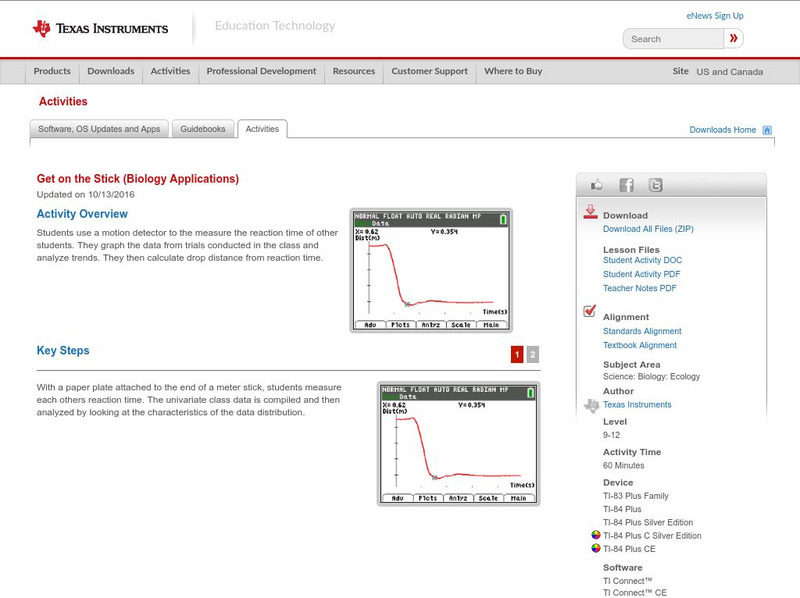
Texas Instruments: Get on the Stick
In this activity, students' use a motion detector to the measure the reaction time of students. They graph the data from trials conducted in the class and analyze trends. They then calculate drop distance from reaction time.
York University
Classics in the History of Psychology: Principles of Psychology by William James
Complete volumes of the two volumes of this work are available for study.