Hi, what do you want to do?





PBS
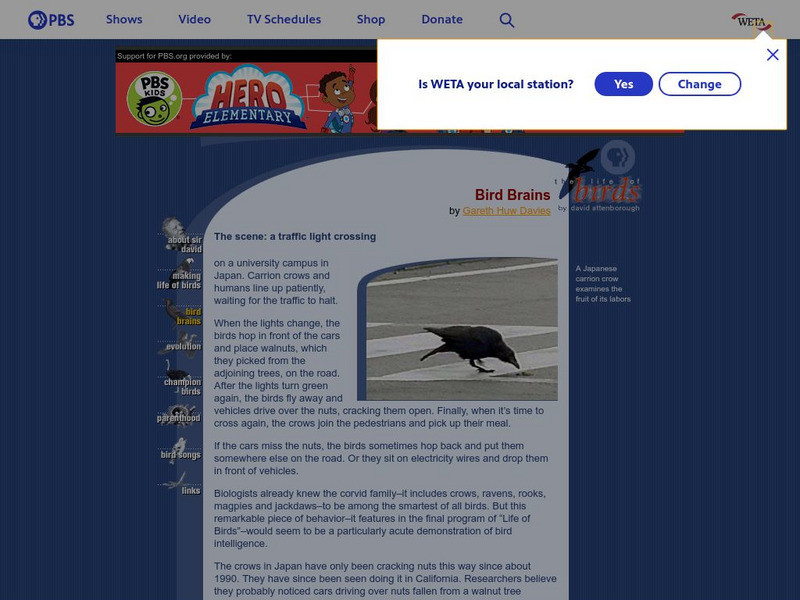
Pbs: The Life of Birds: Bird Brains
Learn about the intelligence of birds. There are many examples to illustrate communication, use of tools, and general resourcefulness that many birds show.
BioEd Online
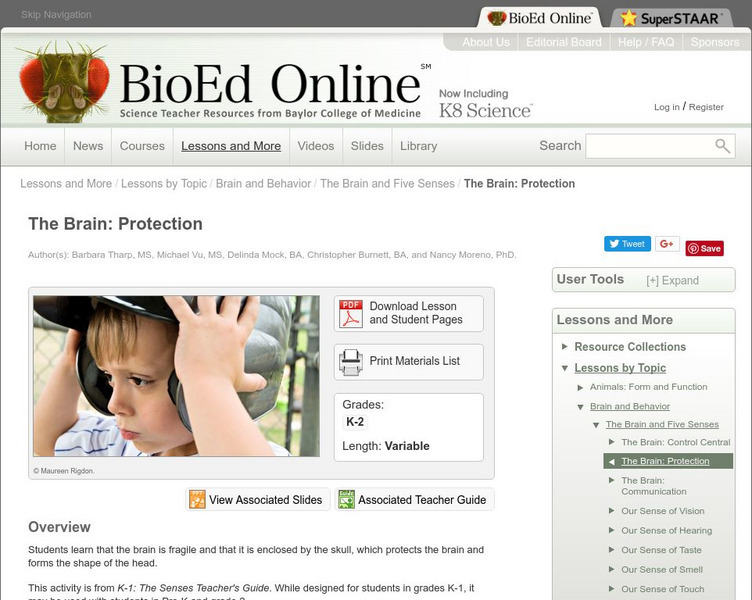
Bio Ed Online: The Brain: Protection
What protects the brain? Why does the brain need to be protected? In this instructional activity students will learn about the fragility of the brain and that it is enclosed by the skull, which protects the brain and forms the shape of...
BioEd Online
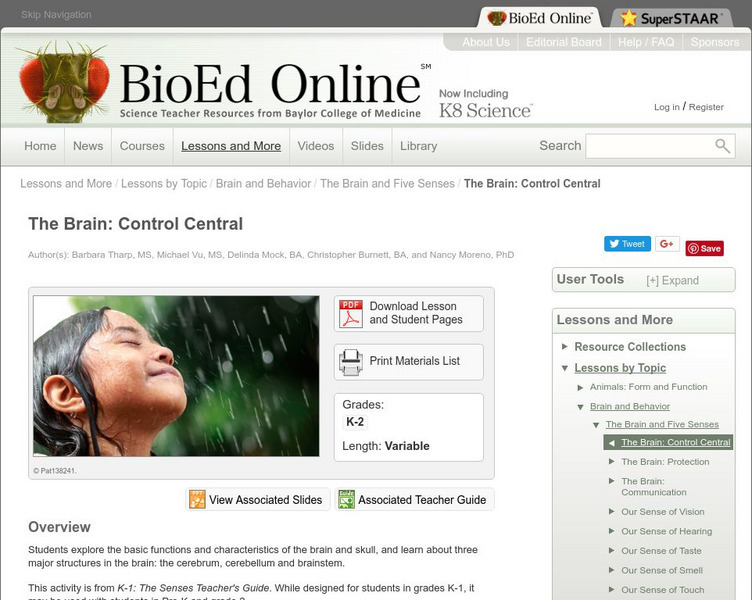
Bio Ed Online: The Brain: Control Central
What do you know about the brain? In this early learners lesson plan, learners will explore the basic functions and characteristics of the brain and skull, and also learn about three major structures in the brain: the cerebrum,...
BioEd Online
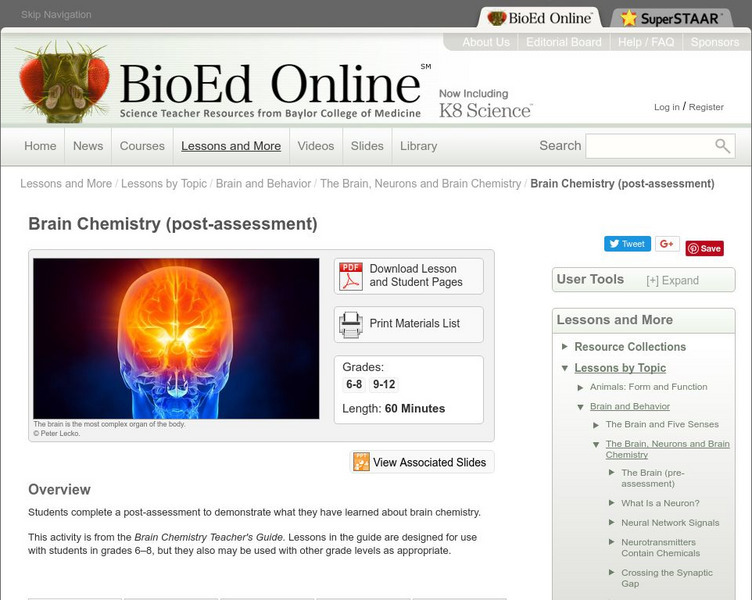
Bio Ed Online: Brain Chemistry Post Assessment
The human brain is complex. Messages within the brain and the rest of the nervous system are conducted by cells called neurons. Drugs and other substances can interfere with or modify the transmission of messages between neurons. In this...
Science Buddies
Science Buddies: The Brains Behind 'Where's Waldo?'
What makes you notice someone in a crowd? Why do some things stand out, while others melt into the background? In this experiment you can investigate the psychology of how things get noticed, by studying how our brains perform a visual...
Science Buddies
Science Buddies: Multitasking: Brain Drain or Boost in Efficiency?
Think it's a good idea to plug into iTunes, surf the Web, or watch TV while doing homework or trying to read? Many people do it and claim that jumping from one activity to another keeps their attention level up and even gives their brain...
Science Buddies
Science Buddies: Tail Wagging and Brain Lateralization
The left brain is supposed to be better at language, and organizing sequential actions, the right brain is supposed to be better at visualizing orientations in space, making and listening to music, and deciphering the emotions of others....
BioEd Online
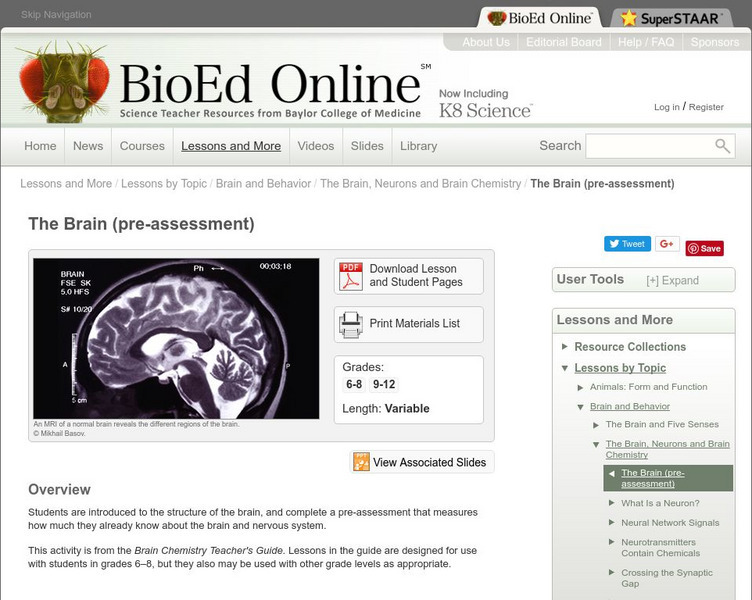
Bio Ed Online: The Brain: Pre Assessment
The brain has unique physical characteristics and it is specialized into many different areas, each with a different job. Brain functions and abilities develop over time. Assess student's knowledge of the structure of the brain by having...
Science Buddies
Science Buddies: Where Do Lizards Go for Lunch?
You've probably heard about differences between the left brain and the right brain in people. One hypothesis has it that brain lateralization evolved as a survival mechanism in animals with eyes on the sides of their heads. One eye could...

BioEd Online
Bio Ed Online: Our Sense of Taste
What are the basic tastes? Where is information about taste detected in the body? In this instructional activity students taste four mystery substances and learn that the tongue is covered with taste buds, which contain taste receptors...
BioEd Online
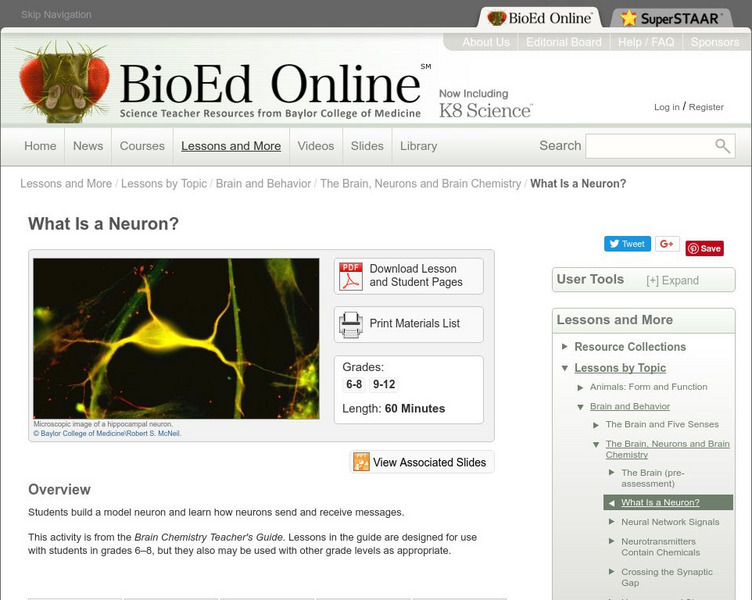
Bio Ed Online: What Is a Neuron?
Messages within the brain and the rest of the nervous system are sent very rapidly. These messages are conducted by cells called neurons. Neurons are specialized to receive and transmit message and neurons are connected in networks. In...
National Institute on Drug Abuse
Nida: Research Report Series: Hallucinogens and Dissociative Drugs
An advanced level report which defines hallucinogens and dissociative and explains their effects.
BioEd Online
Bio Ed Online: Our Sense of Vision
Which parts of the body are involved in vision (seeing)? Is light important for vision? In this instructional activity students make kaleidoscopes to learn that light is essential to vision, and that the brain processes information from...

BioEd Online
Bio Ed Online: Our Sense of Smell
How does our sense of smell work? In this lesson students use four different flavors of dry soft drink mix to investigate the sense of smell, and learn that the nose can detect very small particles in air, and transmit the information to...
BioEd Online
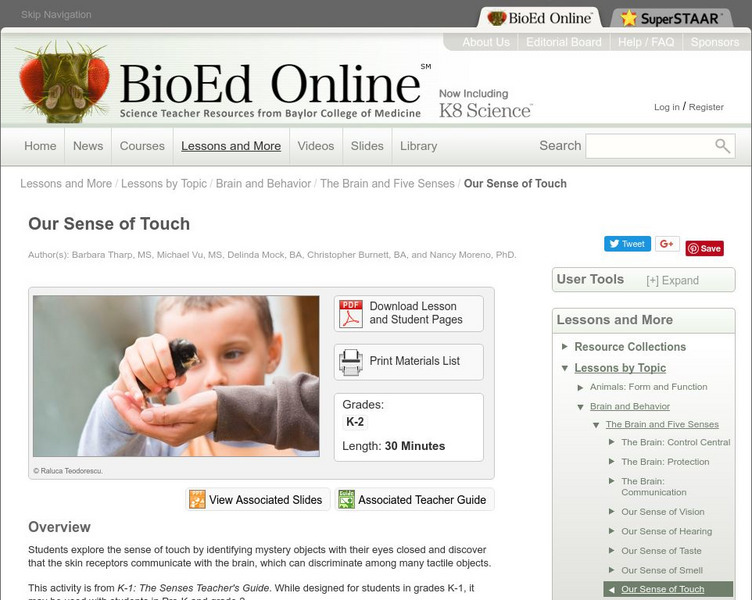
Bio Ed Online: Our Sense of Touch
How does the sense of touch work? Is the sense of touch more sensitive in some parts of the body, such as fingertips, than in others? In this lesson students explore the sense of touch by identifying mystery objects with their eyes...
BioEd Online
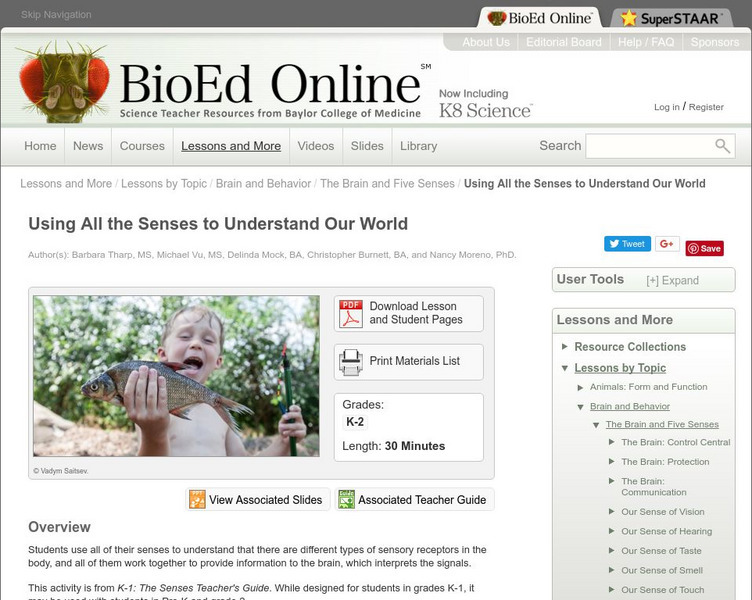
Bio Ed Online: Using All Our Sources to Understand Our World
How do we use our senses to understand our surroundings? What types of input are provided by the different senses? For this lesson students use all of their senses to understand that there are different types of sensory receptors in the...
Science Buddies
Science Buddies: Warped Words and the Stroop Effect
The Stroop effect describes an experiment about the time it takes to name the color of printed words. When you try to name the color in which color words are printed, it takes longer when the color word differs from the ink color than...

Other
Brains.org: Classroom Management
Discipline is widely regarded by most educators and the public alike as the number one concern in schools. Even though administrators and teachers alike view discipline as their number one issue, newly graduated teachers still feel...
PBS
Pbs Learning Media: Zombie Autopsies: Spooky Psychiatric Medicine to Save World
After looking at zombies to learn about brain disease that alters behavior, students now must develop a cure for zombies. They use Skittles, where each color represents a different neurotransmitter. They then present their cure to the...
PBS
Pbs: In the Mix Educators: Alcohol "Targets" Lesson Plan
Here is a simple guideline for a two-period activity through which students "Compose a collage of alcohol ads," and participate in activities that will help hone their critical thinking skills and their views about alcohol and alcohol...