Hi, what do you want to do?





Independence Hall Association
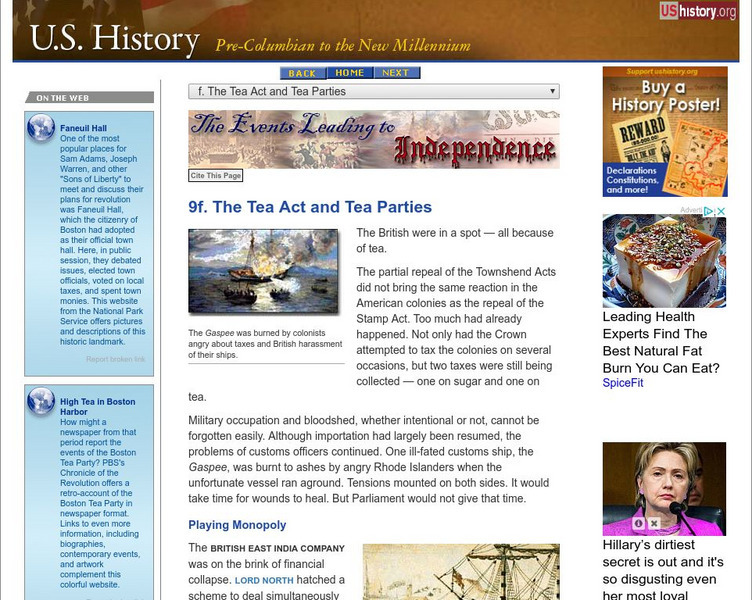
U.s. History: The Tea Act and Tea Parties
Read the text of the Tea Act, passed by the British Parliament primarily as a way to rescue the failing British East India Company. Find out about the colonists' reactions to this tax, and read a first-hand account of the Boston Tea Party.
Other
America's Homepage: The Quartering Act of 1765
Read the full text of The Quartering Act of the British Parliament in 1765, which required colonists to provide food and shelter for soldiers.
National Humanities Center
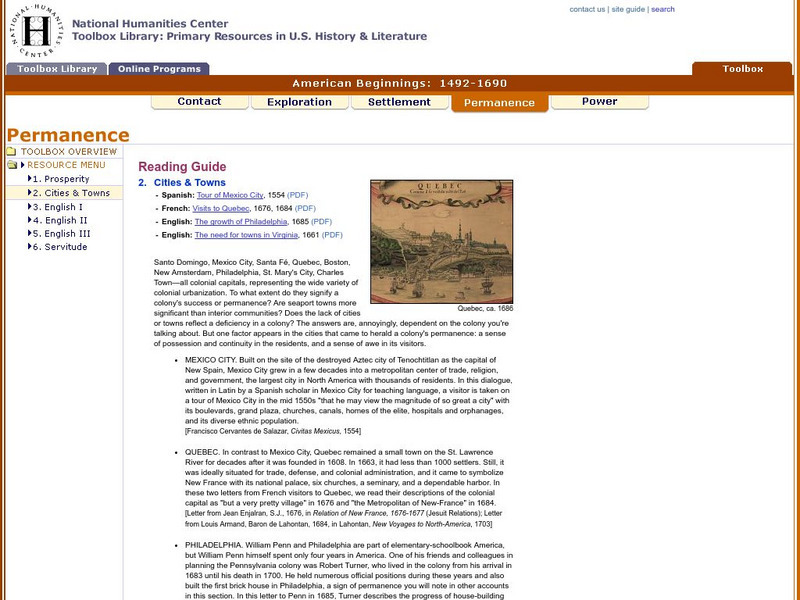
National Humanities Center: Toolbox Library: Cities & Towns, American Beginnings: 1492 1690
Four accounts of the visits to and growth of colonial cities in Spanish, British, and French New World settlements that demonstrate why certain communities developed successfully.
National Humanities Center
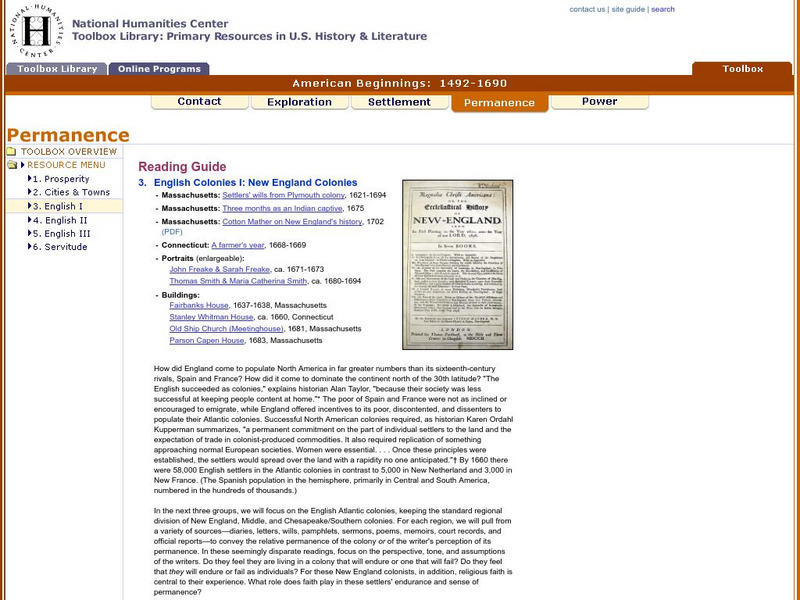
National Humanities Center: Toolbox Library: English I, American Beginnings: 1492 1690
Portraits of early New Englanders as well as four buildings from seventeenth-century New England that accompany accounts in those British colonies of struggles, Indian hostilities, and economic success.
University of Groningen
American History: Essays: The Sugar and Stamp Acts
Reasons for the Sugar Act and the Stamp Act are briefly described. The article also describes the colonial assemblies' reasons for fearing and speaking out against these taxes. The biggest question, Parliament's right to tax the...
![Digital History: The Stamp Act and Methods of Protest [Pdf] Website](https://static.lp.lexp.cloud/images/attachment_defaults/resource/large/FPO-knovation.png "Digital History: The Stamp Act and Methods of Protest [Pdf] Website")
Digital History
Digital History: The Stamp Act and Methods of Protest [Pdf]
The impostition of the Stamp Act hit a nerve with the English colonists. Read about the many forms of protest against the act from the primary sources provided. Think about whether the repeal of the Stamp Act was a Pyrrhic victory in...
Digital History
Digital History: By What Right [Pdf]
Two opposing philosophies concerning the relationship between government and its citizens were expressed by Thomas Hobbes and John Locke in the 17th century. Compare these two philosophies and see how they were related to the colonists'...
Other
Lost Colony: England's Expeditions to the New World 1584 1590
A short history of the attempt to establish a British colony on Roanoke Island which ended with the mysterious disappearance of the colonists.
Art Cyclopedia
Artcyclopedia: Charles Willson Peale
This ArtCyclopedia resource for Charles Willson Peale (1741-1827), the American colonial-era painter, provides links to a biography, museums with his work, and articles about him.
Digital History
Digital History: The Boston Massacre [Pdf]
This excellent recounting of the days that led up the Boston Massacre and the massacre itself fills in a lot of information that is lacking in textbooks because of space contraints. Read about the British soldiers' and the colonists'...
Digital History
Digital History: The Battle of Lexington [Pdf]
Primary sources make for good reading. Here find accounts by the colonial militia commander, the British commander, and accounts by soldiers themselves that tell of their impressions of what happened at the Battle of Lexington. [PDF]
University of Groningen
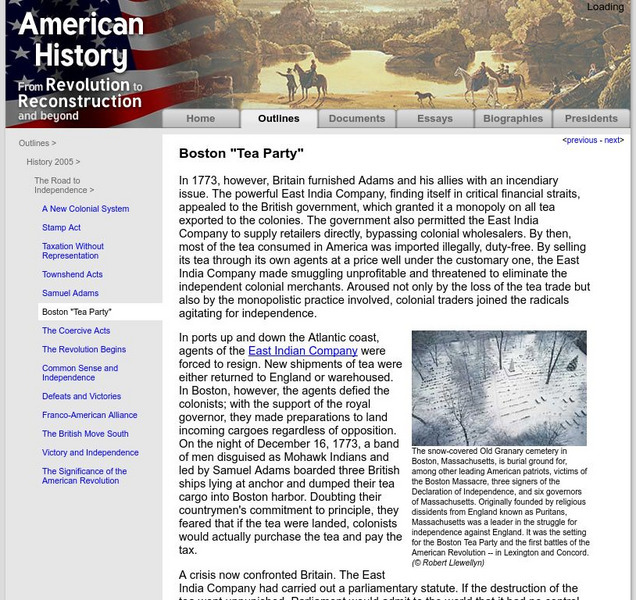
American History: Outlines: Boston "Tea Party"
Overview of the conflict between Britain and American colonists over policies imposed favoring the British East India Company leading to rebellion and what is known as the Boston Tea Party.
Independence Hall Association
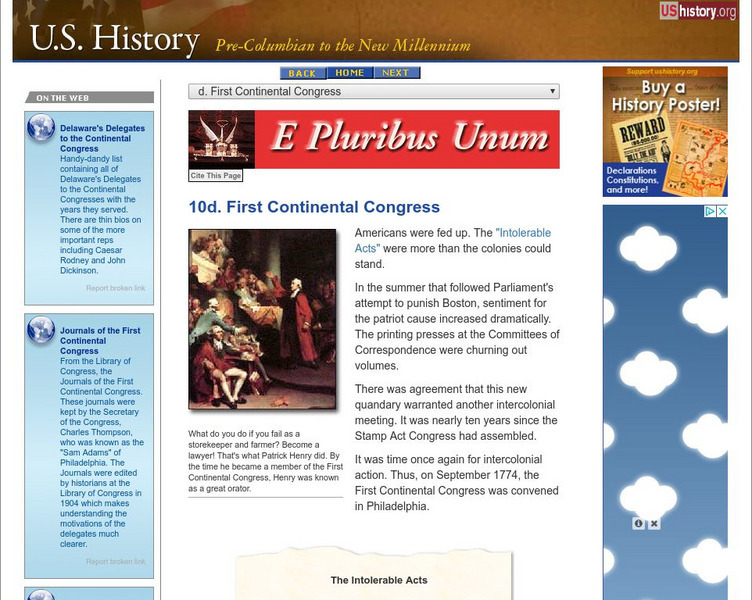
U.s. History: First Continental Congress
By 1774 the colonists had had enough of what they saw as British disrespect and lack of concern about their grievances. Read about the cooperation of the colonies in forming the First Continental Congress to address these issues.
Digital History
Digital History: Was the Revolution Justified?
A terrific look at the twenty-seven specific reasons Thomas Jefferson cited in the Declaration of Independence and the support for those reasons of why the colonists felt justified in breaking the bonds with Great Britain.
The History Place
The History Place: Boston Tea Party: Eyewitness Account by a Participant
Presents a colonist's actual account of the boarding and dumping of the tea into the Boston Harbor on December 17,1773.
PublicBookshelf Corporation
Public Bookshelf: The Stamp Act of 1765
A discussion of the causes and effects of the Stamp Act of 1765 in the British Colonies of North America.
University of North Carolina
Carolina Alumni Review: Where the Colony Went: This Could Be a Big Clue
This article describes how the patches on a map drawn by John White, Governor of the lost Roanoke Colony, came to inspire someone's curiosity and were discovered to hide a location that the colony may have relocated to. This map is known...
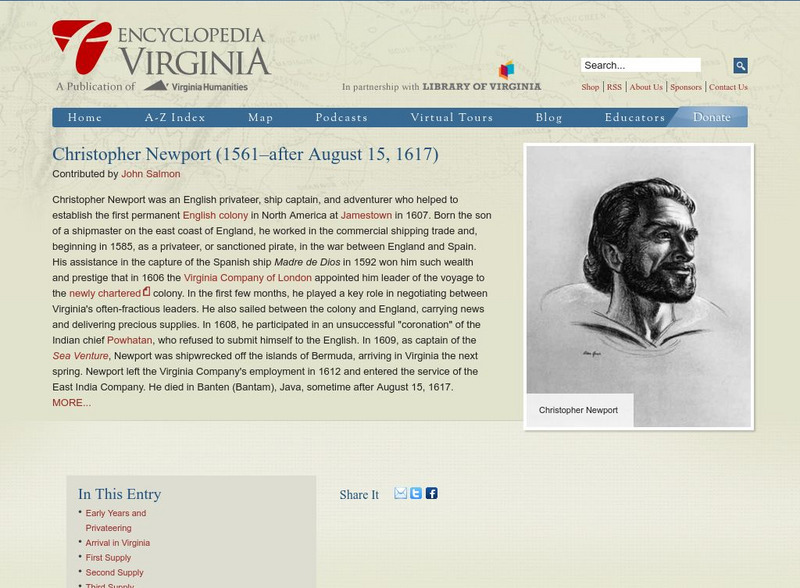
Other
Encyclopedia Virginia: Christopher Newport
Biographical information about English explorer, Christopher Newport, who commanded the first fleet sent by the Virginia Company to America, and who helped the colonists found Jamestown colony. A timeline outlines his active sailing career.
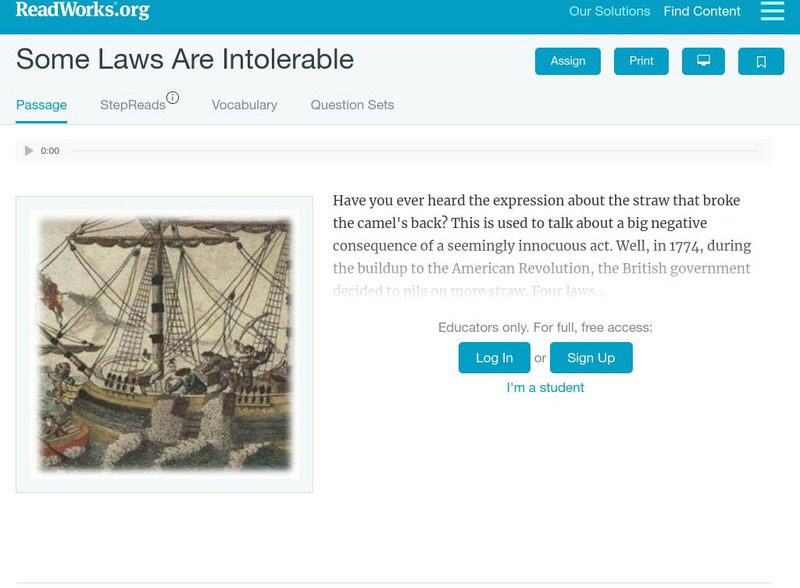
Read Works
Read Works: Some Laws Are Intolerable
[Free Registration/Login Required] An informational text about the British Acts that lead to the Boston Tea Party and to the writing of the Declaration of Independence. A question sheet is available to help students build skills in...
Independence Hall Association
U.s. History: The Beginnings of Revolutionary Thinking
The American Revolution was close to 200 years in the making. Read about the philosophies and attitudes toward government, as well as the diverse populations who came to the British colonies, that eventually fomented rebellion.
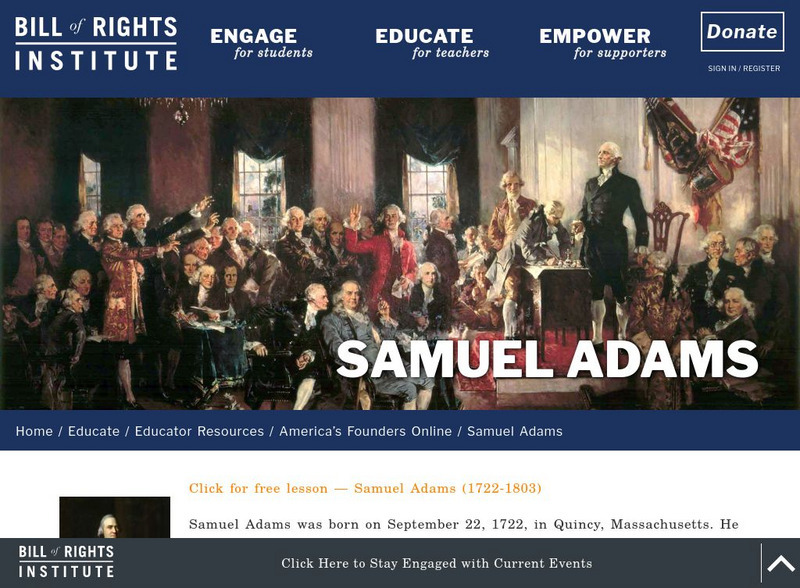
Bill of Rights Institute
Bill of Rights Institute: Samuel Adams
Samuel Adams was born on September 22, 1722, in Quincy, Massachusetts. He entered Harvard College at the age of 14. During the 1760s, Adams became a leader of the Patriot resistance to the British government's attempt to tax the American...
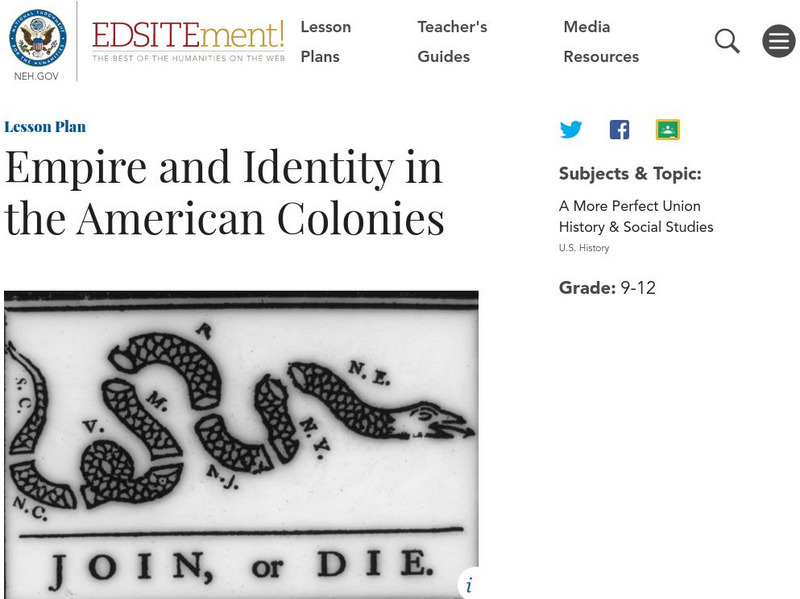
National Endowment for the Humanities
Neh: Edsit Ement: Empire and Identity in the American Colonies
In this lesson plan, students will consider "Empire and Identity in the American Colonies." The plan includes worksheets and other student materials that can be found under the resource tab.
Travel Document Systems
Tds: The Gambia: History
Read about The Gambia's role in the slave trade, its importance in WW II, and its subsequent independence. Information is from the U.S. State Dept. Background Notes.
Massachusetts Institute of Technology
Mit: Open Course Ware: European Imperialism: Nineteenth and Twentieth Centuries
Access university-level course materials compiled for course on European imperialism.