Hi, what do you want to do?






Council for Economic Education
Econ Ed Link: Jesse 'The Body' Wants to Give Money Away!
During his campaign for governor of the State of Minnesota, former professional wrestler Jesse "The Body" Ventura, promised to return to the taxpayers of Minnesota the budget surpluses that had been accumulating in the state. Upon...
Digital History
Digital History: Reaganomics
This on "Reaganomics," President Reagan's economic policy during his two presidential terms in the 1980s, discusses his laissez-faire approach and tax-cutting, which contributed to the economic recovery of that period.

Alabama Learning Exchange
Alex: Wild Water Adventure
Young scholars will learn how a system of equations can be used to find the best use of information to make decisions in real-world situations.Students will work in groups of 3s or 4s to develop a system for the best buy on tickets at a...
Digital History
Digital History: The Clinton Presidency
Short, but comprehensive, synopsis of Clinton's two terms as president. Included in the article is the 1992 campaign, successful and controversial legislation, and the scandals that would eventually become part of his presidential legacy.
University of Regina (Canada)
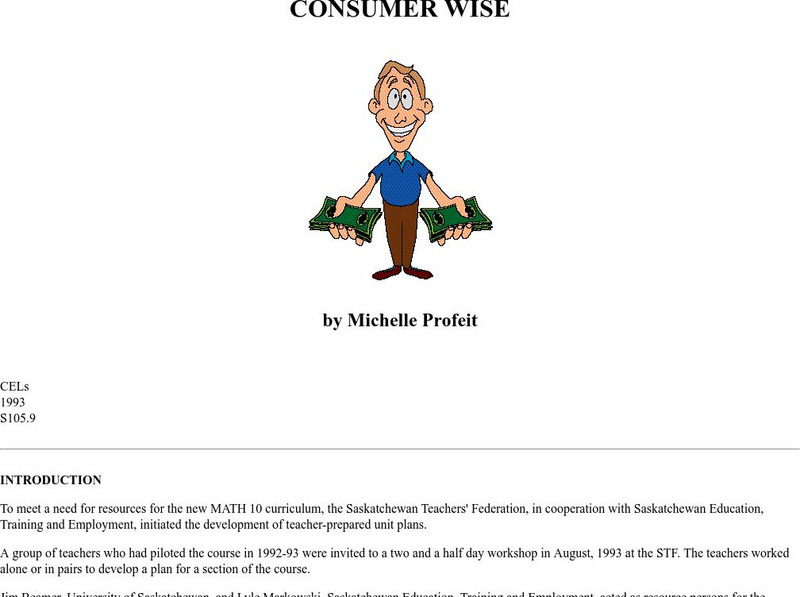
University of Regina: Math Central: Consumer Wise
This unit teaches students how to become a wise consumer. Some of the topics discussed are income, budgeting, credit, saving, and loans. Five different activities include objectives, worksheets, evaluations, and resources.
Other
In Charge: Financial Literacy for Kids
The following lessons provide guidance, lesson plans, and activities for teachers interested in introducing financial literacy concepts to students in grades K-6.
Council for Economic Education
Econ Ed Link: Dumptown, Usa: Making a Ton of Difference
The amount of trash produced in the United States is mounting with each passing year. Communities are finding it increasingly difficult and costly to handle trash disposal. Recycling is considered a key solution to the garbage problem....
Council for Economic Education
Econ Ed Link: What Do You Get for Your $1,818,600,000,000?
Using MS Excel and data from the Bureau of Economic Analysis web site on federal government spending, students will compare the amounts spent on various sectors and programs over a range of years.
Other
The Henry L. Stimson Center: Homepage
"The Henry L. Stimson Center is an independent, nonprofit, public policy institute committed to finding and promoting innovative solutions to the security challenges confronting the United States and other nations in the twenty-first...
Council for Economic Education
Econ Ed Link: Every Penny Counts
Lesson that helps young scholars understand that people must make choices about the goods and services they purchase. Students recognize the prices indicate what people pay for goods and services, learn to compare prices, and understand...
University of Groningen
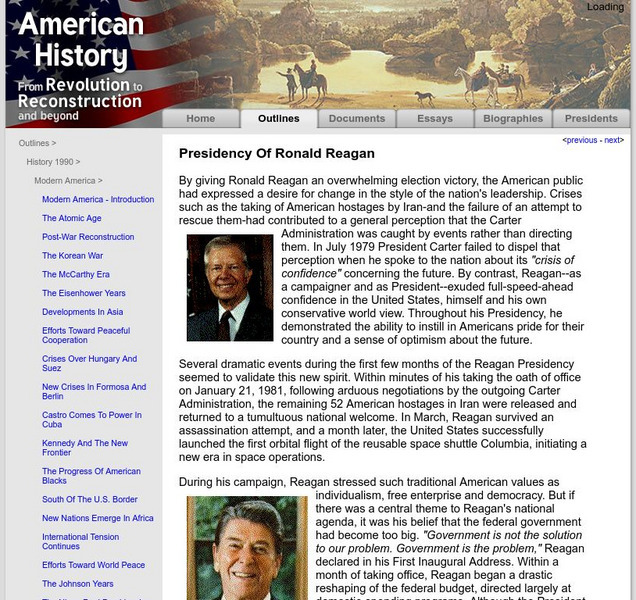
American History: Outlines: Presidency of Ronald Reagan
This site provides an extensive history of Reagan's administration including information on his presidential campaign, domestic policies, foreign policies, and domestic and international events of his presidency.
Other
Economic Awareness Council: Your First Paycheck [Pdf]
Learn what all that information on your paycheck means, and learn to make smart decisions about how to use the money you earn.
Federal Reserve Bank
Federal Reserve Bank of St. Louis: The Pickle Patch Bathtub [Pdf]
A lesson based on The Pickle Patch Bathtub by Frances Kennedy, where young scholars learn about making choices in how to spend money, and how to set goals and develop a savings plan.
University of Missouri
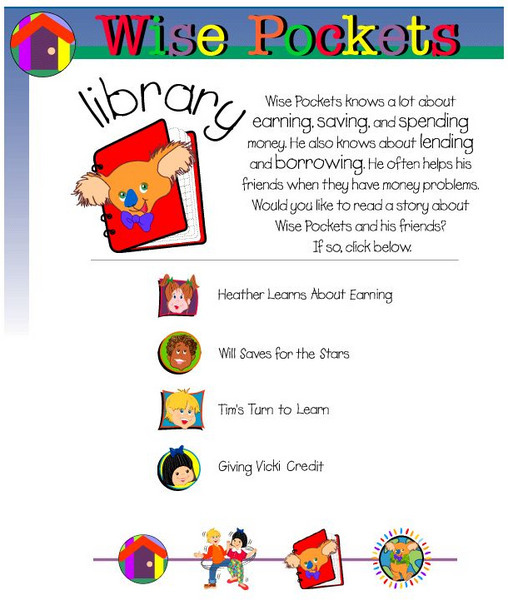
Wise Pockets World: Wise Pockets Clubhouse for Students
As students read the stories in the library, they learn about earning money, spending and saving money, and a bit about borrowing and lending money as well. Each story is followed by a short quiz and a printable activity.
Other
Money Management International: The Berenstain Bears' Trouble With Money
A lesson plan featuring the Berenstain Bears that introduces the concepts of spending, goods, services, income, saving, and interest.

Khan Academy
Khan Academy: Easy Tips to Save Money Every Day
Saving starts with just a few simple changes to your spending. Learn how to save money on your everyday expenses, like groceries, transportation and entertainment. [3:50]