Hi, what do you want to do?






Curated OER
Notes- Similes 2
For this simile worksheet, students read definitions, paragraphs, and examples that contain similes. Students complete 8 sections to read and explain.

Curated OER
How Do Environments Change?
In this environments instructional activity, learners will write in the effects fire, dams, and people can have on the environment. Students will complete 4 fill in the blank statements.

Curated OER
Animals Of The Forest
Students conduct research into the words found to relate to the forests of Wisconsin. They write the words in complete sentences in the correct context. With the writing also includes the oral practice. Students also create their own...

Curated OER
How a Seed Grows: And Who Grows It
Second graders explore botany by viewing video clips in class. In this seed growth activity, 2nd graders identify the types of seeds that grow specific plants and what the optimal conditions are for growing seeds. Students view a video...

Curated OER
Next Year's Seeds
Fifth graders explore genetic traits. In this genetic traits lesson, 5th graders discover how traits are passed from parent to offspring while examining plants. Students problem solve real world applications.

Curated OER
Balance of Nature Pyramid
Students study the concept of food chains and create a physical forest food chain pyramid. For this balance of nature pyramid lesson, students identify the ingredients needed on each level of the pyramid then make connections...

Curated OER
Advanced Sentence Completion: 11
In this sentence completion worksheet, middle schoolers fill in the blank for the correct words for each sentence. Students complete 10 multiple choice questions. Click on "show all" to see the rest of the worksheet.

Curated OER
Changing How Things Look
Third graders use a literature study in order to investigate how organisms effect an ecosystem. They are asked questions about change taken from the book. Students also take a nature walk to make field observations.

Curated OER
Where Do You Fit In?
Learners study habitats and then draw a picture of their own habitat which includes the location of food, water, and shelter, and the concept of space. then they cut their habitat in half and discuss how this would affect their lives.

Curated OER
Using the Suffix 'ly'
In this suffix instructional activity, students spell words using the 'ly' suffix and then write the 'ly' words into sentences. Students write their own sentences for the last set of 'ly' words.

University of Massachusetts
Beavers in Massachusetts
Physical characteristics, distribution, food, life cycle, and dam and lodge building are the topics featured in this effective beaver site.
Read Works
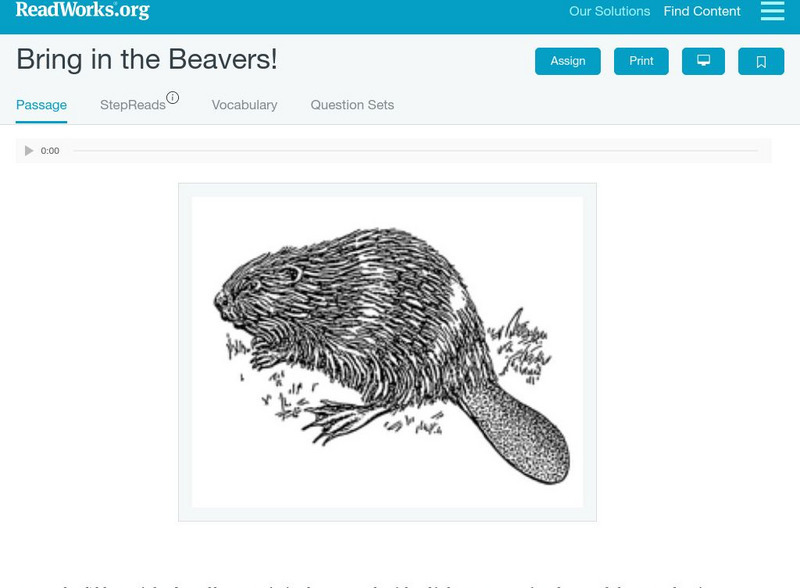
Read Works: Bring in the Beavers!
[Free Registration/Login Required] A literary text about a town that wanted to solve a problem with flooding. A question sheet is available to help students build skills in reading comprehension.
Read Works
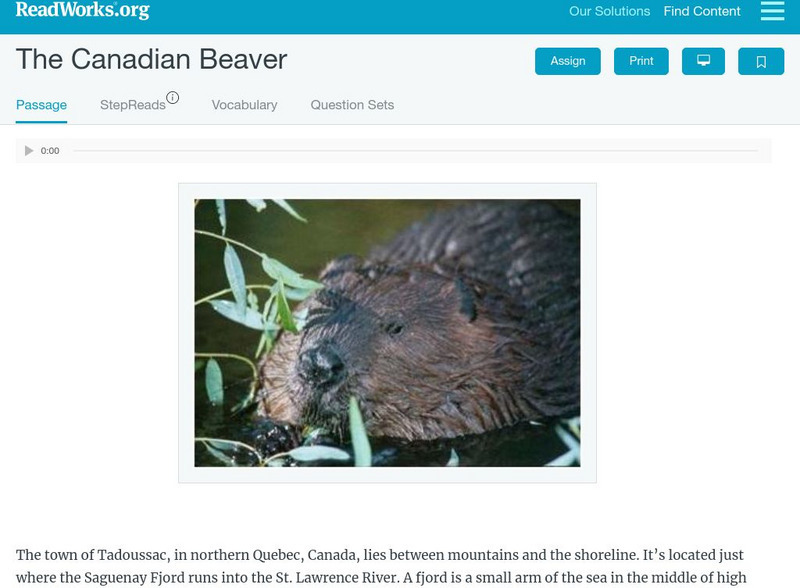
Read Works: The Canadian Beaver
[Free Registration/Login Required] An informational text Canadian beavers in Tadoussac, Quebec. A question sheet is available to help students build skills in reading comprehension.
Canadian Museum of Nature
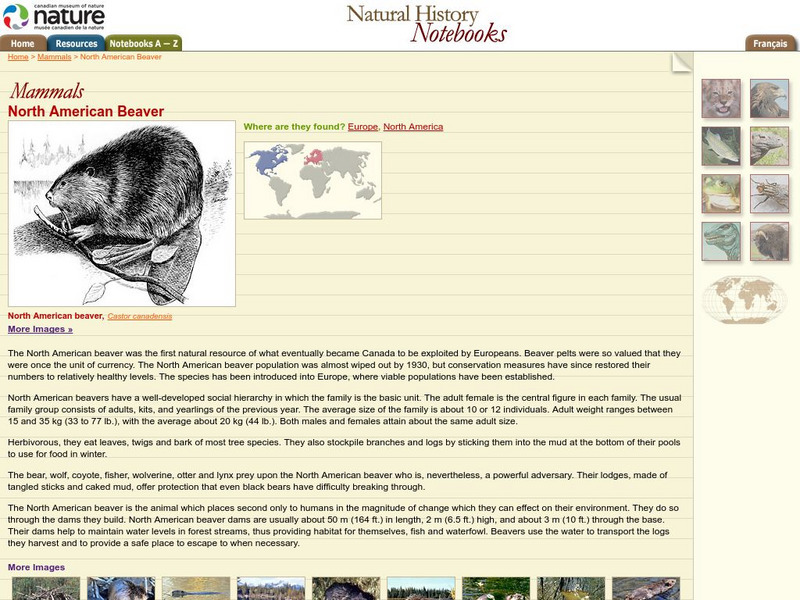
Canadian Museum of Nature: North American Beaver
The North American beaver has survived despite centuries of trapping for their valued pelts. Beavers are marvelous engineers who, the author says, are 'second only to humans in the magnitude of change which they can effect on their...
Pittsburgh Zoo & PPG Aquarium
Pittsburgh Zoo: American Beaver
The American beaver is North America's largest rodent. Use this resource to discover more about this beaver known for building dams, canals, and lodges.

PBS
Pbs Kids: Cat in the Hat: Welcome to Beaver City
Welcome to Beaver City! It's dam building day! Choose from 3 games to play.
Smithsonian Institution
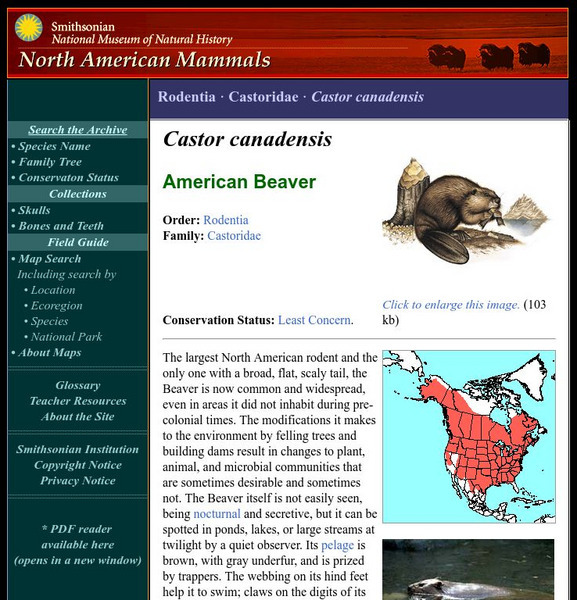
National Museum of Natural History: American Mammals: American Beaver
The largest North American rodent and the only one with a broad, flat, scaly tail, the Beaver is now common and widespread, even in areas it did not inhabit during pre-colonial times. The modifications it makes to the environment by...

Other
Sim Science: Cracking Dams: Beginning Level
Beginning level exercises on the process of dam building. Examines dam building from the human and animal perspectives.
Discovery Education
Discovery Education: Homework Helper: Organism Needs (Habitats)
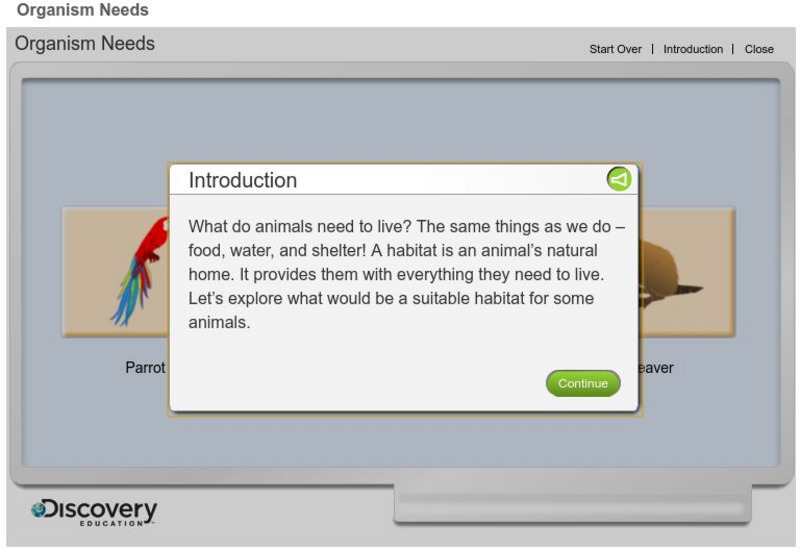
An interactive game asks you to identify the habitat needs of certain animals by building a suitable habitat for a parrot, lion, and beaver.
Read Works
Read Works: Smile! Show Off Those Pearly Whites
[Free Registration/Login Required] An informational text telling about the teeth of different animals including: hippopotamus, beavers, sharks, lions, and people. A question sheet is available to help students build skills in reading...