Hi, what do you want to do?





University of Texas at Austin
Dolph Briscoe Center for American History: Garner the Vice President (1933 1941)
As part of a larger biography, this part describes John Nance Garner's tenure as Franklin D. Roosevelt's vice-president for Roosevelt's first two terms. Find out about his importance to the enactment of the New Deal legislation.
Smithsonian Institution
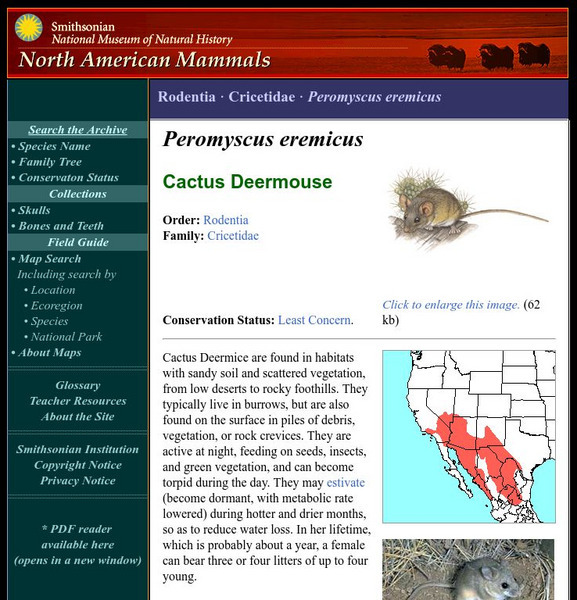
National Museum of Natural History: American Mammals: Cactus Deermouse
Cactus Deermice are found in habitats with sandy soil and scattered vegetation, from low deserts to rocky foothills. They typically live in burrows but are also found on the surface in piles of debris, vegetation, or rock crevices. Learn...

US Senate
U.s. Senate: Art & History: John Nance Garner
Read a description of the portrait of John Nance Garner painted during his second term as Franklin Roosevelt's vice-president. Following that is a short biography of his career in politics.
Smithsonian Institution
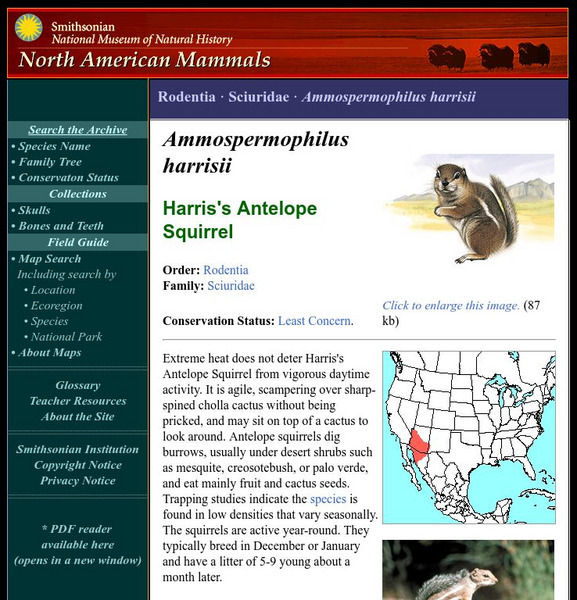
National Museum of Natural History: American Mammals: Harris's Antelope Squirrel
Extreme heat does not deter Harris's Antelope Squirrel from vigorous daytime activity. It is agile, scampering over sharp-spined cholla cactus without being pricked, and may sit on top of a cactus to look around. Learn more about the...
Smithsonian Institution
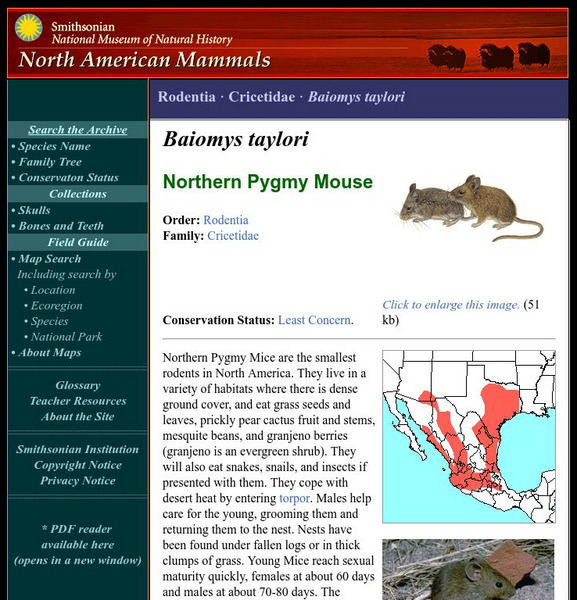
National Museum of Natural History: American Mammals: Northern Pygmy Mouse
Northern Pygmy Mice are the smallest rodents in North America. They live in a variety of habitats where there is dense ground cover and eat grass seeds and leaves, prickly pear cactus fruit and stems, mesquite beans, and granjeno berries...
Smithsonian Institution
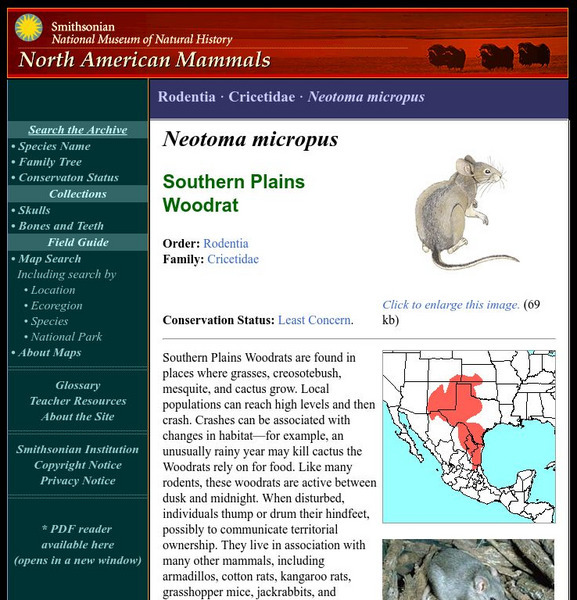
National Museum of Natural History: American Mammals: Southern Plains Woodrat
Southern Plains Woodrats are found in places where grasses, creosotebush, mesquite, and cactus grow. Local populations can reach high levels and then crash. Learn more about the Neotoma micropus, more commonly known as a Southern Plains...
Smithsonian Institution
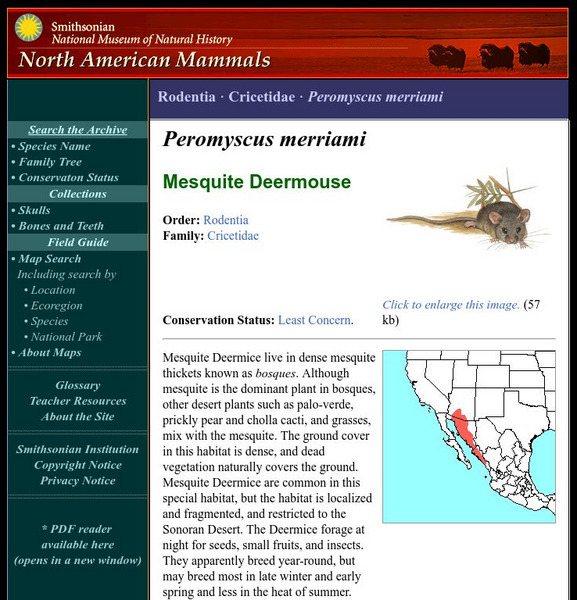
National Museum of Natural History: American Mammals: Mesquite Mouse
Mesquite Mice live in dense mesquite thickets known as bosques. Although mesquite is the dominant plant in bosques, other desert plants such as palo-verde, prickly pear, and cholla cacti, and grasses, mix with the mesquite. Learn more...
Smithsonian Institution
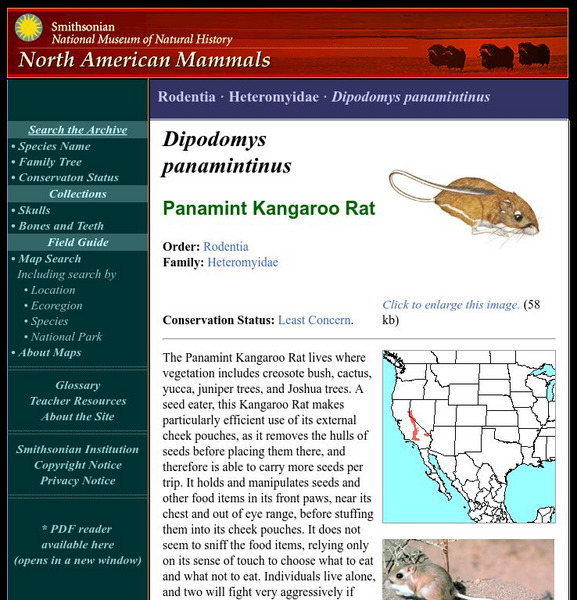
National Museum of Natural History: American Mammals: Panamint Kangaroo Rat
The Panamint Kangaroo Rat lives where vegetation includes creosote bush, cactus, yucca, juniper trees, and Joshua trees. A seed eater, this Kangaroo Rat makes particularly efficient use of its external cheek pouches, as it removes the...
Smithsonian Institution
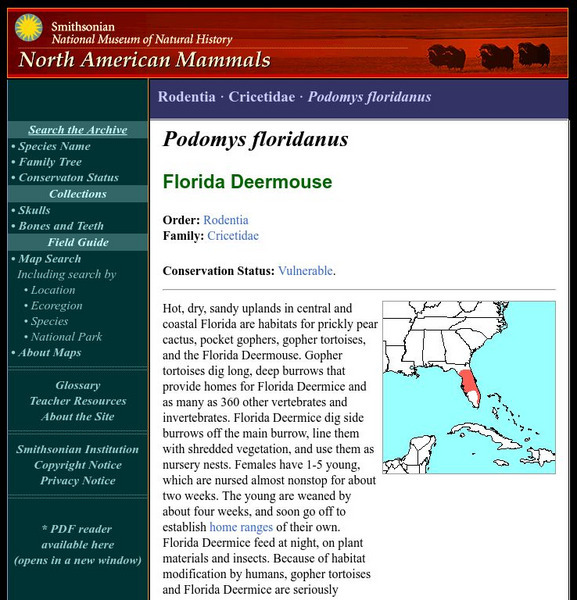
National Museum of Natural History: American Mammals: Florida Mouse
Hot, dry, sandy uplands in central and coastal Florida are habitats for prickly pear cactus, pocket gophers, gopher tortoises, and the Florida Mouse. Gopher tortoises dig long, deep burrows that provide homes for Florida Mice and as many...
Smithsonian Institution
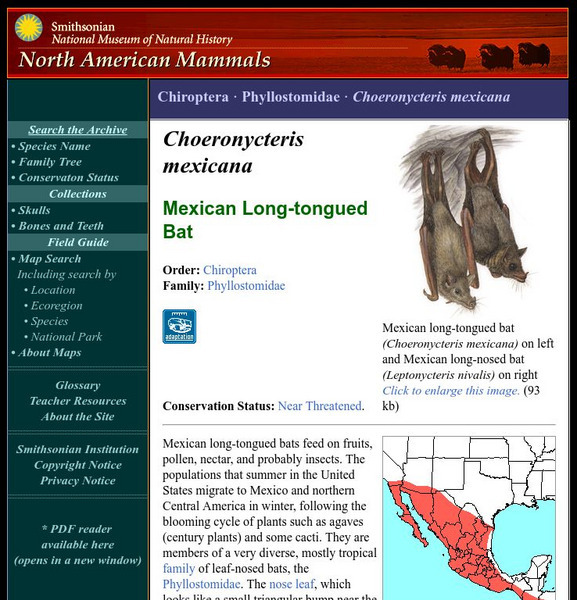
National Museum of Natural History: American Mammals: Mexican Long Tongued Bat
Mexican long-tongued bats feed on fruits, pollen, nectar, and probably insects. The populations that summer in the United States migrate to Mexico and northern Central America in winter, following the blooming cycle of plants such as...
TeachEngineering
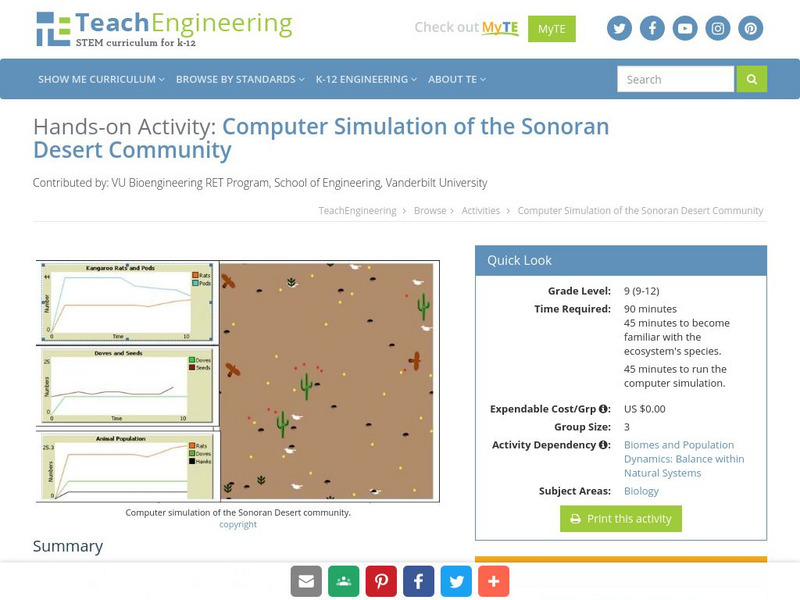
Teach Engineering: Computer Simulation of the Sonoran Desert Community
The computer program's simulation of a Sonoran desert community should ultimately strengthen the student's comprehension of what is required for a natural ecosystem to sustain itself (remain in balance). This computer simulation program...