Hi, what do you want to do?





Smithsonian Institution
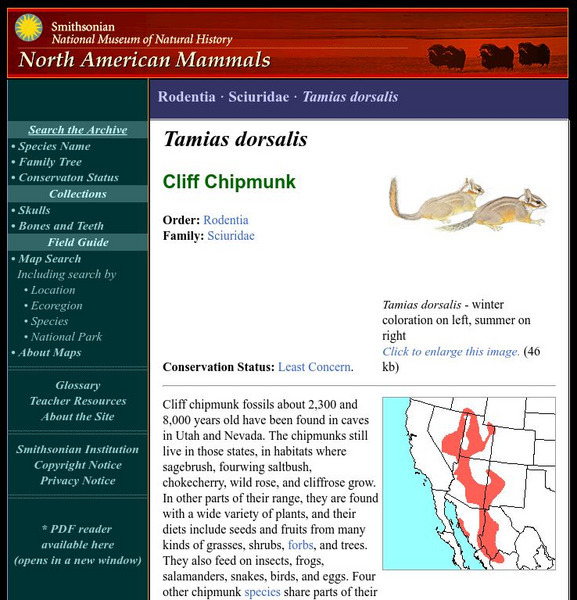
National Museum of Natural History: American Mammals: Cliff Chipmunk
Cliff chipmunk fossils about 2,300 and 8,000 years old have been found in caves in Utah and Nevada. The chipmunks still live in those states, in habitats where sagebrush, fourwing saltbush, chokecherry, wild rose, and cliffrose grow....

Smithsonian Institution
National Museum of Natural History: American Mammals: Lesser Long Nosed Bat
The lesser long-nosed bat is associated with arid grassland, scrub land, and tropical dry forest. Its daytime roosts include caves and abandoned mines, where upwards of 10,000 bats sometimes congregate. Learn more about the Leptonycteris...

Smithsonian Institution
National Museum of Natural History: American Mammals: Northern Long Eared Myotis
Although the northern long-eared myotis is common and widespread, much remains to be learned about its roosting habits, reproduction, and longevity. This bat is known to hibernate in caves and mines and to roost under tree bark. Learn...

Smithsonian Institution
National Museum of Natural History: American Mammals: Southeastern Myotis
The southeastern myotis occurs as far west as northeastern Texas and southwestern Oklahoma. Its preferred daytime roosts are caves with pools of water. Learn more about the Myotis austroriparius, more commonly known as a Southeastern...
Smithsonian Institution
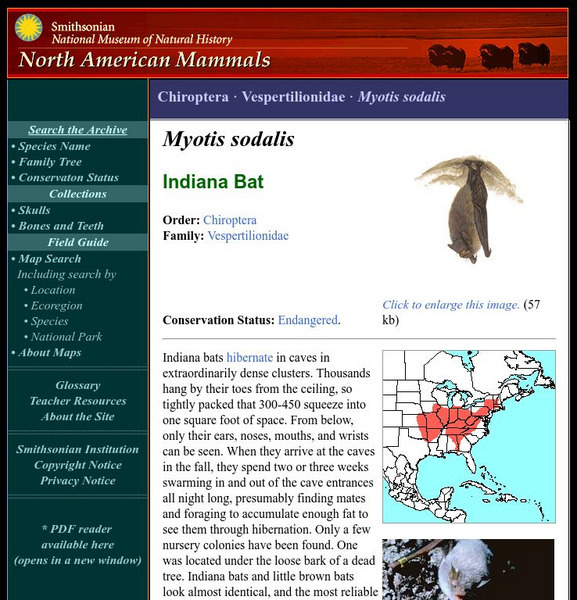
National Museum of Natural History: American Mammals: Indiana Bat
Indiana bats hibernate in caves in extraordinarily dense clusters. Thousands hang by their toes from the ceiling, so tightly packed that 300-450 squeeze into one square foot of space. Learn more about the Myotis sodalis, more commonly...
Smithsonian Institution
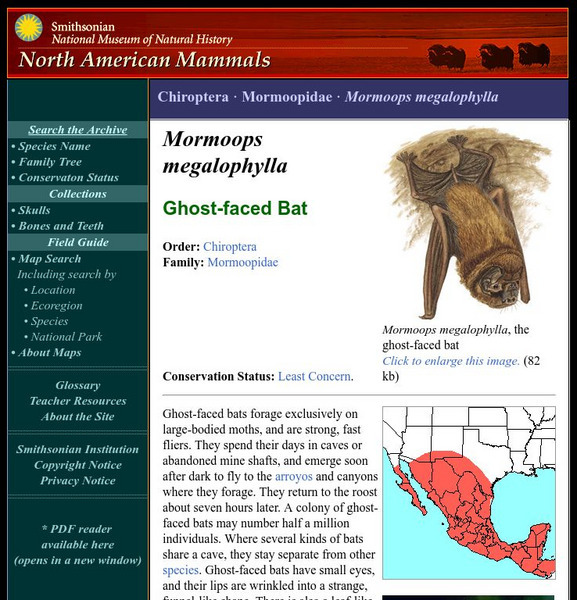
National Museum of Natural History: American Mammals: Ghost Faced Bat
Ghost-faced bats forage exclusively on large-bodied moths, and are strong, fast fliers. They spend their days in caves or abandoned mine shafts, and emerge soon after dark to fly to the arroyos and canyons where they forage. Learn more...
Smithsonian Institution
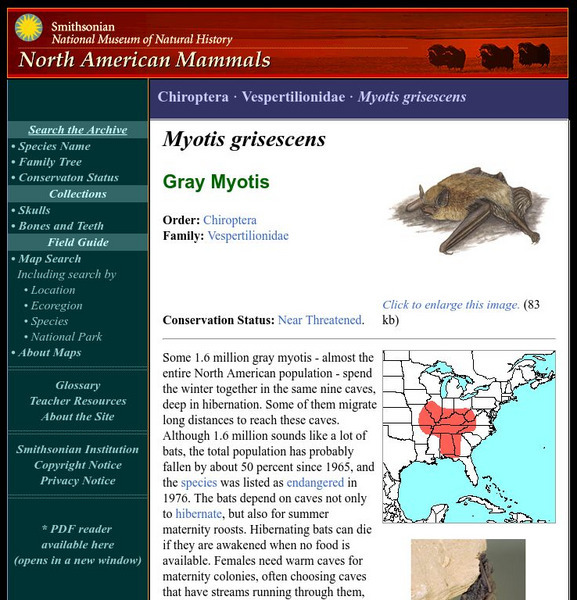
National Museum of Natural History: American Mammals: Gray Myotis
Some 1.6 million gray myotis - almost the entire North American population - spend the winter together in the same nine caves, deep in hibernation. Learn more about the Myotis grisescens, more commonly known as a Gray Myotis, in this...
Smithsonian Institution
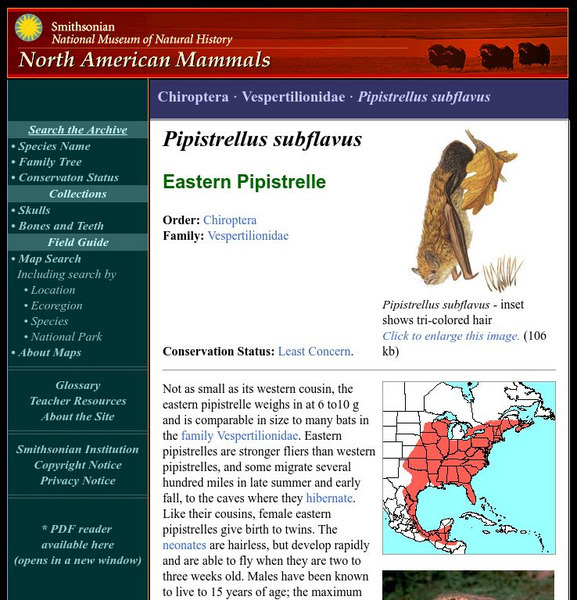
National Museum of Natural History: American Mammals: Eastern Pipistrelle
Not as small as its western cousin, the eastern pipistrelle weighs in at 6 to10 g and is comparable in size to many bats in the family Vespertilionidae. Eastern pipistrelles are stronger fliers than western pipistrelles, and some migrate...

Read Works
Read Works: Bat News
[Free Registration/Login Required] This nonfiction passage describes the job of a chiroptologist, a bat scientist. This passage reinforces essential reading comprehension skills. Opportunities for vocabulary acquisition are also...
Read Works
Read Works: Water on the Earth
[Free Registration/Login Required] This informational text passage discusses the processes of weathering and erosion, along with their effects. This passage is a stand-alone curricular piece that reinforces essential reading skills and...
Other
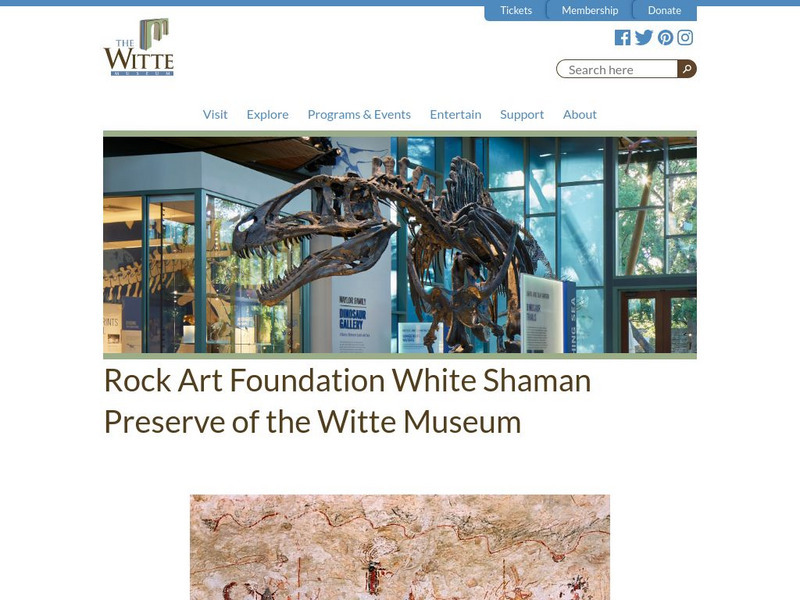
Rock Art Foundation: Welcome to Rock Art of Texas
Learn about and view images of ancient rock art in southern Texas.
Institute for Dynamic Educational Advancement
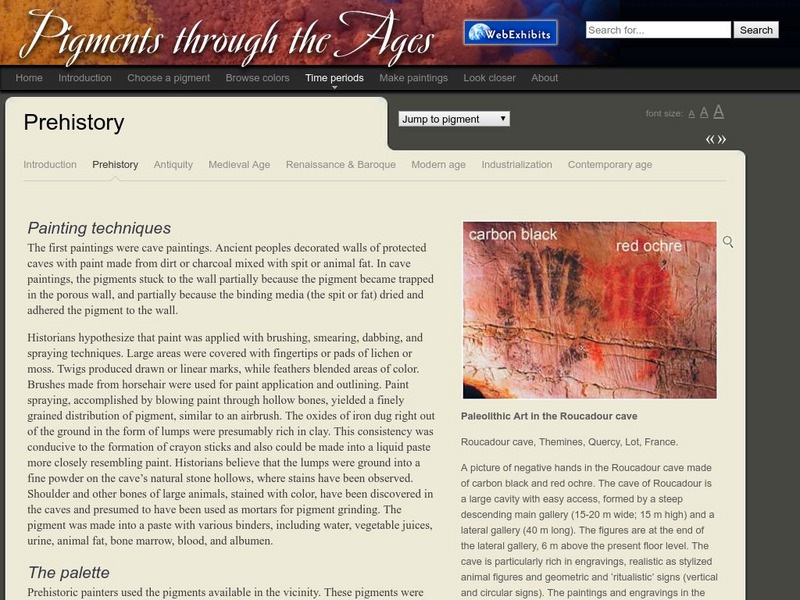
Web Exhibits: Pigments Through the Ages: Prehistory: Painting Techniques
Portion of an essay on the techniques seen in paintings from the prehistoric period.

Extreme Science
Extreme Science: World Records in Earth Science
What is the highest elevation on earth? How about the driest place on earth? Do you know where the greatest earthquake took place? Let Extreme Science take you to these places and other extreme places around the world.
INTERNET Red 2000
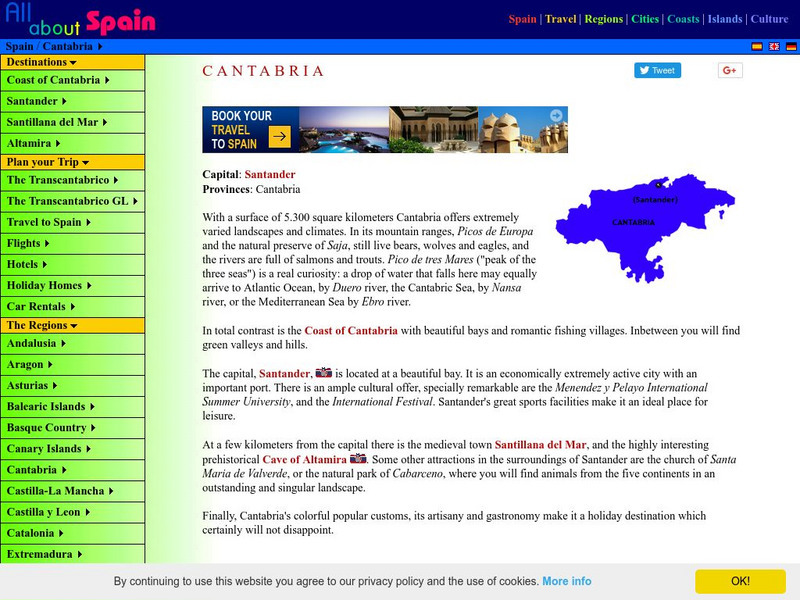
All About Spain: Cantabria
Take a virtual trip to the place where bears, wolves, and eagles still roam freely in Spain Cantabria, which also offers a variety of landscapes and microclimates.

South Carolina Educational Television
Kids Work!: History of Telecommunications
An in-depth look at inventions and developments that had an impact on telecommunication.

PBS
Pbs: How Art Made the World: Art of the San People
The PBS series "How Art Made the World" takes a look at art created by the San people of South Africa. Includes a gallery of images with helpful descriptions that explain the unique qualities of their art and a video that explores the...
Other
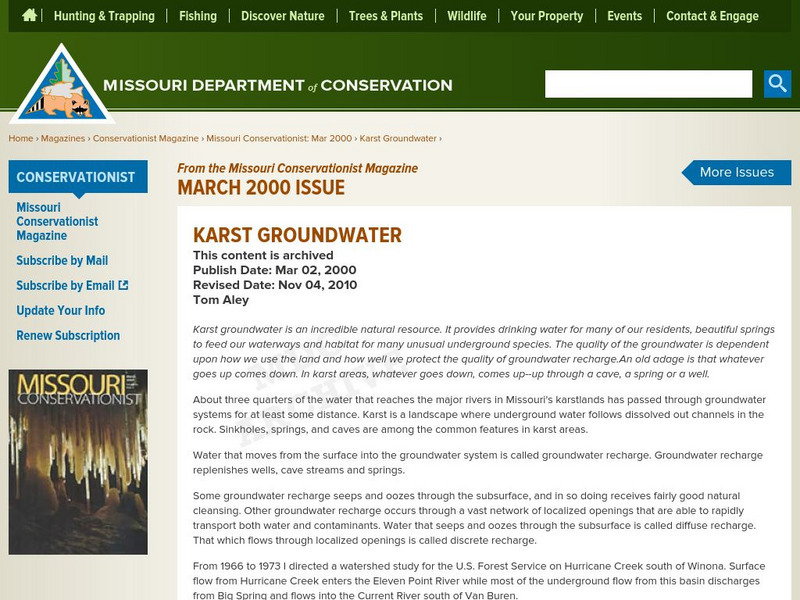
Missouri Conservationist Online: Karst Groundwater
Article highlighting Missouri's karst groundwater systems and the need to protect the land from pollution. Includes diagram of how the system works.

ClassFlow
Class Flow: Rock and Earth
[Free Registration/Login Required] The parts of the earth, classifying minerals, and layers of rock are described in this flipchart.

PBS
Nova: The Lives of Extremophiles
An interview with a microbiologist who studies bacteria that decompose hydrogen sulfide gas and other noxious chemicals. The interview focuses on her research and her career.

Other
Sierra Nevada Recreation Corporation: Underground Adventures: Stalagmites
Illustrated explanation of how stalagmites form.
Other
Sierra Nevada Recreation Corporation: Underground Adventures: Stalactites
Illustrated explanation of how stalactites form.
Other
Dundee University: W. H. Auden's Poetry
This personal website provides the text of four of W. H. Auden's poems: "Three Short Poems" and "In Praise of Limestone." It also offers a link to the W. H. Auden Society website.
Other popular searches
- Cave Paintings
- Cave Art
- Cave Formation
- Cave of Lascaux
- Cavemen
- Cavern Formation
- Anthropology Cave Painting
- Allegory of the Cave
- Caverns
- Cave Drawings
- Cave Paintings in France
- Lascaux Cave Paintings