Hi, what do you want to do?






Other
Eureka Science: Cells: Bacterial Cells
In story form, this site examines the similarities and differences among bacteria, plant cells, and animal cells. Drawings supplement the text for clarity purposes.
Alabama Learning Exchange
Alex: Edible Cell
As part of the study on Life Processes, the students will watch a video clip at Cells Alive to see a model of the cell and its components. The students will use edible products to create an animal cell. Each product will represent a...
Other
My Science Box: Is It Alive?
A lesson plan that introduces students to the concept of classifying objects as either living or non-living. From this lesson, students begin to think about the necessary characteristics of life.
CK-12 Foundation
Ck 12: Life Science: Cell Nucleus
[Free Registration/Login may be required to access all resource tools.] The nucleus is only found in eukaryotic cells. It contains most of the genetic material of the cell. It is surrounded by a double membrane, or nuclear envelope, that...
Other
The Plant Cell: Teaching Tools in Plant Biology: Why Study Plants?
Plants are essential for all life and development. Teach your young scholars about this incredible lifeforce with this teaching guide, lecture notes, and PowerPoint presentation. [PDF]
Wisc-Online
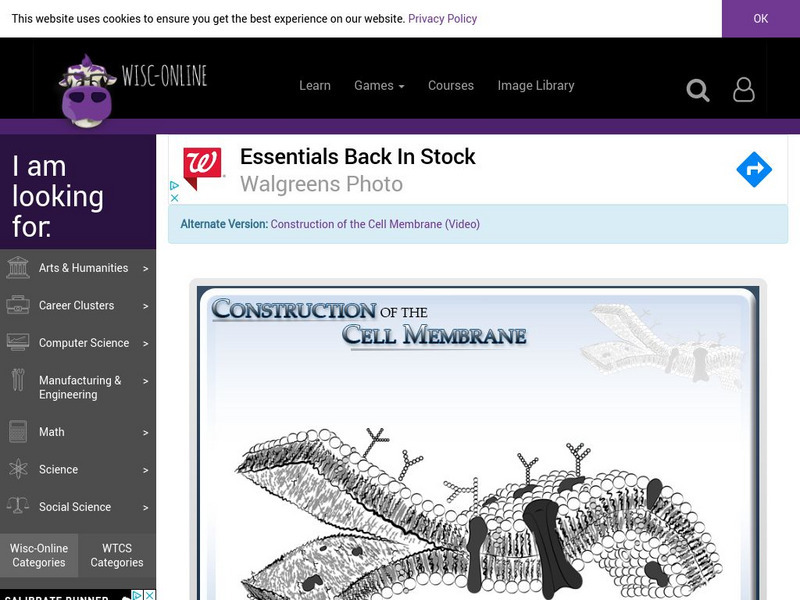
Wisc Online: Construction of the Cell Membrane
The resource investigates the construction of the cell membrane. Students learn about the makeup and the basis for cell membrane function. The tutorial includes questions with solutions on the topics examined.
CK-12 Foundation
Ck 12: Life Science: Human Digestive System
[Free Registration/Login may be required to access all resource tools.] Nutrients in the foods you eat are needed by the cells of your body. How do the nutrients in foods get to your body cells? What organs and processes break down the...
CK-12 Foundation
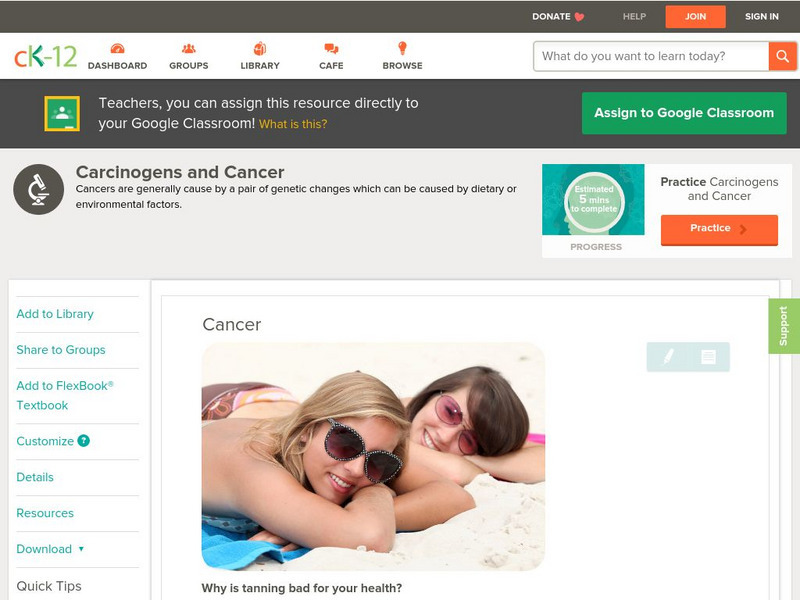
Ck 12: Life Science: Cancer
[Free Registration/Login may be required to access all resource tools.] Cancer is a disease that causes cells to divide out of control. Normally, the body has systems that prevent cells from dividing out of control. But in the case of...
CK-12 Foundation
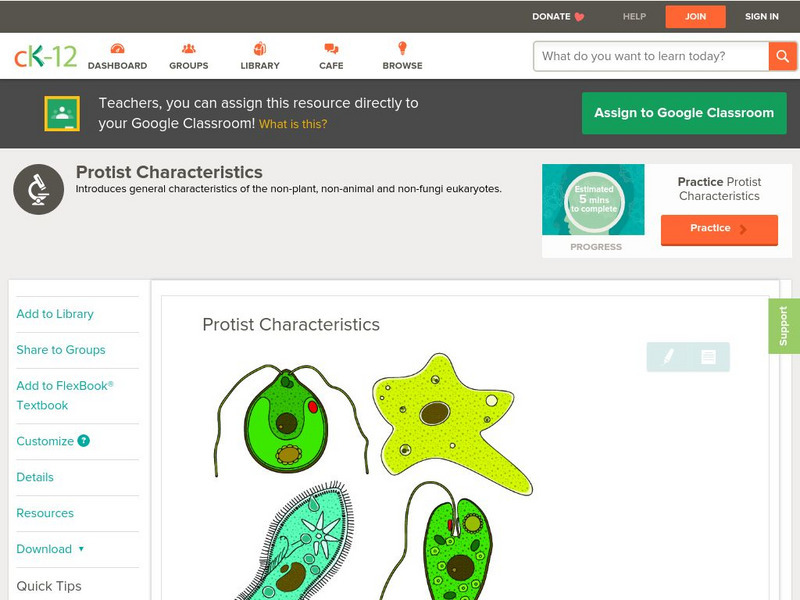
Ck 12: Life Science: Protist Characteristics
[Free Registration/Login may be required to access all resource tools.] Protists are eukaryotes, which means their cells have a nucleus and other membrane-bound organelles. Most protists are single-celled. Other than these features, they...
CK-12 Foundation
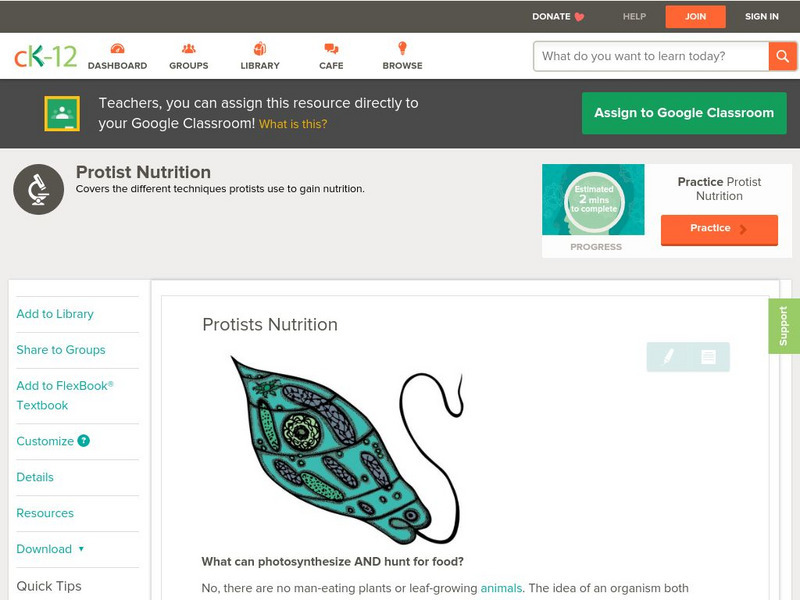
Ck 12: Life Science: Protists Nutrition
[Free Registration/Login may be required to access all resource tools.] The cells of protists need to perform all of the functions that other cells do, such as grow and reproduce, maintain homeostasis, and obtain energy. They also need...
CK-12 Foundation
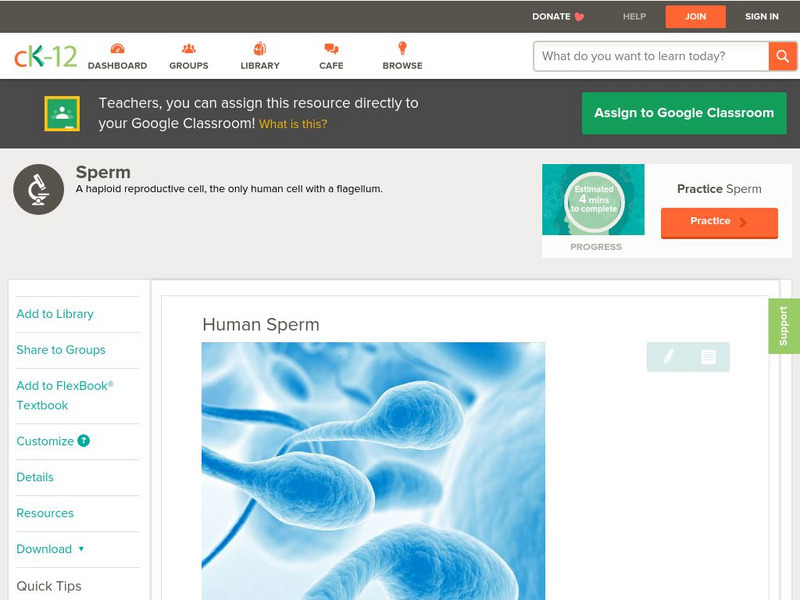
Ck 12: Life Science: Human Sperm
[Free Registration/Login may be required to access all resource tools.] Sperm, the male reproductive cells, are tiny. In fact, they are the smallest cells in the human body. Some people think that they look like tadpoles. Learn more...
CK-12 Foundation
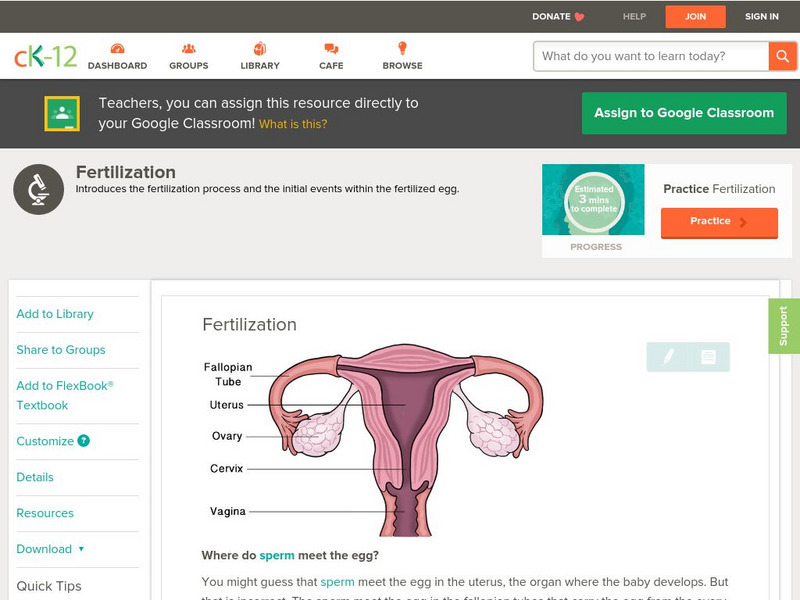
Ck 12: Life Science: Fertilization
[Free Registration/Login may be required to access all resource tools.] The sperm and egg don't look anything like a human baby. After they come together, they will develop into a human being. How does a single cell become a complex...

CK-12 Foundation
Ck 12: Life Science: Blood Diseases
[Free Registration/Login may be required to access all resource tools.] Problems can occur with red blood cells, white blood cells, platelets, and other parts of the blood. Many blood disorders are genetic, meaning they are inherited...
CK-12 Foundation
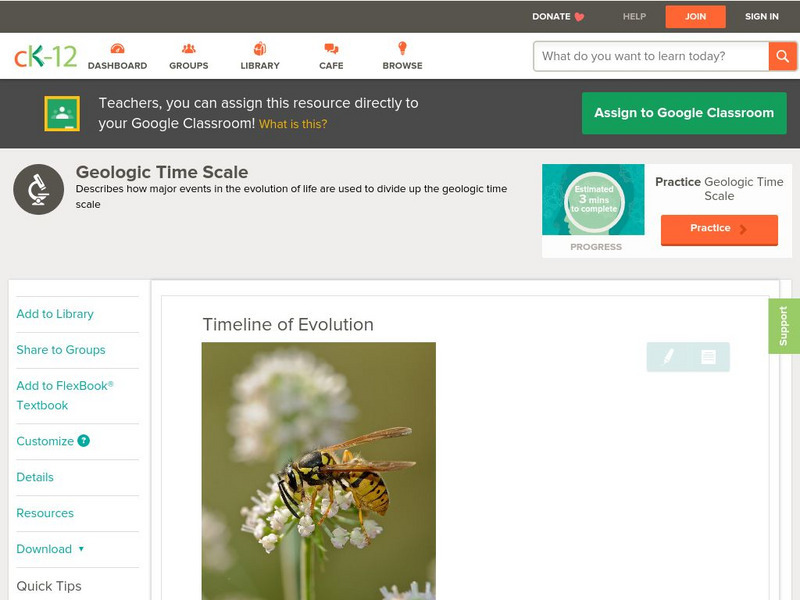
Ck 12: Life Science: Timeline of Evolution
[Free Registration/Login may be required to access all resource tools.] For life to evolve from simple single-celled organisms to many millions of species of prokaryotic species to simple eukaryotic species to all the protists, fungi,...
CK-12 Foundation
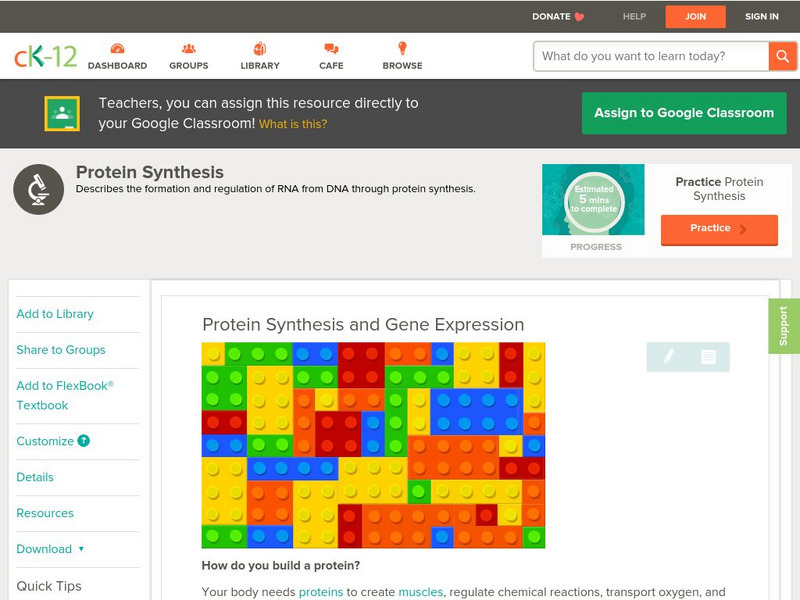
Ck 12: Life Science: Protein Synthesis and Gene Expression
[Free Registration/Login may be required to access all resource tools.] The DNA sequence contains the instructions to place units called amino acids into a specific order. When these amino acid are assembled in that specific order,...
CK-12 Foundation
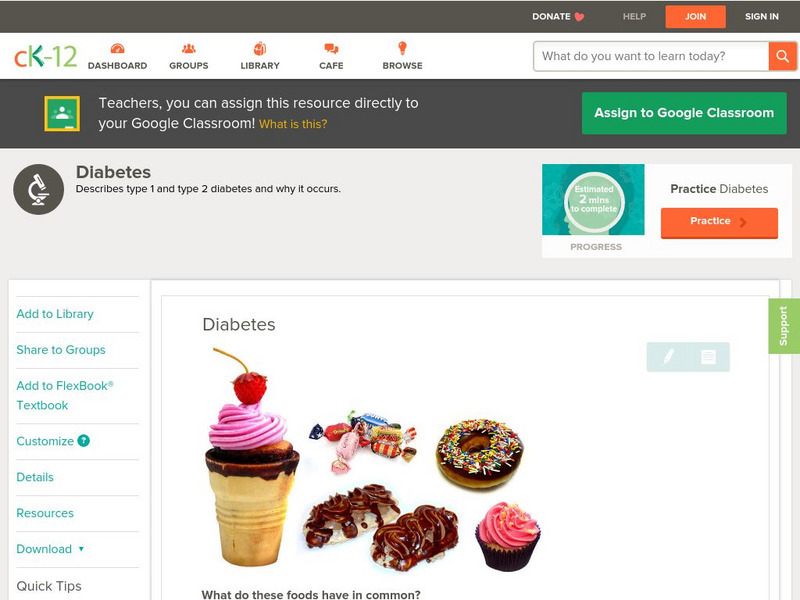
Ck 12: Life Science: Diabetes
[Free Registration/Login may be required to access all resource tools.] Diabetes is a non-infectious disease in which the body is unable to control the amount of sugar in the blood. People with diabetes have high blood sugar, either...
CK-12 Foundation
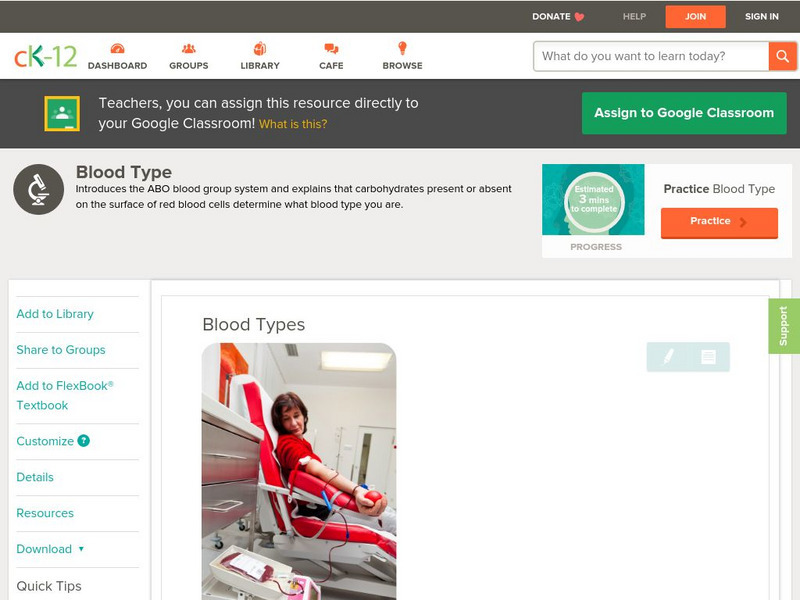
Ck 12: Life Science: Blood Types
[Free Registration/Login may be required to access all resource tools.] Do you know what your blood type is? Maybe you have heard people say that they have Type A or Type O blood. Blood type is a way to describe the type of antigens, or...
CK-12 Foundation
Ck 12: Life Science: Animal Communication
[Free Registration/Login may be required to access all resource tools.] What does the word "communication" make you think of? Talking on a cell phone? Texting? Writing? Those are just a few of the ways in which human beings communicate....
CK-12 Foundation
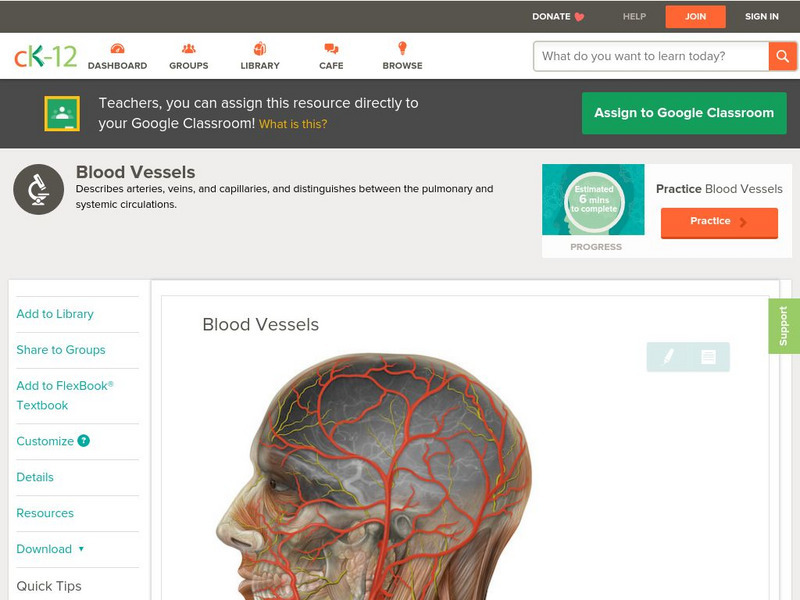
Ck 12: Life Science: Blood Vessels
[Free Registration/Login may be required to access all resource tools.] The blood vessels are an important part of the cardiovascular system. They connect the heart to every cell in the body. Arteries carry blood away from the heart,...
CK-12 Foundation
Ck 12: Life Science: Gene Therapy
[Free Registration/Login may be required to access all resource tools.] Gene therapy is the insertion of genes into a person's cells to cure a genetic disorder. Could gene therapy be the cure for AIDS? No, AIDS is caused by a virus. Gene...
CK-12 Foundation
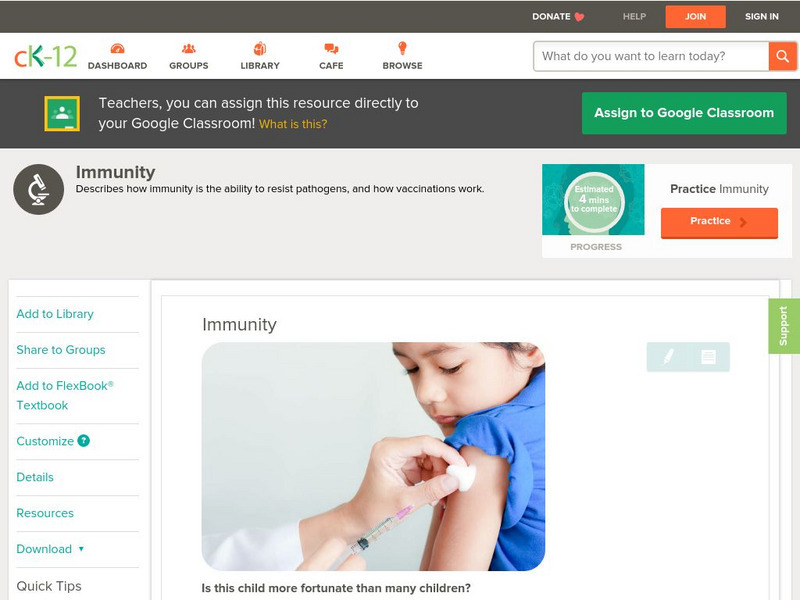
Ck 12: Life Science: Immunity
[Free Registration/Login may be required to access all resource tools.] Most B and T cells die after an infection has been brought under control. But some of them survive for many years. These long-lasting B and T cells are called memory...
CK-12 Foundation
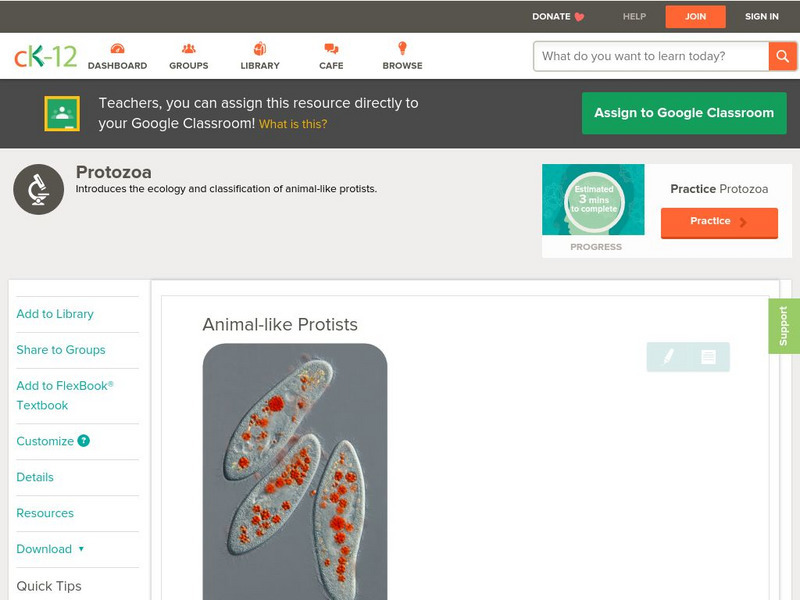
Ck 12: Life Science: Animal Like Protists
[Free Registration/Login may be required to access all resource tools.] Animal-like protists are called protozoa. Protozoa are single-celled eukaryotes that share some traits with animals. Like animals, they can move, and they are...
CK-12 Foundation
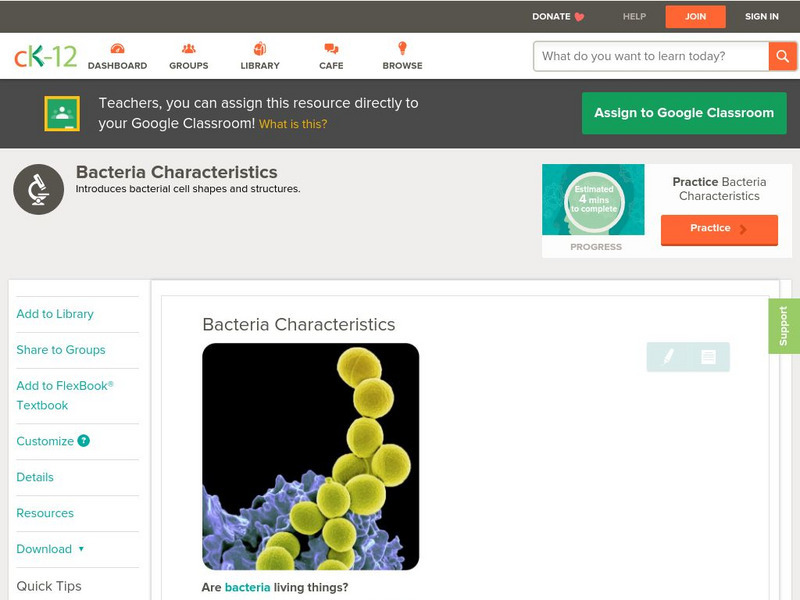
Ck 12: Life Science: Bacteria Characteristics
[Free Registration/Login may be required to access all resource tools.] Bacteria are the most successful organisms on the planet. They lived on this planet for two billion years before the first eukaryotes and, during that time, evolved...
CK-12 Foundation
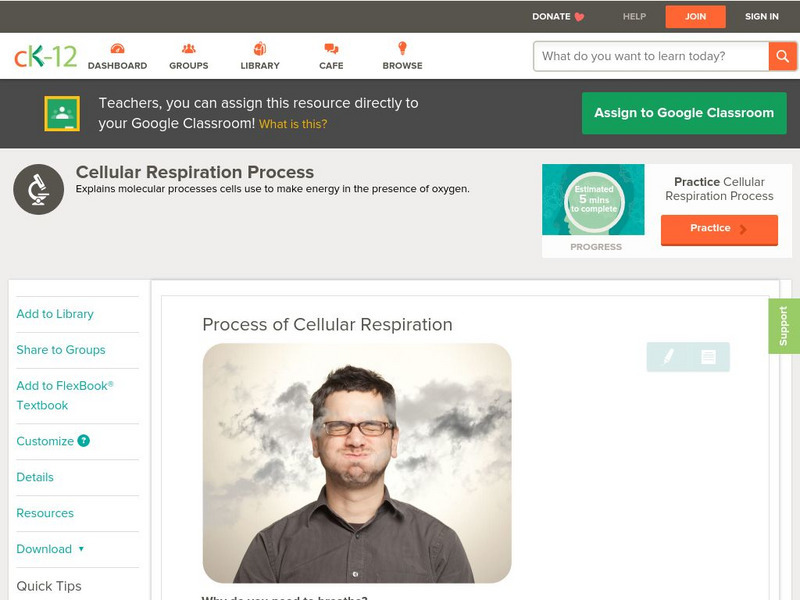
Ck 12: Life Science: Process of Cellular Respiration
[Free Registration/Login may be required to access all resource tools.] Why do you need air to live? Of course if you didn't breathe, you couldn't survive. You need the gas oxygen to perform cellular respiration to get energy from your...