Hi, what do you want to do?





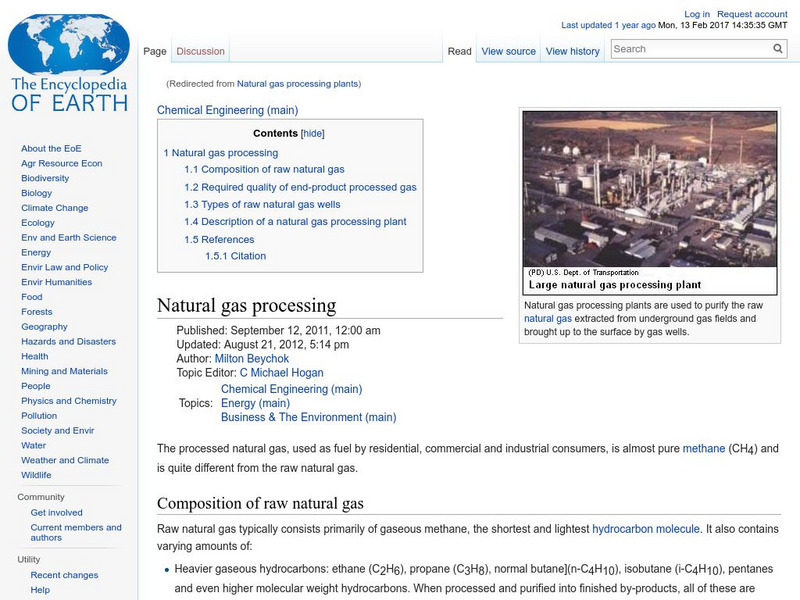
Encyclopedia of Earth
Encyclopedia of Earth: Chemical Engineering: Natural Gas Processing
Explains the composition of natural gas and what is required to make it market-ready, types of reservoirs, and what happens in a natural gas processing plant. Includes a diagram showing the whole process. (Published: September 12, 2011)
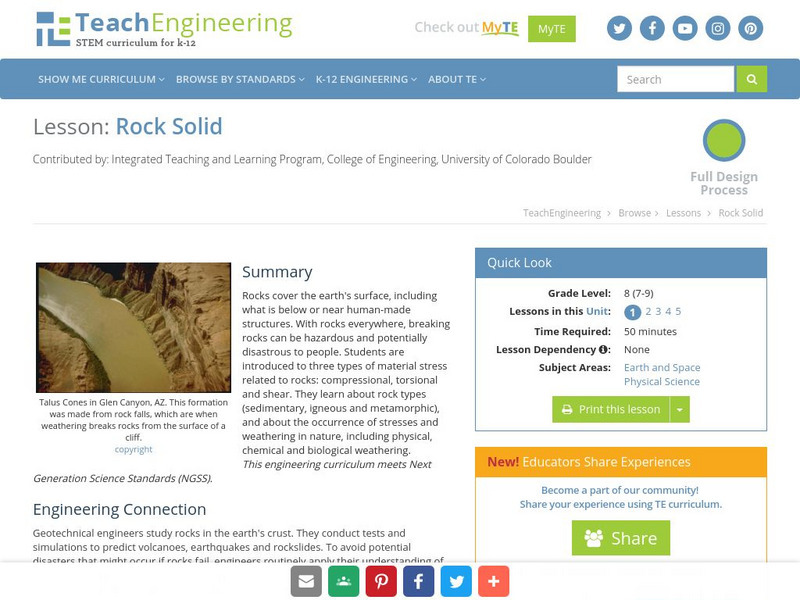
TeachEngineering
Teach Engineering: Rock Solid
Rocks cover the earth's surface, including what is below or near human-made structures. With rocks everywhere, breaking rocks can be hazardous and potentially disastrous to people. Students are introduced to three types of material...
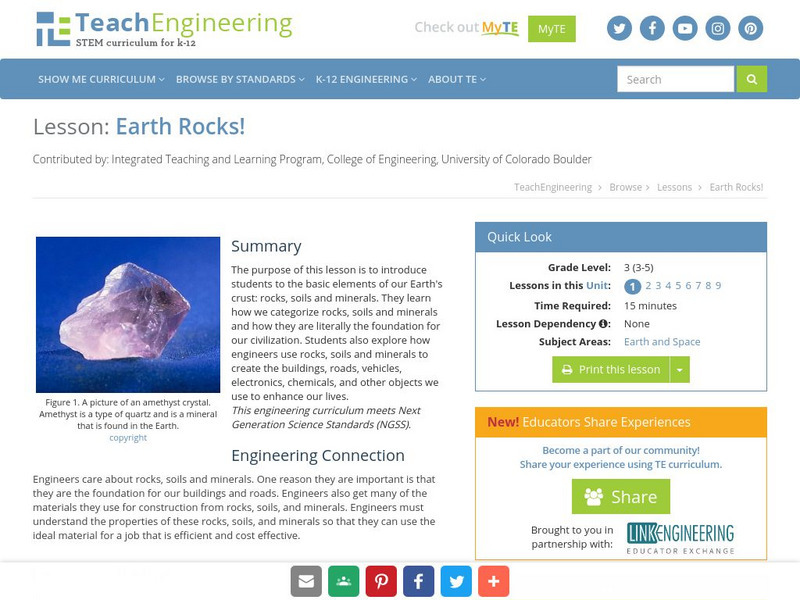
TeachEngineering
Teach Engineering: Earth Rocks!
The purpose of this instructional activity is to introduce students to the basic elements of our Earth's crust: rocks, soils and minerals. They learn how we categorize rocks, soils and minerals and how they are literally the foundation...
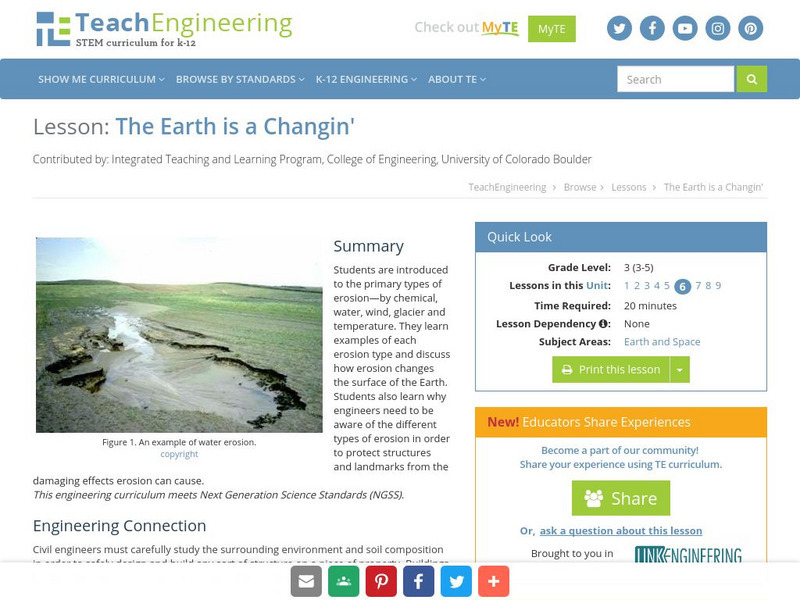
TeachEngineering
Teach Engineering: The Earth Is a Changin'
This lesson introduces and describes the main types of erosion (i.e., chemical, water, wind, glacier and temperature). Students learn examples of each type of erosion and discuss how erosion changes the surface of the Earth. Students...
TeachEngineering
Teach Engineering: Aqua Thrusters!
In this activity, students construct their own rocket-powered boat called an "aqua-thruster." These aqua-thrusters will be made from a film canister and will use carbon dioxide gas - produced from a chemical reaction between an antacid...
TeachEngineering
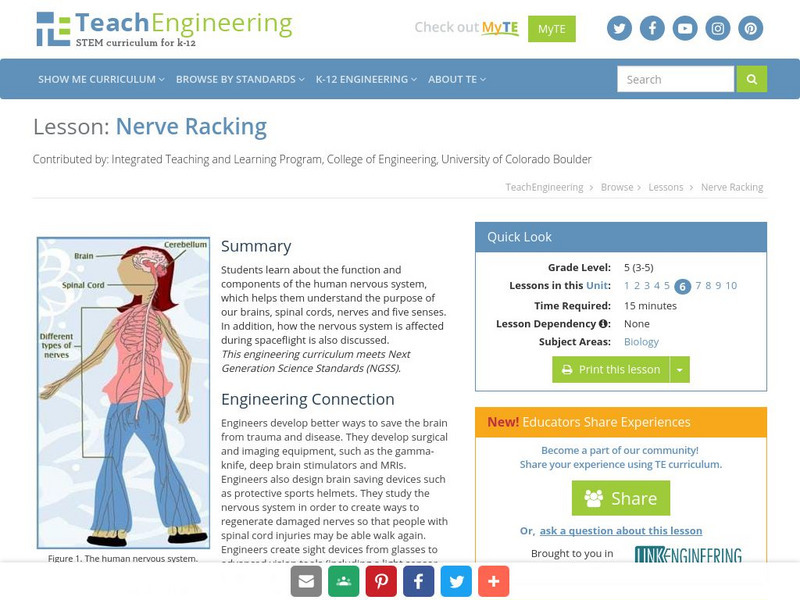
Teach Engineering: Nerve Racking
This lesson describes the function and components of the human nervous system. It helps learners understand the purpose of our brain, spinal cord, nerves and the five senses. How the nervous system is affected during spaceflight is also...
TeachEngineering
Teach Engineering: Bridging to Polymers: Thermoset Lab
Students act as engineers to learn about the strengths of various epoxy-amine mixtures, and observe the unique characteristics of different mixtures of epoxies and hardeners. Student groups make and optimize thermosets by combining two...
TeachEngineering
Teach Engineering: Spectroscopy
Students learn how using a spectrograph helps us understand the composition of light sources. Using simple materials and holographic diffraction gratings (available online at a variety of sites, including Edmund Scientifics and the...

TeachEngineering
Teach Engineering: Photosynthesis Life's Primary Energy Source
This instructional activity covers the process of photosynthesis and the related plant cell functions of transpiration and cellular respiration. Students will learn how engineers can use the natural process of photosynthesis as an...
TeachEngineering
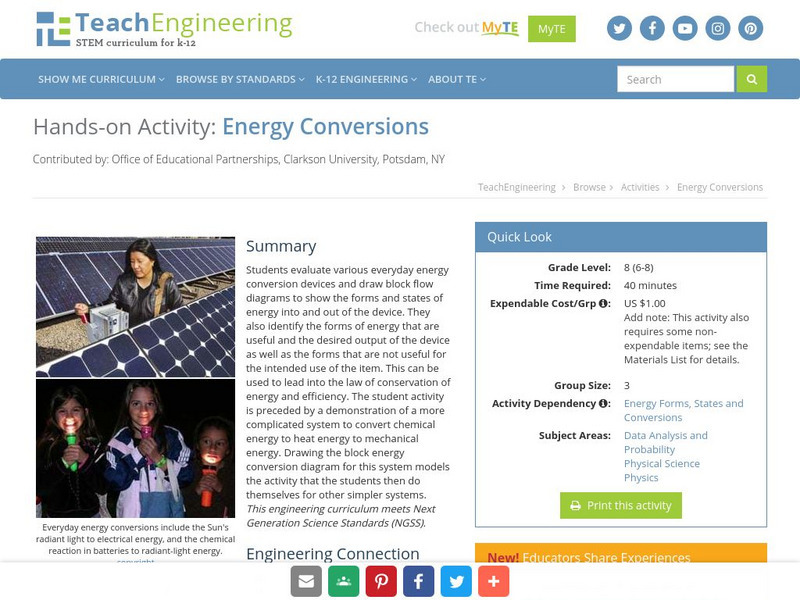
Teach Engineering: Energy Conversions
Students evaluate various everyday energy conversion devices and draw block flow diagrams to show the forms and states of energy into and out of the device. They also identify the forms of energy that are useful and the desired output of...
TeachEngineering
Teach Engineering: Wizardry and Chemistry
Students learn how common pop culture references (Harry Potter books) can relate to chemistry. While making and demonstrating their own low-intensity sparklers (muggle-versions of magic wands), students learn and come to appreciate the...
TeachEngineering
Teach Engineering: Things That Matter to Flocculants
Prior to reaching households, water is exposed to a variety of treatments designed to render it fit for human consumption and use. One of the first treatment steps is the removal of suspended solids using chemical additives called...
TeachEngineering
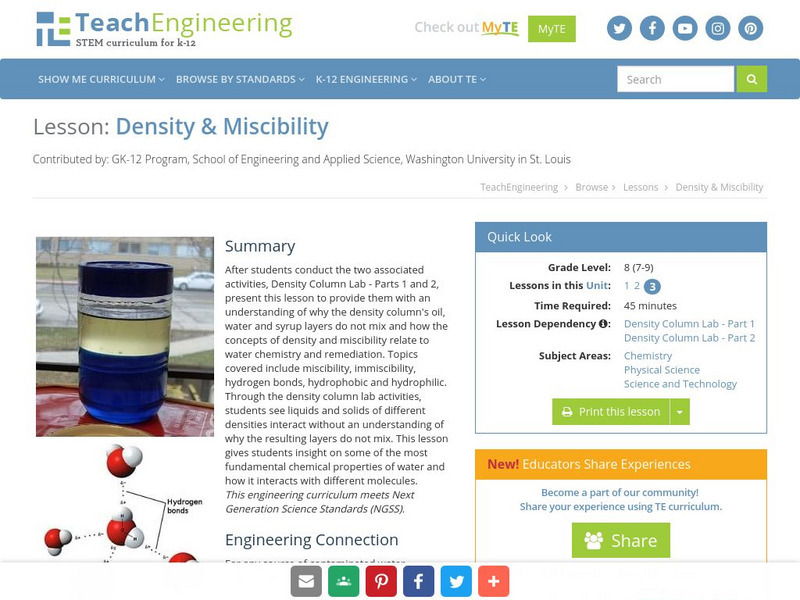
Teach Engineering: Density & Miscibility
After students conduct the two associated activities, Density Column Lab - Parts 1 and 2, present this lesson to provide them with an understanding of why the density column's oil, water and syrup layers do not mix and how the concepts...
TeachEngineering
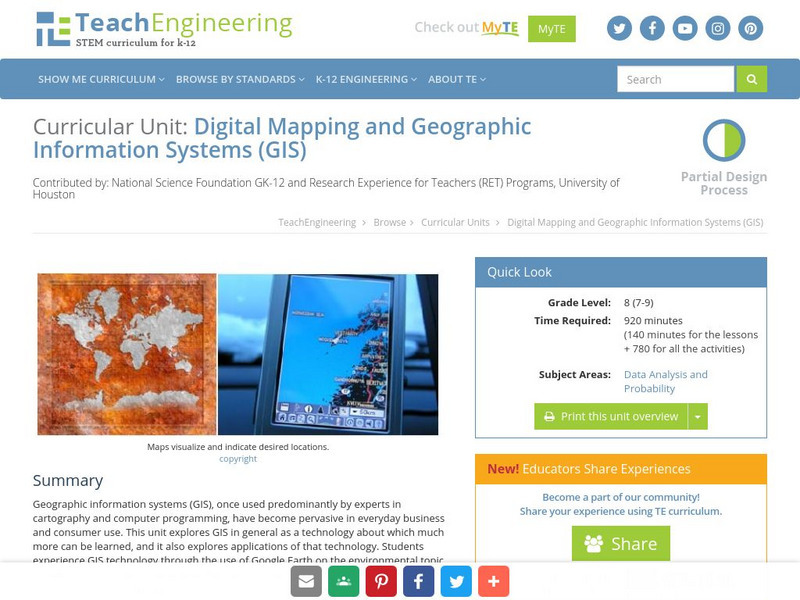
Teach Engineering: Digital Mapping and Geographic Information Systems (Gis)
Geographic information systems (GIS), once used predominantly by experts in cartography and computer programming, have become pervasive in everyday business and consumer use. This unit explores GIS in general as a technology about which...

TeachEngineering
Teach Engineering: Solid, Liquid or Gas?
Students are given a variety of materials and asked to identify if each material as a solid, liquid or gas. They use their five senses - sight, sound, smell, texture and taste - to identify the other characteristics of each item.

American Chemical Society
American Chemical Society: Chemical & Engineering News: Reel Science
Reel Science publishes reviews of movies with a science or science fiction theme. Its aim is to heighten awareness of inaccuracies in the ways science is presented in film, and to promote greater public understanding of true science.
TeachEngineering
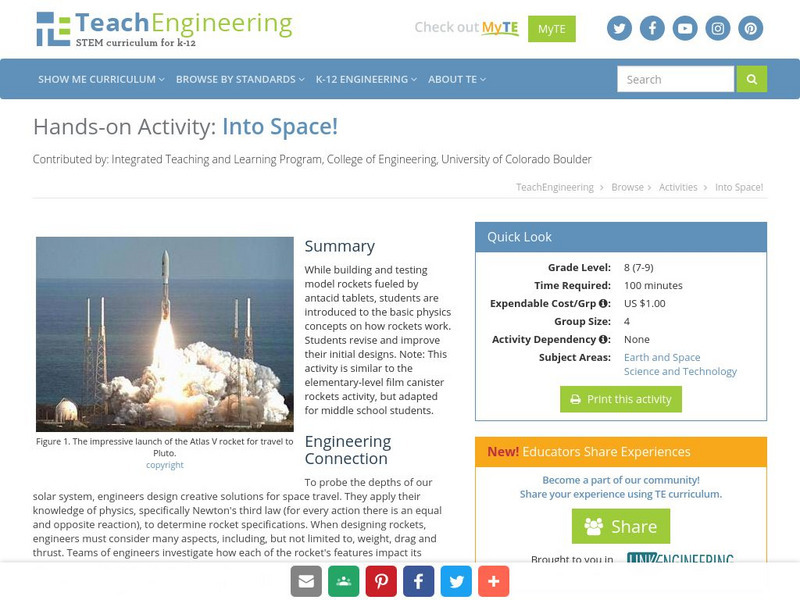
Teach Engineering: Into Space!
While building and testing model rockets fueled by antacid tablets, students are introduced to the basic physics concepts on how rockets work. Students revise and improve their initial designs. Note: This activity is similar to the...
Cosmo Learning
Cosmo Learning: Introduction to Solid State Chemistry
A collection of video lectures from a course that investigates the application of basic chemistry principals to engineering systems. The course draws from industrial practice to give examples of the application in engineering systems. In...

PBS
Nova Teacher: Saved by the Sun: Classroom Activity
During the lesson, students will also design, build and test a solar cooker that pasteurizes water.
Famous Scientists
Famous Scientists: Carl Bosch
Learn about the life and work of German chemist, engineer, and Nobel laureate in chemistry, Carl Bosch.
Other
University of Delaware: Major Resource Kits
Major Resource Kits link academic majors to career alternatives by providing information on career paths, sample job titles, and a short bibliography of Career Resource Center materials available to students in a particular major....
Science Buddies
Science Buddies: Rubber Band Elasticity and Temperature
Many materials expand when heated and contract when cooled. What do you think will happen to the elasticity (stretchiness) of a rubber band when it is heated or cooled to various temperatures?
TeachEngineering
Teach Engineering: What Is Energy? Short Demos
Three short, hands-on, in-class demos expand students' understand of energy. First, using peanuts and heat, students see how the human body burns food to make energy. Then, students create paper snake mobiles to explore how heat energy...