Hi, what do you want to do?





TeachEngineering
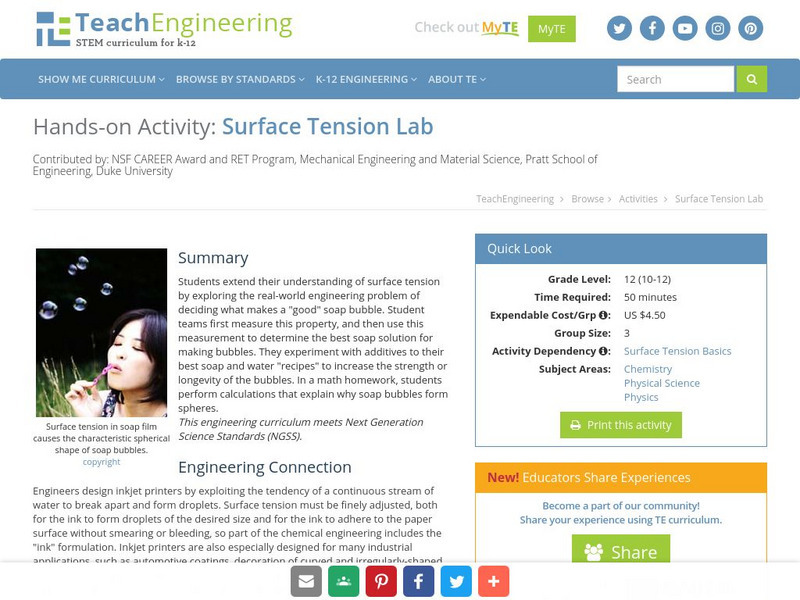
Teach Engineering: Surface Tension Lab
Students extend their understanding of surface tension by exploring the real-world engineering problem of deciding what makes a "good" soap bubble. Student teams first measure this property, and then use this measurement to determine the...
Chemistry Collective
Chem Collective: Textbook Style Limiting Reagents Problem Ii
In this activity, students practice with experiments involving limiting reagents and the test their knowledge to determine the concentration of an unknown solution.

BBC
Bbc: Gcse Bitesize: Chemical Calculations
You should be able to calculate the masses of reactants and products from balanced equations, and the formula of a compound from information about reacting masses.
TeachEngineering
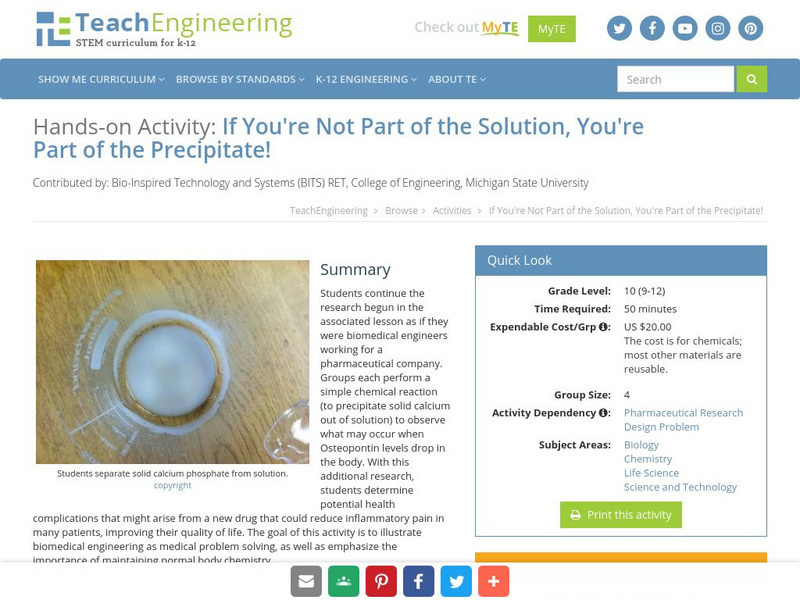
Teach Engineering: If You're Not Part of the Solution!
Students continue the research begun in the associated lesson as if they were biomedical engineers working for a pharmaceutical company. Groups each perform a simple chemical reaction (to precipitate solid calcium out of solution) to...
Massachusetts Institute of Technology
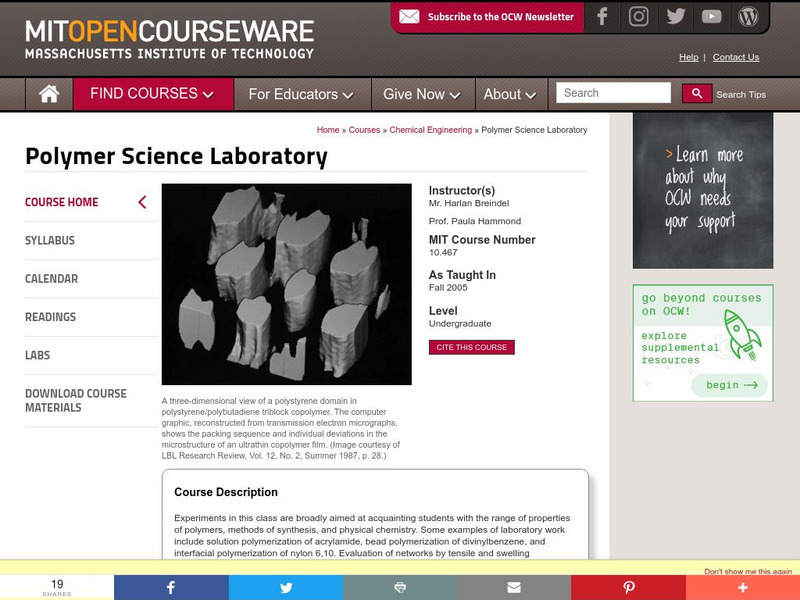
Mit: Open Course Ware: Courses: Polymer Science Laboratory
College-level chemical engineering course highlighting polymers. Course topics focus on the range of properties of polymers, methods of synthesis, and physical chemistry. Course features include a list of related readings and a large...

Ducksters
Ducksters: Chemistry for Kids: Chemical Mixtures
Explore all about chemical mixtures on this site including solutions, alloys, suspensions, colloids, dissolving, examples, and facts.

Science Buddies
Science Buddies: Test Your Foods for Starch
There is a simple chemical test that you can do to detect starch, which involves an iodine solution. The iodine solution turns any food that contains starch dark blue. Try this activity and watch it in action yourself.
The Wonder of Science
The Wonder of Science: Ms Ps3 3: Thermal Energy Transfer Solution
Lessons to show thermal energy transfer. Students will "apply scientific principles to design, construct, and test a device that either minimizes or maximizes thermal energy transfer".
University of Colorado
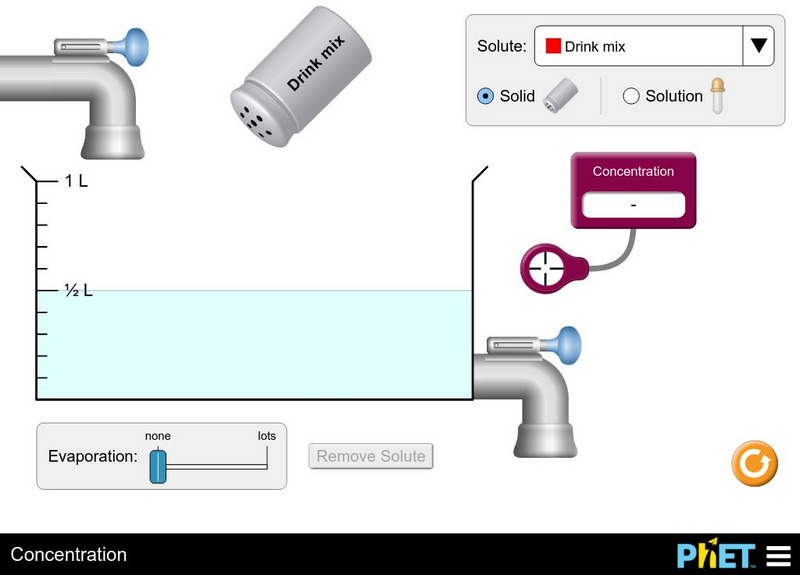
University of Colorado: Ph Et Interactive Simulations: Concentration
Watch your solution change color as you mix chemicals with water. Then check molarity with the concentration meter. What are all the ways you can change the concentration of your solution? Switch solutes to compare different chemicals...
TeachEngineering
Teach Engineering: Concentrate This! Sugar or Salt
Students investigate the property dependence between concentrations and boiling point. First, they investigate the boiling point of various liquid solutions. Then they analyze data collected from the entire class to generate two boiling...
Carnegie Mellon University
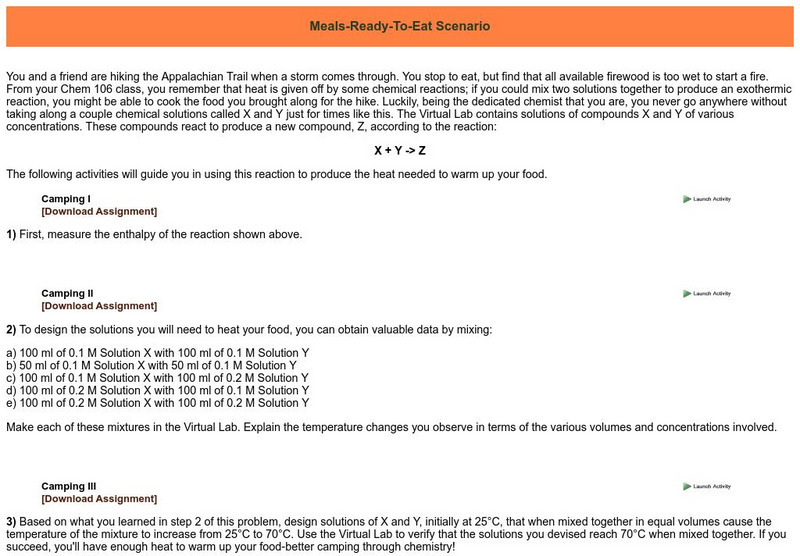
Chem Collective: Meals Ready to Eat
While camping on the Appalachian Trail, a storm dampens all the fire wood and you must design a chemical reaction to heat your meal. In this activity, students design an experiment in the virtual lab to determine the heat of reaction for...
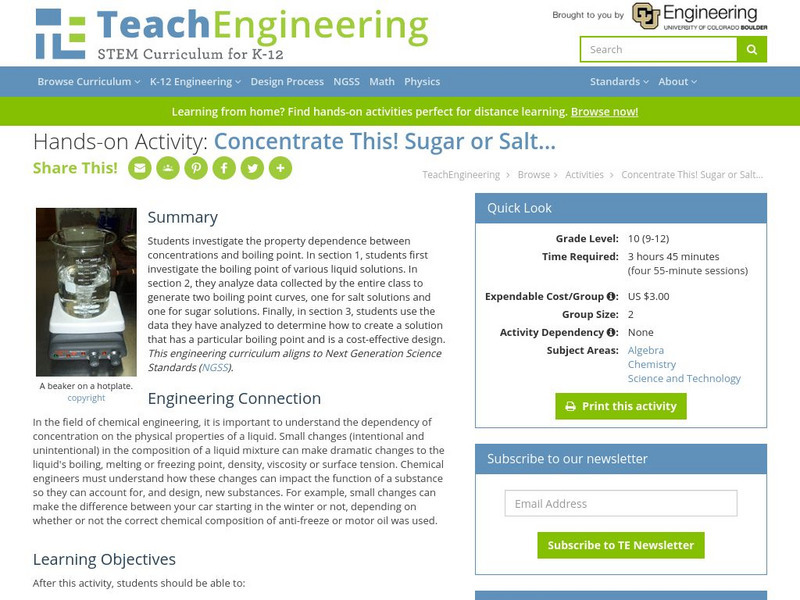
TeachEngineering
Teach Engineering: Concentrate This! Sugar or Salt
Students investigate the property dependence between concentrations and boiling point. In Section 1, students first investigate the boiling point of various liquid solutions. In Section 2 they analyze data collected from the entire class...
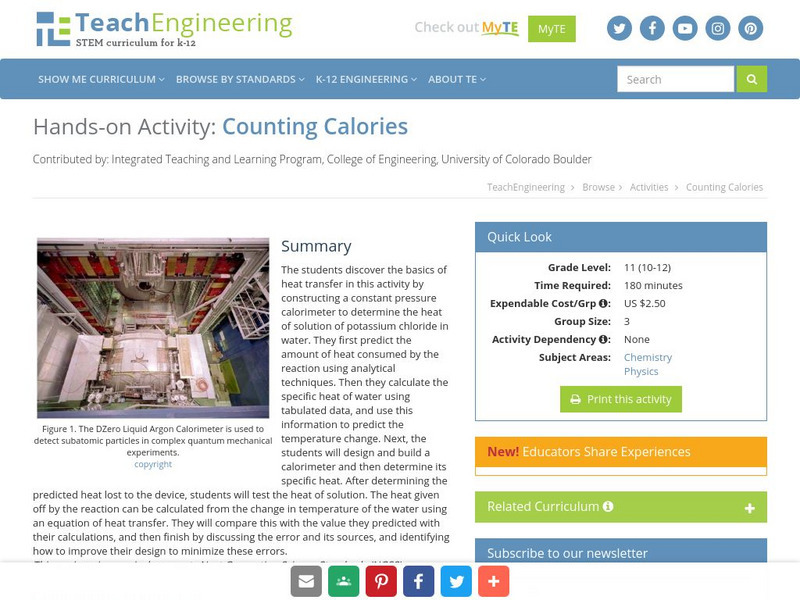
TeachEngineering
Teach Engineering: Counting Calories
The students discover the basics of heat transfer in this activity by constructing a constant pressure calorimeter to determine the heat of solution of potassium chloride in water. They first predict the amount of heat consumed by the...
Science Buddies
Science Buddies: How Blue Is Your Sports Drink?
Do you read the list of ingredients in foods and drinks before you buy them at the grocery store? If you do, you may have noticed that many of the items that are blue in color have the same dye, called FD&C blue 1. In this chemistry...
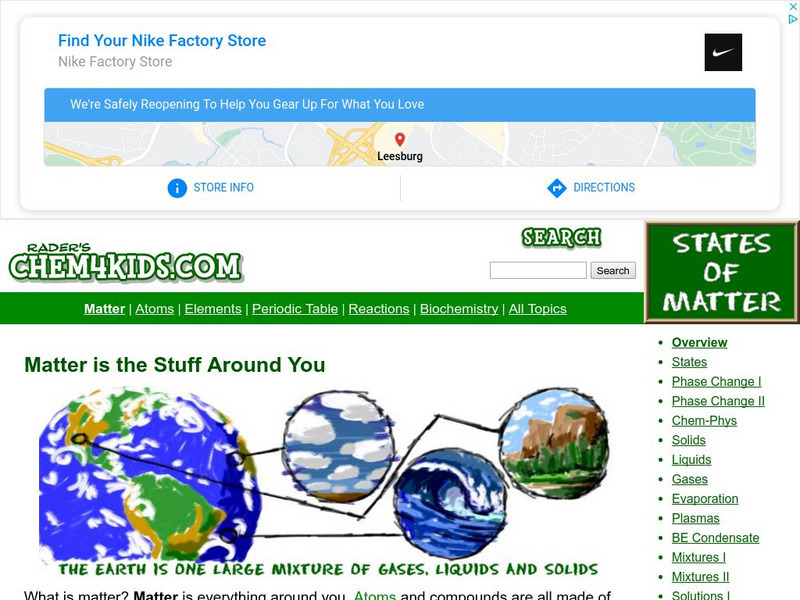
Chem4kids
Chem4 Kids: Matter
"Matter is everything." So begins this comprehensive website on the physical and chemical properties of matter in its four main states: solids, liquids, gases, and plasmas. The text is large and easy-to-read. Students will enjoy the...
American Chemical Society
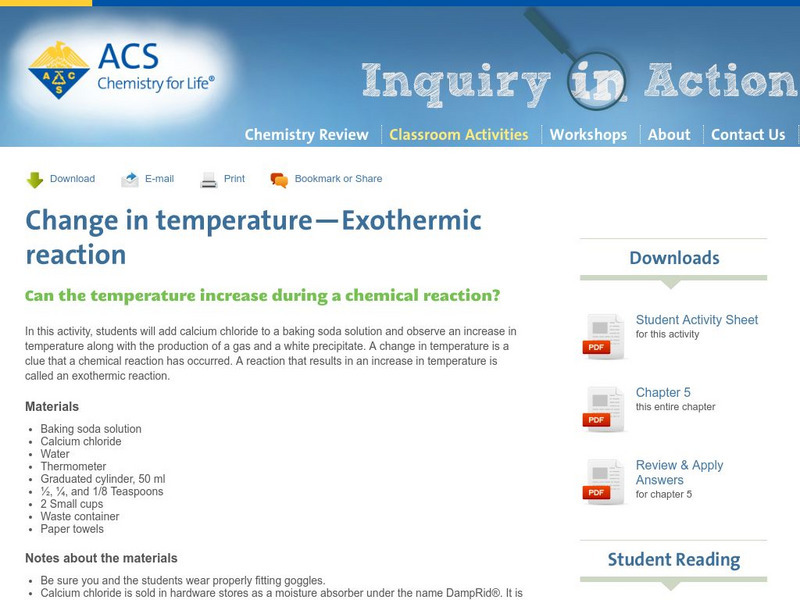
Inquiry in Action: Change in Temperature: Exothermic Reaction
Students will observe an exothermic reaction in this activity where they add calcium chloride to a baking soda solution. This increase in temperature is due to the chemical change that has occurred.
PBS
Pbs Learning Media: Acids and Bases: Cabbage Juice Indicator
In this video segment, the ZOOM cast demonstrates how to use cabbage juice to find out if a solution is an acid or a base.
American Chemical Society
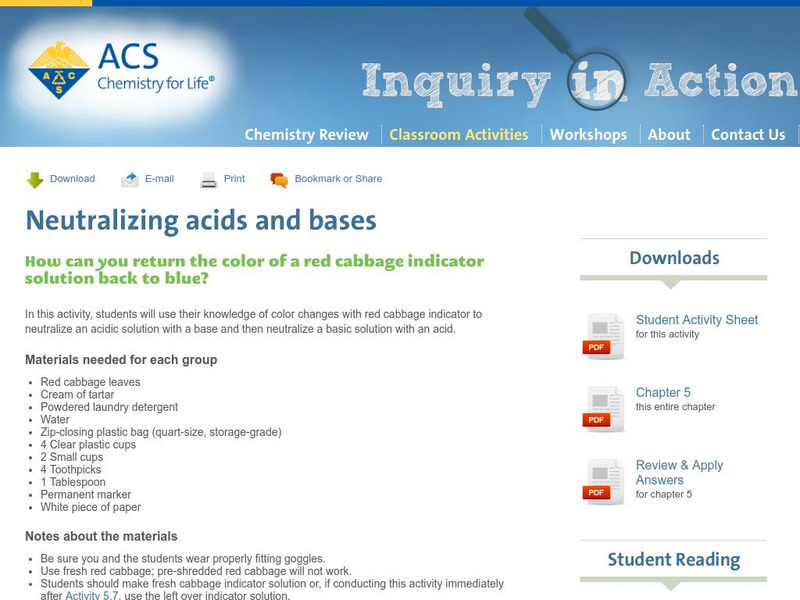
Inquiry in Action: Neutralizing Acids and Bases
A lab activity where students will neutralize and acidic solution with a base and a basic solution with an acid by using their knowledge of a red cabbage indicator. This site includes teacher and student instruction for the lab activity...
American Chemical Society
Middle School Chemistry: Lesson Plans: Temperature Changes in Dissolving
Media-rich instructional activity in which students discover that it takes energy to break bonds, and that energy is released when bonds are formed during the process of dissolving. They also determine whether dissolving is either...
Chemistry Collective
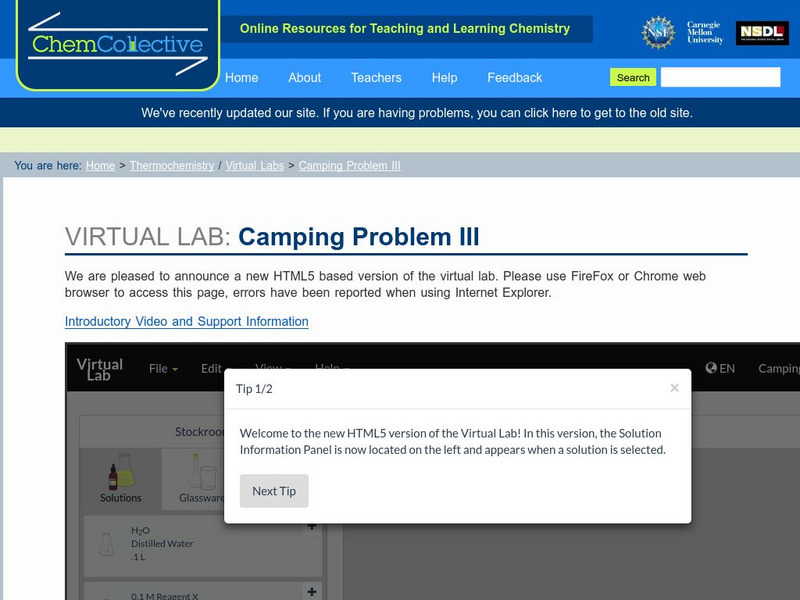
Chem Collective: Camping Problem Iii
In this part of the MRE scenario, students create solutions that when mixed, increase to a certain temperature.

OpenStax
Open Stax: Anatomy & Physiology: Body Fluids and Fluid Compartments
Learn about the chemical and physical characteristics of the fluids that make up the human body.
American Chemical Society
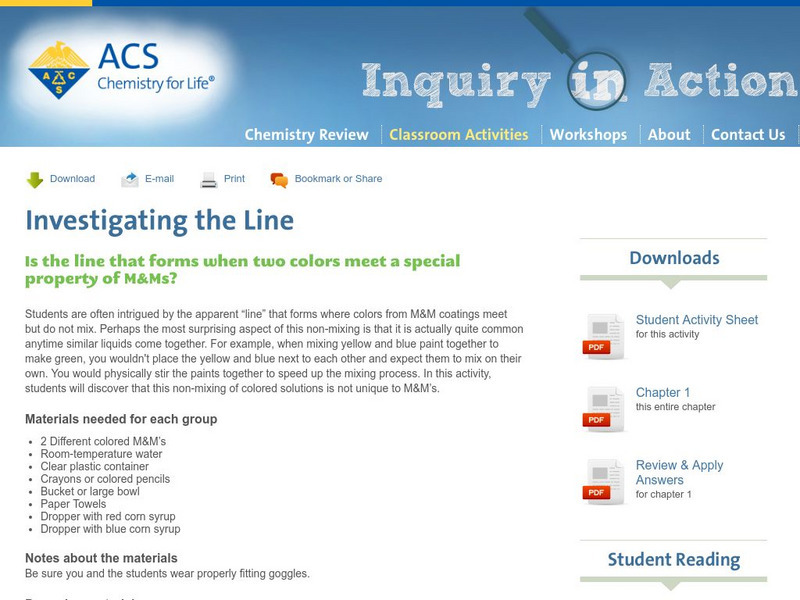
Inquiry in Action: Investigating the Line
Students will observe the non-mixing of colored solutions by using M&M's in this lab activity. Lab activity includes both student and teacher instruction sheets.

University of Colorado
University of Colorado: Ph Et Interactive Simulations: Molarity
What determines the concentration of a solution? Learn about the relationships between moles, liters, and molarity by adjusting the amount of solute and solution volume. Change solutes to compare different chemical compounds in water.

TeachEngineering
Teach Engineering: Separating Mixtures
In this instructional activity the students will learn how to classify the materials as mixtures, elements and compounds and identify the properties of each group. Also the concept of separation of mixtures will be introduced to the...