Hi, what do you want to do?





CK-12 Foundation
Ck 12: Life Science: Water Cycle
[Free Registration/Login may be required to access all resource tools.] Water and elements like carbon and nitrogen are constantly being recycled through the environment. This process is called a biogeochemical cycle because it involves...
CK-12 Foundation
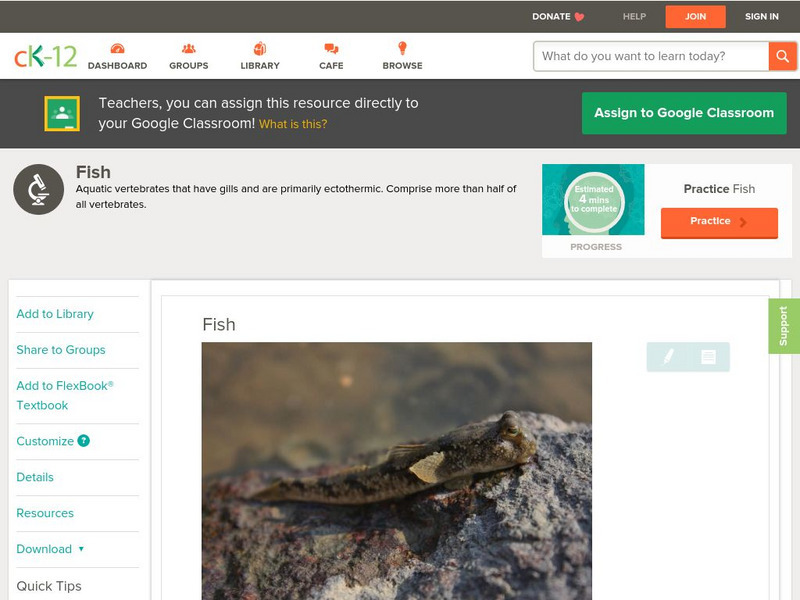
Ck 12: Life Science: Fish
[Free Registration/Login may be required to access all resource tools.] What exactly is a fish? You probably think the answer is obvious. You may say that a fish is an animal that swims in the ocean or a lake, using fins. But not all...
CK-12 Foundation
Ck 12: Life Science: How the Eye Works
[Free Registration/Login may be required to access all resource tools.] The job of the eye is to focus light. The parts of the eye help it to carry out its job. Follow the path of light through the eye as you read about it. Learn more...
CK-12 Foundation
Ck 12: Life Science: Skin
[Free Registration/Login may be required to access all resource tools.] Did you know that you see the largest organ in your body every day? You wash it, dry it, cover it up to stay warm, and uncover it to cool off. Yes, your skin is your...
CK-12 Foundation
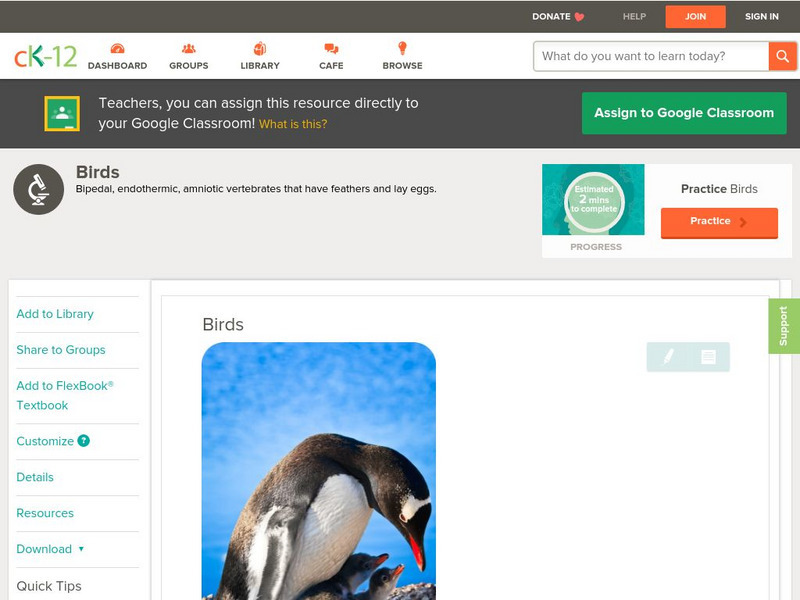
Ck 12: Life Science: Birds
[Free Registration/Login may be required to access all resource tools.] There is an amazingly wide variety of birds. Birds are vertebrates. Almost all have forelimbs modified as wings, but not all birds can fly. Learn more about birds in...
CK-12 Foundation
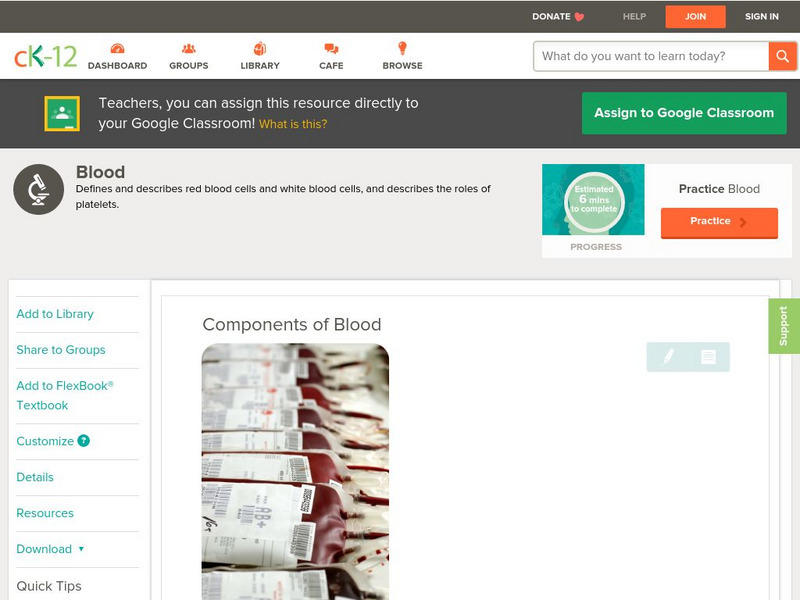
Ck 12: Life Science: Components of Blood
[Free Registration/Login may be required to access all resource tools.] Did you know that blood is a tissue? Blood is a fluid connective tissue that is made up of red blood cells, white blood cells, platelets, and plasma. Learn more...
CK-12 Foundation
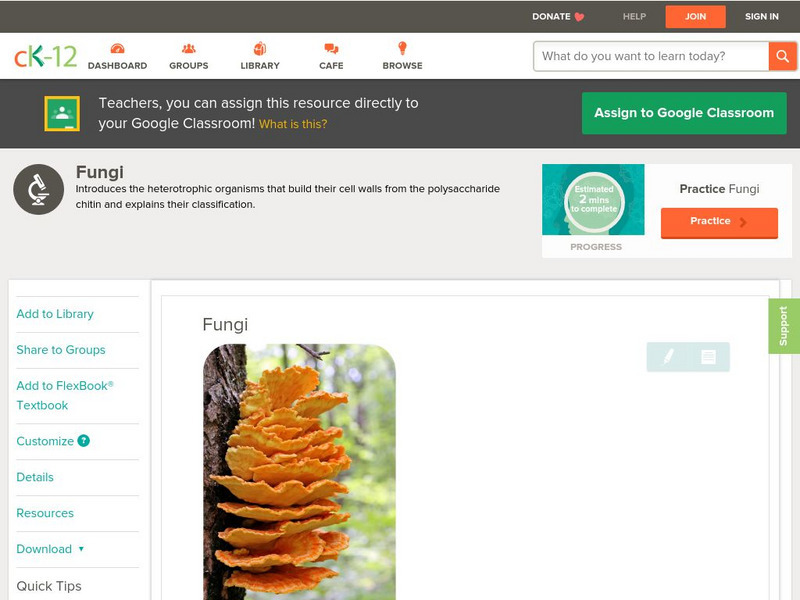
Ck 12: Life Science: Fungi
[Free Registration/Login may be required to access all resource tools.] Ever notice blue-green mold growing on a loaf of bread? Do you like your pizza with mushrooms? Has a physician ever prescribed an antibiotic for you? Learn more...
CK-12 Foundation
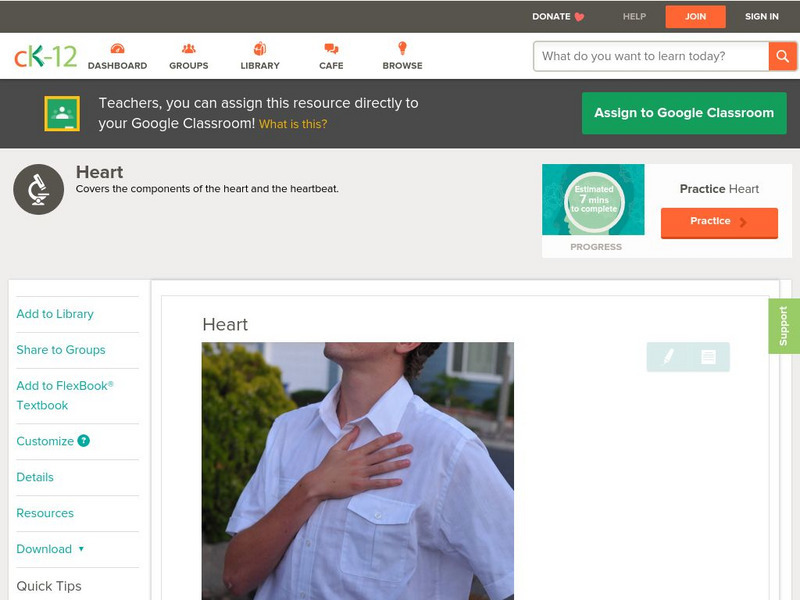
Ck 12: Life Science: Heart
[Free Registration/Login may be required to access all resource tools.] What does the heart look like? How does it pump blood? Learn more about the heart in this learning module produced by CK-12.
CK-12 Foundation
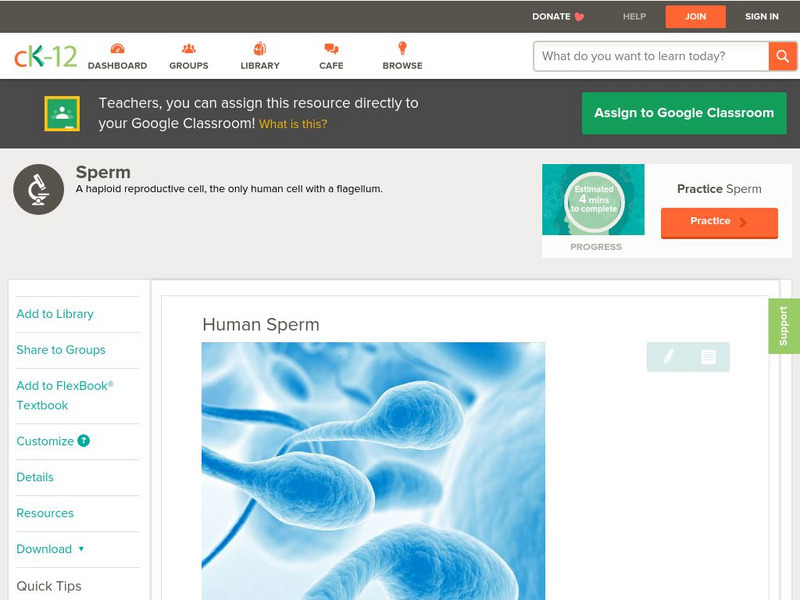
Ck 12: Life Science: Human Sperm
[Free Registration/Login may be required to access all resource tools.] Sperm, the male reproductive cells, are tiny. In fact, they are the smallest cells in the human body. Some people think that they look like tadpoles. Learn more...
CK-12 Foundation
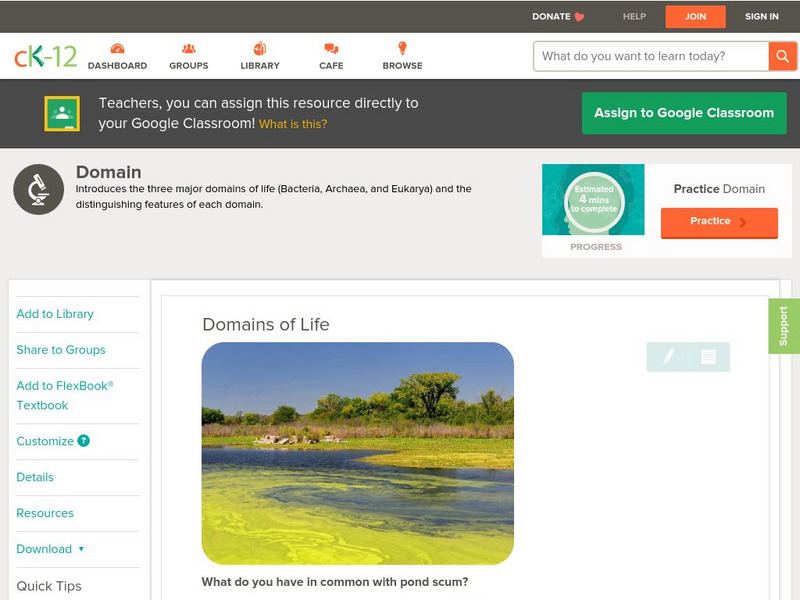
Ck 12: Life Science: Domains of Life
[Free Registration/Login may be required to access all resource tools.] Humans are in the same domain as trees and algae. What could they possibly have in common? It is the location of their DNA inside their cells. Their cells all have a...
CK-12 Foundation
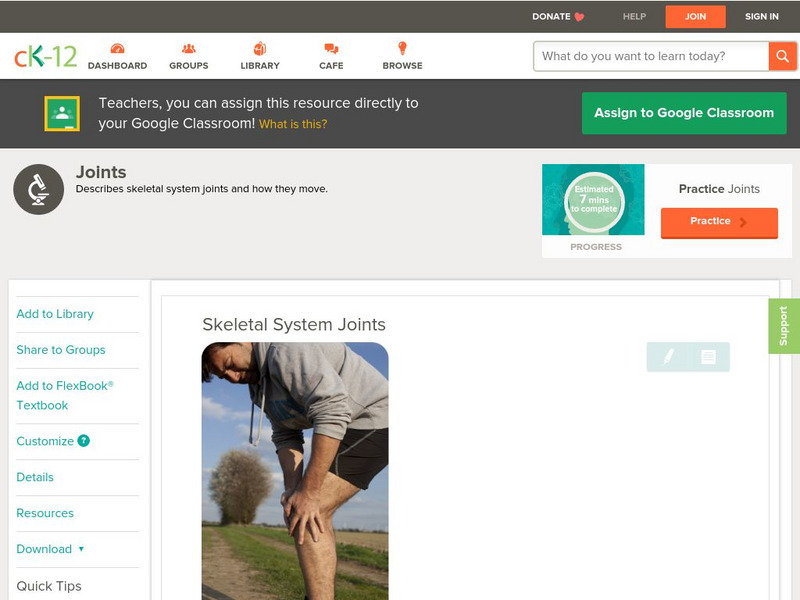
Ck 12: Life Science: Skeletal System Joints
[Free Registration/Login may be required to access all resource tools.] As you age, you might start noticing pain in your knees or elbows. These are examples of joints. Joints are the part of the skeletal system that connect your bones....
CK-12 Foundation
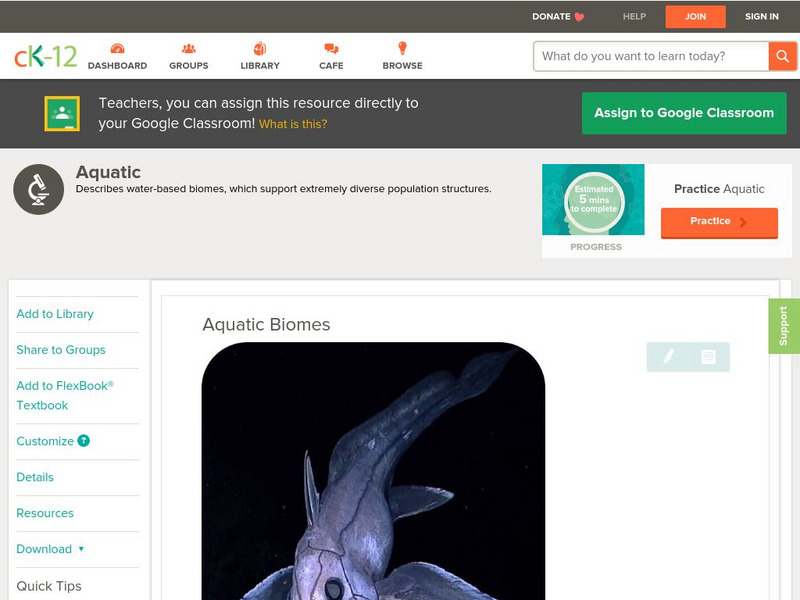
Ck 12: Life Science: Aquatic Biomes
[Free Registration/Login may be required to access all resource tools.] Aquatic biomes can be generally classified based on the amount of salt in the water. Freshwater biomes have less than 1% salt and are typical of ponds and lakes,...
CK-12 Foundation
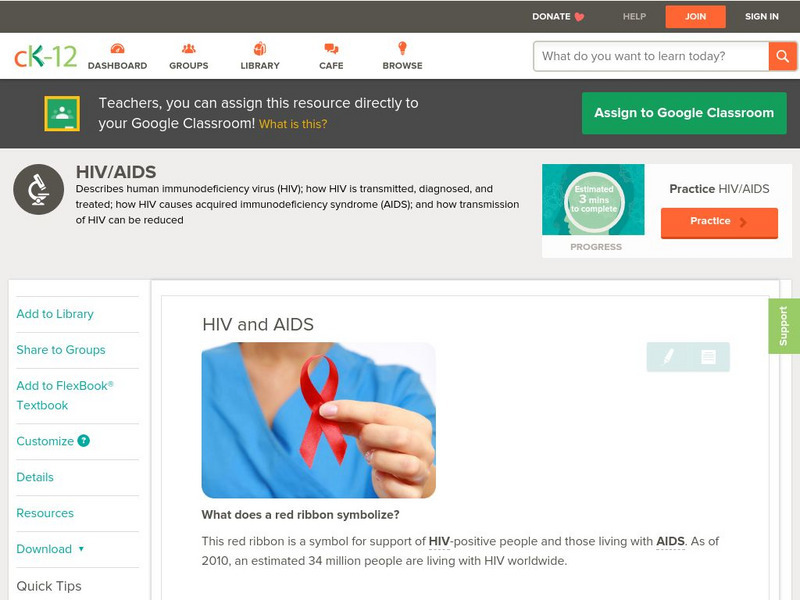
Ck 12: Life Science: Hiv and Aids
[Free Registration/Login may be required to access all resource tools.] HIV, or human immunodeficiency virus, causes AIDS. AIDS stands for "acquired immune deficiency syndrome." It is a condition that causes death and does not have a...
CK-12 Foundation
Ck 12: Life Science: Insects
[Free Registration/Login may be required to access all resource tools.] Insects, with over a million described species, are the most diverse group of animals on Earth. They may be found in nearly all environments on the planet. No matter...
CK-12 Foundation
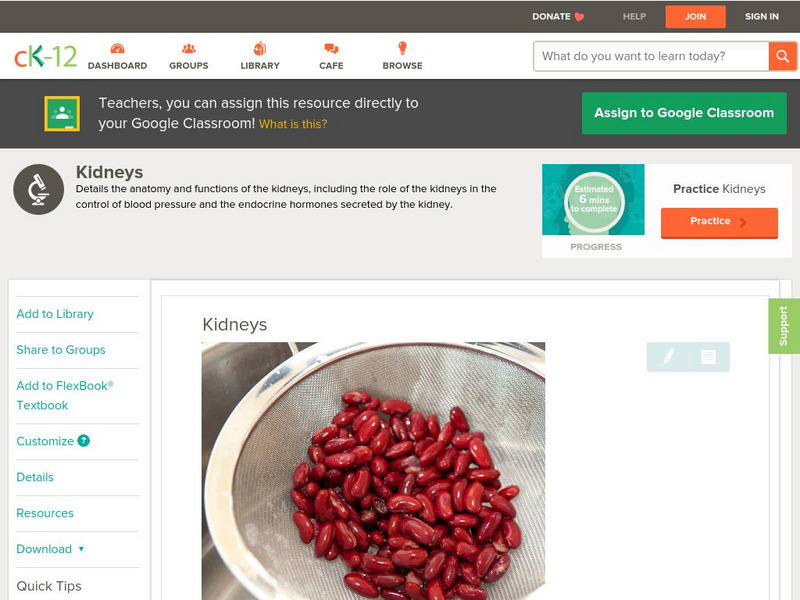
Ck 12: Life Science: Kidneys
[Free Registration/Login may be required to access all resource tools.] The kidneys are important organs in maintaining homeostasis, the ability of the body to maintain a stable internal environment despite a changing environment....
CK-12 Foundation
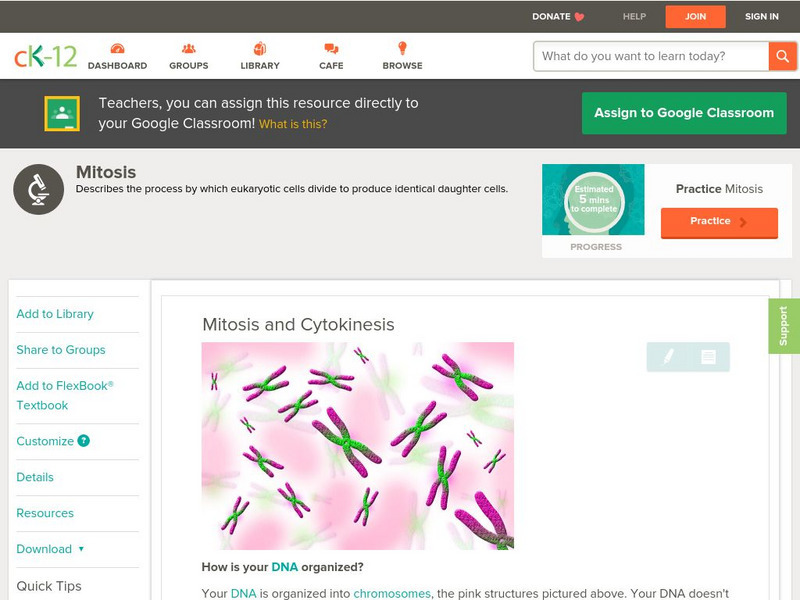
Ck 12: Life Science: Mitosis and Cytokinesis
[Free Registration/Login may be required to access all resource tools.] During mitosis, the DNA in a nucleus must replicate. The copied DNA is divided into two genetically identical sets, so that after cytokinesis or cell division, each...
CK-12 Foundation
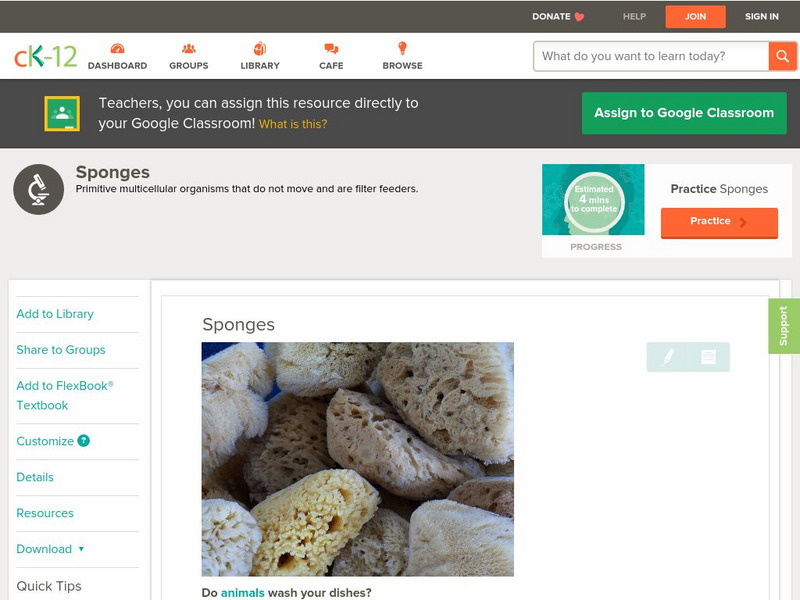
Ck 12: Life Science: Sponges
[Free Registration/Login may be required to access all resource tools.] Sponges are classified in the phylum Porifera, from the Latin words meaning "having pores." Sponges are sessile, meaning they cannot move, so they filter water...
CK-12 Foundation
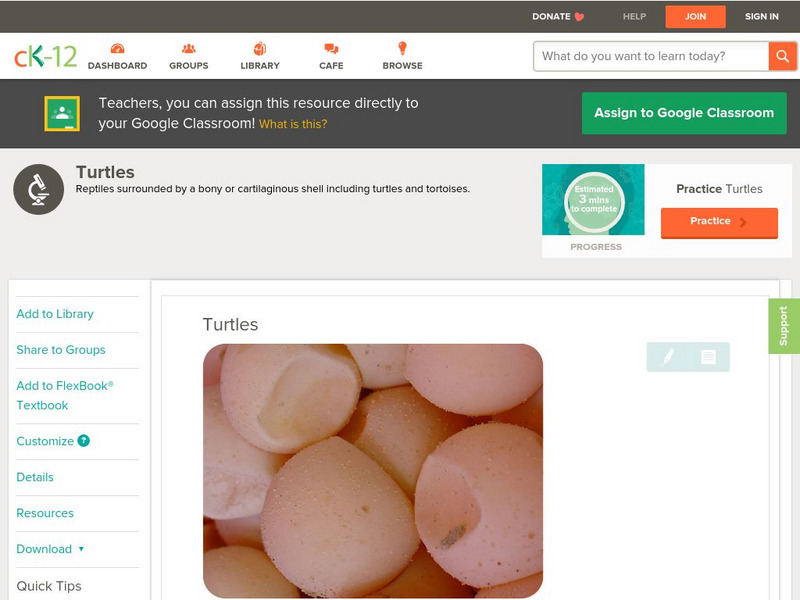
Ck 12: Life Science: Turtles
[Free Registration/Login may be required to access all resource tools.] Turtles are reptiles in the order Testudines. Most turtle bodies are covered by a special shell developed from their ribs. About 300 species are alive today, and...
CK-12 Foundation
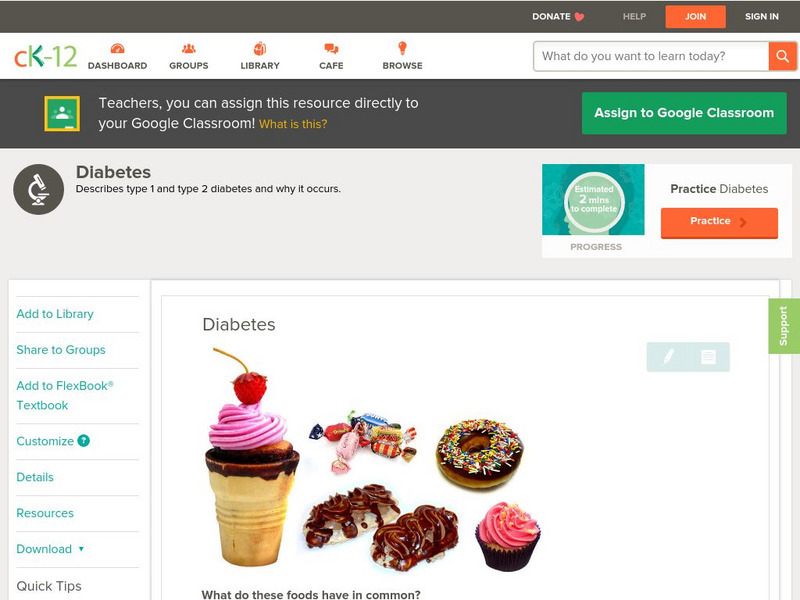
Ck 12: Life Science: Diabetes
[Free Registration/Login may be required to access all resource tools.] Diabetes is a non-infectious disease in which the body is unable to control the amount of sugar in the blood. People with diabetes have high blood sugar, either...
CK-12 Foundation
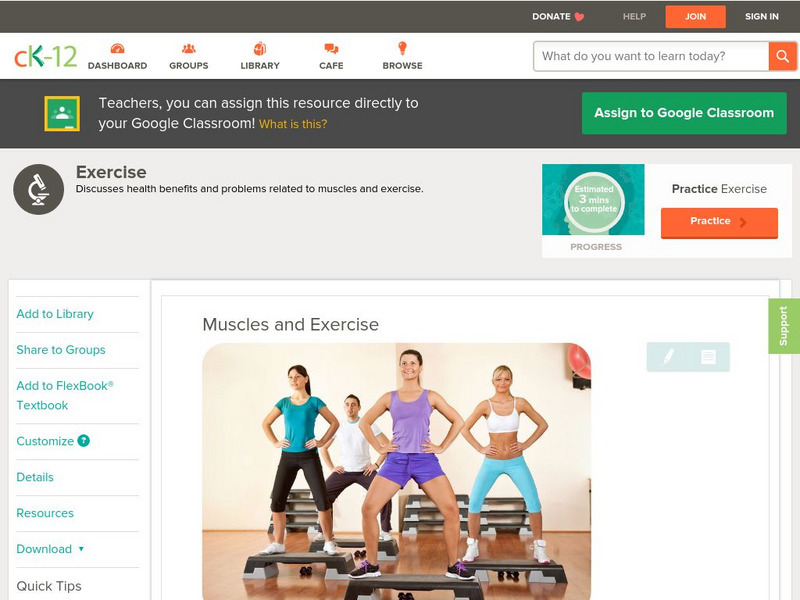
Ck 12: Life Science: Muscles and Exercise
[Free Registration/Login may be required to access all resource tools.] Regular physical exercise is important in preventing lifestyle diseases such as cardiovascular disease, some types of cancer, type 2 diabetes, and obesity. Regular...
CK-12 Foundation
Ck 12: Life Science: Tropisms
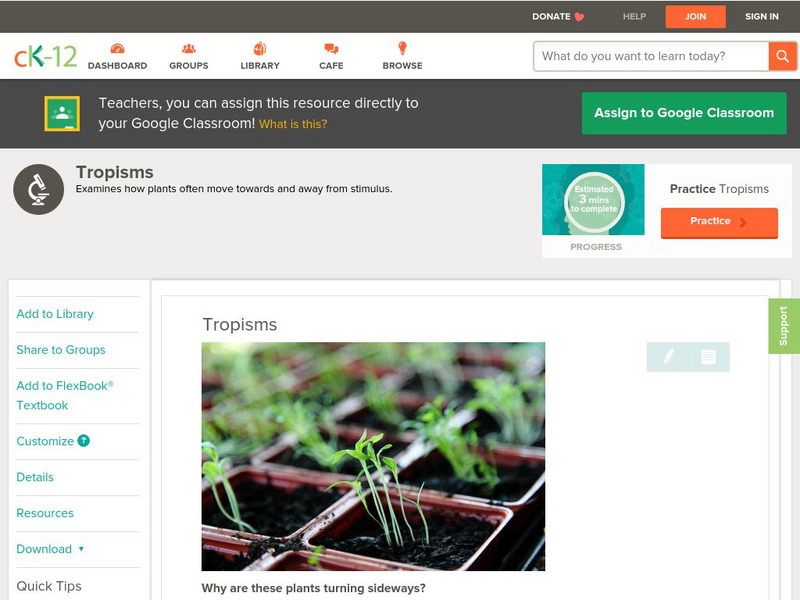
[Free Registration/Login may be required to access all resource tools.] Plants may not be able to move, but they are able to change how they grow in response to their environment. Growth toward or away from a stimulus is known as a...
CK-12 Foundation
Ck 12: Life Science: Adulthood and Aging
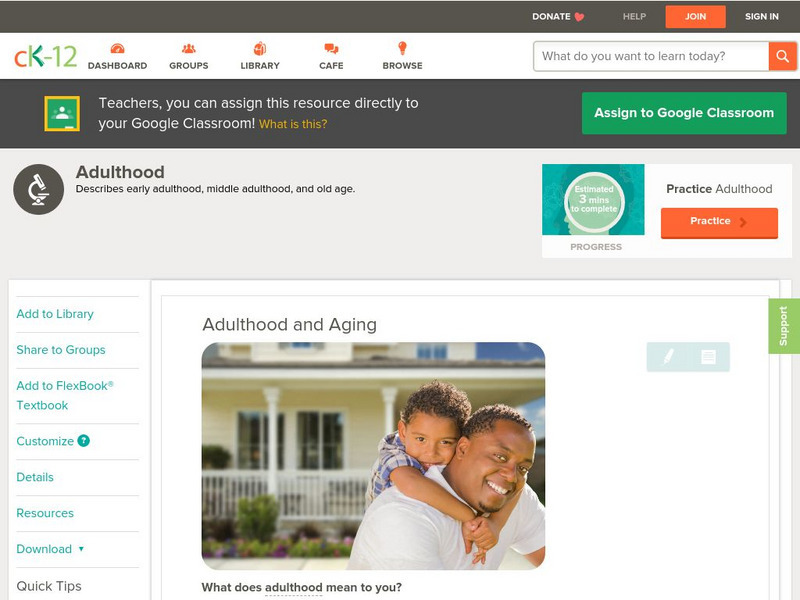
[Free Registration/Login may be required to access all resource tools.] When is a person considered an adult? That depends. Most teens become physically mature by the age of 16 or so. But they are not adults in a legal sense until they...
CK-12 Foundation
Ck 12: Life Science: Arachnids
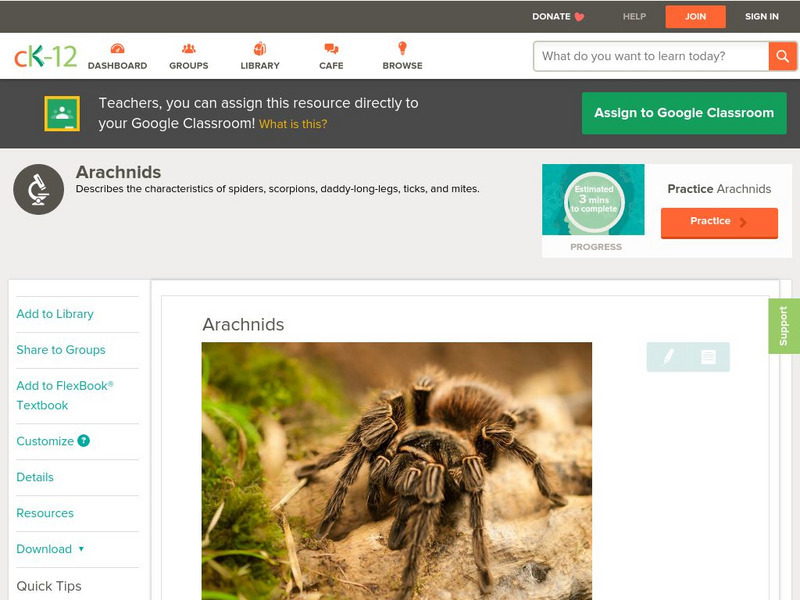
[Free Registration/Login may be required to access all resource tools.] Arachnids are a class of joint-legged invertebrates in the subphylum Chelicerata. They live mainly on land but are also found in freshwater and in all marine...
CK-12 Foundation
Ck 12: Life Science: Bony Fish
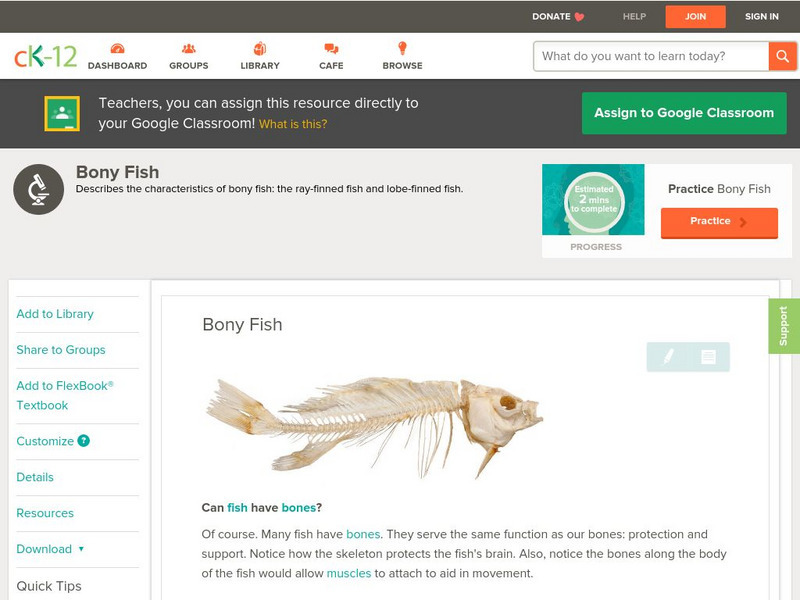
[Free Registration/Login may be required to access all resource tools.] There are almost 27,000 species of bony fish, which are divided into two classes: ray-finned fish and lobe-finned fish. Most bony fish are ray-finned. These thin...