CK-12 Foundation
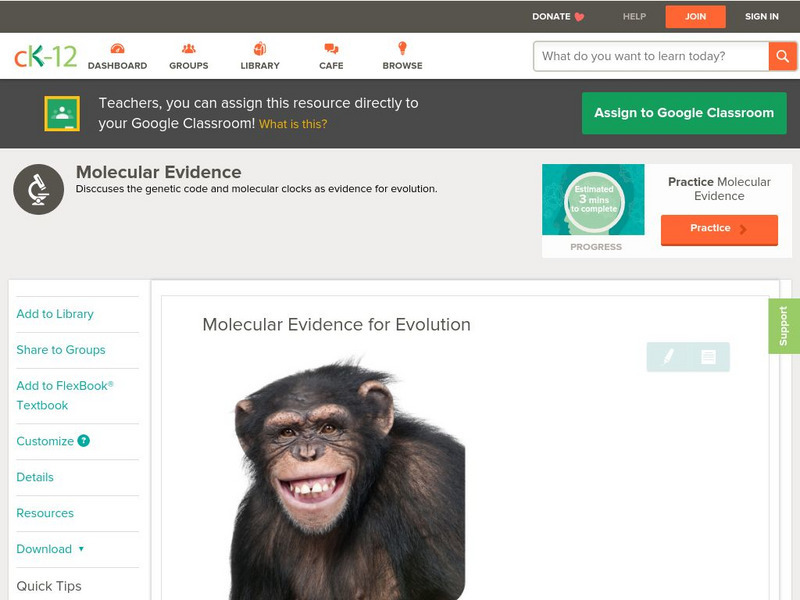
Ck 12: Life Science: Molecular Evidence for Evolution
[Free Registration/Login may be required to access all resource tools.] Chimpanzees and humans turn out to be very similar - if you look at their DNA. When scientists determined the entire genetic code of both humans and chimpanzees,...
CK-12 Foundation
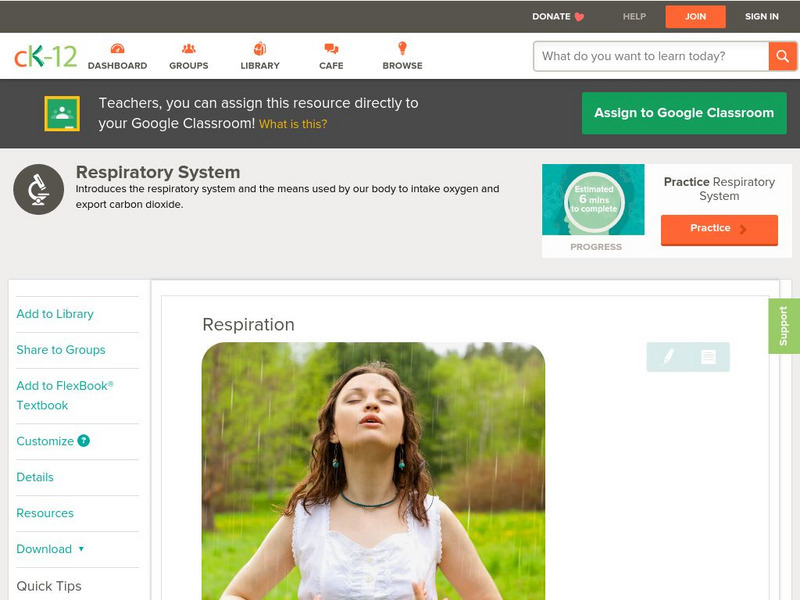
Ck 12: Life Science: Respiration
[Free Registration/Login may be required to access all resource tools.] We breathe because we need oxygen. Breathing also releases carbon dioxide from our bodies into the air. The respiratory system is the body system that brings air...
CK-12 Foundation
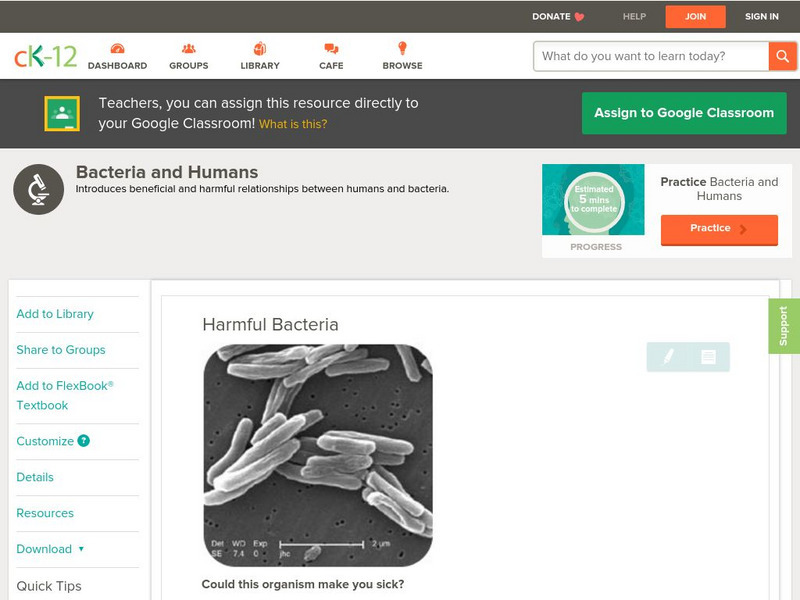
Ck 12: Life Science: Harmful Bacteria
[Free Registration/Login may be required to access all resource tools.] With so many species of bacteria, some are bound to be harmful. Harmful bacteria can make you sick. They can also ruin food and be used to hurt people. Learn more...
CK-12 Foundation
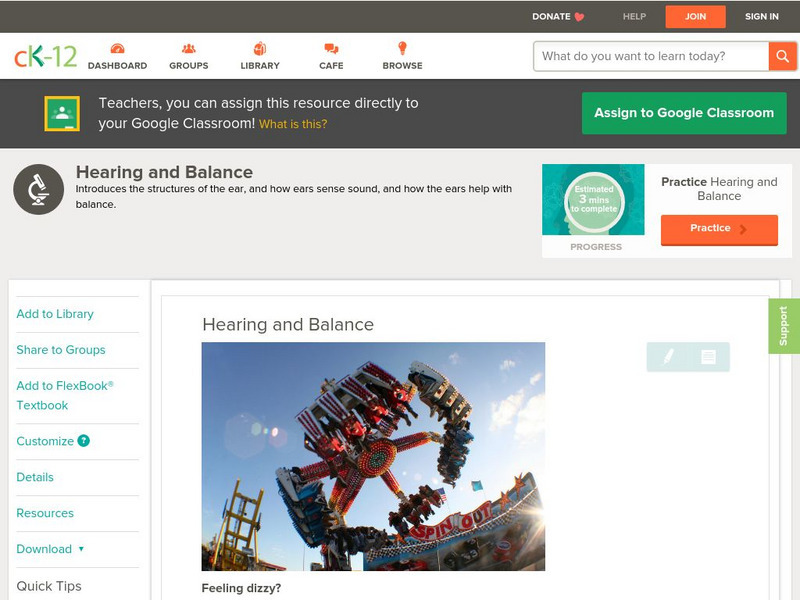
Ck 12: Life Science: Hearing and Balance
[Free Registration/Login may be required to access all resource tools.] What do listening to music and riding a bike have in common? It might surprise you to learn that both activities depend on your ears. The ears do more than just...
CK-12 Foundation
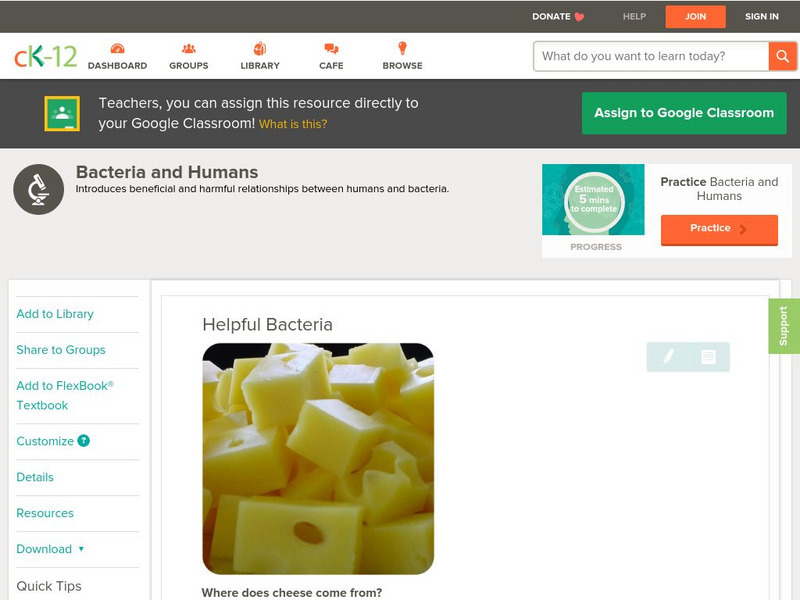
Ck 12: Life Science: Helpful Bacteria
[Free Registration/Login may be required to access all resource tools.] Can we survive without bacteria? Could bacteria survive without us? Learn more about helpful bacteria in this learning module produced by CK-12.
CK-12 Foundation
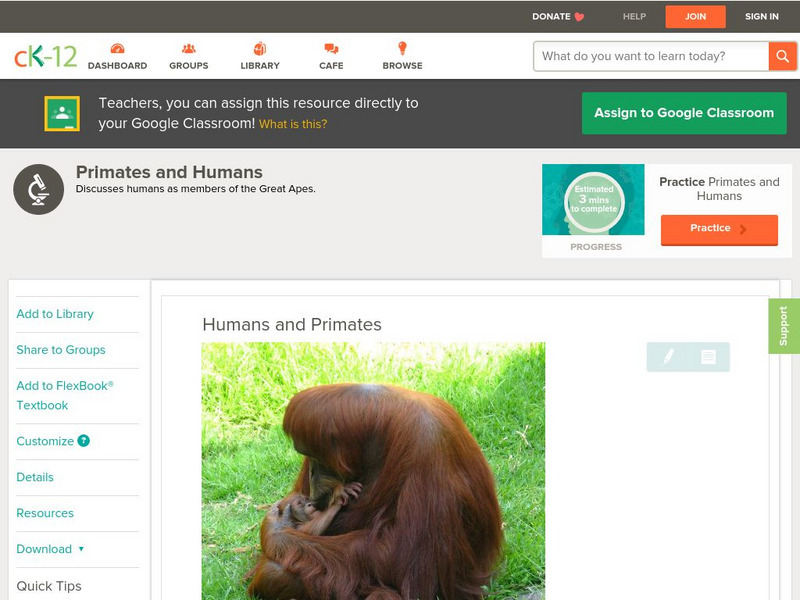
Ck 12: Life Science: Humans and Primates
[Free Registration/Login may be required to access all resource tools.] The great apes are the members of the biological family Hominidae, which includes four living genera: chimpanzees, gorillas, humans, and orangutans. Learn more about...
CK-12 Foundation
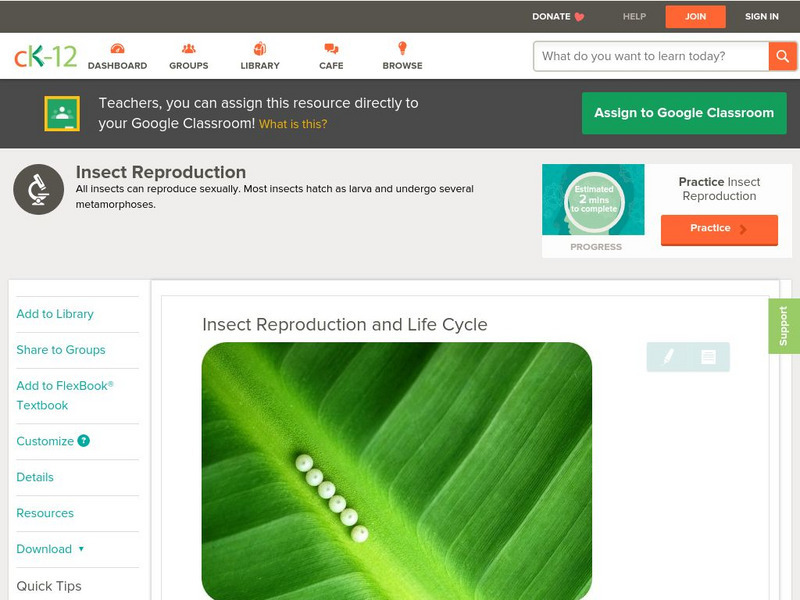
Ck 12: Life Science: Insect Reproduction and Life Cycle
[Free Registration/Login may be required to access all resource tools.] Most insects can reproduce quickly within a short period of time, which means they evolve faster and can adjust to environmental changes. Most reproduce by sexual...
CK-12 Foundation
Ck 12: Life Science: Mammal Reproduction
[Free Registration/Login may be required to access all resource tools.] Mammals don't typically lay eggs, but monotremes are the exception. All other mammals give birth to live young and belong to one of two categories, the marsupials...
CK-12 Foundation
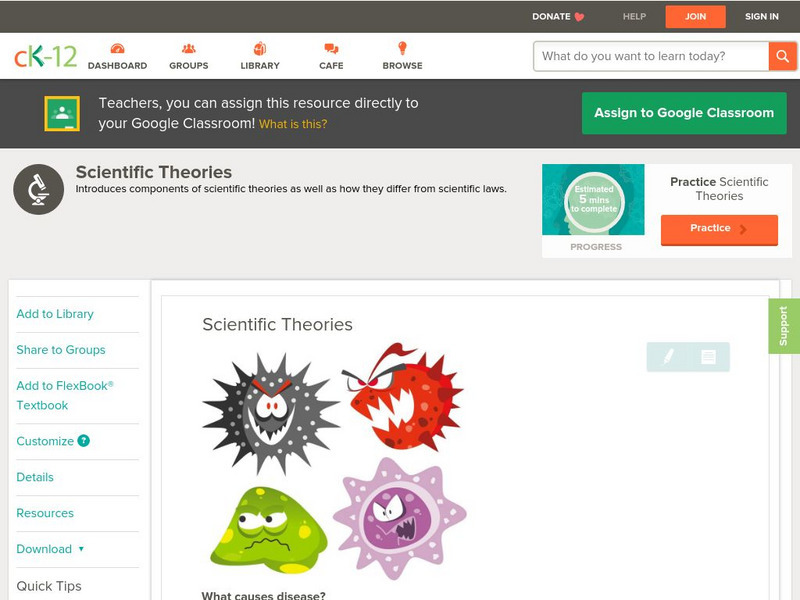
Ck 12: Life Science: Scientific Theories
[Free Registration/Login may be required to access all resource tools.] Today most people realize that microorganisms, such as bacteria or viruses, are the cause of disease. This concept is known as the germ theory of disease, one of the...
CK-12 Foundation
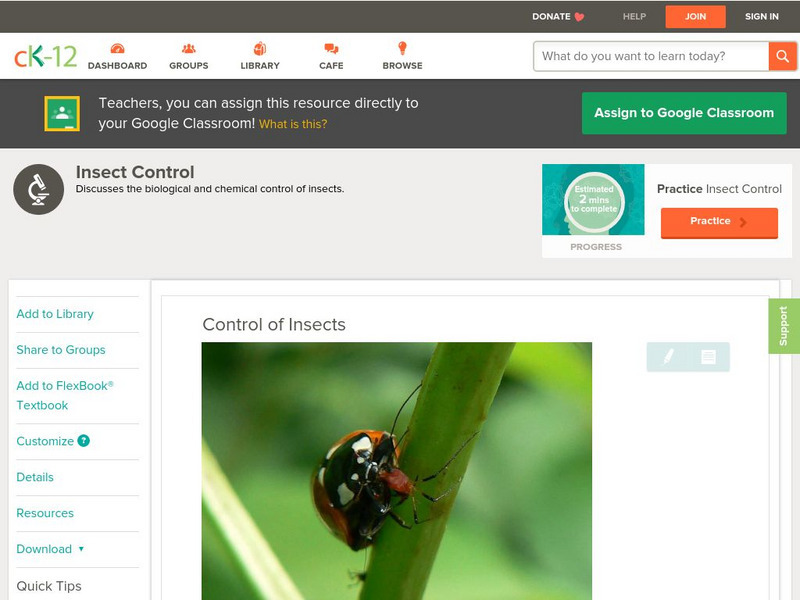
Ck 12: Life Science: Control of Insects
[Free Registration/Login may be required to access all resource tools.] Ladybugs won't hurt you. But they are dangerous to some other insects! Ladybugs eat plant-harming bugs known as aphids. Since they have an appetite for aphids,...
CK-12 Foundation
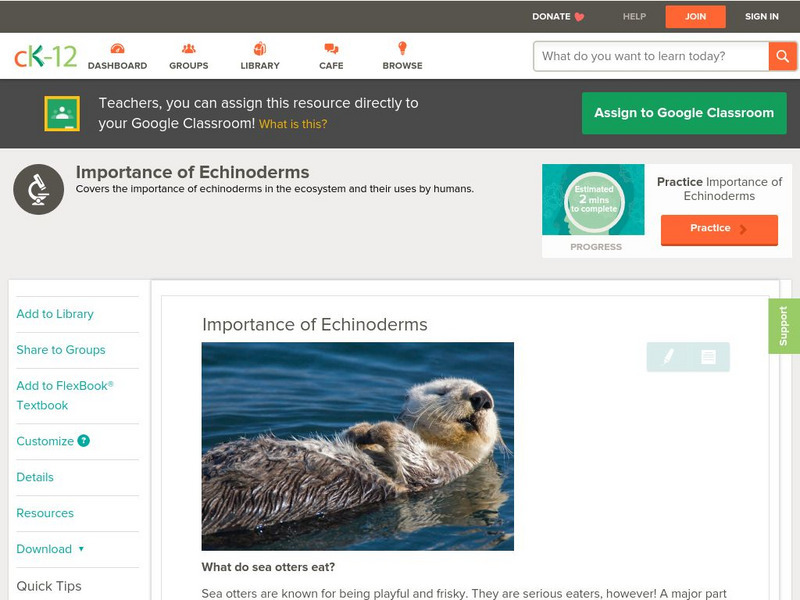
Ck 12: Life Science: Importance of Echinoderms
[Free Registration/Login may be required to access all resource tools.] Echinoderms are important for the ecosystem. They are also a source of food and medicine for humans. Learn more about the importance of echinoderms in this learning...
CK-12 Foundation
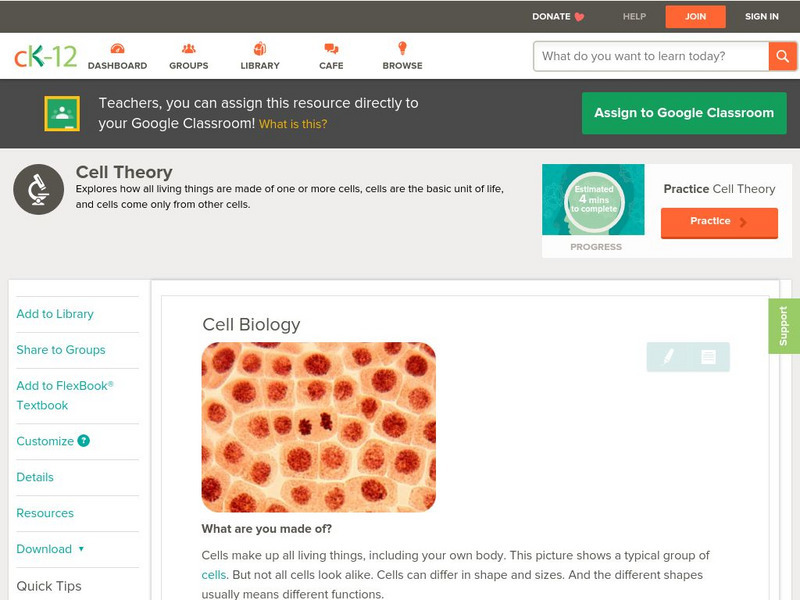
Ck 12: Life Science: Cell Biology
[Free Registration/Login may be required to access all resource tools.] A cell is the smallest structural and functional unit of an organism. Learn more about cell biology in this learning module produced by CK-12.

CK-12 Foundation
Ck 12: Life Science: Predation
[Free Registration/Login may be required to access all resource tools.] Predation is another mechanism in which species interact with each other. Predation is when a predator organism feeds on another living organism or organisms, known...
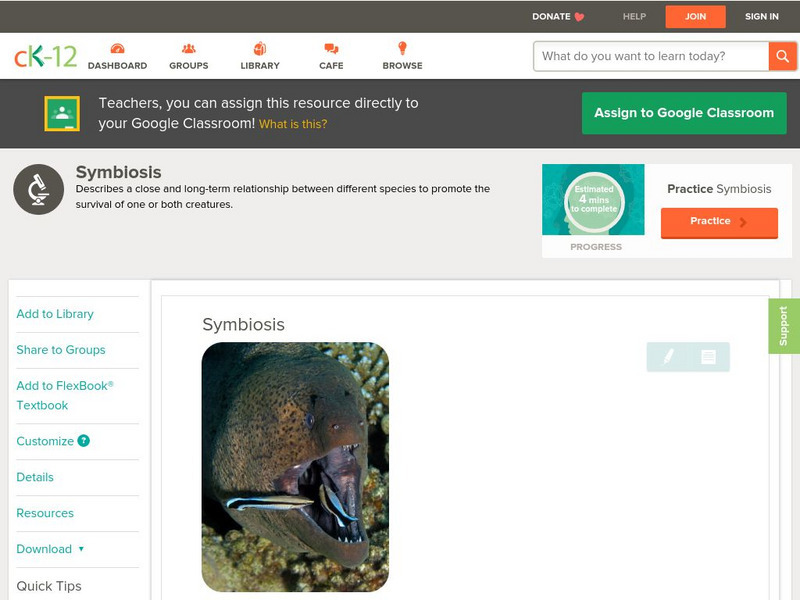
CK-12 Foundation
Ck 12: Life Science: Symbiosis
[Free Registration/Login may be required to access all resource tools.] Symbiosis describes a close and long-term relationship between different species. At least one species will benefit in a symbiotic relationship. There are three...
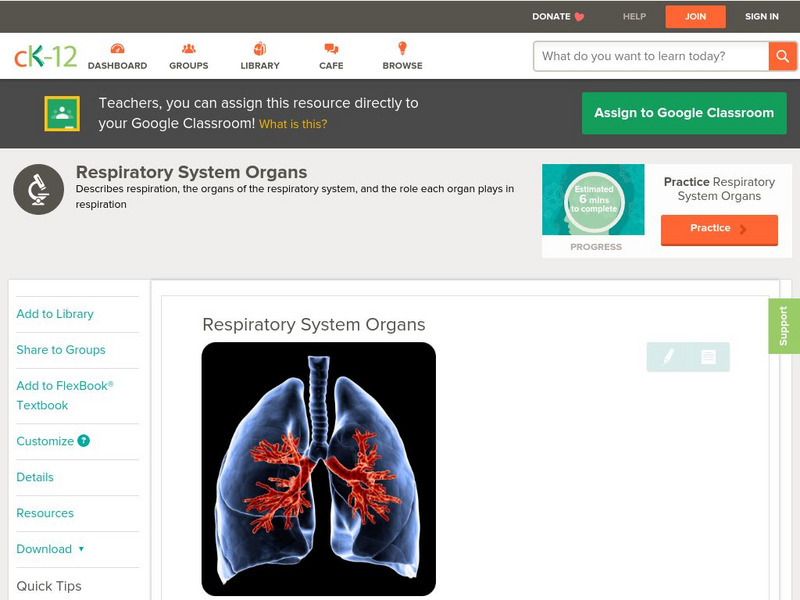
CK-12 Foundation
Ck 12: Life Science: Respiratory System Organs
[Free Registration/Login may be required to access all resource tools.] When you think of the processes of breathing, the lungs probably come to mind. The lungs are the main organ of the respiratory system. However, many other organs are...
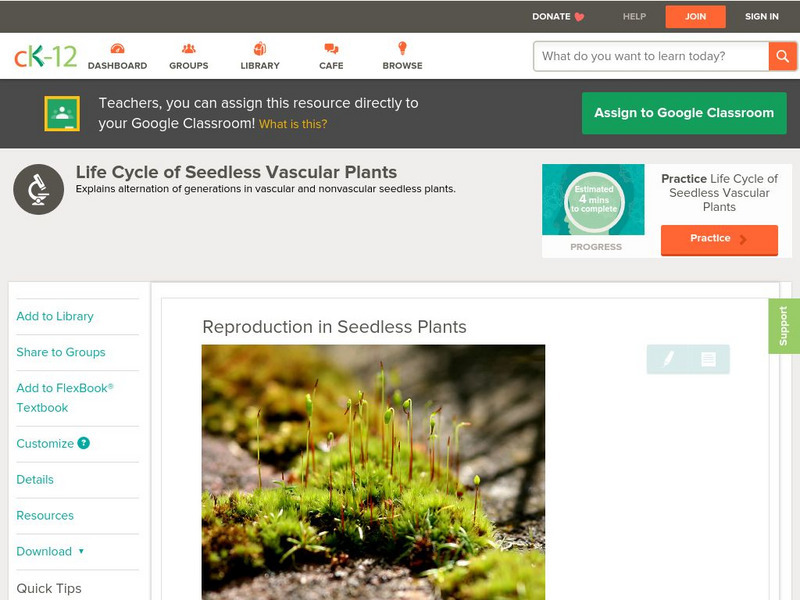
CK-12 Foundation
Ck 12: Life Science: Reproduction in Seedless Plants
[Free Registration/Login may be required to access all resource tools.] Seedless plants can reproduce asexually or sexually. Some seedless plants, like hornworts and liverworts, can reproduce asexually through fragmentation. When a small...
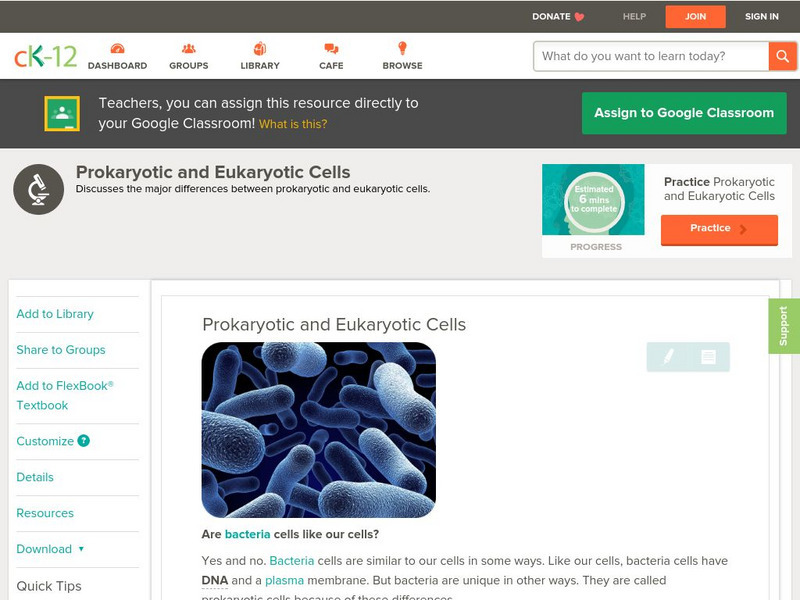
CK-12 Foundation
Ck 12: Life Science: Prokaryotic and Eukaryotic Cells
[Free Registration/Login may be required to access all resource tools.] There are two basic types of cells, prokaryotic cells and eukaryotic cells. The main difference between eukaryotic and prokaryotic cells is that eukaryotic cells...
CK-12 Foundation
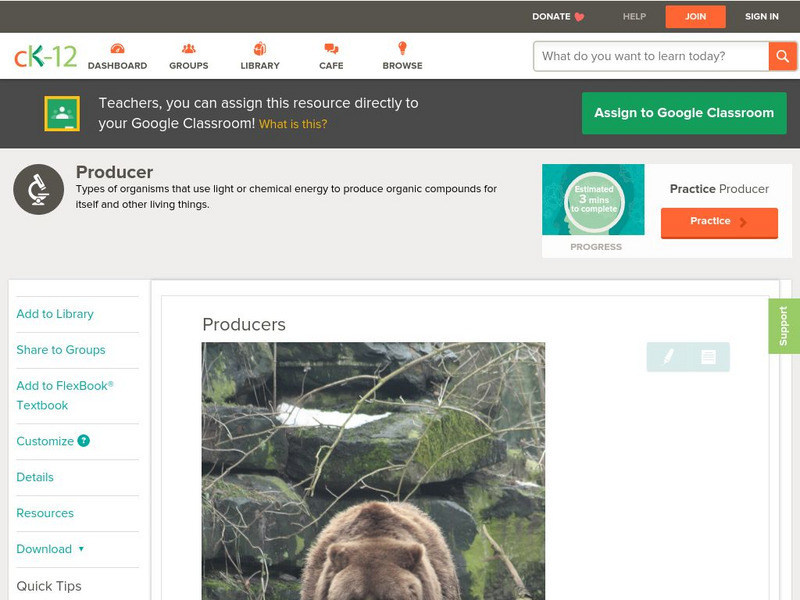
Ck 12: Life Science: Producers
[Free Registration/Login may be required to access all resource tools.] Energy is the ability to do work. In organisms, this can be physical work, like walking or jumping, or it can be the work used to carry out the chemical processes in...
CK-12 Foundation
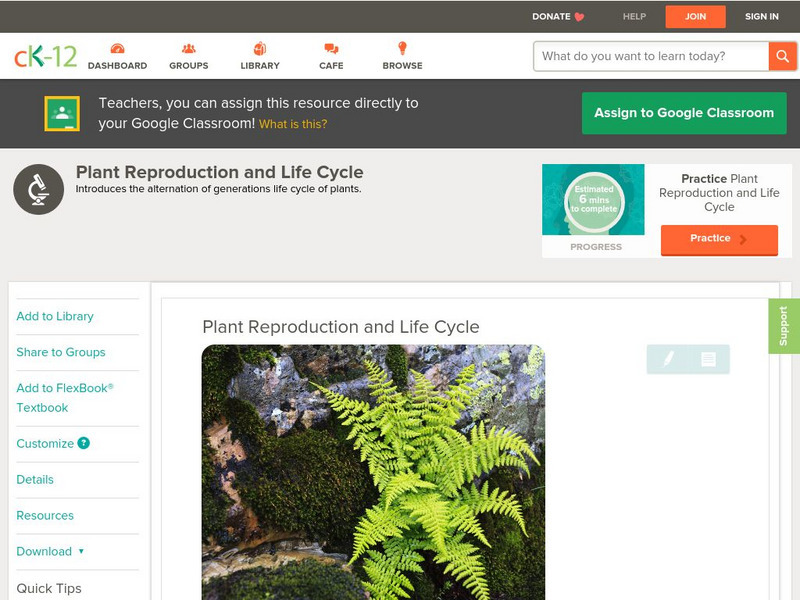
Ck 12: Life Science: Plant Reproduction and Life Cycle
[Free Registration/Login may be required to access all resource tools.] The life cycle of a plant is very different from the life cycle of an animal. Humans are made entirely of diploid cells (cells with two sets of chromosomes). Our...
CK-12 Foundation
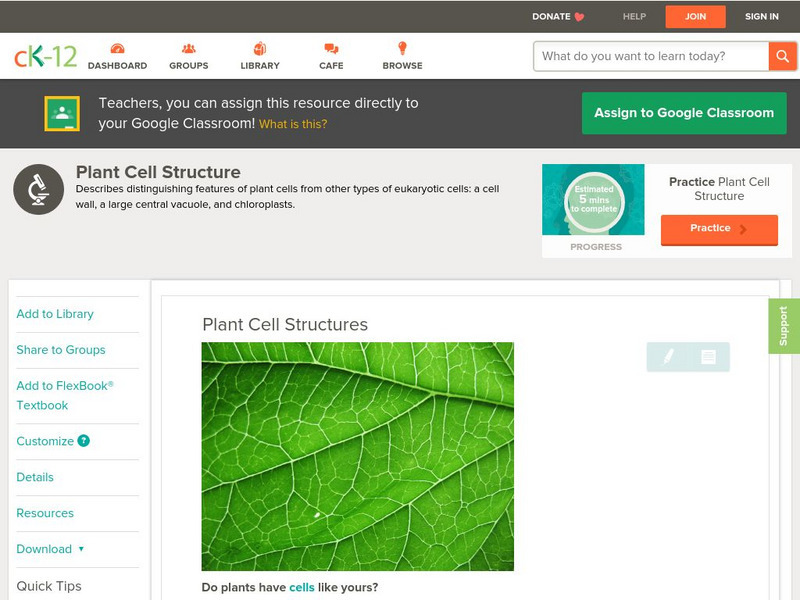
Ck 12: Life Science: Plant Cell Structures
[Free Registration/Login may be required to access all resource tools.] Even though plants and animals are both eukaryotes, plant cells differ in some ways from animal cells. Plant cells have a large central vacuole, are surrounded by a...

CK-12 Foundation
Ck 12: Life Science: Photosynthesis
[Free Registration/Login may be required to access all resource tools.] Plants are producers, which means they are able to make their own food, as well as "food" for other organisms. Plants are also autotrophs - they collect energy from...
CK-12 Foundation
Ck 12: Life Science: Peripheral Nervous System
[Free Registration/Login may be required to access all resource tools.] The peripheral nervous system (PNS) contains all the nerves in the body that are found outside of the central nervous system. They include nerves of the hands, arms,...
CK-12 Foundation
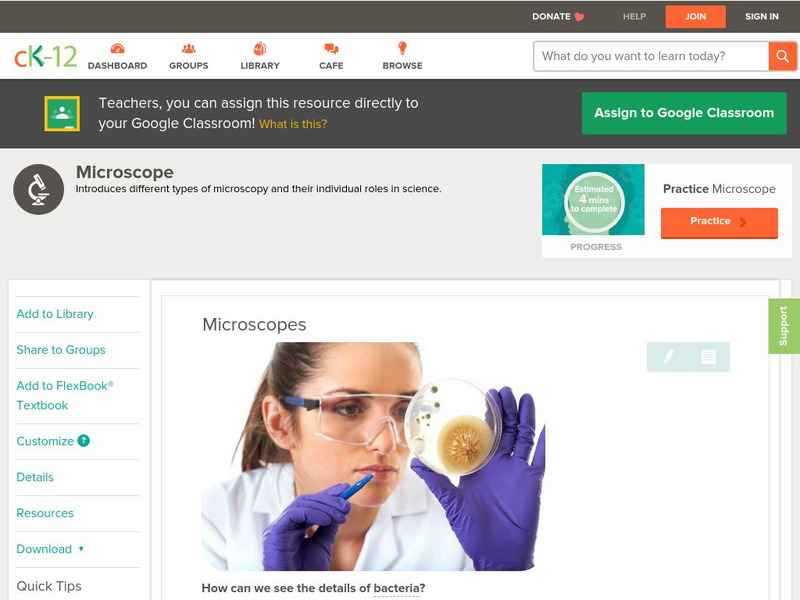
Ck 12: Life Science: Microscopes
[Free Registration/Login may be required to access all resource tools.] A microscope is a tool used to make things that are too small to be seen by the human eye look bigger. Before microscopes were invented in 1595, the smallest things...
CK-12 Foundation
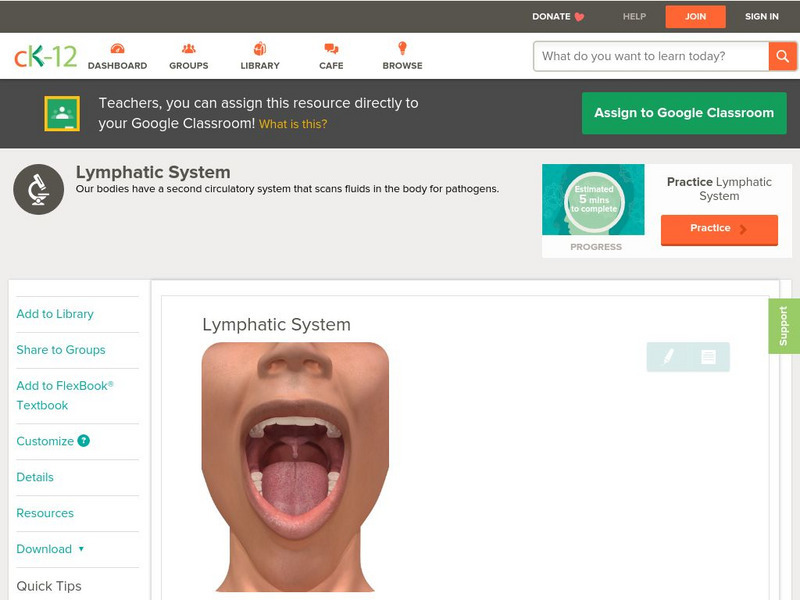
Ck 12: Life Science: Lymphatic System
[Free Registration/Login may be required to access all resource tools.] If pathogens get through the body's first two lines of defense, a third line of defense takes over. This third line of defense involves the immune system. The immune...