Hi, what do you want to do?






Vision Learning
Visionlearning: Data: Data Analysis and Interpretation
An explanation of data from collection to analysis. Includes a discussion of how the same data may be interpreted various ways by different individuals.

Vision Learning
Visionlearning: Data: Uncertainty, Error, and Confidence
An explanation of how errors may affect data that has been collected for experimentation. Some examples are given.

Vision Learning
Visionlearning: Data: Using Graphs and Visual Data in Science
An explanation of how data can be turned into visual forms which can help people comprehend information easier than observing numbers.
NOAA
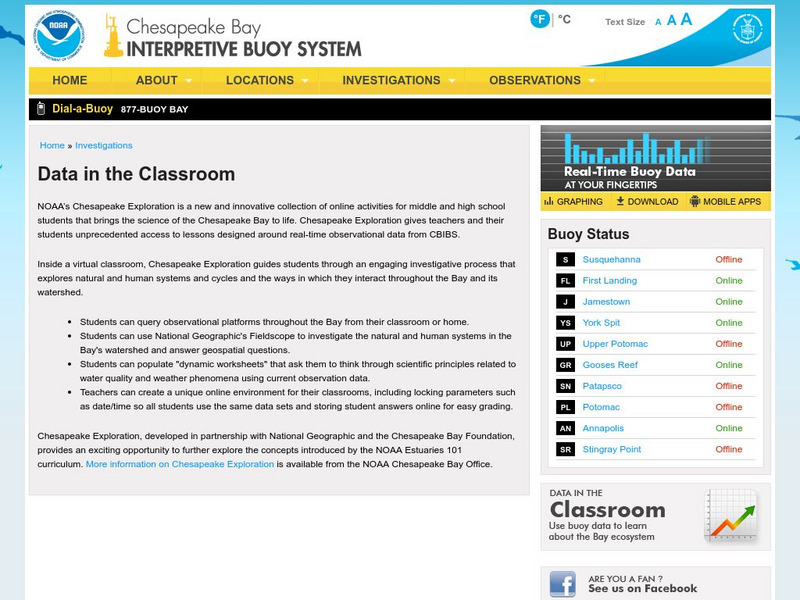
Noaa: Chesapeake Bay Interpretive Buoy System: Data in the Classroom
NOAA Smart Buoys collect and transmit real-time weather, water conditions, and water quality data. Chesapeake Exploration gives teachers and their students unprecedented access to lessons designed around real-time observational data from...

Other
Univ. Of Copenhagen: Centre for Ice and Climate: Preserved Fossil Dna in the Ice
Discusses how fossil DNA data that is collected from ice cores is used by scientists to reconstruct the composition of past ecosystems and their biodiversity, as well as climates. There is a great deal of other information on the website...
BSCS Science Learning
Bscs: Invitations to Inquiry With Data Using Field Scope
Invitations to Inquiry are short instructional activities designed to help middle and high school students work with large data sets. Teachers and students use the interactive FieldScope platform to collect, visualize, and analyze...
Vision Learning
Visionlearning: Data: Statistics in Science
An explanation of how statistics allows scientist to explore the degree of uncertainty that accompanies conclusions that are based on data collected during experimentation and research.
BioEd Online
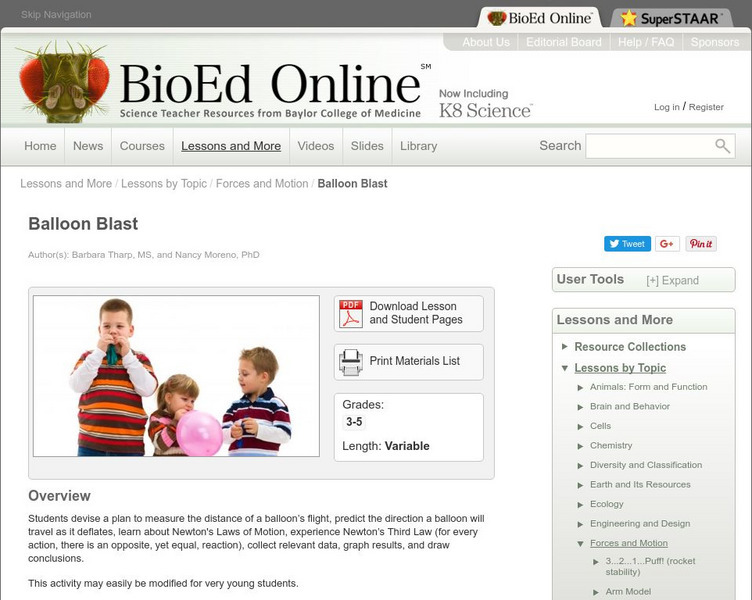
Bio Ed Online: Balloon Blast
In the following lesson plan students are asked to devise a plan to measure the distance of a balloon's flight, predict the direction a balloon will travel as it deflates, learn about Newton's Laws of Motion, experience Newton's Third...
Illustrative Mathematics
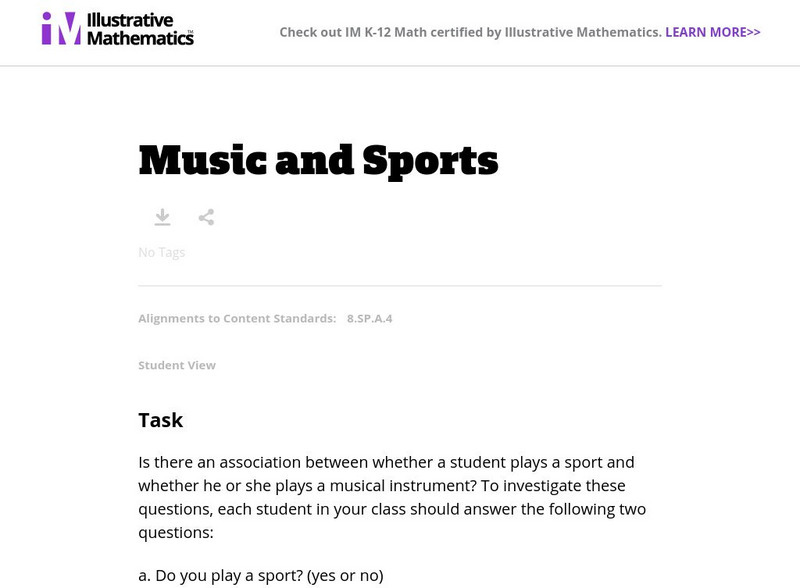
Illustrative Mathematics: 8.sp.4 Music and Sports
This task looks at a possible relationship between playing a sport and playing a musical instrument. Students collect data from classmates, summarize the data into a two-way table, make some observations, and construct a bar graph of the...
Climate Literacy
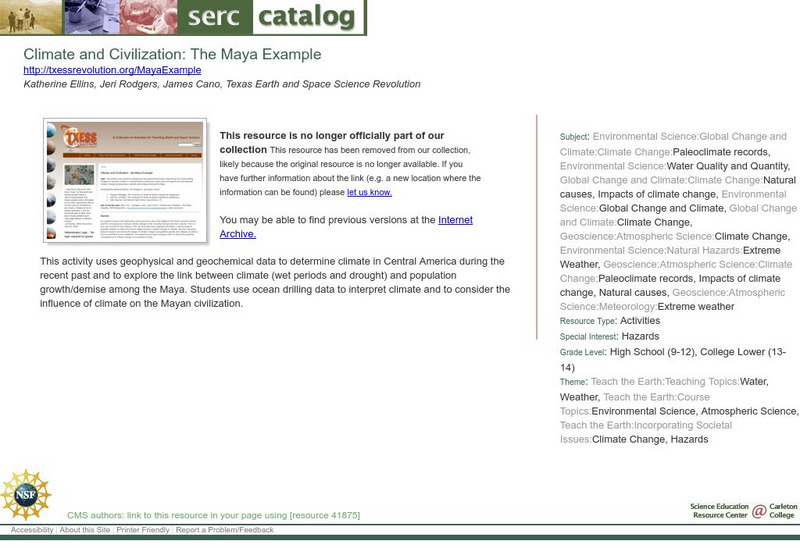
Clean: Climate and Civilization: The Maya Example
Students use geophysical and geochemical data collected by the Ocean Drilling Program to examine climate in Central America during the recent past. They also have the opportunity to investigate the link between climate change and...
BSCS Science Learning
Bscs: Heavy Metals in Waterways
This inquiry focuses on heavy metals in waterways in Colorado. Students will learn about heavy metals and data collected about them from citizen scientists, and then analyze the data in tables and maps to identify possible evidence of...
Center for Innovation in Engineering and Science Education, Stevens Institute of Technology
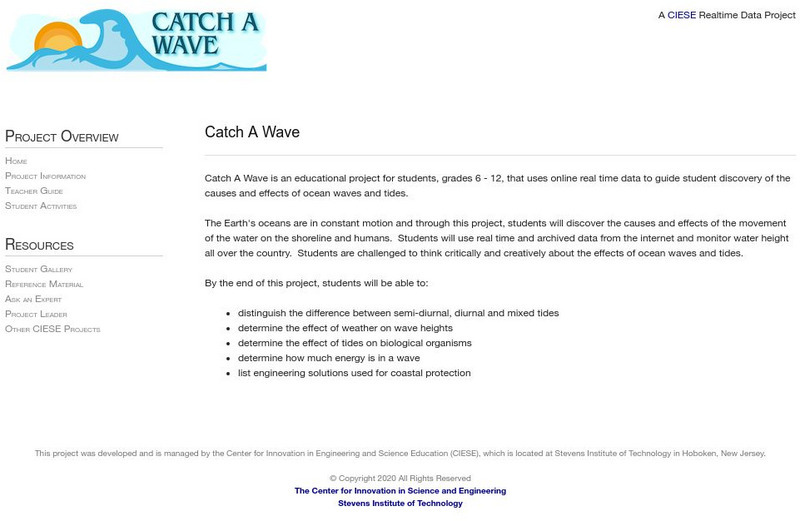
Ciese: Catch a Wave
In this project for Grades 6 to 12, young scholars will use real data collected online to learn how waves and tides work. They will learn what causes water to move, and how waves and tides impact on humans, organisms and waterfront...

Alabama Learning Exchange
Alex: A Look at Our Natural Environment
During this lesson students will have the opportunity to research, analyze, and collect data on how the natural environment influenced the Native Americans long ago, and how it still influences us today. Using information gathered from...
NASA
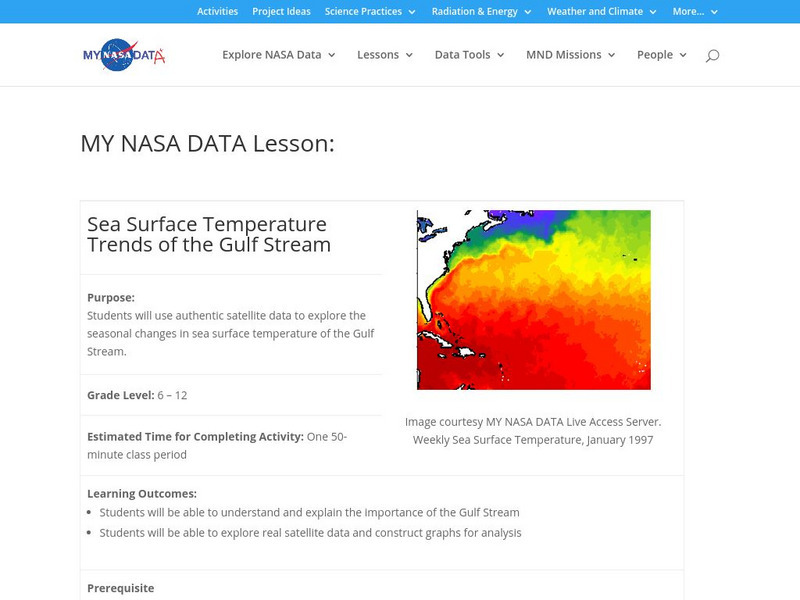
Nasa: Sea Surface Temperature Trends of the Gulf Stream
Learners investigate changes in the surface temperatures of the Gulf Stream over the course of the seasons using data collected by NASA's satellites. The data is inputted into a spreadsheet and graphed.
PBS
Pbs Learning Media: School Leadership in Action
This learning module includes several lessons designed to illustrate best practices in school leadership and spark conversation, reflection, and new thinking in schools and districts.
PBS
Pbs Kids Afterschool Adventure!: Operation: All About Us Activity Plan
It's time to stand in the spotlight! During this Afterschool Adventure, children will learn about and practice a variety of math skills as they gather information about their favorite subject-themselves! Children will start out by...
Other
Stat Soft: Getting Started With Statistics Concepts
Definitions of the basic concepts in statistics. Great for review and discussion or for introduction into topics.
Other
The Verge: All the Ways Congress Is Taking on the Tech Industry
After the 2016 presidential contest and years of investigations from intelligence experts, Congress woke up to the power Big Tech holds over democracy - whether it's through collecting data or serving up political ads. For legislators,...
Science and Mathematics Initiative for Learning Enhancement (SMILE)
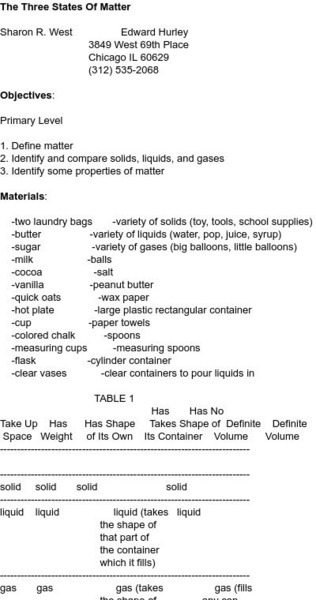
Smile: Three States of Matter
Teachers can find an interactive lesson plan for introducing the three states of matter to the early elementary student using items that they are familiar with. This also includes gathering data and filling in a table, an important part...
Math Slice
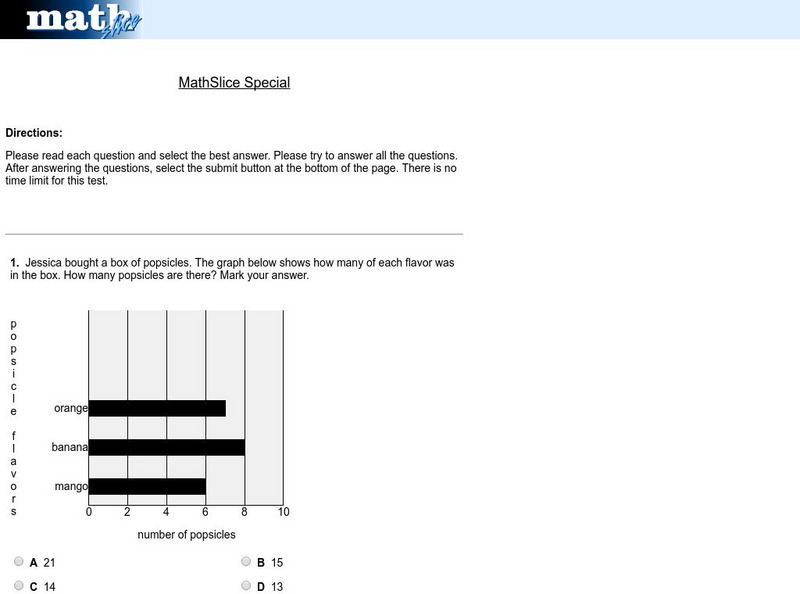
Math Slice: Chart Slice Special Test
A ten question test assessing data collection and analysis skills with bar graphs. Assessment is scored online. An excellent tool for assessment.

Science and Mathematics Initiative for Learning Enhancement (SMILE)
Smile: Lesson Plan: Scientific Method "The Big Ahah"
This lesson plan helps students understand and use the scientific method. It also helps helps students understand the importance of good scientific experimentation to the scientific method.
PBS
Pbs Online News Hour Extra: Watching the Clock: Building Media Savvy Students
A lesson that leads young scholars to an understanding of the time constraints on broadcast news by applying data-collecting and data-display skills. Students will learn to identify the main difference between publicly funded news...
Better Lesson
Better Lesson: Representing Our Own Surveys
After developing a survey questions and polling their classmates (in yesterday's lesson), 1st graders will now find a way to represent their findings and write a statement about what they noticed.
Shodor Education Foundation
Shodor Interactivate: Misleading Graphs
This lesson will challenge students to think creatively by having them design and build water balloon catchers from random scrap materials, while requiring them to take into consideration a multitude of variables including cost,...