Hi, what do you want to do?






College Board
So Much Data, So Little Time
Organizing data in a statistics class is often a challenge. A veteran statistics teacher shares data organization tips in a lesson resource. The instructor shows how to group data to link to individual calculators in a more efficient...

Solution Tree
A Data Picture of Our School
Collecting the data required to adequately assess school programs can be an overwhelming task. Simplify the process with a three-page worksheet that identifies the indicators for student achievement results, engagement data, discipline...

Solution Tree
Data Analysis Protocol
Once data has been collected about student performance, members of a professional learning community (PLC) may use this worksheet to analyze the data and create plans to improve student performance.

College Board
Calculations Aren't Enough!
Unlike mathematics, statistics comes with a context. The author reminds teachers that data analysis involves using the context to make sense of the numbers. The article stresses good communication skills by highlighting the scoring...

College Board
Using the Java Collections Hierarchy
Collect a set of collections. Professional development material provides teachers with information about collections that are in AP Computer Science. Materials include teaching strategies, sample labs, and worksheets. Educators use the...

New York State Education Department
TASC Transition Curriculum: Workshop 4
Why is it important to use precise language? Participants explore this question in the fourth activity in a series of 15 on effective instruction. Perfect for all content areas, the activity promotes appropriate language choice through...

All Things PLC
Critical Issues for Team Consideration
Profession Development Community (PLC) teams use the provided worksheet to evaluate the progress of their group in addressing critical issues their school is facing.
University of Regina (Canada)
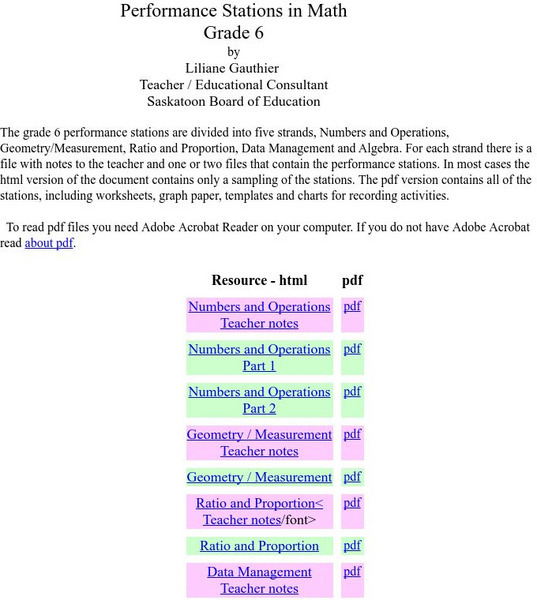
University of Regina: Math Central: Performance Stations in Math: Grade 6
The Saskatoon Board of Education provides teachers with this collection of grade six math performance stations. Although several of the stations have been designed as assessment tools for the Saskatchewan curriculum, teachers may also...
University of Regina (Canada)
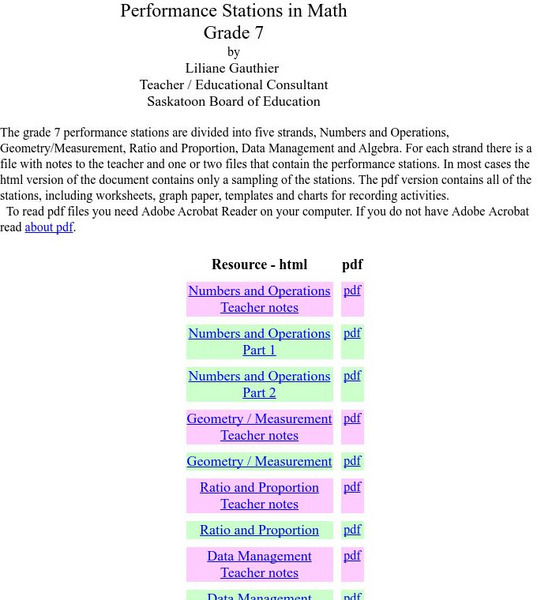
University of Regina: Math Central: Performance Stations in Math: Grade 7
The Saskatoon Board of Education provides teachers with this collection of grade seven math performance stations. Although several of the stations have been designed as assessment tools for the Saskatchewan curriculum, teachers may also...
University of Regina (Canada)
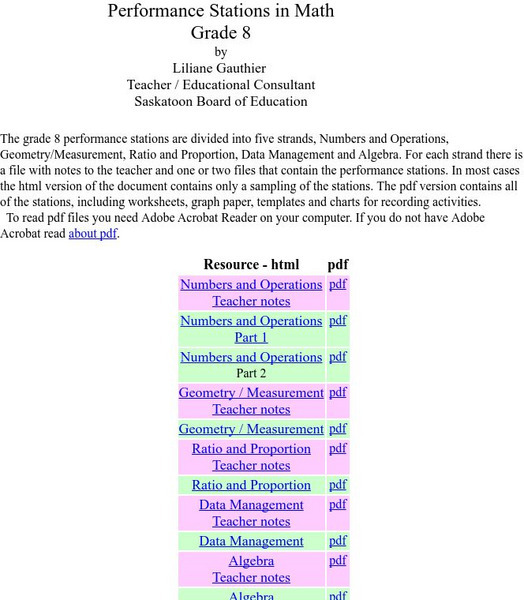
University of Regina: Math Central: Performance Stations in Math: Grade 8
The Saskatoon Board of Education provides teachers with this collection of grade eight math performance stations. Although several of the stations have been designed as assessment tools for the Saskatchewan curriculum, teachers may also...
University of Regina (Canada)
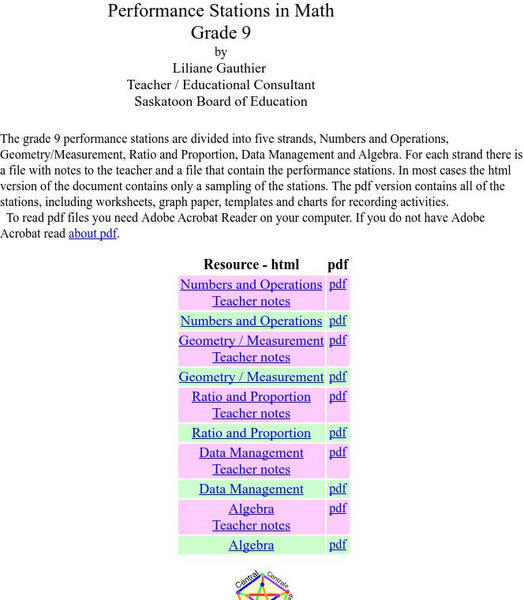
University of Regina: Math Central: Performance Stations in Math: Grade 9
The Saskatoon Board of Education provides teachers with this collection of grade nine math performance stations. Although several of the stations have been designed as assessment tools for the Saskatchewan curriculum, teachers may also...
Texas Education Agency
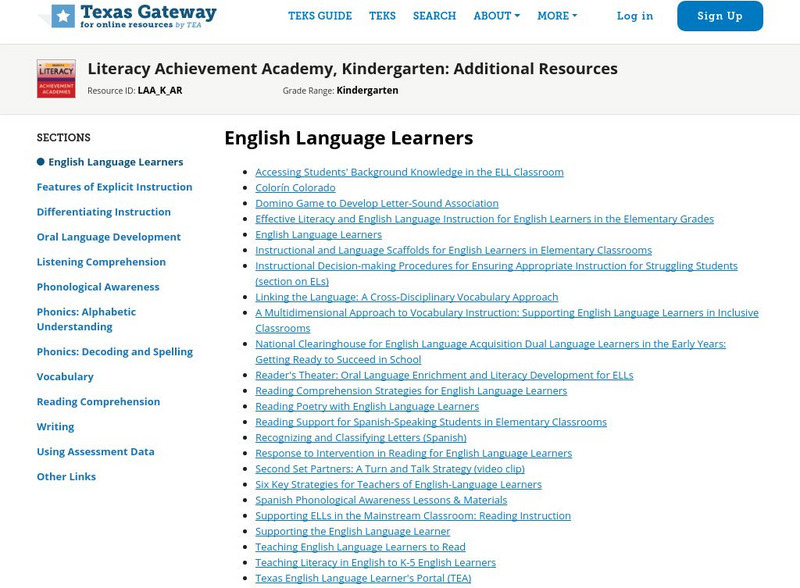
Texas Gateway: Literacy Achievement Academy, Kindergarten: Additional Resources
This is a collection of links to teacher resources for teaching literacy to kindergarteners. It includes reading comprehension, word recognition, vocabulary, fluency, differentiated instruction, and using assessment data.
Texas Education Agency
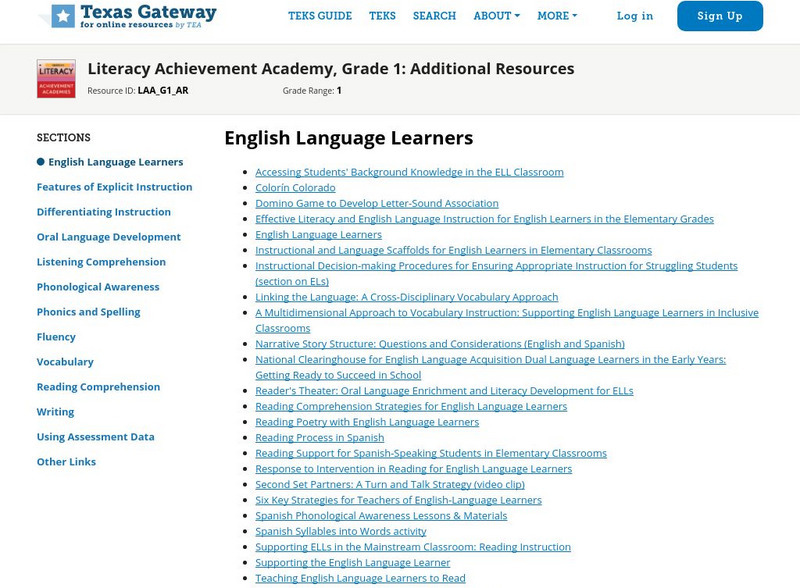
Texas Gateway: Literacy Achievement Academy, Grade 1: Additional Resources
This is a collection of links to teacher resources for teaching literacy to 1st graders. It includes reading comprehension, word recognition, vocabulary, fluency, differentiated instruction, and using assessment data.
Texas Education Agency
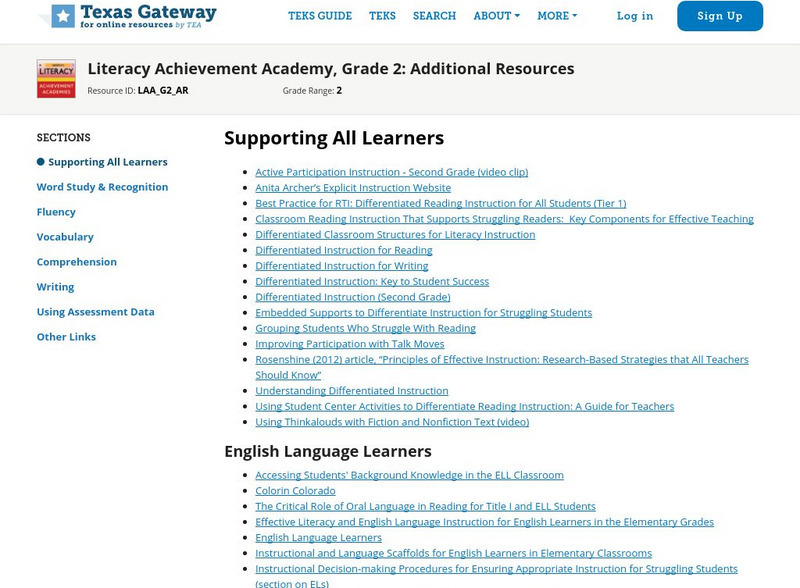
Texas Gateway: Literacy Achievement Academy, Grade 2: Additional Resources
This is a collection of links to teacher resources for teaching literacy to 2nd graders. It includes reading comprehension, word recognition, vocabulary, fluency, differentiated instruction, and using assessment data.