Hi, what do you want to do?





National Humanities Center
National Humanities Center: Toolbox Library: English I, American Beginnings: 1492 1690
Portraits of early New Englanders as well as four buildings from seventeenth-century New England that accompany accounts in those British colonies of struggles, Indian hostilities, and economic success.

Smithsonian Institution
National Museum of American History: Price of Freedom: Tricorn Hat
See a picture of the tricorn hat, worn by militiamen in the Revolutionary War. You can also read about the history of this particular hat.

Smithsonian Institution
Smithsonian American Art Museum: Young America in Art
An historical site from the Smithsonian American Art Museum that shows the growth of America through art work by over 45 artists. This site by the Smithsonian Institute has fascinating images showing American artists depicting the...
Independence Hall Association
U.s. History: Beginnings of Revolutionary Thinking: What Is the American?
Even colonial America was a melting pot of people from far away. Read about the diversity of the population and why it had an effect on the possibility of rebellion and revolution.
National Humanities Center
National Humanities Center: Toolbox Library: English Ii, American Beginnings: 1492 1690
Three seventeenth-century homes in Pennsylvania and New York and three accounts from those English colonies of the factors leading to prosperity and permanence.
National Humanities Center
National Humanities Center: Toolbox Library: Prosperity, American Beginnings: 1492 1690
Four original source accounts, and four related maps, of successful English, French, and Spanish settlements in North America and the Caribbean that explain the qualities of these settlements and their reasons for permanence and prosperity.
PBS
Africans in America: Phillis Wheatley
This website briefly describes the life of Phillis Wheatley, poetess and freed slave.
Tom Richey
Tom richey.net: Native American Cultures 1491 1607 [Ppt]
Presents key ideas for examining the cultures of Native American tribes that lived in North America in early colonial times. Discusses the major groups, the way of life of each group, and where they lived.
Metropolitan Museum of Art
Metropolitan Museum of Art: Coffee, Tea, and Chocolate in Early Colonial America
Several examples of pots for coffee, tea, and chocolate from the colonial period. Learn how Americans adopted the practice of drinking coffee and tea, and how this practice affected society, daily life, and the decorative art created by...
Annenberg Foundation
Annenberg Learner: American Passages: Utopian Promise: Anne Bradstreet
English immigrant in the New World, Anne Bradstreet became an acclaimed poet of Puritan New England. Click on "Anne Bradstreet Activities" for related artifacts and activities.
Colonial Williamsburg Foundation
Colonial Williamsburg: Politics in Colonial Virginia
This site explores the politics involved in Colonial Williamsburg, leading up to the American Revolution. Content focuses on famous speeches, documents, and influential people.
University of Groningen
American History: Outlines: Colonial Economy
Whatever early colonial prosperity there was resulted from trapping and trading in furs. In addition, the fishing industry was a primary source of wealth in Massachusetts. But throughout the colonies, people relied primarily on small...
PBS
Pbs Learning Media: Primary Source Set: The Colonies: Motivations and Realities
A collection of primary sources to explore the motivations and realities behind life in the American colonies.
Colonial Williamsburg Foundation
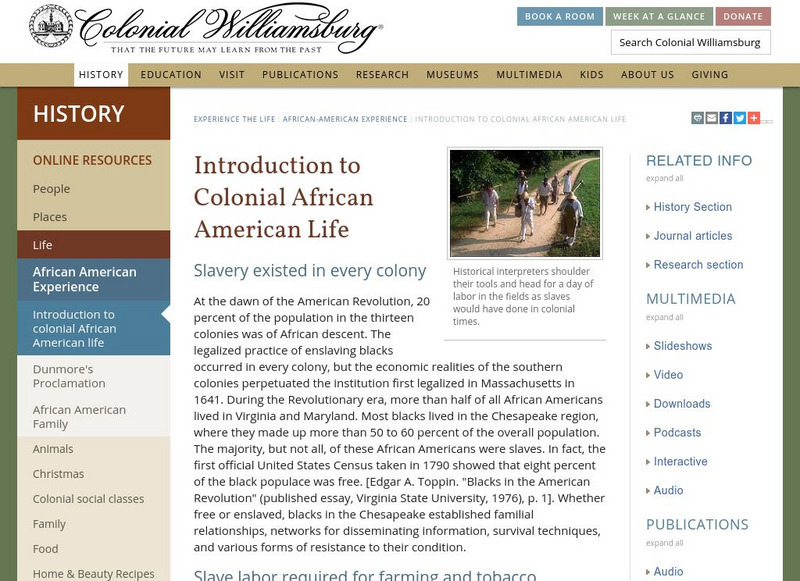
Colonial Williamsburg: Colonial African American Life
Provides a few statistics on slaves in Maryland and Virginia and then contrasts the lives of field hand vs household or urban slaves.
Other
Understanding Slavery: The Lives of Eighteenth Century African Americans
Comprehensive description of slaves in South Carolina. Click on the topics on the left to take you to a wealth of information about the lives of slaves in South Carolina.

Smithsonian Institution
Smithsonian American Art Museum: Childe Hassam
As part of the Smithsonian Art Museum's database of artists, this site provides biographical information on Childe Hassam in addition to an extensive listing of his works as displayed at the museum.
Stanford University
Sheg: Document Based History: Reading Like a Historian: King Philip's War
[Free Registration/Login Required] Lesson in which students analyze original documents to evaluate the conflict between colonists under King Philip and Native Americans.
Louisiana Department of Education
Louisiana Doe: Louisiana Believes: English Language Arts: Grade 4: If You Lived at the Time of the Revolution
Fourth graders learn about the American Revolution and evaluate the decisions and choices colonists had to make leading up to and during their fight for freedom from England. Students explore the idea of taking sides and how, despite...
Council for Economic Education
Econ Ed Link: Taxation Without Representation?
Check out this informative site to learn more about life in the colonies before the Revolutionary War. Find out why the colonists had issues with "taxation without representation." "You will work independently and in pairs to learn about...
PBS
Wnet: Thirteen: Slavery & Making of America: The Slave Experience: Men, Women & Gender
Learn about issues related to slave gender roles at this PBS series site that features illustrations and documents dating back to the Colonial, Antebellum, and Reconstruction periods in American history.
Library of Congress
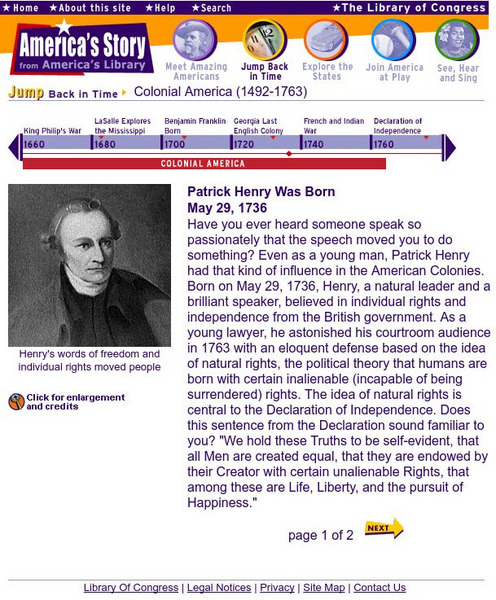
Loc: America's Story: Patrick Henry
Patrick Henry's speeches and leadership have earned him an honored place in American history. This article provides a brief overview of his life, as well as a portrait of this founding father.
Yale University
Yale New Haven Teachers Institute: Architecture of New England,southern Colonies
Describes the chronology of architectural design in New England and the South and what the architecture revealed about class building techniques. Includes ideas for lesson plan activities.
PBS
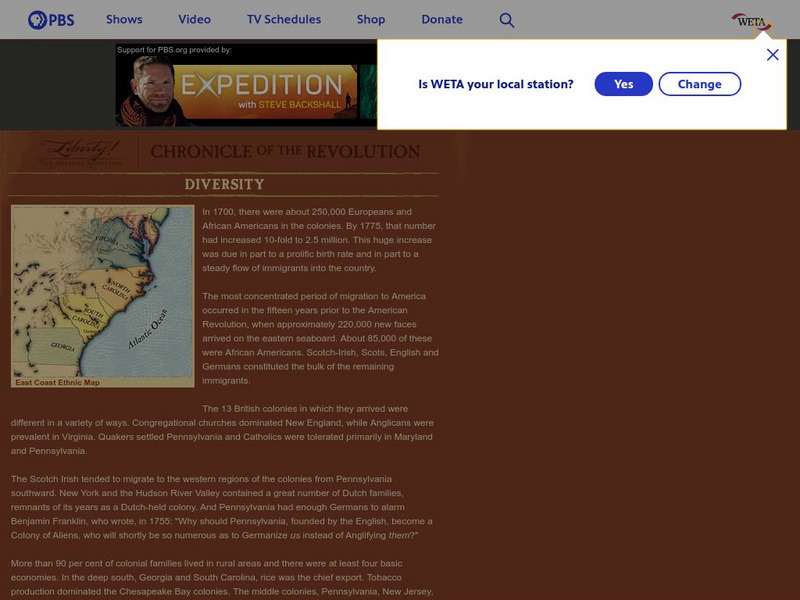
Liberty: Chronicle of the Revolution: Diversity
A brief look at the population increase in colonial America. Find out where all these immigrants came from and what they did in the colonies. From PBS.
Colonial Williamsburg Foundation
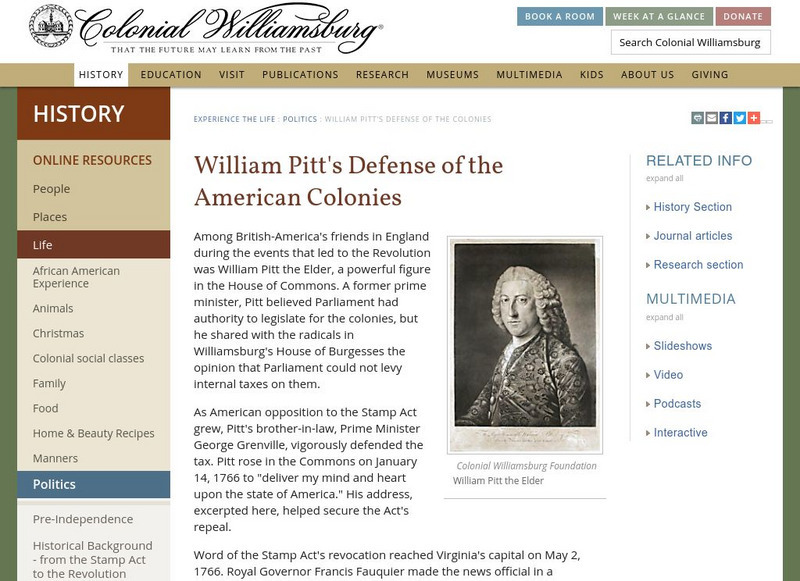
Colonial Williamsburg: William Pitt's Defense of the American Colonies
This site contains the address Pitt gave against the Stamp Act in front of the House of Commons. His address helped secure the Act's repeal.