Hi, what do you want to do?






TeachEngineering
Teach Engineering: Means, Modes, and Medians
Students experience data collection, analysis and inquiry in this LEGO MINDSTORMS NXT -based activity. They measure the position of an oscillating platform using a ultrasonic sensor and perform statistical analysis to determine the mean,...
TeachEngineering
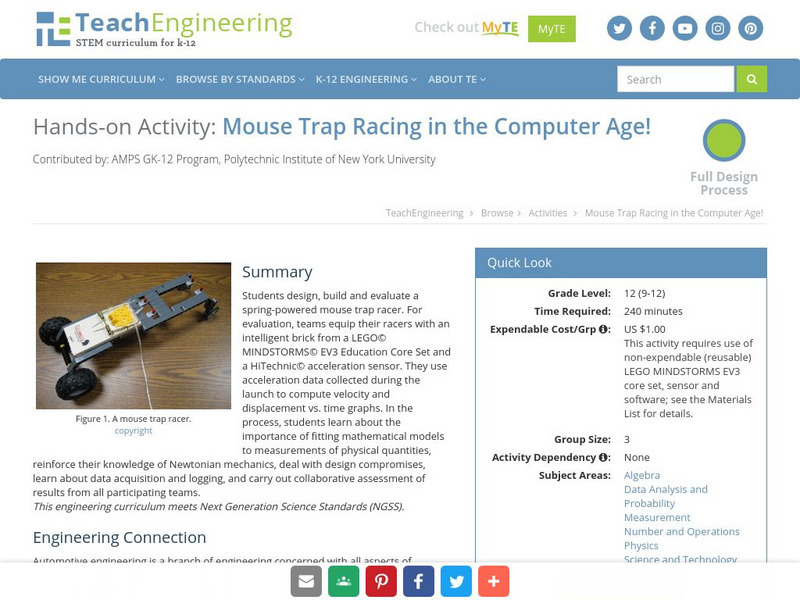
Teach Engineering: Mouse Trap Racing in the Computer Age!
Students design, build and evaluate a spring-powered mouse trap racer. For evaluation, teams equip their racers with an intelligent brick from a LEGO MINDSTORMS NXT Education Base Set and a HiTechnic acceleration sensor. They use...
TeachEngineering
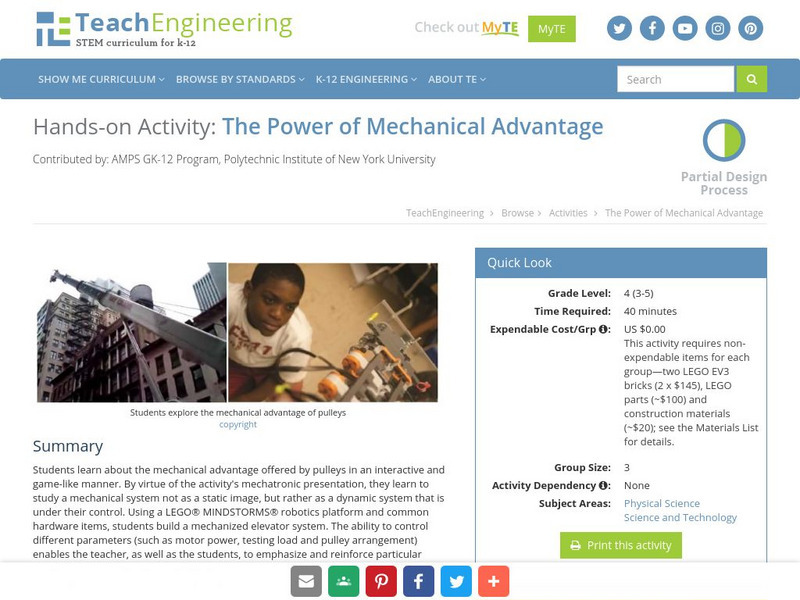
Teach Engineering: The Power of Mechanical Advantage
Students learn about the mechanical advantage offered by pulleys in an interactive and game-like manner. By virtue of the activity's mechatronic presentation, they learn to study a mechanical system not as a static image, but rather as a...
TeachEngineering
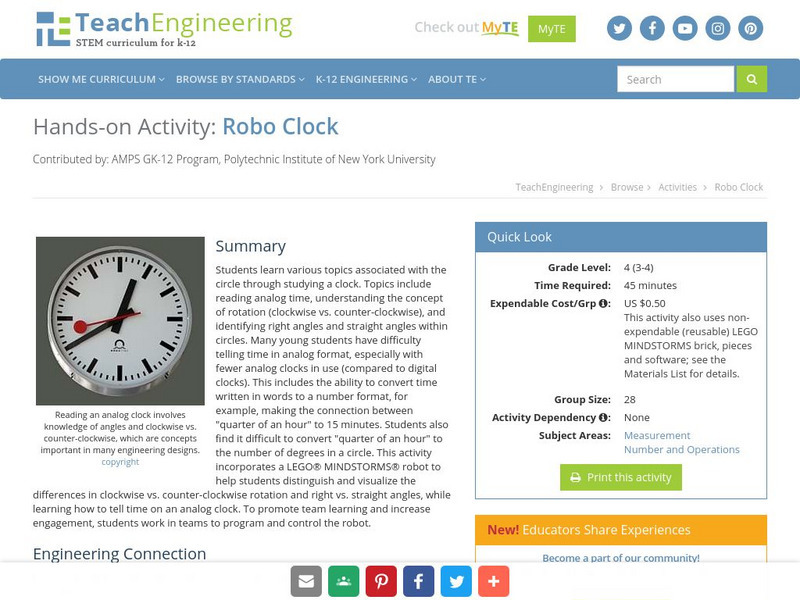
Teach Engineering: Robo Clock
Students learn various topics associated with the circle through studying a clock. Topics include reading analog time, understanding the concept of rotation (clockwise vs. counter-clockwise), and identifying right angles and straight...
TeachEngineering
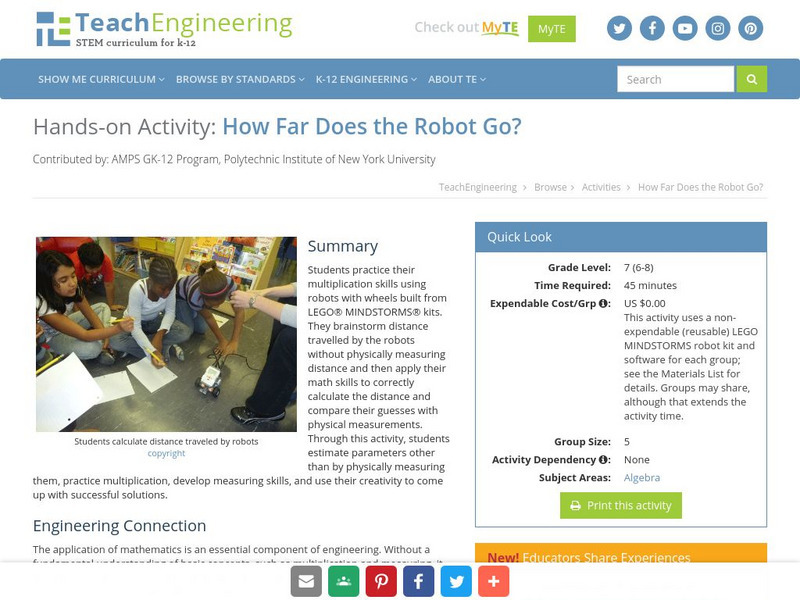
Teach Engineering: How Far Does the Robot Go?
Students practice their multiplication skills using robots with wheels built from LEGO MINDSTORMS NXT kits. They brainstorm distance travelled by the robots without physically measuring distance and then apply their math skills to...
TeachEngineering
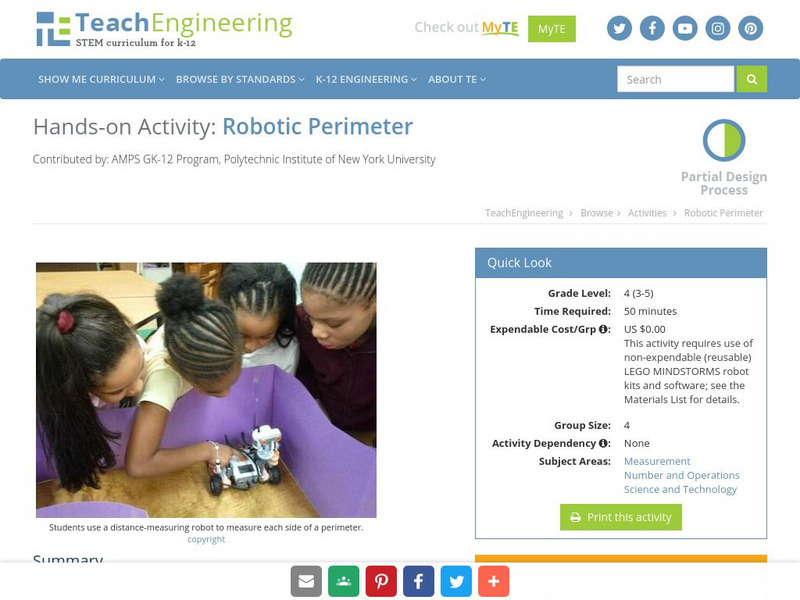
Teach Engineering: Robotic Perimeter
Students learn and practice how to find the perimeter of a polygonal shape. Using a ruler, they measure model rooms made of construction paper walls. They learn about other tools, such as a robot, that can help them take measurements....
TeachEngineering
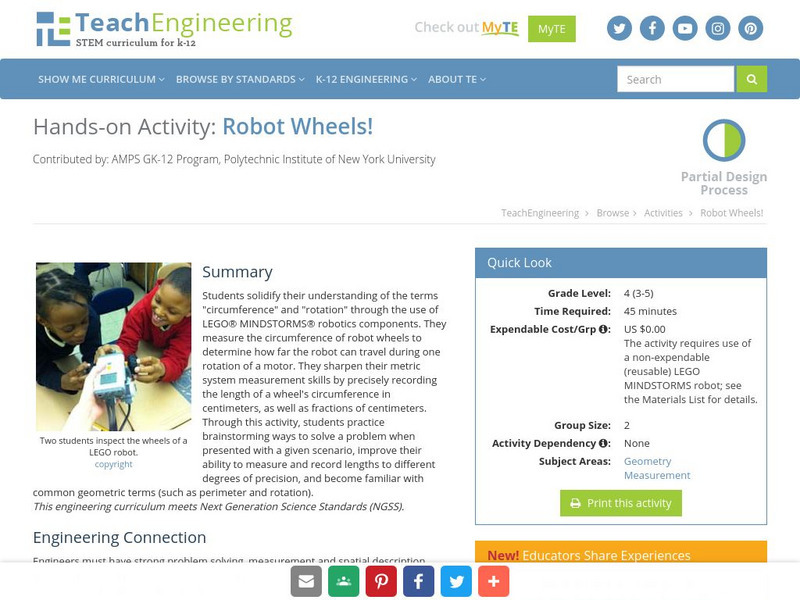
Teach Engineering: Robot Wheels!
Students solidify their understanding of the terms "circumference" and "rotation" through the use of LEGO MINDSTORMS NXT robotics components. They measure the circumference of robot wheels to determine how far the robot can travel during...
TeachEngineering
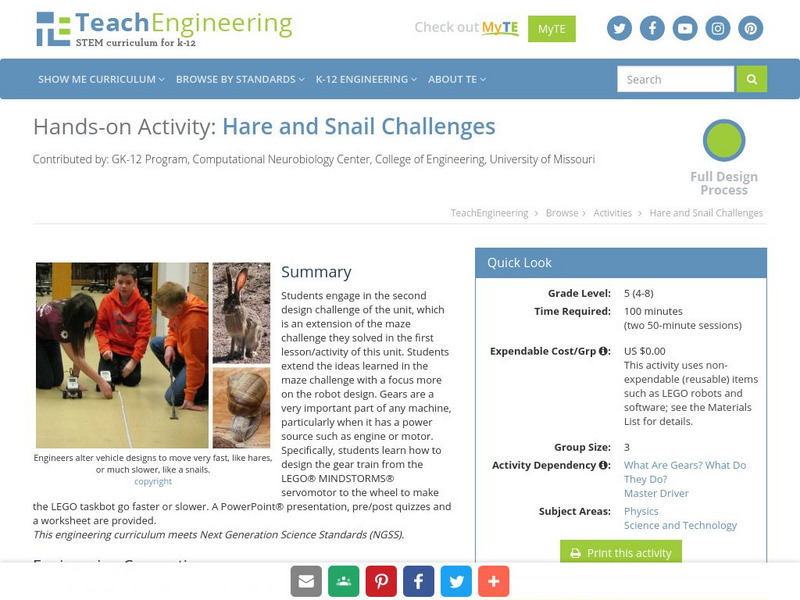
Teach Engineering: Hare and Snail Challenges
Students extend the ideas learned in the maze challenge in this unit with a focus more on the robot design. They learn how to design the gear train from the LEGO MINDSTORMS NXT servomotor to the wheel to make the LEGO taskbot go faster...
TeachEngineering
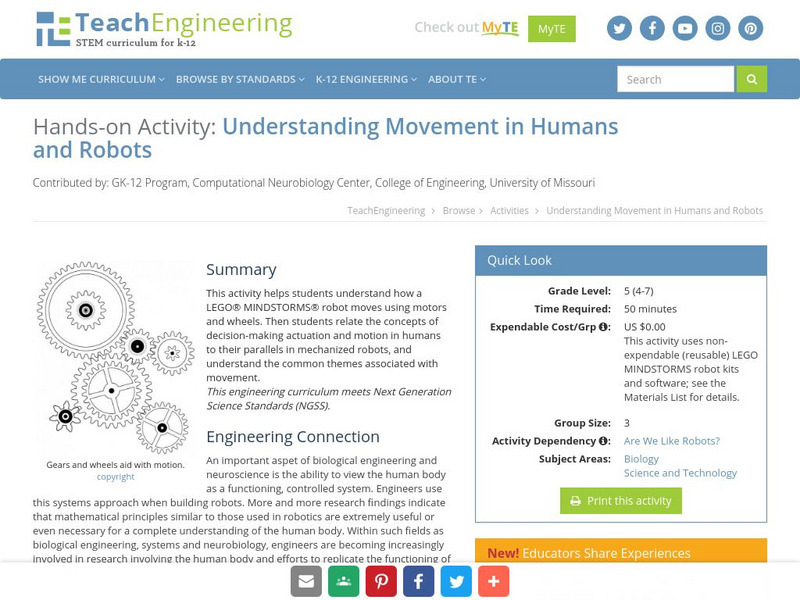
Teach Engineering: Understanding Movement in Humans and Robots
This activity helps students understand how a LEGO MINDSTORMS NXT robot moves using motors and wheels. Then students relate the concepts of decision-making actuation and motion in humans to their parallels in mechanized robots, and...
TeachEngineering
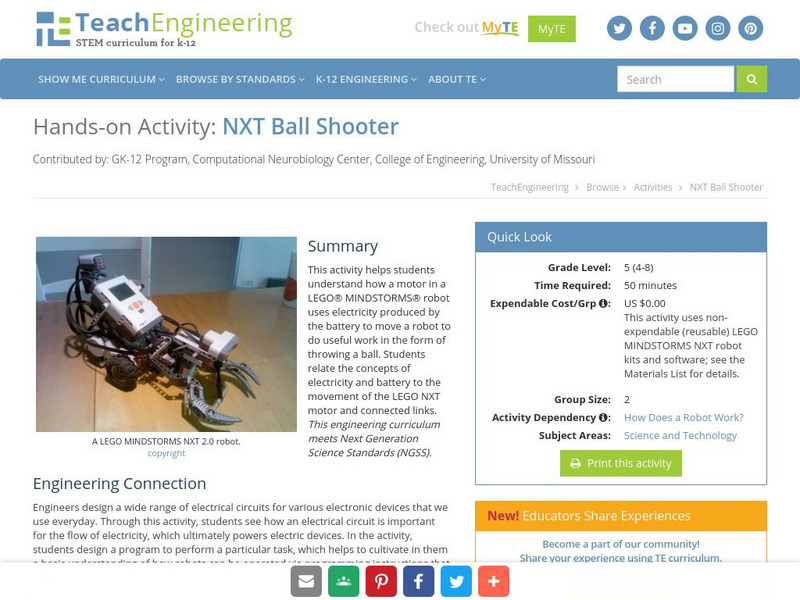
Teach Engineering: Nxt Ball Shooter
This activity helps students understand how a motor in a LEGO MINDSTORMS NXT robot uses electricity produced by the battery to move a robot to do useful work in the form of throwing a ball. Students relate the concepts of electricity and...
TeachEngineering
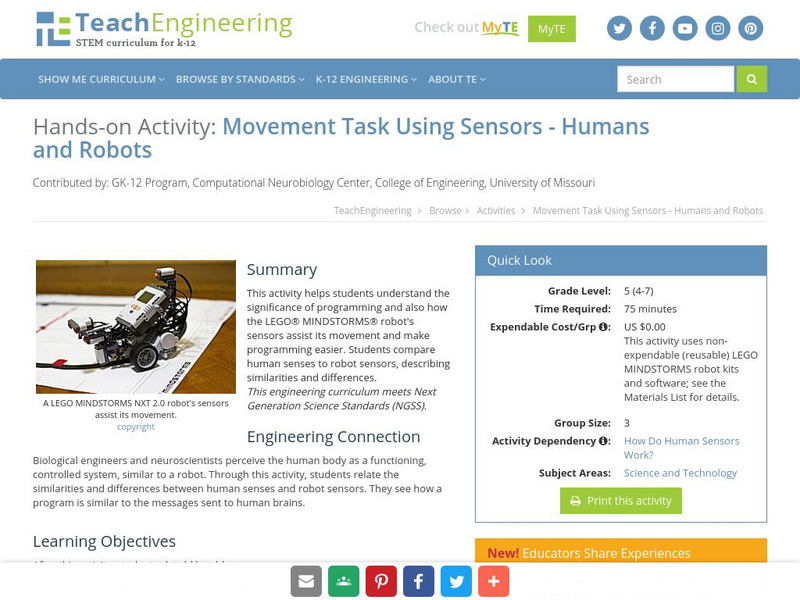
Teach Engineering: Movement Task Using Sensors Humans and Robots
This activity helps students understand the significance of programming and also how the LEGO MINDSTORMS NXT robot's sensors assist its movement and make programming easier. Students compare human senses to robot sensors, describing...
TeachEngineering
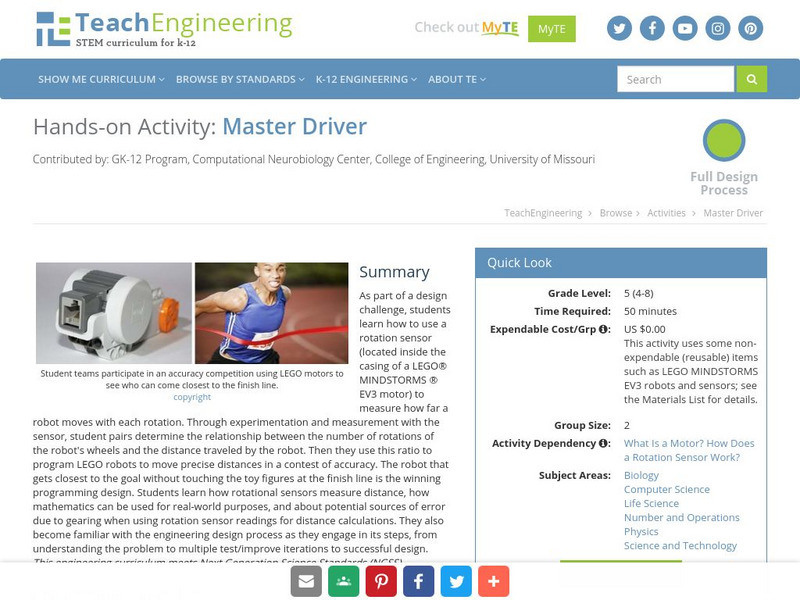
Teach Engineering: Master Driver
Students learn how rotational sensors measure distance, how mathematics can be used for real-world purposes, and about potential sources of error due to gearing when using rotation sensor readings for distance calculations.
TeachEngineering
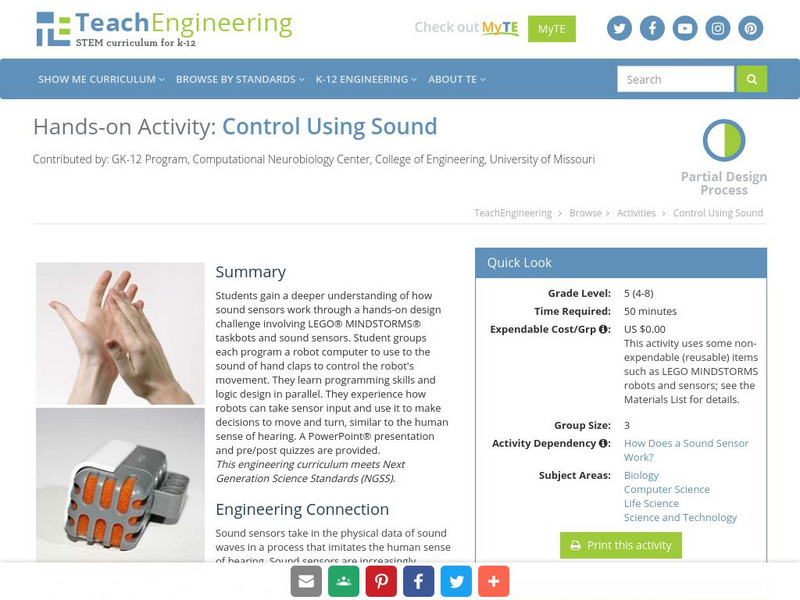
Teach Engineering: Control Using Sound
Students gain a deeper understanding of how sound sensors work through a hands-on design challenge involving LEGO MINDSTORMS NXT taskbots and sound sensors.
TeachEngineering
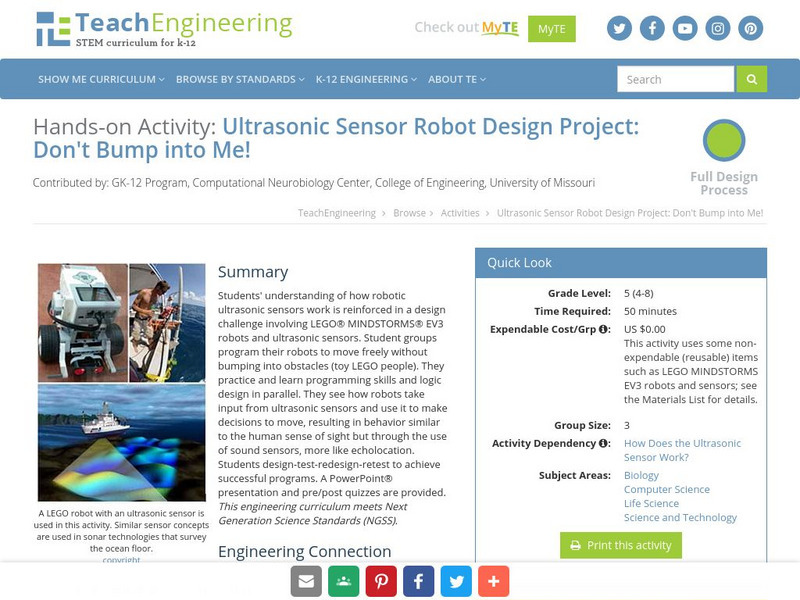
Teach Engineering: Don't Bump Into Me!
Students' understanding of how robotic ultrasonic sensors work is reinforced in a design challenge involving LEGO MINDSTORMS NXT robots and ultrasonic sensors.

TeachEngineering
Teach Engineering: Python Script Analysis
Working in small groups, students complete and run functioning Python codes.This requires students to understand the logic employed, and then they must make modifications to the code in order to find the slopes of tangents to a variety...
TeachEngineering
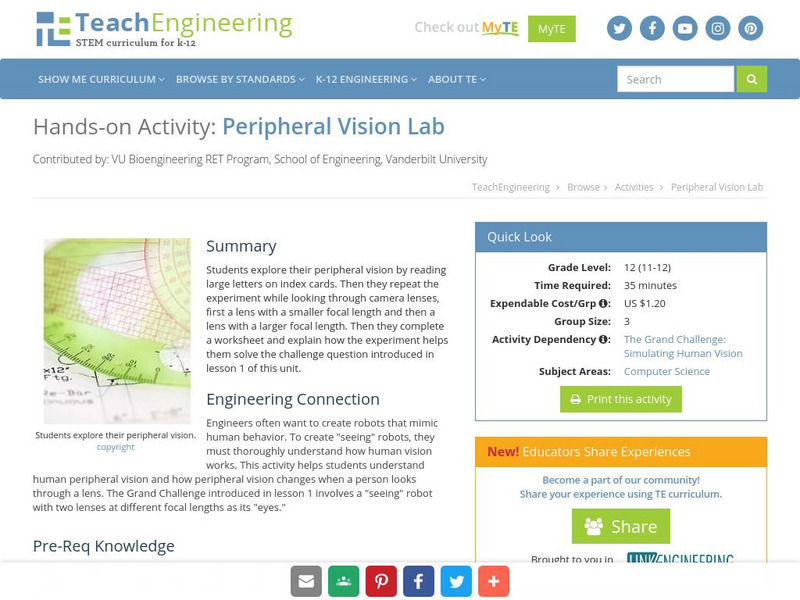
Teach Engineering: Peripheral Vision Lab
Students explore their peripheral vision by reading large letters on index cards. Then they repeat the experiment while looking through camera lenses, first a lens with a smaller focal length and then a lens with a larger focal length....
TeachEngineering
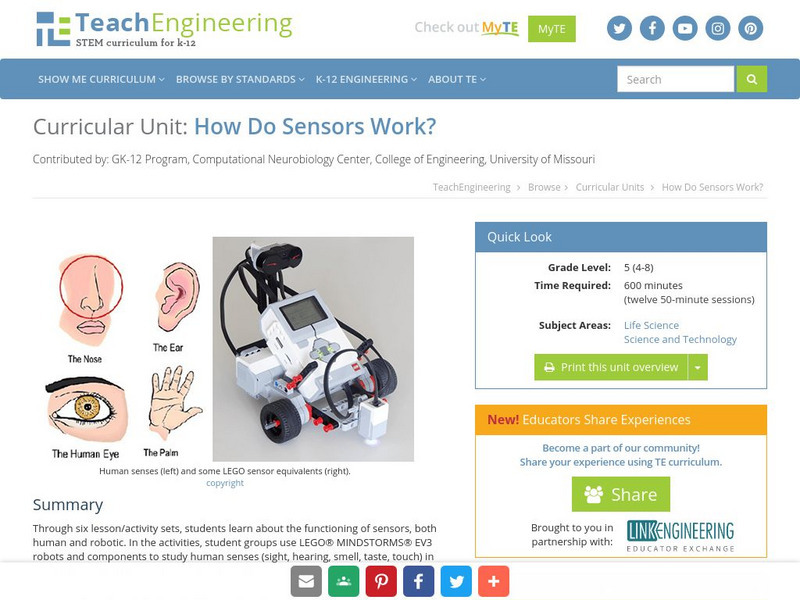
Teach Engineering: How Do Sensors Work?
Through six lesson/activity sets, students learn about the functioning of sensors, both human and robotic
TeachEngineering
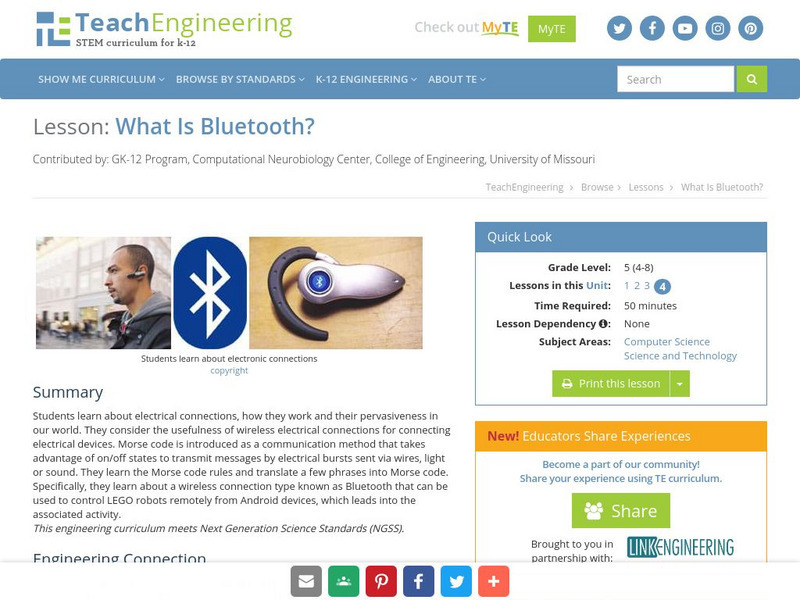
Teach Engineering: What Is Bluetooth?
Students learn about electrical connections, how they work, and their pervasiveness in our world. Two specific skills explored are Morse code and the function of Bluetooth. Using bluetooth, they control LEGO robots remotely from Android...
TeachEngineering
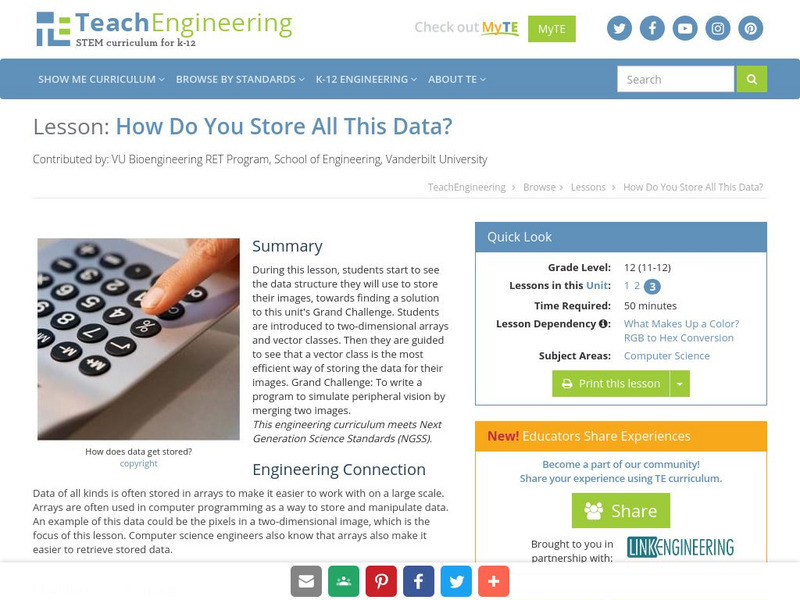
Teach Engineering: How Do You Store All This Data?
During this lesson, students start to see the data structure they will use to store their images, towards finding a solution to this unit's Grand Challenge. Students are introduced to two-dimensional arrays and vector classes. Then they...
TeachEngineering
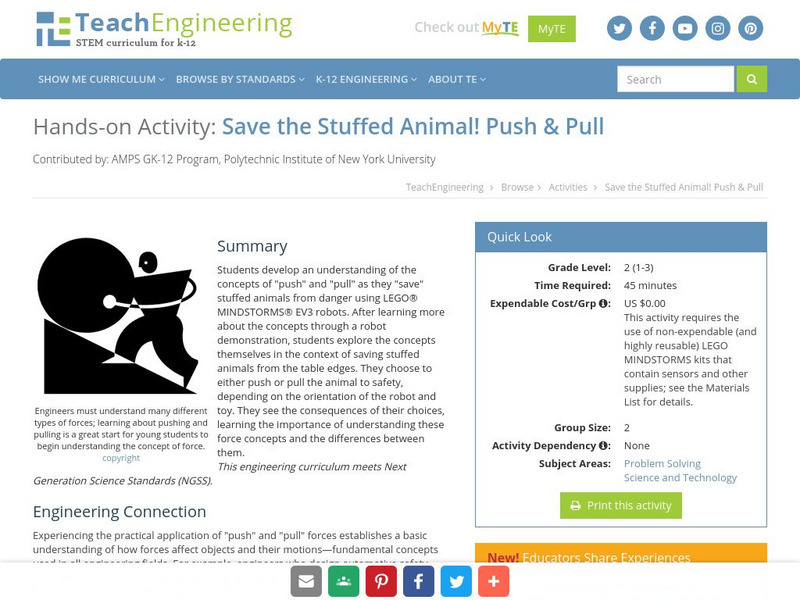
Teach Engineering: Save the Stuffed Animal! Push & Pull
Students develop an understanding of the concepts of "push" and "pull" as they "save" stuffed animals from danger using LEGO MINDSTORMS NXT robots. After learning more about the concepts through a robot demonstration, students explore...
TeachEngineering
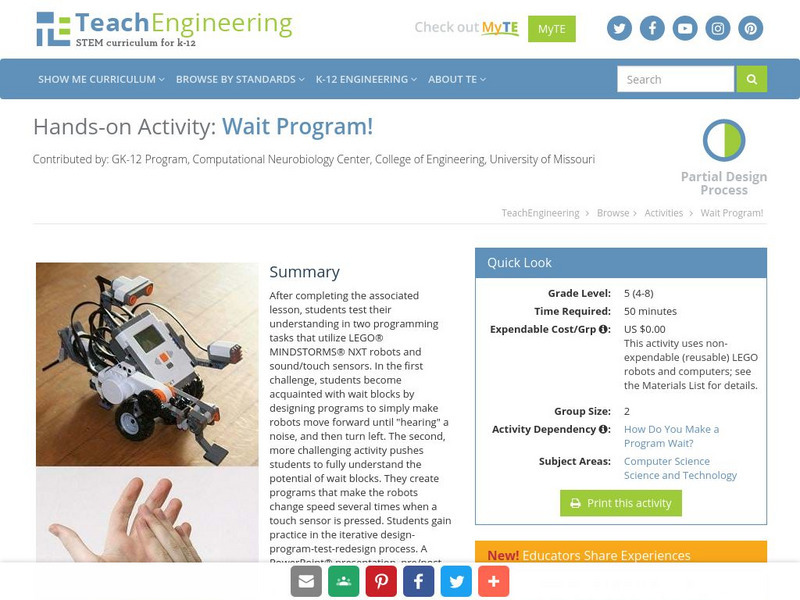
Teach Engineering: Wait Program!
After completing an associated lesson, students test their understanding in two programming tasks that utilize LEGO MINDSTORMS NXT robots and sound/touch sensors. Students gain practice in the iterative design-program-test-redesign process.
TeachEngineering
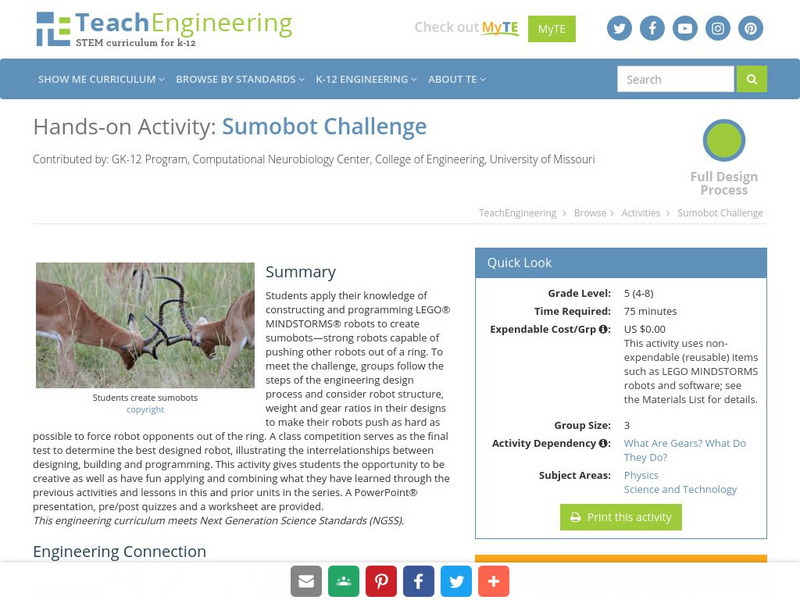
Teach Engineering: Sumobot Challenge
Students apply their knowledge of constructing and programming LEGO MINDSTORMS NXT robots to create sumobots- strong robots capable of pushing other robots out of a ring.
TeachEngineering
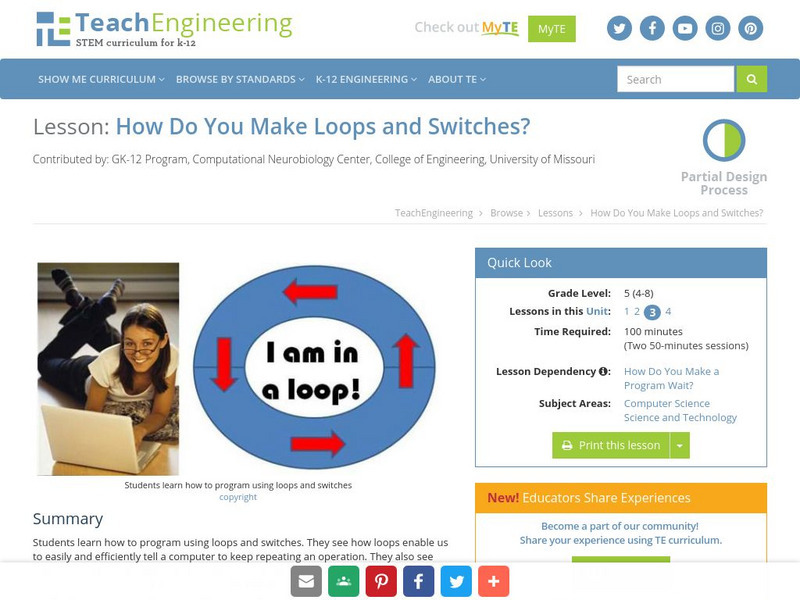
Teach Engineering: How Do You Make Loops and Switches?
Young scholars learn how to program using loops and switches. Using the LEGO MINDSTORMS NXT robots, sensors and software, student pairs perform three mini programming activities using loops and switches individually, and then combined.
TeachEngineering
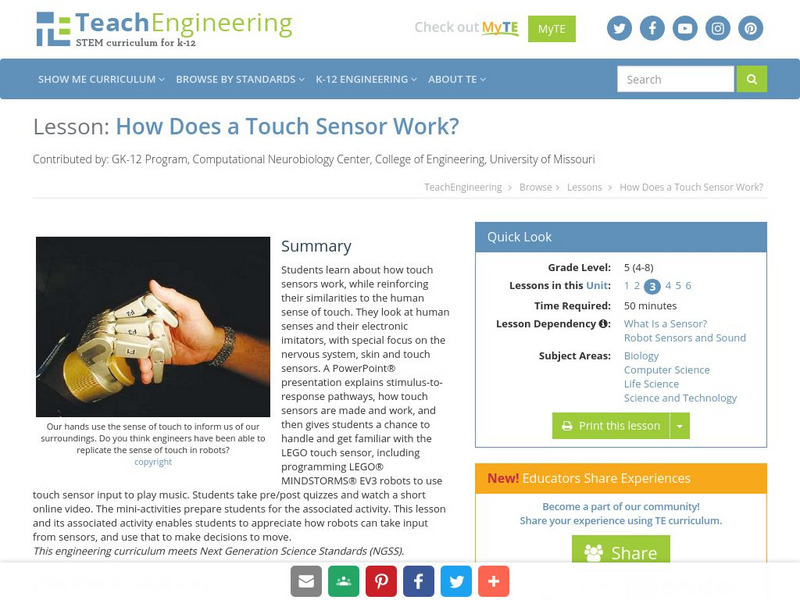
Teach Engineering: How Does a Touch Sensor Work?
Students look at human senses and their electronic imitators, with special focus on the skin and touch sensors. They have a chance to handle and get familiar with the LEGO touch sensor, including programming LEGO MINDSTORMS NXT robots to...