Hi, what do you want to do?





Cool Math
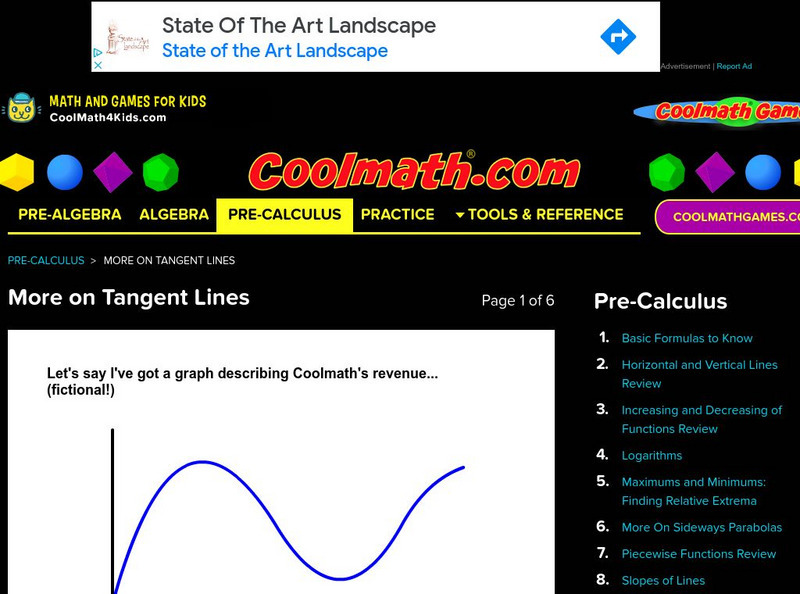
Coolmath: More on Tangent Lines
This CoolMath resource provides instruction and practice for tangent lines.

Georgia State University
Georgia State University: Hyper Physics: Ray Diagrams for Mirrors
Provides a discussion of curved mirrors and ray diagrams. Shows and explains the process of drawing a ray diagram to determine the image location, size, and orientation.
Georgia State University
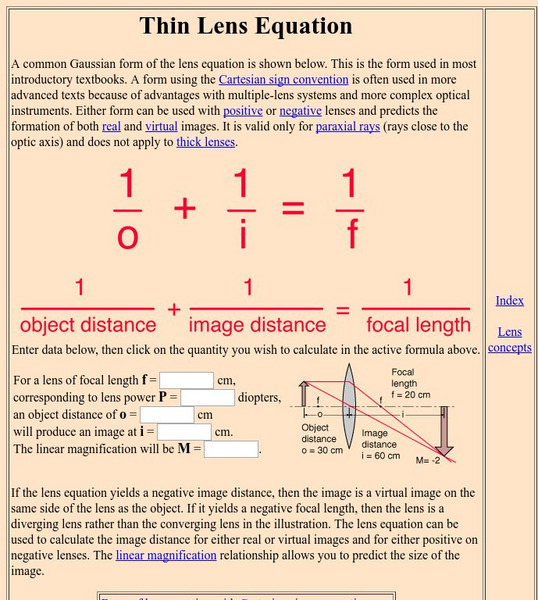
Georgia State University: Hyper Physics: Thin Lens Equation
This is an informative site from Georgia State University. It gives a discussion of the thin lens equation and an illustration of its use in determining the image distance based upon the object distance and the focal length.

CK-12 Foundation
Ck 12 Exploration Series: Simulations: Physics: Contact Lens
[Free Registration/Login Required] A simulation exploring how contact lens correct your vision!.
Varsity Tutors
Varsity Tutors: Hotmath: Practice Problems: Applications of Derivatives
Hotmath provides 25 practice problems dealing with derivative applications. Each of the practice problems include a step-by-step guide.

ClassFlow
Class Flow: What Is Light?
[Free Registration/Login Required] This flipchart reviews the characteristics of light and its properties. Students are given examples of reflection, refraction, and lens types. An assessment component is included.
Sophia Learning
Sophia: Sum of Angles in Polygons
This tutorial with video and slideshow components investigate the characteristics of polygons as well as how to calculate the interior and exterior angles of any polygon. It offers two PowerPoint presentations and two videos that feature...
Optical Society
Optical Society of America: Optics for Kids: Lenses and Geometrical Optics
Article explaining what lenses are and how they work. At the end of the article, there are links to several hands-on activities for investigating lenses.
Mathigon
Mathigon: Geometry: Polygons and Polyhedra: Polygons
This lesson focuses on polygons; a polygon is a closed, flat shape that has only straight sides. Polygons can have any number of sides and angles, but the sides cannot be curved.
Math Open Reference
Math Open Reference: Polygons
Get the definition and properties of a polygon. Then explore such topics as: 1) types of polygon 2) area 3) Perimeter 4) angles associated with polygons and 5) names of polygons.
PBS
Pbs Learning Media: Galileo's Telescope
The invention of the telescope helped change our understanding of the universe. This video segment adapted from NOVA looks at Galileo's contribution to this technology. [1:49]
Cuemath
Cuemath: Polyhedron
Introduces the concept of polyhedrons by learning the definition, types, and where they are found. Check-out the solved examples for better understanding and try your hand at solving a few interactive questions at the end of the page.
Cuemath
Cuemath: Convex Shapes
A comprehensive guide for learning all about convex shapes with definitions, examples, and practice questions.
Texas Instruments
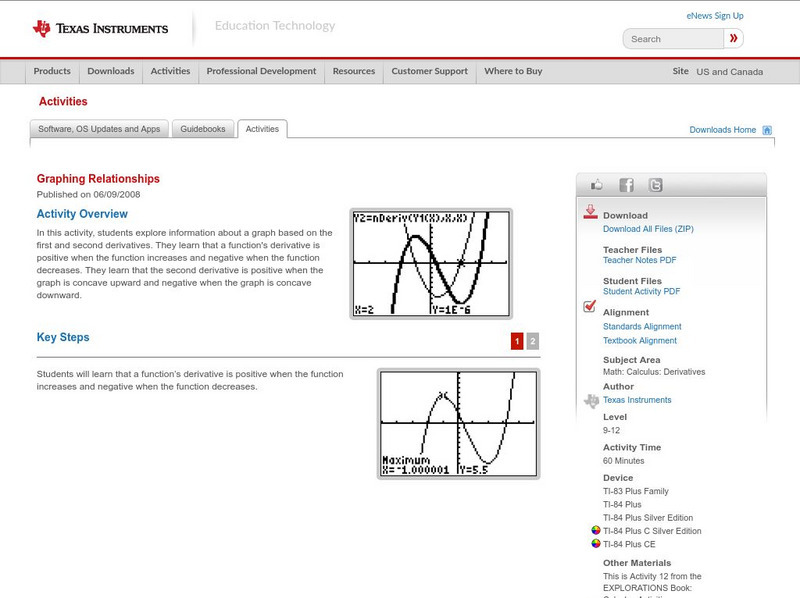
Texas Instruments: Graphing Relationships
In this activity, students explore information about a graph based on the first and second derivatives. They learn that a function's derivative is positive when the function increases and negative when the function decreases. They learn...
CK-12 Foundation
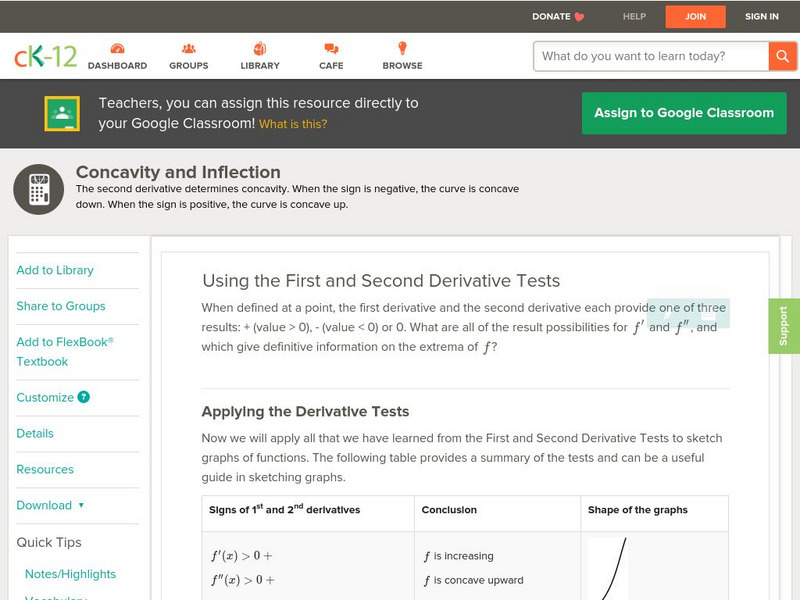
Ck 12: Using the First and Second Derivative Tests
[Free Registration/Login may be required to access all resource tools.] This resource gives a step by step account of how to apply knowledge from First and Second Derivative Tests to sketch graphs of functions. The following table...
Other
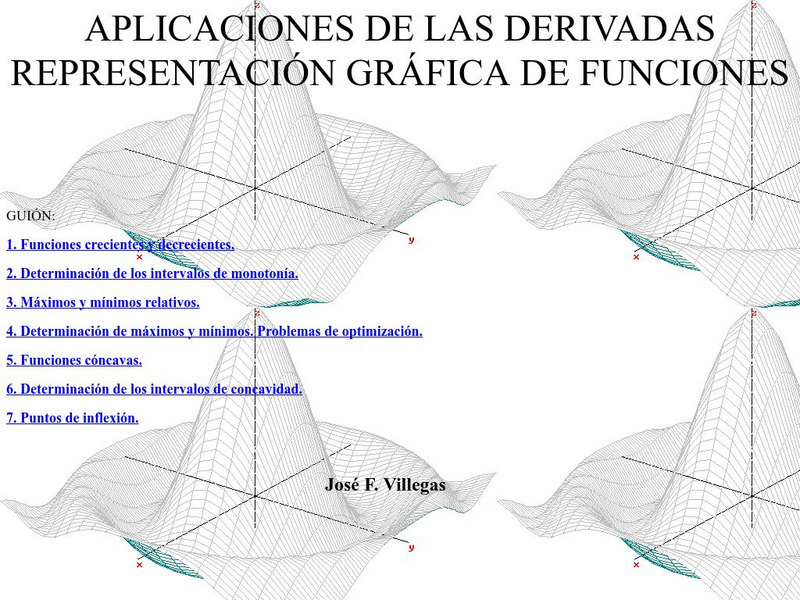
Representacion Grafica De Funciones
In Spanish. In depth explanations of functions at an advanced level. Includes topics such as concavity, points of inflection and relative maximums and minimums. A great resource for the Spanish speaking student to keep up in the English...
Other
Arbor Scientific: Haunted Laboratory: Halloween Physics
This resource presents a collection of experiments for the science classroom that focuses on physics concepts for Halloween. Activities include mirror ghost with a concave mirror, apple oscillators with pendulums, and a pumpkin pendulum....
CK-12 Foundation
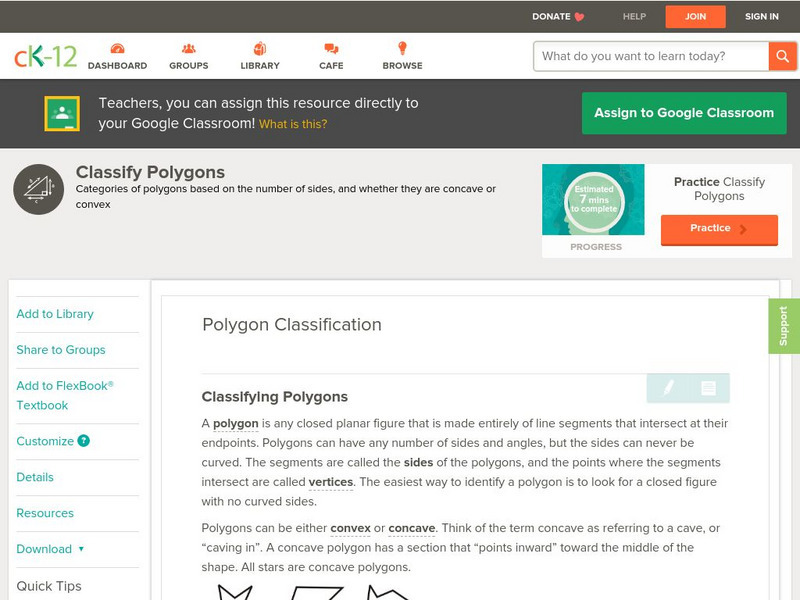
Ck 12: Geometry: Polygon Classification
[Free Registration/Login may be required to access all resource tools.] This concept teaches students how to classify a polygon based on its sides and how to determine whether a polygon is convex or concave.

Other
Geometric Optics
This site provides a very brief definition to geometric optics, and includes links to related information.
Physics Classroom
The Physics Classroom: Reflection and the Ray Model of Light
A four-lesson tutorial on the reflection and the ray model of light. These complete tutorials include informational text, interactive activities, animations, and quick, interactive comprehension questions.

Georgia State University
Georgia State University: Hyper Physics: Mirror Instruments
This site from Georgia State University discusses the means by which mirrors and lenses are combined to produce an optical instrument which accomplishes a specific purpose. Good illustrations.
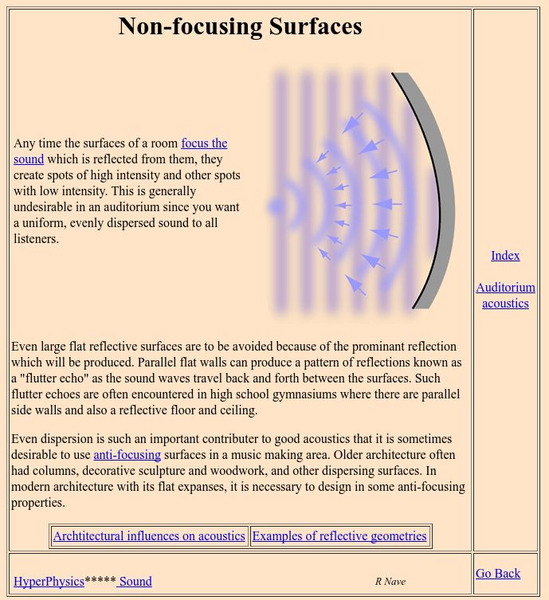
Georgia State University
Georgia State University: Hyper Physics: Non Focusing Surfaces
This hypertext physics course tutorial on nonfocusing surfaces relates various design principles to good auditorium design. Illustrated.
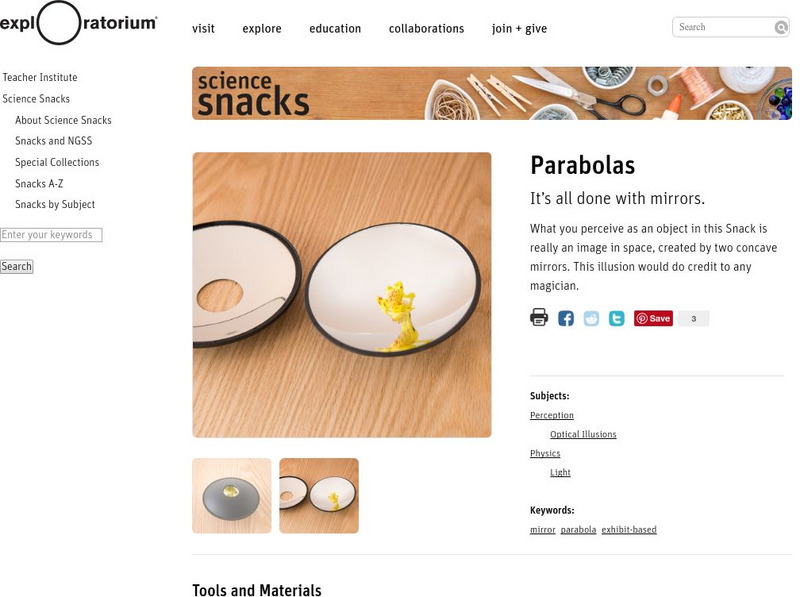
Exploratorium
Exploratorium: Science Snacks: Parabolas
Recreate this optical illusion using two parabolic mirrors to make it appear like an object is in the center, when it is really just its image. This experiment requires special equipment which may need to be purchased.
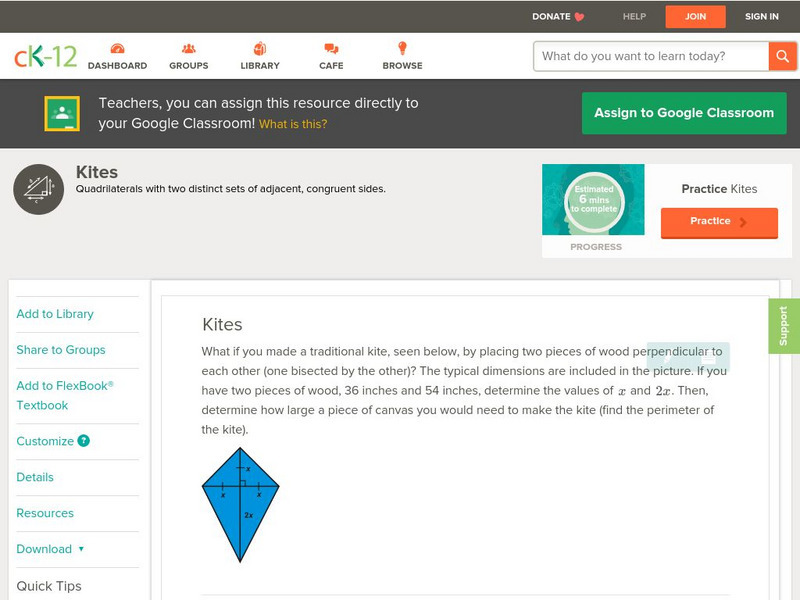
CK-12 Foundation
Ck 12: Geometry: Kites
[Free Registration/Login may be required to access all resource tools.] This concept teaches students the properties of kites and how to apply them.
Other popular searches
- Convex and Concave Lenses
- Convex and Concave Polygons
- Concave Lenses
- Concave & Convex Lenses
- Convex and Concave Mirrors
- Concave Convex Lens Lab
- Concave Pentagon
- Concave Mirrors
- Convex Concave Lens
- Concave Lens
- Convex Concave
- Concave Convex Mirror