Hi, what do you want to do?





Concord Consortium
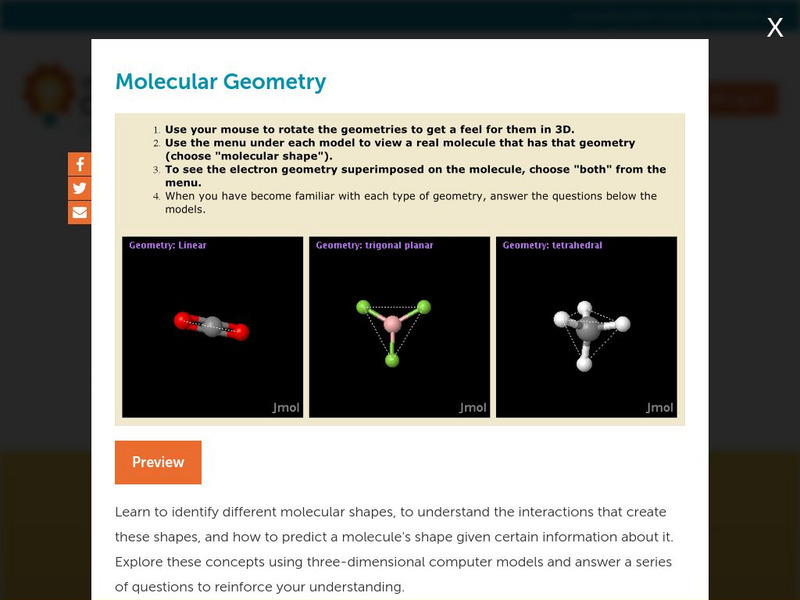
Concord Consortium: Stem Resources: Molecular Geometry
Students work through animated models showing the effects that electron repulsions have on the shape of a molecule in this web-based activity. In addition, shared and unshared electron pairs are demonstrated to define a molecule's shape....
Concord Consortium
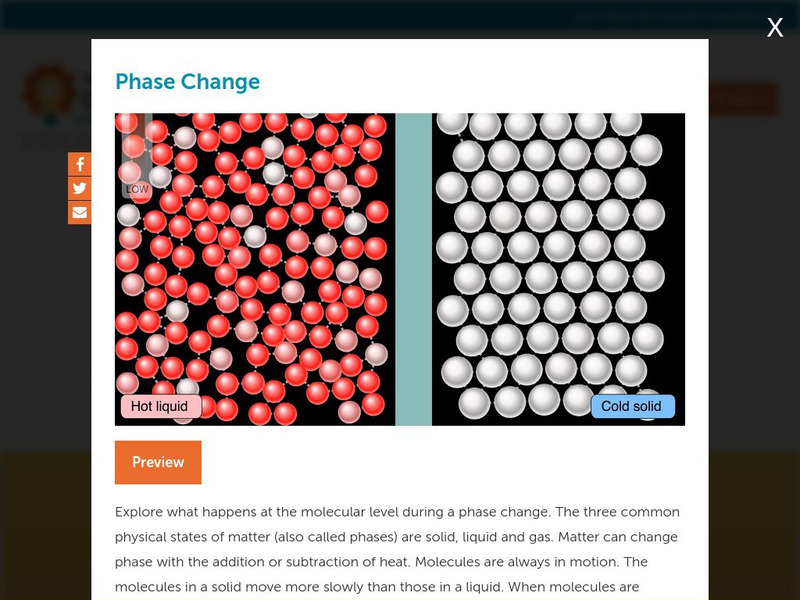
Concord Consortium: Stem Resources: Phase Changes
This activity reviews of states of matter, then relates them to atomic movement as it is affected by attractions between atoms and the addition of energy. Latent heat and evaporative cooling are also topics covered. Multiple-choice and...
Concord Consortium
Concord Consortium: Stem Resources: Solubility
Learners can use this web-based activity to study solutions, as far as the intermolecular attractive forces that allow or do not allow a solvent to dissolve in a solute. Also discussed includes the solubility rule "like dissolves like"...
Concord Consortium
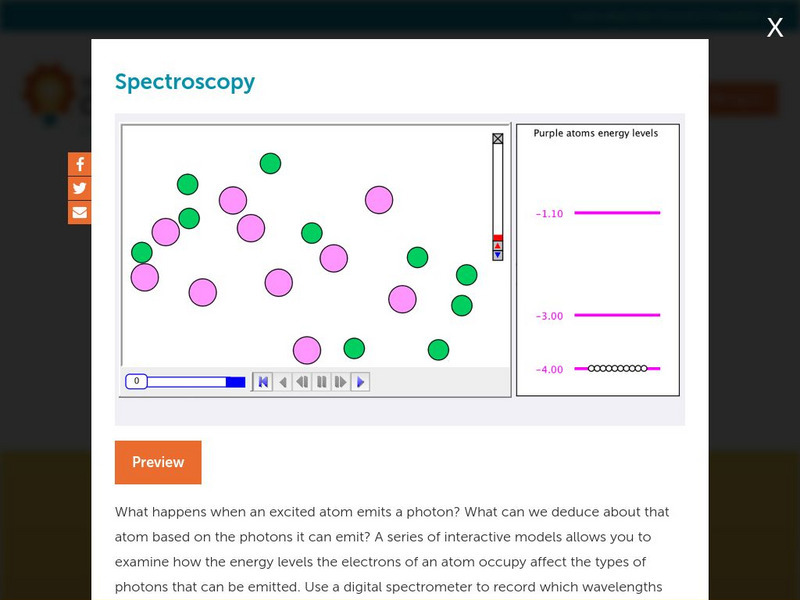
Concord Consortium: Stem Resources: Spectroscopy
Web-based activity walks learners through the use of spectroscopy in determining the identity of atoms and molecules by defining the excited state of atoms, the frequencies of emitted photons, and atoms' ability to absorb them....
Concord Consortium
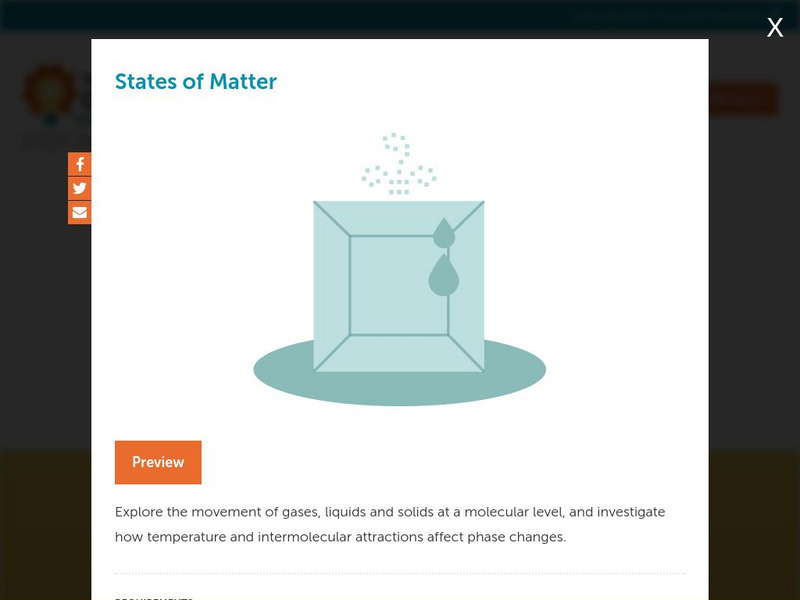
Concord Consortium: Stem Resources: States of Matter
Using simulations observe what solids, liquids, and gases look like at the atomic scale. After observing the different states of matter at their atomic level, students will be able to conclude about the forces and attractions that exist...
Concord Consortium
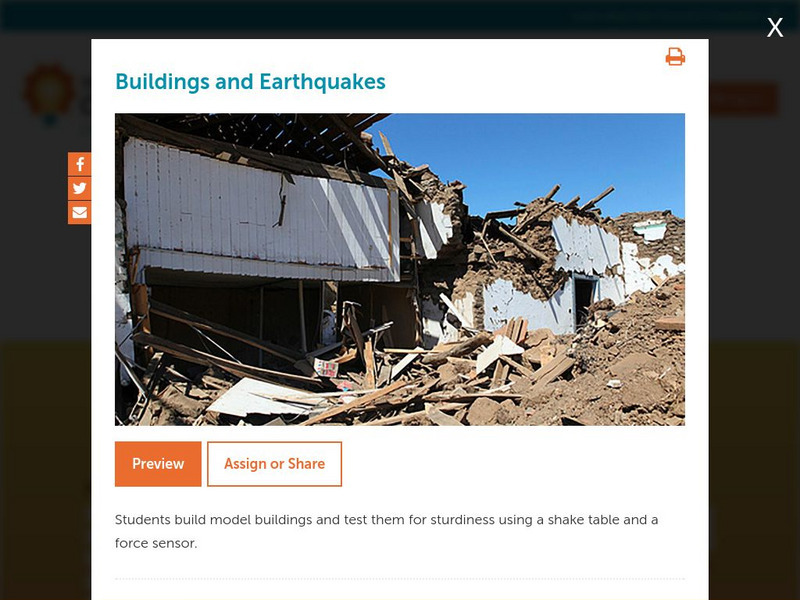
Concord Consortium: Stem Resources: Buildings and Earthquakes
Do you think you can build a house that can withstand the shaking from an earthquake? In this activity, students design and construct model building that will be tested on a shake table with a force sensor. Activity includes questions...

Concord Consortium
Concord Consortium: Geniventure
Geniventure engages students in exploring heredity, genetics, and the protein-to-trait relationship by breeding and studying virtual dragons. Students play through six levels of challenges, conducting simulated experiments that generate...

Concord Consortium
Concord Consortium: Stem Resources: Confliction Selection Pressures
Investigate how selection pressures and natural selection influence populations growth with this computer model. Understand how a population changes when selection pressures are in conflict. Perform the virtual lab to see what happens to...

Concord Consortium
Concord Consortium: Stem Resources: Natural Selection
Build a dam in the middle of an ecosystem and observe how the population of plants and animals adapt to their new environment with this science simulation. Learn how the populations adapt to survive in their new habitat. Then remove the...
Concord Consortium
Concord Consortium: Molecular Workbench Showcase: Heat and Temperature
A tutorial that explores the concepts of heat and temperature, the transfer of energy between substances, the relationship of temperature and the movement of atom, and thermal radiation. The tutorial includes animations, interactive...

Concord Consortium
Concord Consortium: Molecular Workbench
Numerous molecular biology interactive activities along with a program that can automatically keep models and reports to keep track of progress.
Concord Consortium
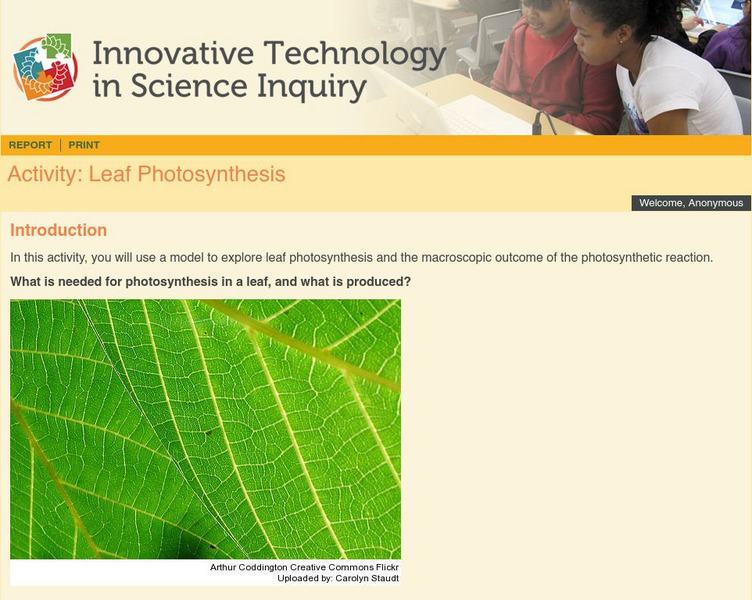
Concord Consortium: Leaf Photosynthesis
Use a model to explore leaf photosynthesis and the macroscopic outcome of the photosynthetic reaction.
Concord Consortium
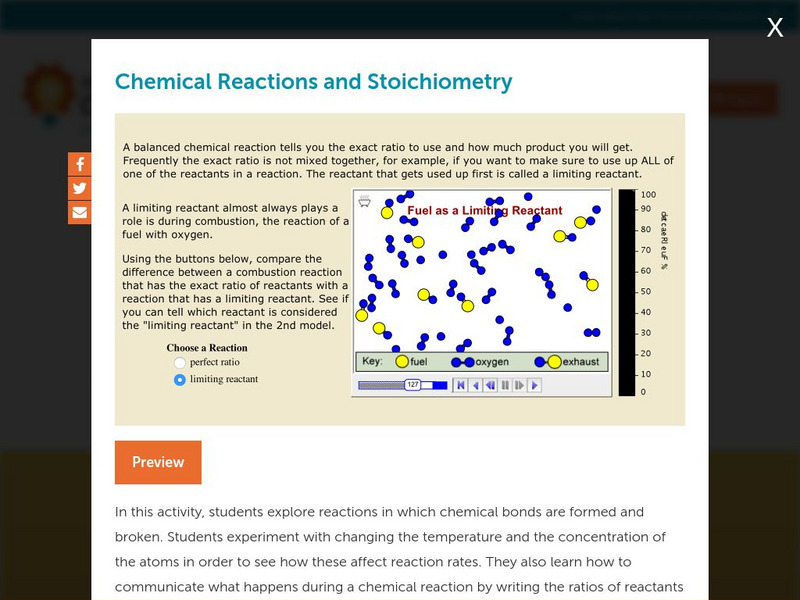
Concord Consortium: Chemical Reactions and Stoichiometry
In this activity, students explore reactions in which chemical bonds are formed and broken. Students experiment with changing the temperature and the concentration of the atoms in order to see how these affect reaction rates. They also...
Concord Consortium
Concord Consortium: Electrostatics
Use a series of interactive models and games to explore electrostatics. Learn about the effects positive and negative charges have on one another, and investigate these effects further through games.
Concord Consortium
Concord Consortium: Molecular View of a Gas
This simulation allows students to make observations about the structure and movement of particles in a gas.
Concord Consortium
Concord Consortium: Molecular View of a Liquid
This simulation allows students to make observations about the structure and movement of particles in a liquid.
Concord Consortium
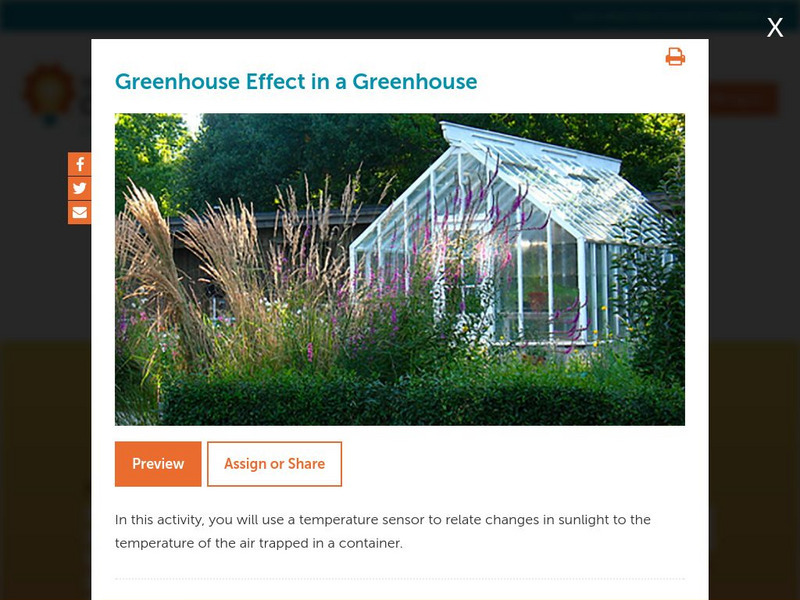
Concord Consortium: Greenhouse Effect in a Greenhouse
In this activity, you will use a temperature sensor to relate changes in sunlight to the temperature of the air trapped in a container.
Concord Consortium
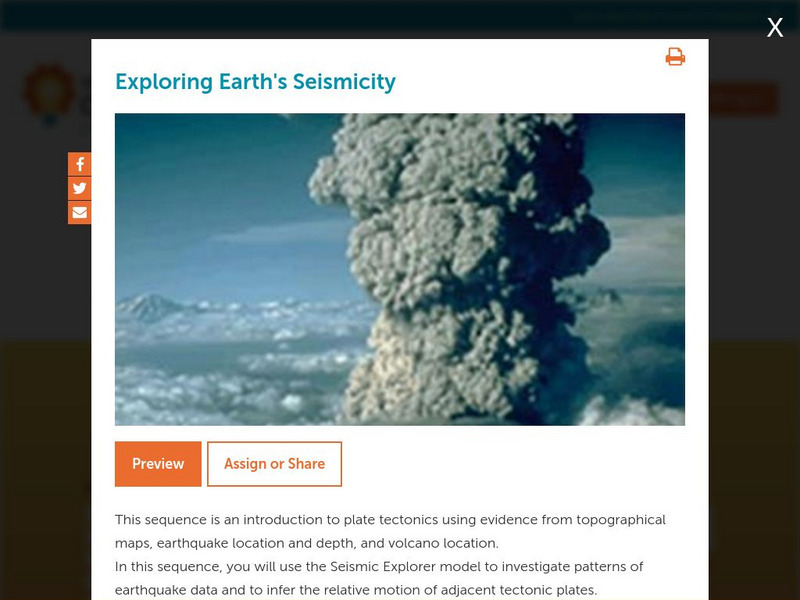
Concord Consortium: Exploring Earth's Seismicity
This sequence is an introduction to plate tectonics using evidence from topographical maps, earthquake location and depth, and volcano location using the Seismic Explorer model to investigate patterns of earthquake data and to infer the...
Concord Consortium
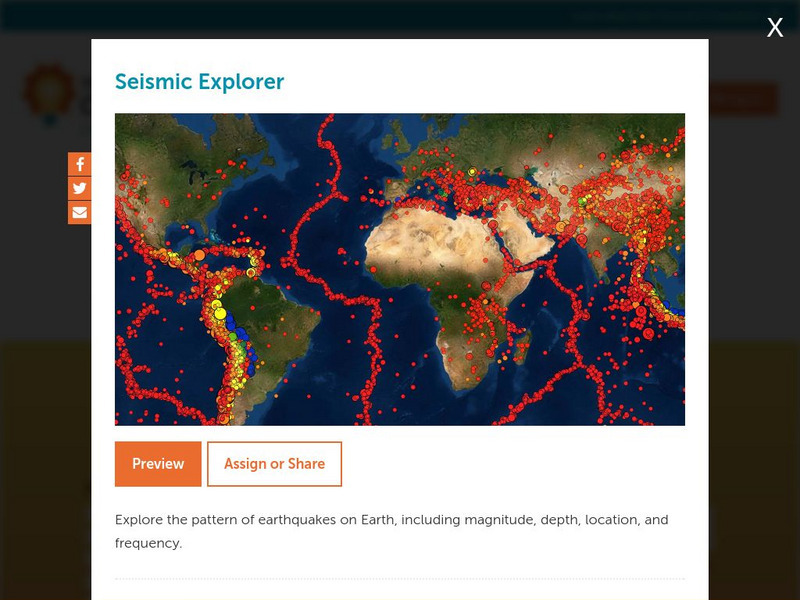
Concord Consortium: Seismic Explorer
Explore the pattern of earthquakes on Earth, including magnitude, depth, location, and frequency.
Concord Consortium
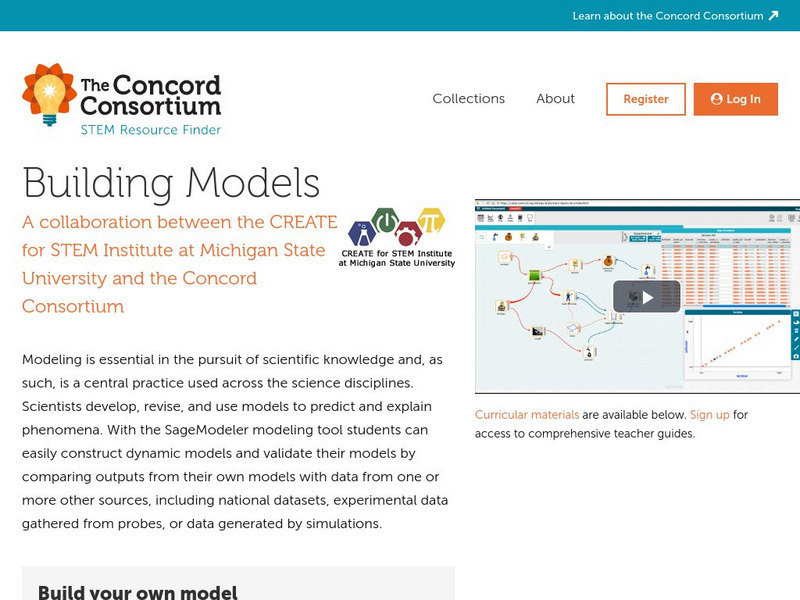
Concord Consortium: Sage Modeler
Sage Modeler is a systems modeling tool to facilitate the building of dynamic models.
Concord Consortium
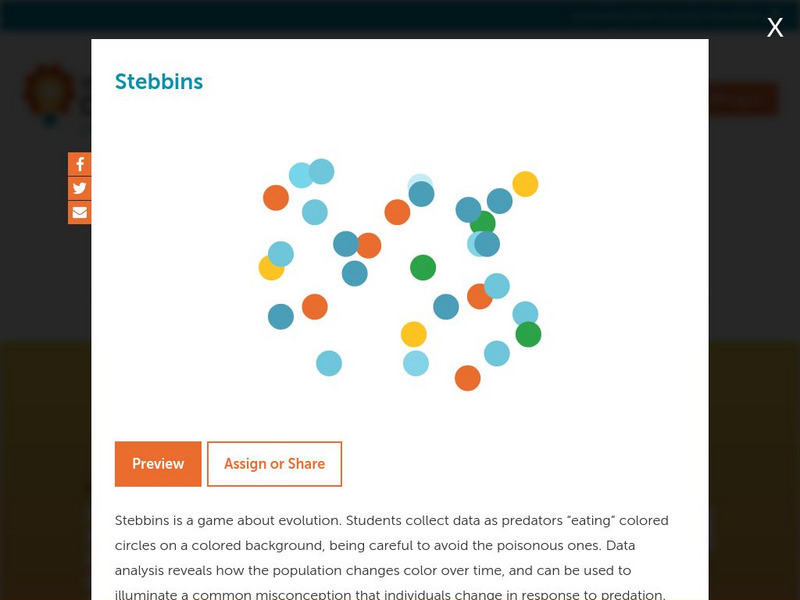
Concord Consortium: Stebbins
Stebbins is a game about evolution. Students collect data as predators eating colored circles on a colored background, being careful to avoid the poisonous ones. Data analysis reveals how the population changes color over time, and can...
Concord Consortium
Concord Consortium: Smartgraphs: Equivalent Graphs
Students investigate graphs that are equivalent, in the sense that they represent the same data, though they look different because they employ different scales.
Concord Consortium
Concord Consortium: Geniversity for Geniverse
Geniversity has been designed to help teachers use Geniverse, free web-based software for high school biology that engages students in exploring genetics by breeding and studying virtual dragons.
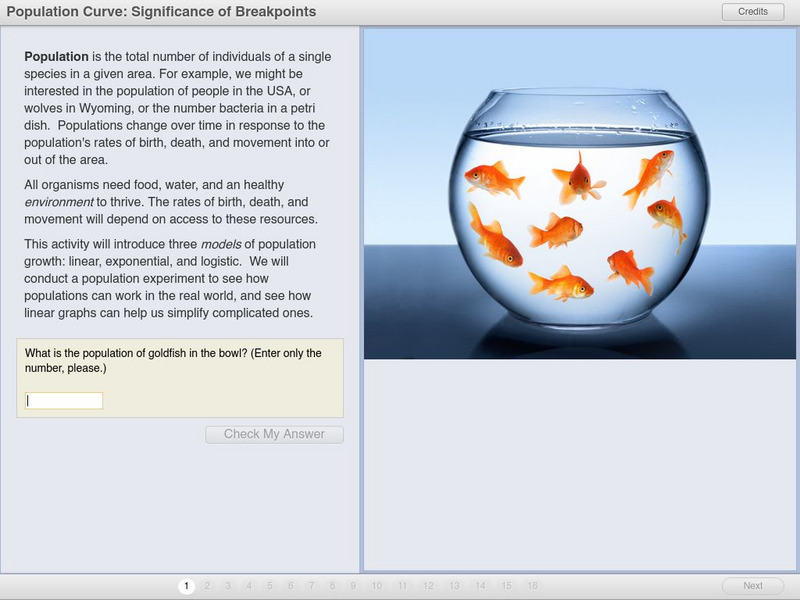
Concord Consortium
Concord Consortium: Population Curve: Significance of Breakpoints
Learn about three models of population growth: linear, exponential, and logistic. Then conduct a population experiment to see how populations can work in the real world, and see how linear graphs can help simplify complicated ones.