Hi, what do you want to do?






Independence Hall Association
U.s. History: George Washington: The First Administration
Read about George Washington's presidency. See why his role was so important in setting precedents to be followed by future chief executives. Find out about some of the warts in his personality too, all of which made him more human.
Independence Hall Association
U.s. History: The Iroquois Tribes
The Iroquois were a group of five tribes linked by their language and similar culture. Read about why the Iroquois were such a great example of the elevated role of women in the tribes, the complex lifestyle they had, and their political...

Independence Hall Association
U.s. History: Westward Expansion: The Louisiana Purchase
Read about the fortuitous purchase made that doubled the size of the United States. See why Napoleon was willing to sell the land, and find out about the quandary Thomas Jefferson was in as he had to go against his strict construction...
Independence Hall Association
U.s. History: The South Carolina Nullification Controversy
The nullification controversy began as an economic dispute between north and south. See how the question about tariffs resulted in a states' rights issue in South Carolina. Read about what President Andrew Jackson was going to do about...
Independence Hall Association
U.s. History: The Election of 1860
The election of Abraham Lincoln in 1860 was a watershed moment for the union of the country. Read about the political conventions, several candidates, and the votes that were split among them. Find a map that shows how the electoral...
Political Resources on the Net
Political Resources: Azerbaijan
This site provides information on the political aspects of the country, Azerbaijan. Includes many, many useful links.
Illinois Institute of Technology
Oyez Project
The OYEZ Project is a vast multimedia relational database on the U.S. Supreme Court that contains abstracts for all leading constitutional decisions of the Court, authoritative oral arguments in streamed media format, and a 360-degree...
University of Nebraska Omaha
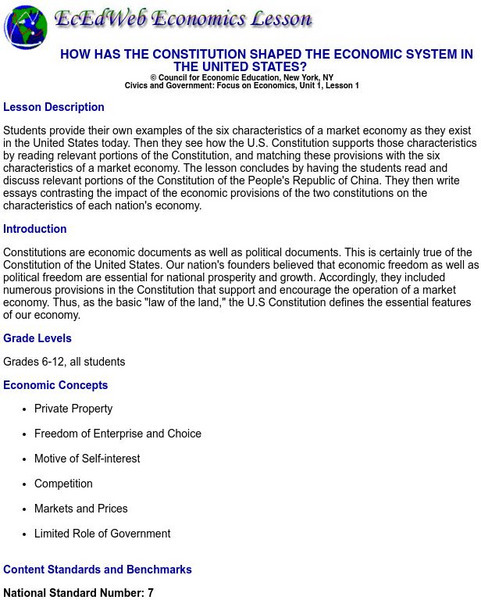
Ec Ed Web: How Has the Constitution Shaped the Economic System in the Us?
This lesson plan deals with how the U.S. Constitution has shaped our economic system. Provides standards, objectives, and materials.
Ohio State University
Osu History Teaching Institute: u.s. Constitution: The Bill of Rights
Fifth graders will examine the Bill of Rights of the US Constitution.

Khan Academy
Khan Academy: Us History: 1754 1800: Constitutional Convention and Ratification
A quick comprehension check over the Constitutional Convention and debates over ratification.

Khan Academy
Khan Academy: Us History: 1754 1800: Unit Test
Take this eleven question unit test over US history during the period of 1754 and 1800.
Independence Hall Association
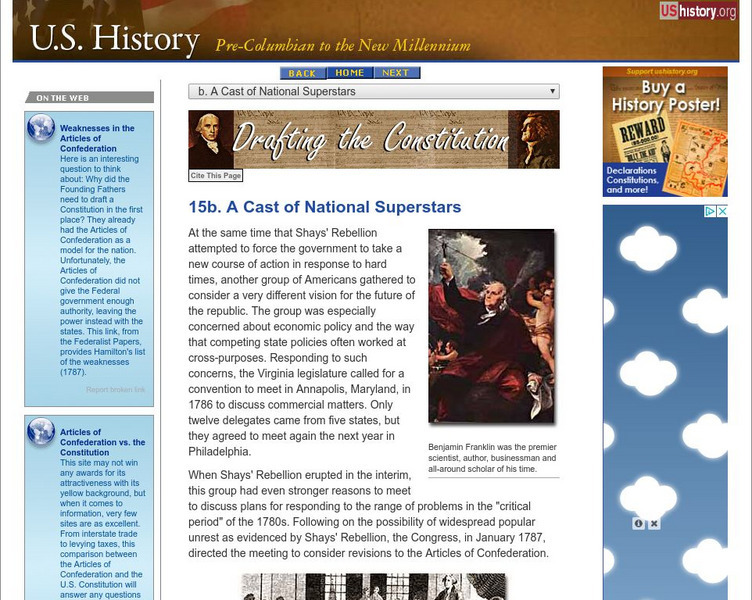
U.s. History: A Cast of National Superstars
A brief look at some of those who served as delegates to the Philadelphia Convention, which morphed into a constitutional convention. Pay attention to the class of people who made up the delegates.

Scholastic
Scholastic: u.s. Constitution Changes With the Times
Clear, concise overview of the "voting" amendments to the Constitution. Includes quotes from 20th century Justices and Presidents about Amendments they thought were needed.
US Government Publishing Office
Ben's Guide to u.s. Government: Ways to Amend the Constitution
Ben's Guide is a fun way to present US laws to school aged children. This site presents a thorough investigation into ways to amend the Constitution. Links to related sites are available.
Constitutional Rights Foundation
Constitutional Rights Foundation: King and Parliament in Medieval England
Activity in which students read and write about the development of democratic ideas in Medieval England, then in small groups, compare U.K. Parliamentary system to U.S. Presidential system.
Other
Justia: Us Supreme Court: Furman v. Georgia, 408 u.s. 238 (1972)
Court documents of a case challenging the death penalty as constituting "cruel and unusual punishment" and violating the Eighth and Fourteenth Amendments. Includes link to audio file of oral argument.
OpenStax
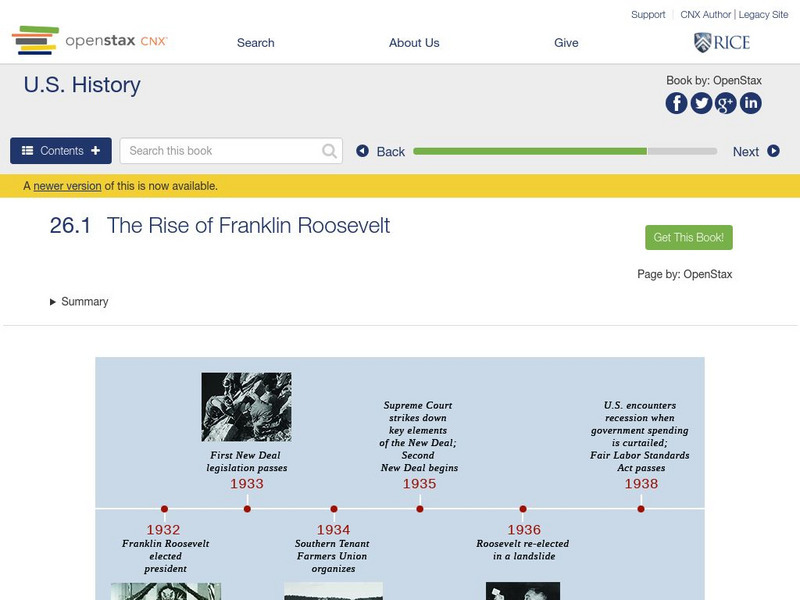
Open Stax: Franklin Roosevelt and New Deal 1932 1941: Rise of Franklin Roosevelt
Examines the election of 1932 and why Franklin Roosevelt appealed to voters. After the election, the country had to wait a whole four months, called an interregnum, before Roosevelt's inauguration, prompting Congress to amend the U.S....
Digital History
Digital History: Writing a Constitution [Pdf]
This site is from a unit called 'Writing the US Constitution.' It looks at the documents that preceded the Constitution, and the major issues that were debated while the Constitution was being created.
The Dirksen Congressional Center
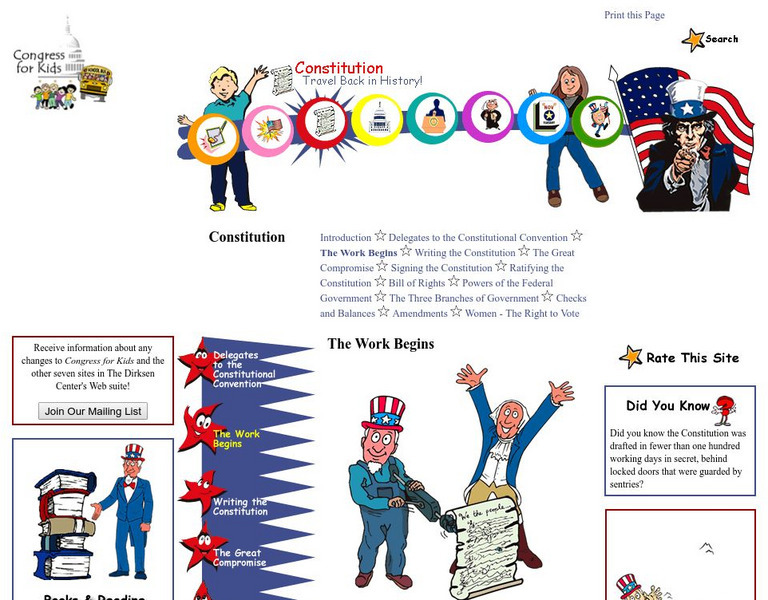
Congress for Kids: Constitution: The Work Begins
Discover how the Constitution was initiated and read about the Constitutional Congress. After learning about the beginning stages of the Constitution, take a quiz to show your learning.
Other
Us Congress: Congress, the Court, and the Constitution
Transcript of a congressional hearing, held in 1994, to discuss whether Congress had given too much power to the Supreme Court, against the express intent of the Founding Fathers. This transcript is lengthy but informative, containing...
Lectric Law Library
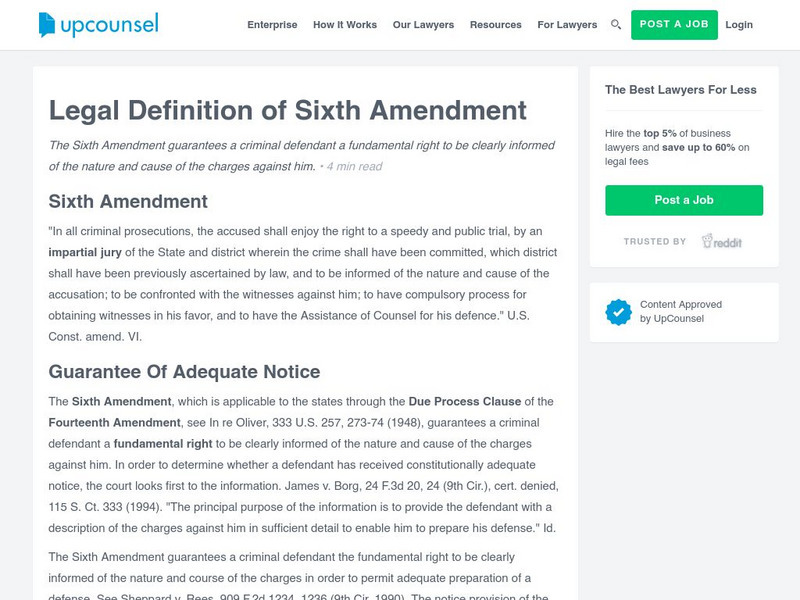
The 'Lectric Law Library: Sixth Amendment
The "Lectric Law Library's definition and explanation of the amendment, including the "impartial jury" phrase.
The Dirksen Congressional Center
Congress for Kids: Ratifying the Constitution
The process for ratifying the United States Constitution is explained in simple terms. Suggestions for research projects, resource links, and some activities are included. The rest of the site has lots more information on the U. S....

Khan Academy
Khan Academy: Ap Us History Period 3: 1754 1800: The American Revolution
This Khan Academy resource provides video lessons, detailed notes, and practice questions for the AP U.S. History Exam. The years 1754-1800 are covered.
Thomson Reuters
Find Law: U S. Constitution: Annotation 18: First Amendment
Information about the boundaries of seditious speech and the permissibility of governmental measures which are directly concerned with the content of expression.