Hi, what do you want to do?





TeachEngineering
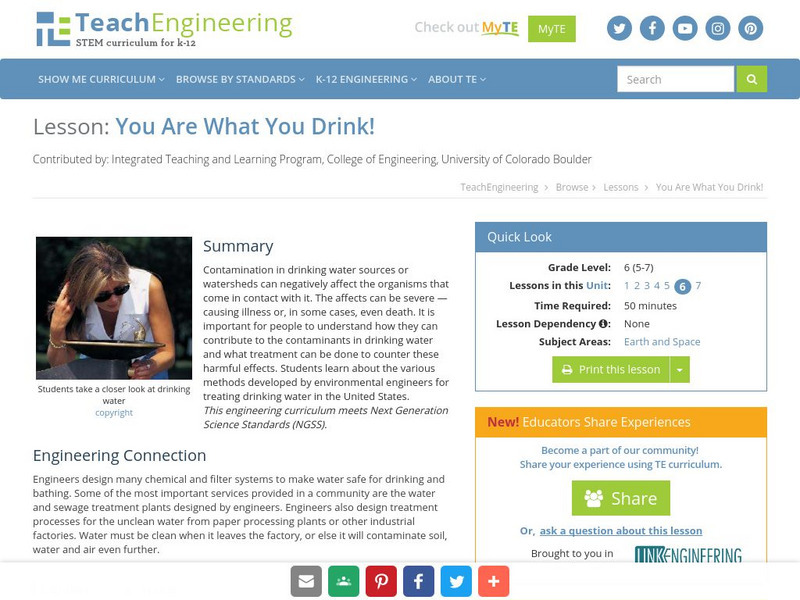
Teach Engineering: You Are What You Drink!
Contamination in drinking water sources or watersheds can negatively affect the organisms that come in contact with it. The affects can be severe - causing illness or, in some cases, even death. It is important for people to understand...
Thinkport Education
Thinkport: Water, Water, Everywhere: Water Quality Resources
Explore these resources to learn more about the natural and engineered processes that can help contribute to improved water quality.

TED Talks
Ted: Ted Ed: When Is Water Safe to Drink?
Mia Nacamulli examines water contamination and treatment.
Other
Extox Net Fa Qs: Water Treatment
Discusses many options of water treatment, the contaminants that the treatments are focused on, how the treatment works, and common treatment systems.
TeachEngineering
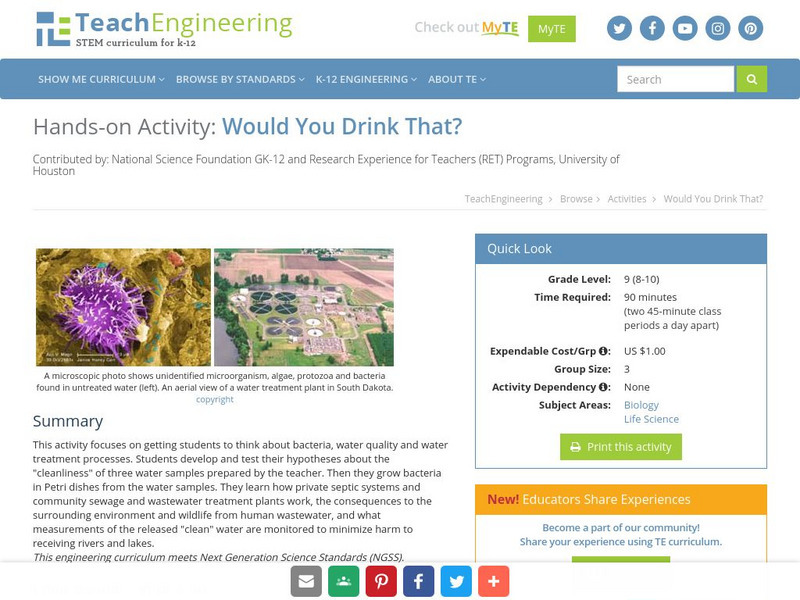
Teach Engineering: Would You Drink That?
This activity focuses on getting students to think about bacteria, water quality and water treatment processes. Students develop and test their hypotheses about the "cleanliness" of three water samples prepared by the teacher. Then they...
Carnegie Mellon University
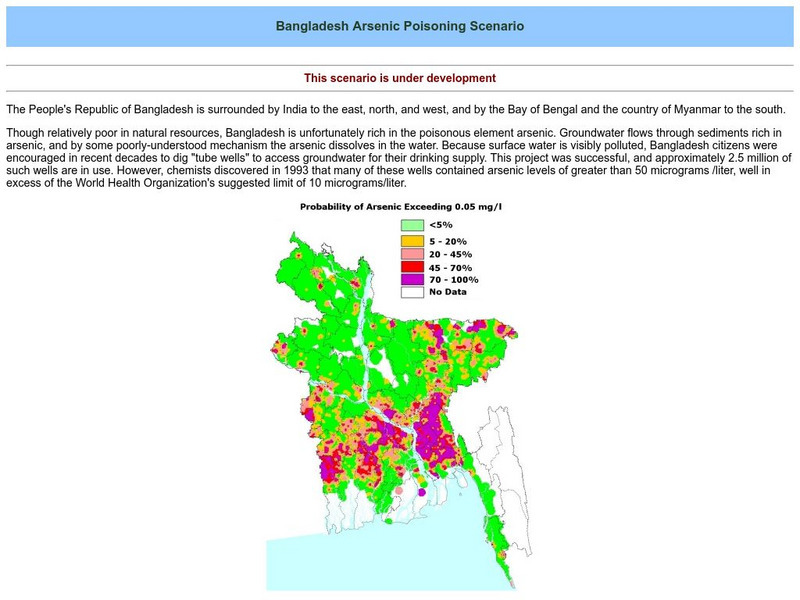
Chem Collective: Arsenic in Drinking Water
Set in the context of ground water contamination in Bangladesh, this stoichiometry and analytical chemistry activity examines the issues around identifying wells contaminated with arsenic.
![Epa: Where Does Your Water Come From? [Pdf] Lesson Plan](https://content.lessonplanet.com/knovation/original/41160-83ff7c05b0f0460206fa551d2700d8dc.jpg?1661270414 "Epa: Where Does Your Water Come From? [Pdf] Lesson Plan")
US Environmental Protection Agency
Epa: Where Does Your Water Come From? [Pdf]
Where does your drinking water come from? This resource features a clear and concise explanation for this question. This resource will be beneficial to students and teachers.
Other
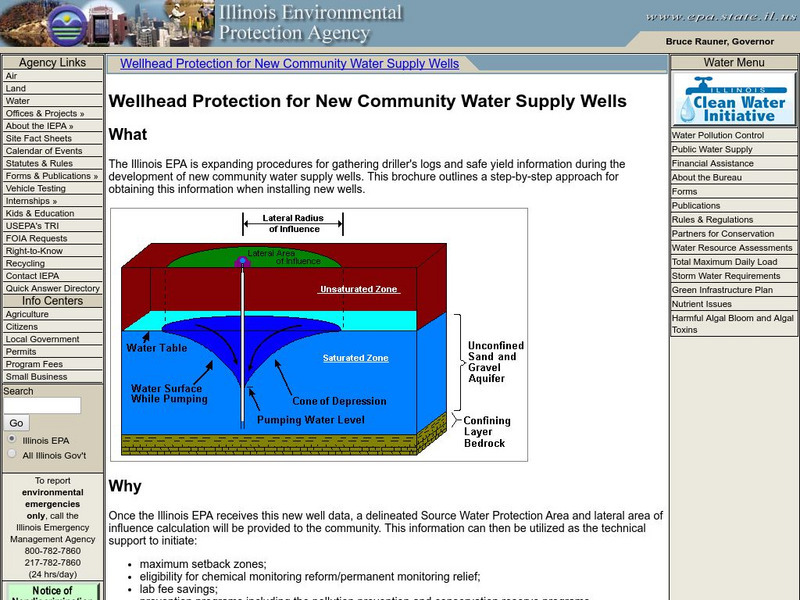
Iepa:wellhead Protection in Community Water Supply Wells
Discusses what wellhead protection is, why it is needed, who is involved, a step by step plan, and a nice diagram of a well and the surrounding area.
University of Arizona
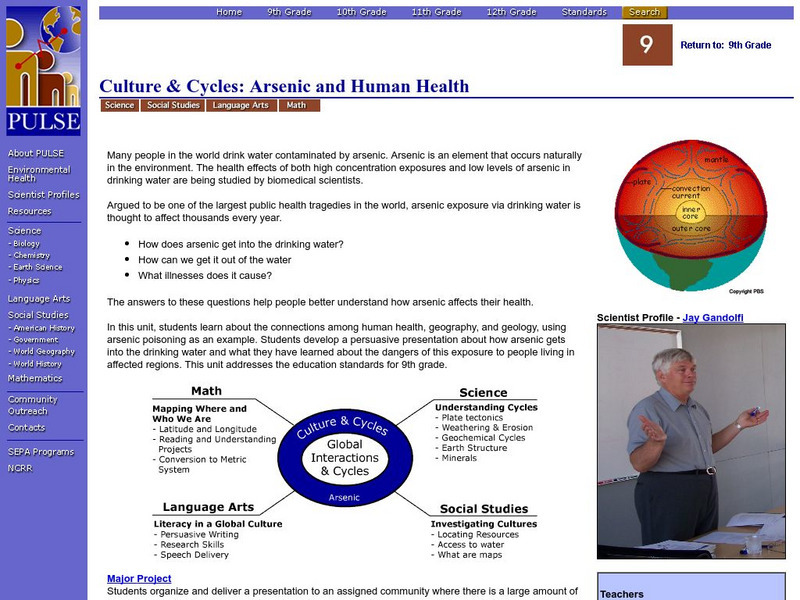
University of Arizona: Pulse: Cultures and Cycles: Arsenic and Human Health
Interdisciplinary unit about the risk of exposure to arsenic in public drinking water. Math, language arts, social studies, and science are incorporated into the lessons.

TeachEngineering
Teach Engineering: Chromatography Lab
To increase students' awareness of possible invisible pollutants in drinking water sources, students perform an exciting lab requiring them to think about how solutions and mixtures exist even in unsuspecting places such as ink. They use...

TeachEngineering
Teach Engineering: Who's Down the Well?
Drinking water comes from many different sources, including surface water and groundwater. Environmental engineers analyze the physical properties of groundwater to predict how and where surface contaminants will travel. In this lesson...
TeachEngineering
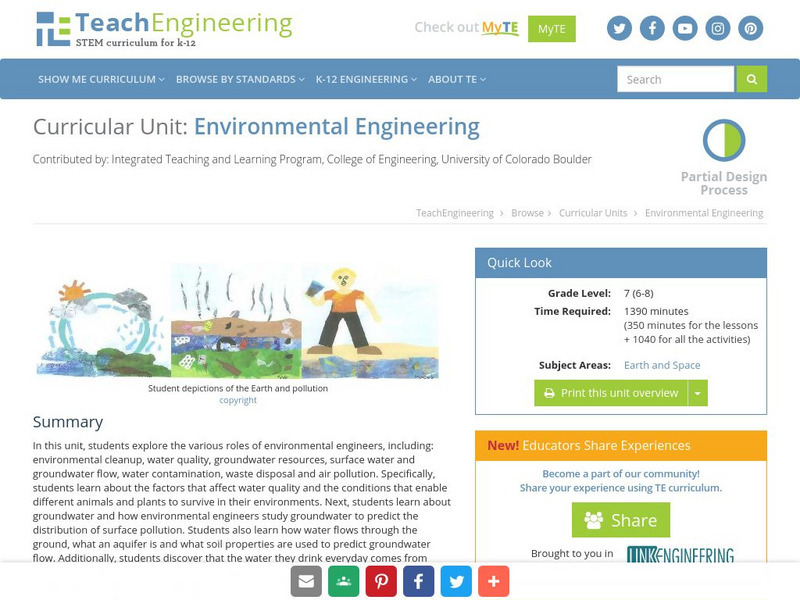
Teach Engineering: Environmental Engineering
In this unit, students explore the various roles of environmental engineers, including: environmental cleanup, water quality, groundwater resources, surface water and groundwater flow, water contamination, waste disposal and air...
TeachEngineering
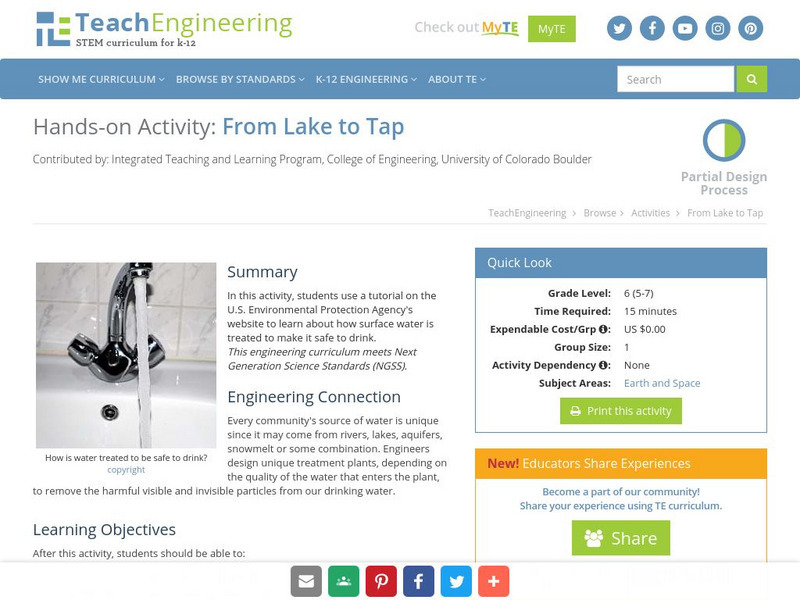
Teach Engineering: From Lake to Tap
In this activity, students will use a tutorial on the U.S. Environmental Protection Agency's website to learn about how surface water is treated to make it safe to drink.
Purdue University
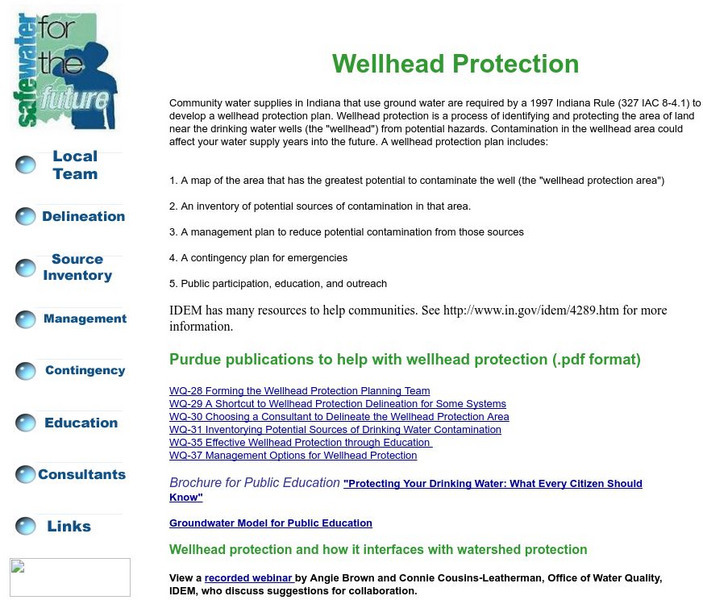
Purdue Engineering/wellhead Protection
This resource describes what well head protection is, what you can do, case studies, why you should care, and related links.

TeachEngineering
Teach Engineering: Biosensors for Food Safety
How can you tell if harmful bacteria are in your food or water that might make you sick? What you eat or drink can be contaminated with bacteria, viruses, parasites and toxins pathogens that can be harmful or even fatal. Students learn...

Other
Dangers of Fracking: What Goes in and Out of Hydraulic Fracturing
Hydraulic fracturing, or "fracking", is the process of drilling and injecting fluid into the ground at a high pressure in order to fracture shale rocks to release natural gas inside.