Hi, what do you want to do?





California Institute of Technology
Cool Cosmos: Ask an Astronomer: Comets
Resource provides easy to understand information about comets. Click on the frequently asked question link to find out more about these mysterious celestial bodies.
California Institute of Technology
Cool Cosmos: Ask an Astronomer for Kids: Solar System
Resource presents information about the solar system through a list of most frequently asked questions. Click on each question and be transported to a wealth of knowledge about our solar system and the planets within it.

California Institute of Technology
Cool Cosmos: Ask an Astronomer: Neptune
Resource provides a deeper look at the planet Neptune. Just click on the frequently asked question link and dive into knowledge.
California Institute of Technology
Cool Cosmos: Ask an Astronomer: Pluto
Visit this site and learn more about Pluto. Provides the answers to kids' most frequently asked questions.
New York University
New York University : Lanford Wilson
This site from the New York University provides a very brief biographical sketch of Wilson, along with a link to a short summary of and commentary on Wilson's play "A Poster of the Cosmos."
California Institute of Technology
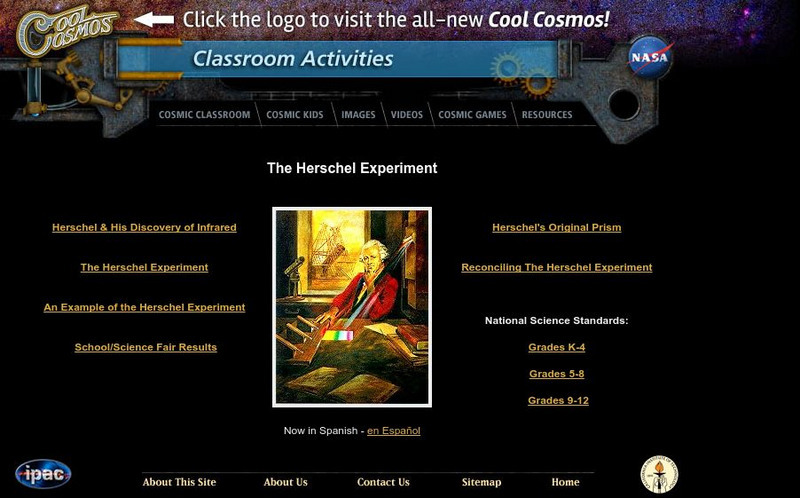
Cool Cosmos: The Herschel Experiment
This website provides a background on the discoverer of infared light--Sir Frederick William Herschel. A version of the experiment Herschel conducted in the 1800s is provided as well.

California Institute of Technology
Nasa: Cool Cosmos: What Is Heat?
Eight different types of energy that can convert into thermal energy are described. A movement activity and an experiment are included in this overview of thermal energy.
California Institute of Technology
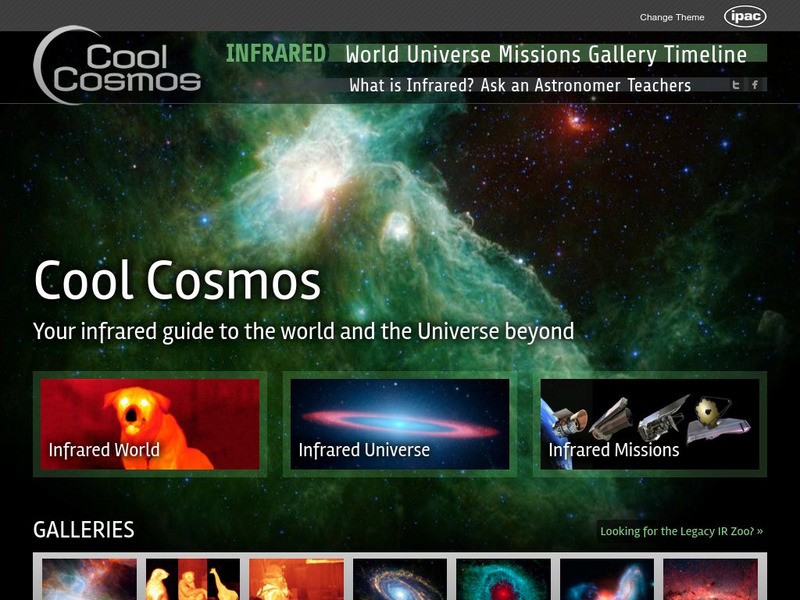
Welcome to Cool Cosmos!
Site provides a cosmic classroom, an image gallery, science resources, fun and games, and much more!
Science Buddies
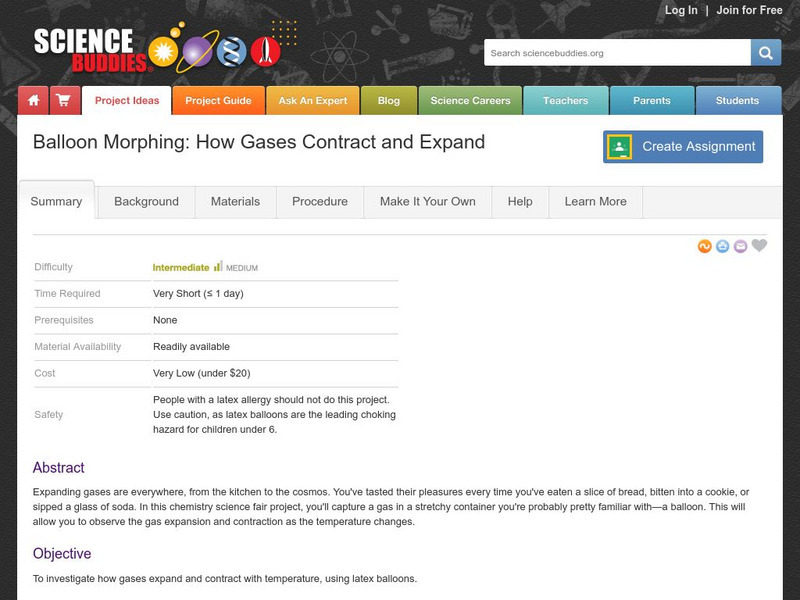
Science Buddies: Balloon Morphing: How Gases Contract and Expand
Expanding gases are everywhere, from the kitchen to the cosmos. You've tasted their pleasures every time you've eaten a slice of bread, bitten into a cookie, or sipped a glass of soda. In this chemistry science fair project, you'll...
University of Oregon
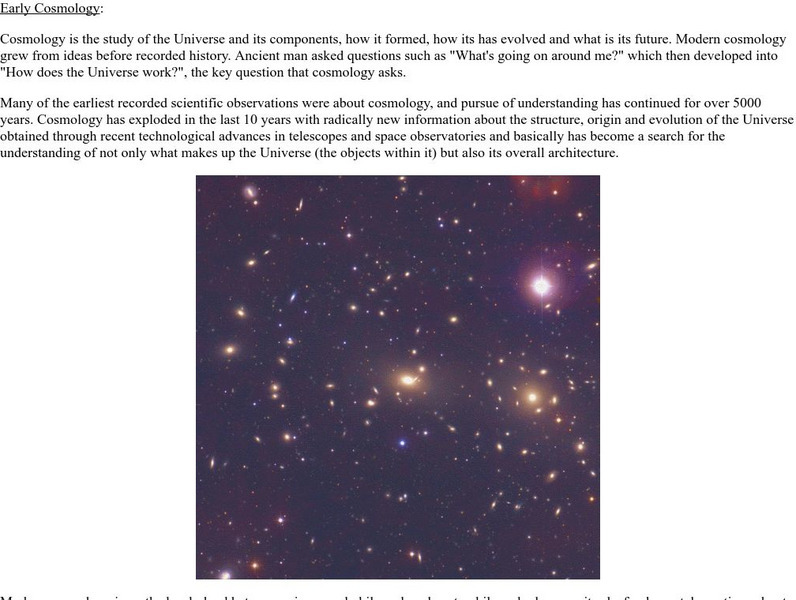
University of Oregon: Greek Science: Early Cosmology
Discusses the evolution of ideas about the cosmos, from the Magic Cosmology of the Neolithic age to the stage of Mythical Cosmology, to the Geometric Cosmology of the ancient Greeks. The third stage advocated a rational approach to...

PBS
Pbs Learning Media: Einstein: How Smart Was He?
This essay from the NOVA Web site explores the impact Einstein made on physics and most everything we know about the cosmos.
California Institute of Technology
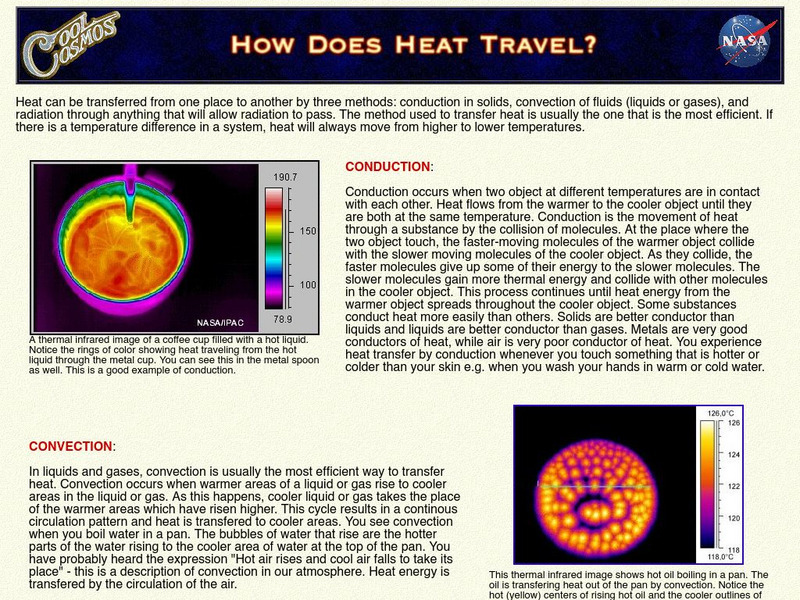
Nasa: Cool Cosmos: How Does Heat Travel?
An explanation, with infrared images, of how heat is transferred from one object to another.
California Institute of Technology
Cal Tech: Cool Cosmos: Ask an Astronomer: How Many Moons Does Neptune Have?
Resource provides a brief answer to this question.
Texas A&M University
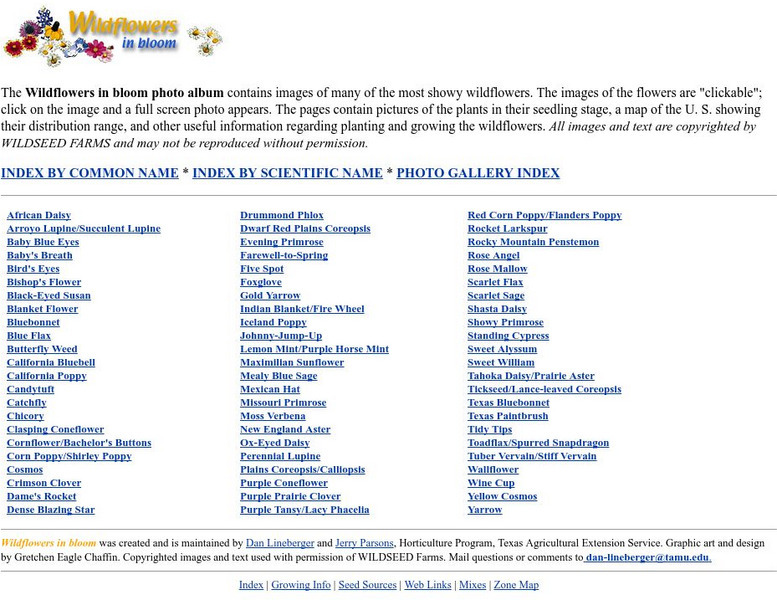
Wildflowers in Bloom Photo Abum
The Wildflowers in bloom photo albumcontains an extensive look at beautiful images of many of the most showy wildflowers.

PBS
Pbs Nova: Hunting the Edge of Space
A collection of articles and interactives on the topic of telescopes and what we have learned from them about the universe, including information about some of the strangest phenomena. One section discusses the giant telescopes of the...

Peabody Essex Museum
Peabody Essex Museum: Perfect Imbalance: Exploring Chinese Aesthetics
An exploration of Chinese Aesthetics. Includes images and descriptions of artifacts, the history of Chinese art, and lesson plans.
Other
Aip: Einstein Image and Impact
A major exhibition that presents nine sections of in-depth information on aspects of Einstein's life.

California Institute of Technology
Learn About Infrared
The people at Cool Cosmos explain infrared in a comprehensible way. They use several sets of pictures for you to visually see how infrared rays work. Great for anyone doing research or just reading up on an interest.
Massachusetts Institute of Technology
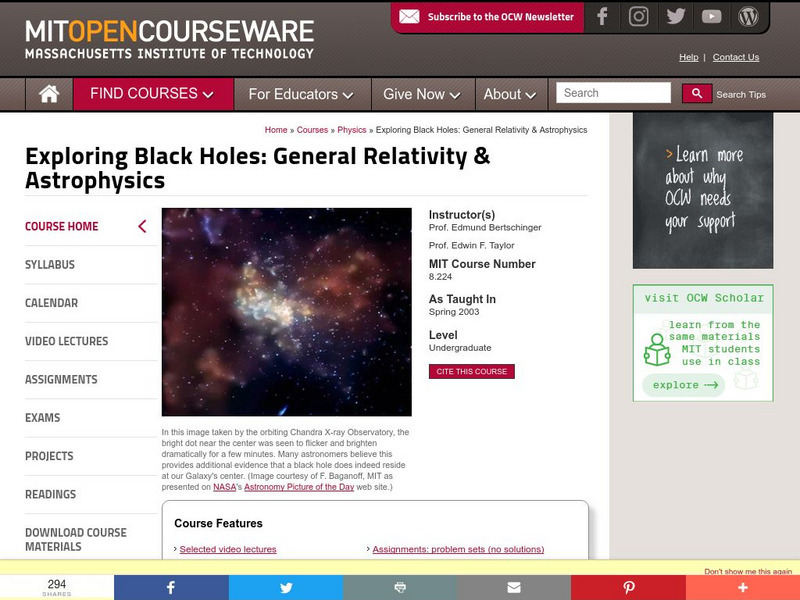
Mit: Open Course Ware: Exploring Black Holes: General Relativity and Astrophysics
College-level physics course focusing on black holes. Course topics include general relativity, astrophysics, and elements of cosmology . Course features include selected video lectures, lecture notes, assignments, and exams.
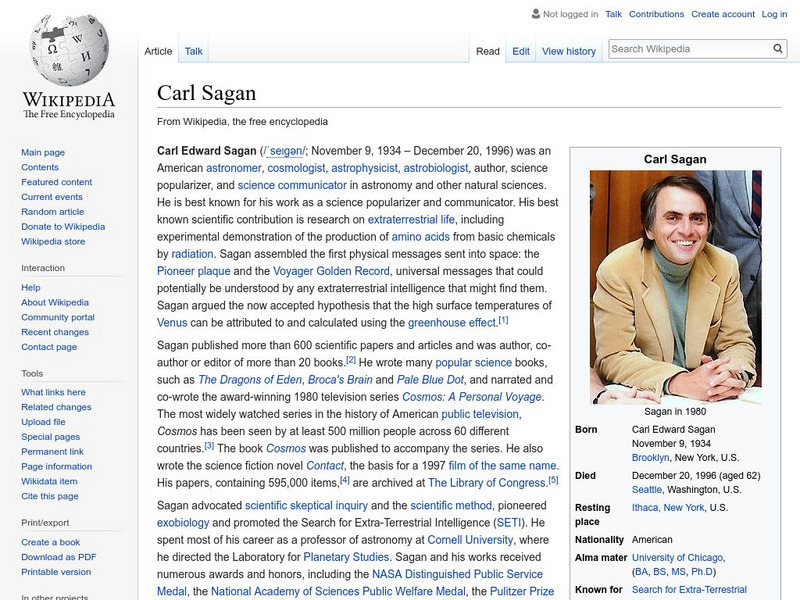
Wikimedia
Wikipedia: Carl Sagan
This encyclopedia article from Wikipedia provides a brief biography of Carl Sagan, the American astronomer who pioneered exobiology and promoted the Search for Extraterrestrial Intelligence (SETI), and science in general.
Kidport
Kidport: Space Science
This complete resource will help students to improve their understand of space exploration. Includes images of the universe, galaxies, stars and planets.

TED Talks
Ted: Ted Ed: How Cosmic Rays Help Us Understand the Universe
Veronica Bindi explains what cosmic rays are, and how they transmit information about our universe from the great beyond. [4:40]
Encyclopedia Mythica
Encyclopedia Mythica: Ragnarok
This site shares an encyclopedia entry for the a mythological topic of "Ragnarok".
Famous Scientists
Famous Scientists: Carl Sagan
A short biography about a scientist best known for his contributions to the research of extraterrestrial life, including experimental demonstration of the production of amino acids from basic chemicals by radiation.
Other popular searches
- Montessori Cosmos
- Scale of the Cosmos
- Destination Cosmos
- Gadgets & Cosmos
- Stars of the Cosmos
- Gadgets \& Cosmos
- Cosmos Word Problems