Hi, what do you want to do?





US National Archives
Docsteach: Integration of the u.s. Armed Forces
Students will draw upon the visual and textual data presented in photographs and documents to gain an understanding of the participation of African Americans in the U.S. Armed Forces and of changes in American military policy regarding...
US National Archives
Docsteach: Landing a Man on the Moon: President Nixon and the Apollo Program
This activity chronicles the Space Race from President Kennedy's call to land on the Moon until Apollo 17 - the last lunar Mission, placing particular emphasis on President Nixon's role in the space program.
US National Archives
Docsteach: Lowering the Voting Age: Nixon and the 26th Amendment
This activity encourages students to think critically about the history and importance of the 26th Amendment, that granted the right to vote to American citizens aged eighteen or older.
US National Archives
Docsteach: Civil Rights Act, 1964 & Equal Employment Opportunity Commission
This activity asks young scholars to read, analyze, and summarize Title VII of the Civil Rights Act of 1964 that established the Equal Employment Opportunity Commission.
US National Archives
Docsteach: The Treaty of Guadalupe Hidalgo
The Treaty of Guadalupe Hidalgo, which brought an official end to the Mexican-American War, was signed on February 2, 1848. This activity asks students to read and analyze the treaty to explain the overall message and tone.
US National Archives
Docsteach: Half Right, Half Wrong: Analyzing a Letter About Ford Pardoning Nixon
In this activity, students will analyze a document sent from a child to President Gerald Ford in 1974. Anthony Ferreira wrote to the president to express his opinion regarding the pardon of Richard Nixon.
US National Archives
Docsteach: Road to Revolution: Patriotism or Treason?
Students will analyze the causes of the American Revolution and examine them from various points of view. Perspectives include the Sons of Liberty, loyalists living in the colonies, patriots, and British citizens living in England.
US National Archives
Docsteach: Wwi America: Babe Ruth's Draft Card
Students will examine the language of the WWI draft card for George Herman 'Babe' Ruth to try and determine differences between American society during World War I and the present day.
US National Archives
Docsteach: The First Amendment
In this activity students will analyze documents that span the course of American history to determine their connection to the different phrases found within the First Amendment of the U.S. Constitution.
US National Archives
Docsteach: Americans on the Homefront Helped Win World War I
In this activity, students will match documents to visualize ways that Americans contributed to the war effort on the homefront during World War I. Students will see a payoff image related to the armistice celebration and reflect on the...
US National Archives
Docsteach: To Sign or Not to Sign
Middle schoolers will consider the arguments made by members of the Continental Congress regarding whether or not to sign the Declaration of Independence. They will also have the opportunity to analyze each section of the Declaration to...
US National Archives
Docsteach: We the People
In this activity, learners will examine the original and final drafts of the Constitution and evaluate the significance of the selection of the words 'We the People.'
US National Archives
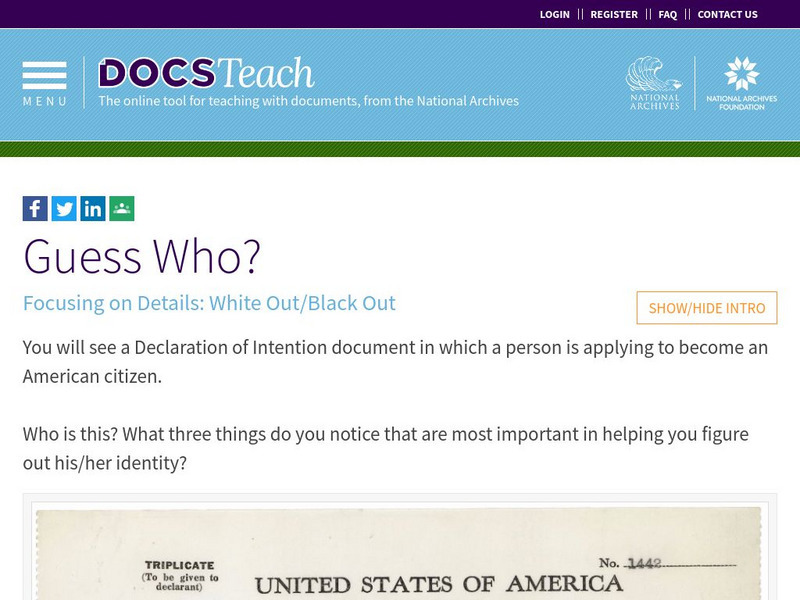
Docsteach: Guess Who?: Analyzing Einstein's Citizenship Application
Students will examine and interpret information from a Declaration of Intention document to discover the individual applying for citizenship in the United States - Albert Einstein.
US National Archives
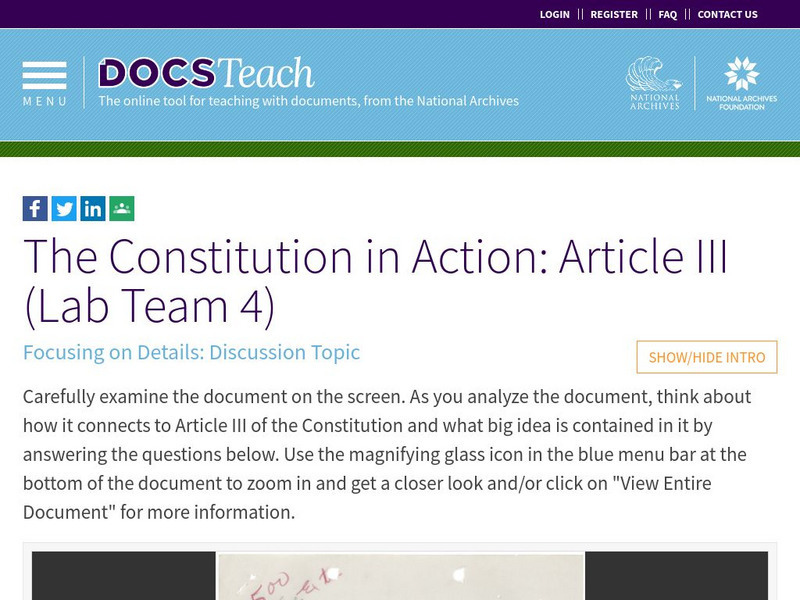
Docsteach: The Constitution in Action: Article Iii (Lab Team 4)
In this activity students will analyze the Opinion of the Court by Chief Justice Earl Warren in the Case of Miranda v. Arizona and identify how the document demonstrates content contained within Article III of the Constitution in action.
US National Archives
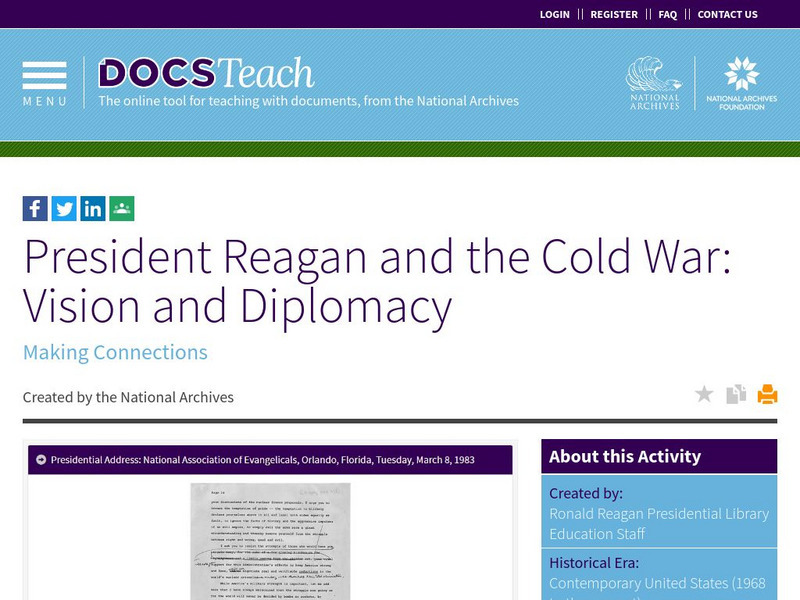
Docs Teach: President Reagan and the Cold War: Vision and Diplomacy
See how Ronald Reagan's rhetoric evolved from his speech calling the Soviet Union an "evil empire" to his signing of the Intermediate-Range Nuclear Forces Treaty by examining photographs and documents.
US National Archives
National Archives: Bring History to Life
How can you actually bring history to life? Here are some tools from the National Archives that allow students to create their own projects using primary-source based activities that develop historical thinking skills. Special historical...
US National Archives
National Archives Experience: Digital Vaults
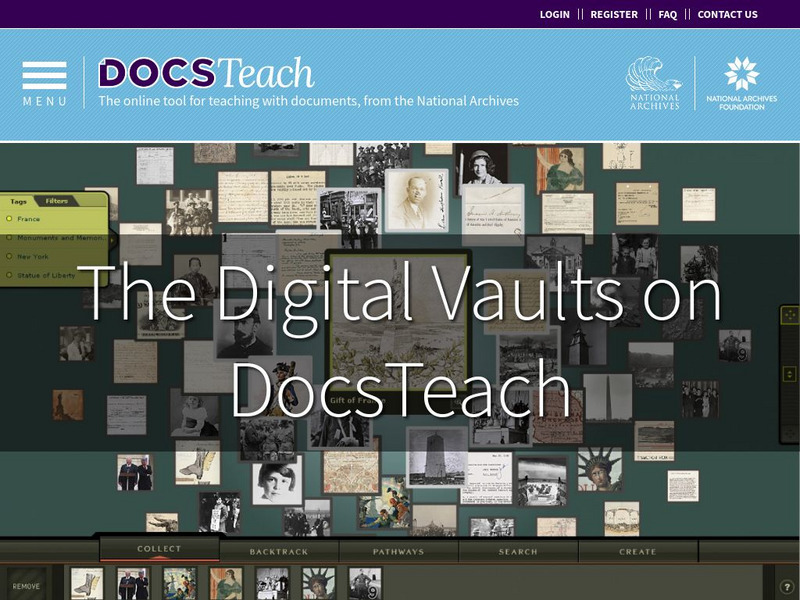
Unlock the digital vault in the U.S. National Archives' collections. Once inside this portal, use visual resources to make archival connections, view related teacher resources, or simply follow the interconnected pathways of historical...
US National Archives
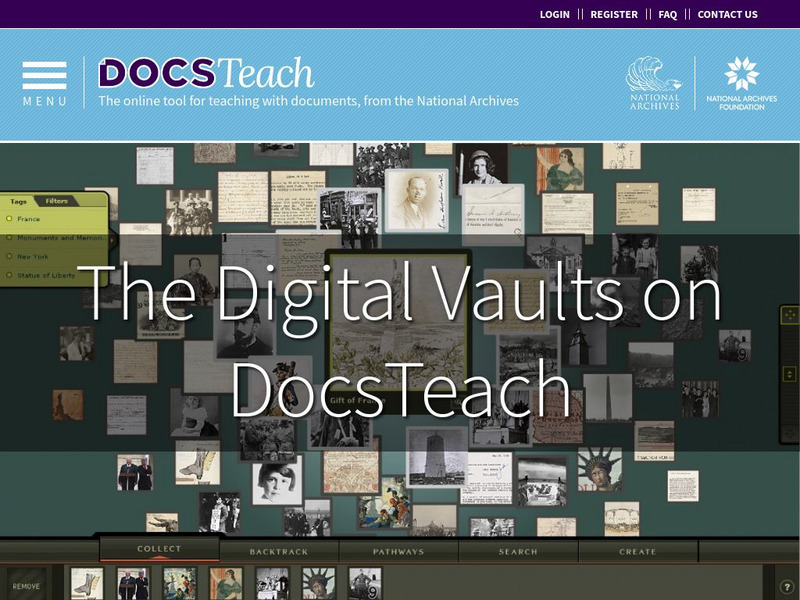
The National Archives Experience: Digital Vaults
This interactive website reveals primary sources for the National Archives vaults.