Hi, what do you want to do?





US National Archives
National Archives: Benjamin Franklin: Politician and Diplomat
Benjamin Franklin was the only man to help shape all the major documents that established the United States. Students will review those documents and match the correct document to its description. Upon completion, students will choose...
US National Archives
National Archives: We the People
View George Washington's annotated draft of the Constitution while discussing the ratification process. Specifically, the students will analyze changes to the Preamble of the Constitution. Critical thinking questions are provided.
US National Archives
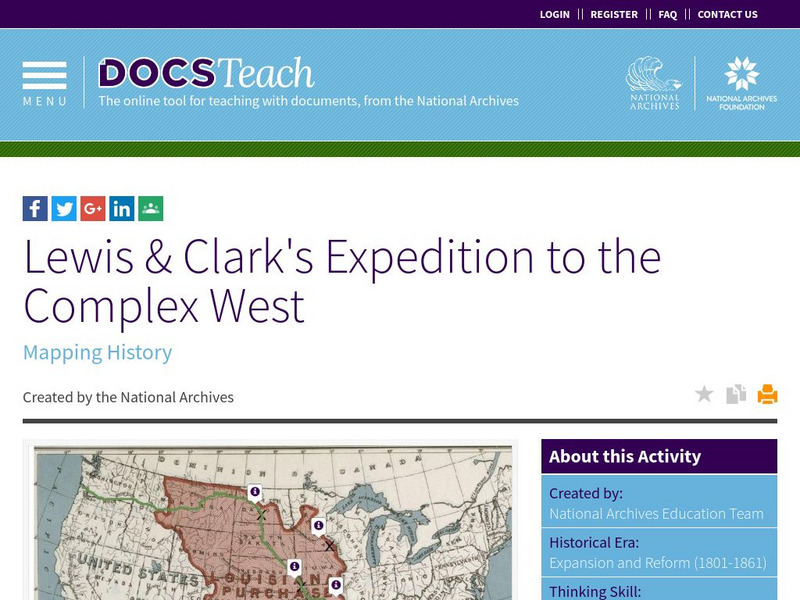
National Archives: Lewis and Clark's Expedition to the Complex West
Jefferson sent Lewis and Clark to explore the land annexed in the Louisiana Purchase knowing that his area was already inhabited and politically complicated. Learners will explore documents related to the purchase and use the map to...

US National Archives
National Archives: The Treaty of Guadalupe Hidalgo
Was the Treaty of Guadalupe Hidalgo a fair compromise to end the Mexican-American War? Learners will dissect sections of the treaty to summarize and formulate a conclusion to that question.

US National Archives
National Archives: u.s. V. Amistad: A Case of Jurisdiction
Students will review the Amistad case and use passages from the case explore the concept of jurisdiction and how a case travels through the federal court system. Also, included are links to the background of the Amistad case, a...
US National Archives
National Archives: From Dred Scott to the Civil Rights Act of 1875
The Dred Scott case decided that African Americans were not citizens of the United States. However, 18 years later they would have citizenship and many other rights. Students will examine the following documents to understand how and why...
US National Archives
National Archives: How Effective Were the Efforts of the Freedmen's Bureau?
Upon being freed, the formerly enslaved people had many challenges to overcome. The Freedmen's Bureau was established to assist the newly free people. Students will examine the following documents and formulate an opinion about the...
US National Archives
National Archives: Letter to President Abraham Lincoln From Annie Davis
"Will you please let me know if I am free?" wrote Annie Davis. Annie Davis was a slave who wrote this letter to President Lincoln 20 months after the Emancipation Proclamation. To understand her confusion, examine the following documents...
US National Archives
National Archives: Oh Freedom! Sought Under the Fugitive Slave Act
What would your life be like if you had to always be running from people who wanted to capture you and make you their slave? The following documents tell the story of William and Ellen Craft who fled from slavery in 1848. View the...

US National Archives
National Archives: The Civil War as Photographed by Mathew Brady
Students will surmise what life was like for soldiers fighting in the Civil War by viewing photographs from that time period. Students will answer questions in small groups and reconvene for a whole class discussion.
US National Archives
National Archives: To What Extent Was Reconstruction a Revolution? (Part 1)
Should Reconstruction be viewed as a revolution or not? Using primary source documents, students can weigh the evidence and come up with their conclusion. This lesson can be used as a whole class, small group, or individual activity.
US National Archives
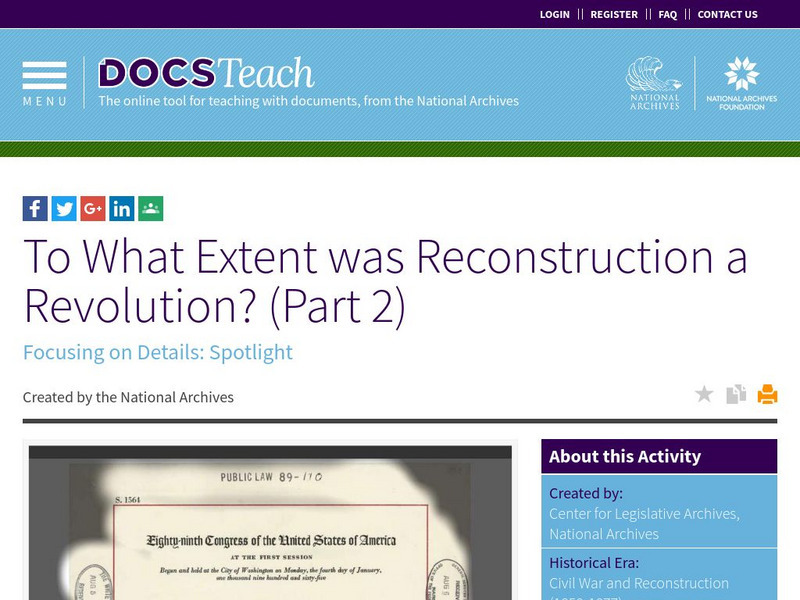
National Archives: To What Extent Was Reconstruction a Revolution? (Part 2)
This is a continuation of part 1 of the lesson "To What Extent was Reconstruction a Revolution?". Students will study the Voting Rights Act of 1965 to see if their opinion changes from the previous lesson. Included are whole class...
US National Archives
National Archives: Prohibition and Its Consequences
Was prohibition necessary to protect family values or was it an over-reach by the government? Students will debate this question while analyzing documents from this era. Documents include political cartoon, photos, letters from citizens,...
US National Archives
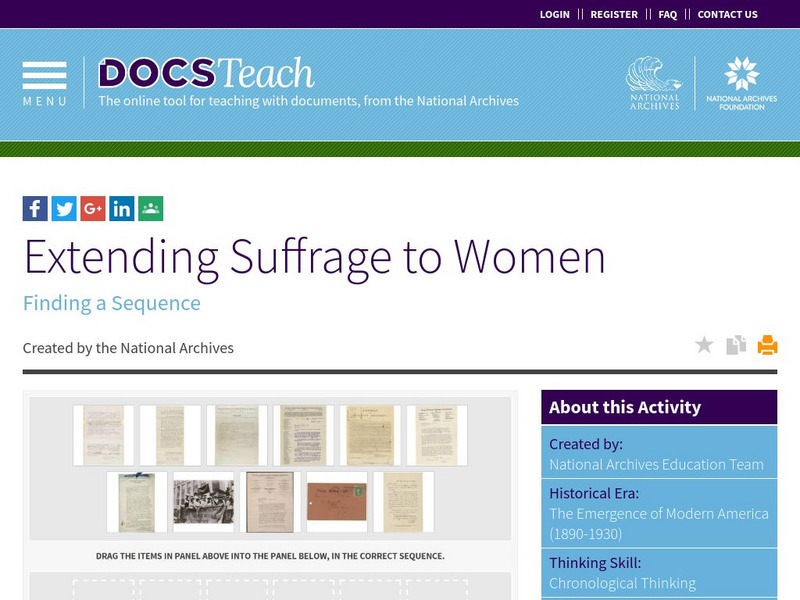
National Archives: Extending Suffrage to Women
The passage of the 15th Amendment sparked the Women's Suffrage Movement. Students will analyze documents pertaining to the Suffrage Movement such as letters from prominent suffragists, anti-suffrage postcards, photos from parades, and...
US National Archives
National Archives: How Have Americans Responded to Immigration?
How have Amercian's views on immigration changed over the course American history? What causes the shifts in acceptance? Students will view documents spanning the 19th and 20th century to answer those questions. They will examine...
US National Archives
National Archives: Confronting Work Place Discrimination on the Wwii Homefront
African Americans were not able to take advantage of the booming industries as Americans were mobilizing for WWII. The FEPC was established to make sure Roosevelt's executive order providing for equal opportunities in defense industries...
US National Archives
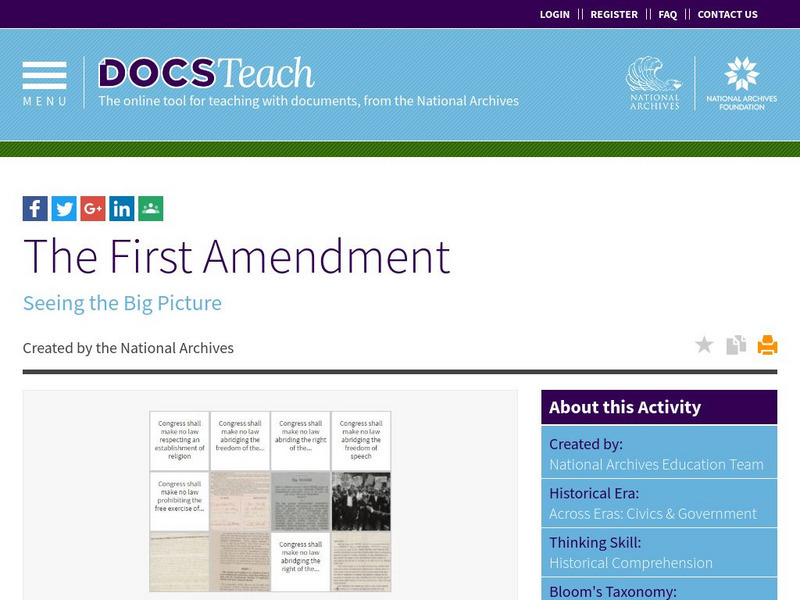
National Archives: The First Amendment
Students will look at documents and cases throughout American history to understand the effects of the First Amendment on our nation.
US National Archives
National Archives: Bring History to Life
How can you actually bring history to life? Here are some tools from the National Archives that allow students to create their own projects using primary-source based activities that develop historical thinking skills. Special historical...
US National Archives
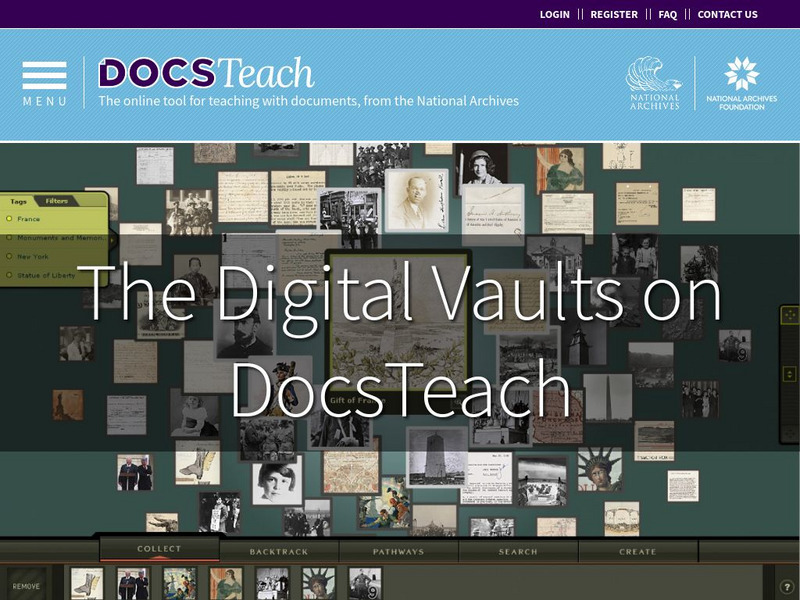
National Archives Experience: Digital Vaults
Unlock the digital vault in the U.S. National Archives' collections. Once inside this portal, use visual resources to make archival connections, view related teacher resources, or simply follow the interconnected pathways of historical...
US National Archives
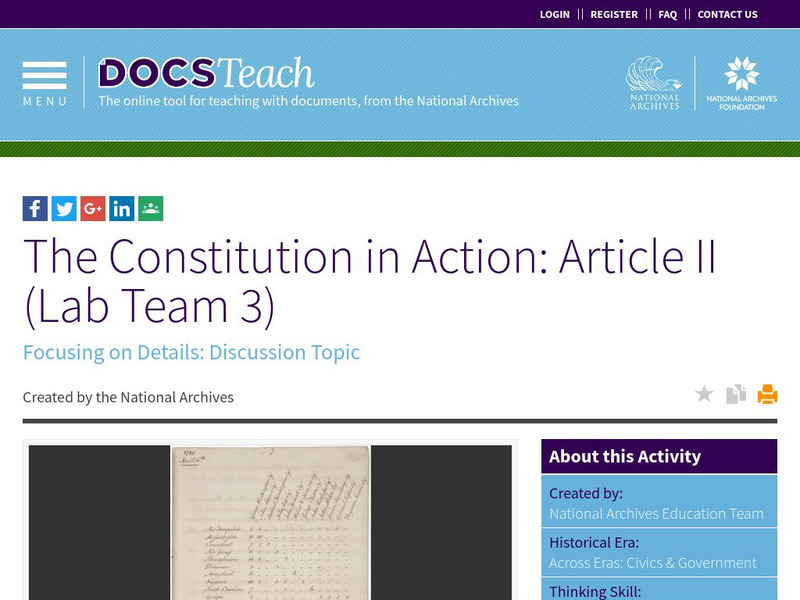
National Archives: The Constitution in Action: Article Ii
This activity can be used during a unit on the U.S. Constitution. Students will analyze the Senate Journal of the First Congress and identify how the document demonstrates content contained within Article II of the Constitution in...
US National Archives
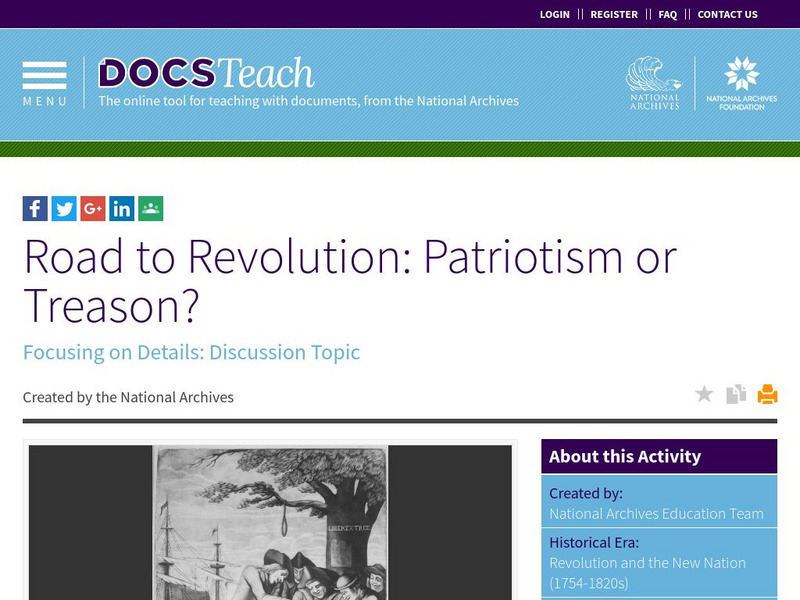
National Archives: Road to Revolution: Patriotism or Treason?
What if you lived in the colonies during in the years preceding the Revolution? Would you be a loyalist or join the Sons of Liberty? Students will analyze a picture of a tax collector being tarred and feathered and answer critical...
US National Archives
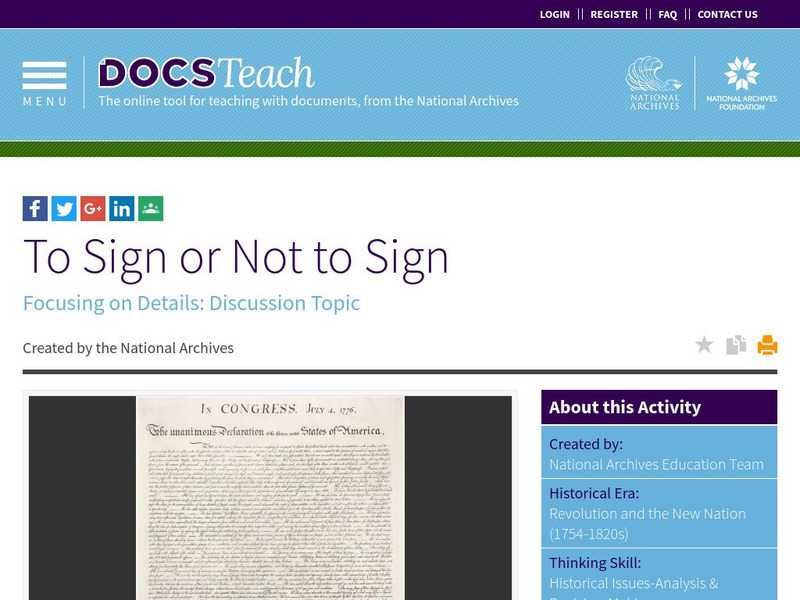
National Archives: To Sign or Not to Sign
Use this lesson in the middle of a Revolutionary War unit. Young scholars will analyze sections of the Declaration of Independence to answer critical thinking questions. Upon completion of the unit, students will reevaluate their...
US National Archives
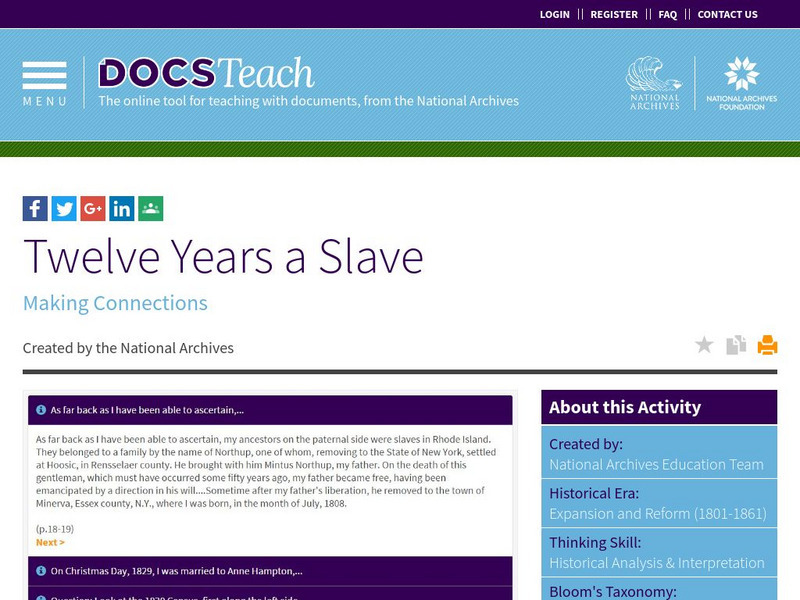
National Archives: Twelve Years a Slave
Solomon Northup was a free man of color who was sold into slavery. Students will read excerpts from his autobiography and analyze documents based on his life. These documents included slave manifests and census documents.
US National Archives
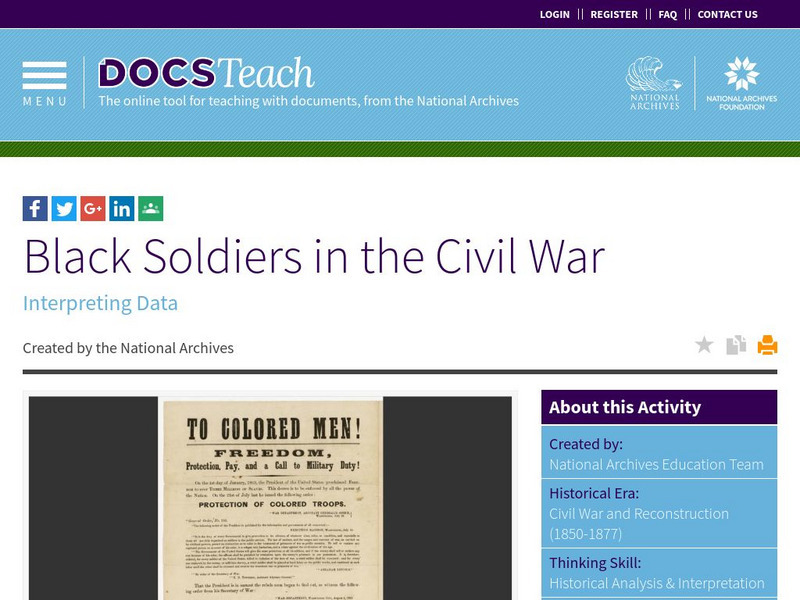
National Archives: Black Soldiers in the Civil War
Increasing pressures on the Union army led to the recruitment of African Americans to fight in the Civil War. Students will analyze the following recruitment poster for freed slaves and decide how important the black soldiers were to a...