Hi, what do you want to do?





Better Lesson
Better Lesson: Come Prepared for Discussions
This is a collection of 14 discussion opportunities. Review the key ideas expressed and draw conclusions in light of information and knowledge gained from the discussions.
Better Lesson
Better Lesson: Collision Course (Part 2)
This is part 2 of a two-part lesson on understanding how speed changes when two objects collide. Students will conduct an experiment, collect data, and draw conclusions about the changes in energy that occur when objects collide....
Better Lesson
Better Lesson: What the Heck Is That? Inferring the Purpose of an Object
For this lesson, 5th graders use their prior knowledge and inference skills to determine uses of unfamiliar objects. They participate in group discussions and analyze the key information they have in order to reach conclusions.
National Endowment for the Humanities
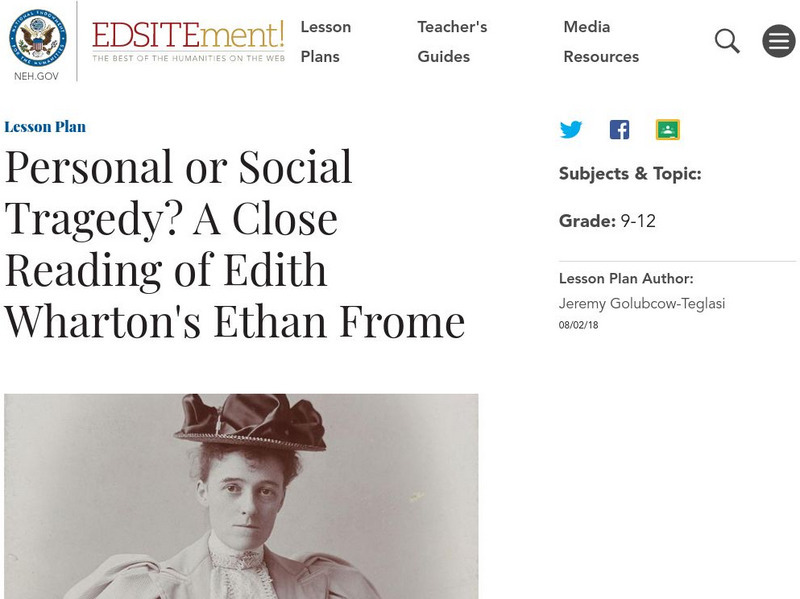
Neh: Edsit Ement: Personal or Social Tragedy? Edith Wharton's Ethan Frome
This lesson will challenge students to weigh the textual evidence for and against the claim that Ethan's woes lay in staying in Starkfield-and not in the details of his personal relationships. In the process, students will close read...

PBS
Pbs Teachers: Pope John Paul Ii's Complicated Legacy (Lesson Plan)
A lesson plan that directs students to online articles about the legacy of Pope John Paul II from which they are required to draw conclusions about his influence on the Catholic Church as well as on the world community.
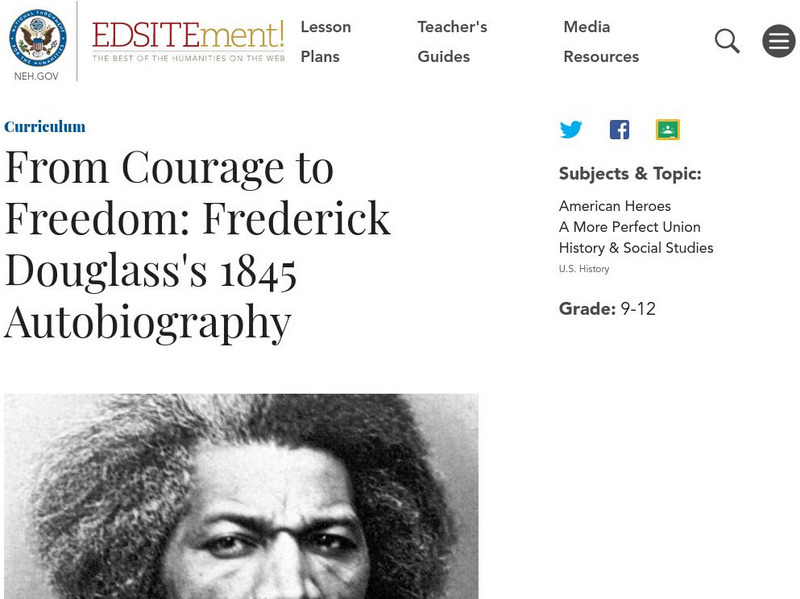
National Endowment for the Humanities
Neh: Edsit Ement: From Courage to Freedom:frederick Douglass's 1845 Autobiography
In this 3-lesson unit, young scholars will read Douglass's narrative. They will analyze Douglass's vivid first-hand accounts of the lives of slaves and the behavior of slave owners to see how he successfully contrasts reality with...
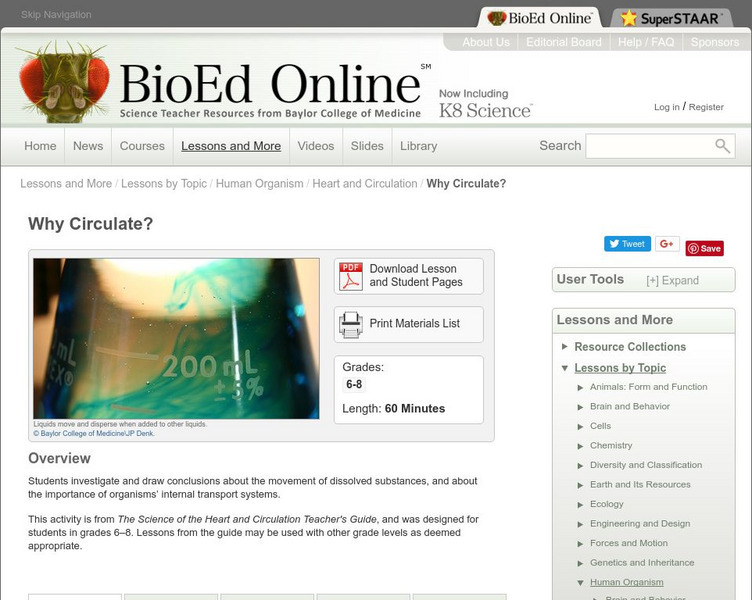
BioEd Online
Bio Ed Online: Why Circulate?
In this lesson plan students will observe the dispersion of a drop of food coloring in water, draw conclusions about the movement of dissolved substances, and develop explanations about the importance of organisms' internal transport...
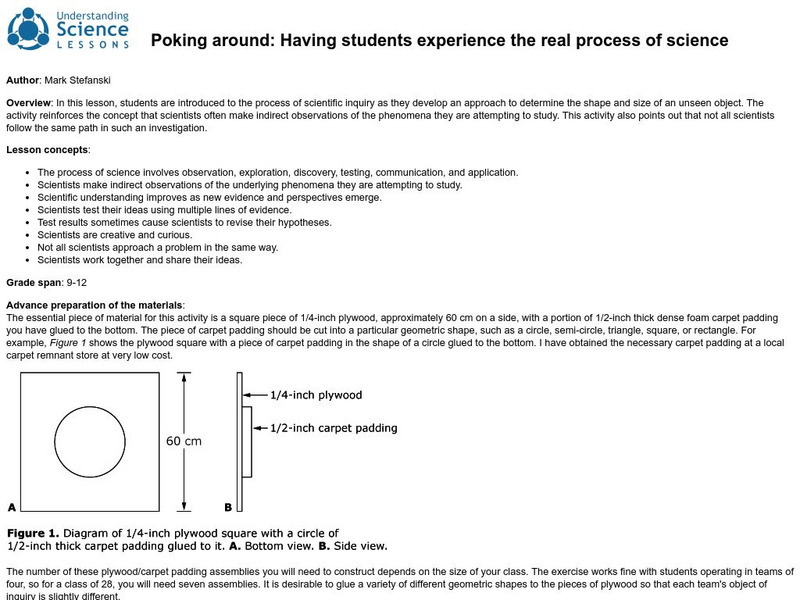
University of California
University of California at Berkeley: Understanding Science: Poking Around
Students work in groups to develop an understanding of the size and shape of an object hidden beneath a plywood board, asking questions, testing their reasoning, and drawing conclusions, as scientists do. Students are never permitted to...
CPALMS
Mountain Bicycles, Inc.
[Free Registration/Login Required] During this MEA simulation, kindergarten students will be deciding which type of bike will be best for a company to sell in their community. Students must work in cooperative groups as they determine...
Huntington Library
Huntington Library: Learning From Leaves: A Look at Leaf Size [Pdf]
A instructional activity unit where students examine and measure leaf sizes, as well as look at their textures, and draw conclusions about environmental factors that may have influenced their growth positively or negatively.
National Endowment for the Humanities
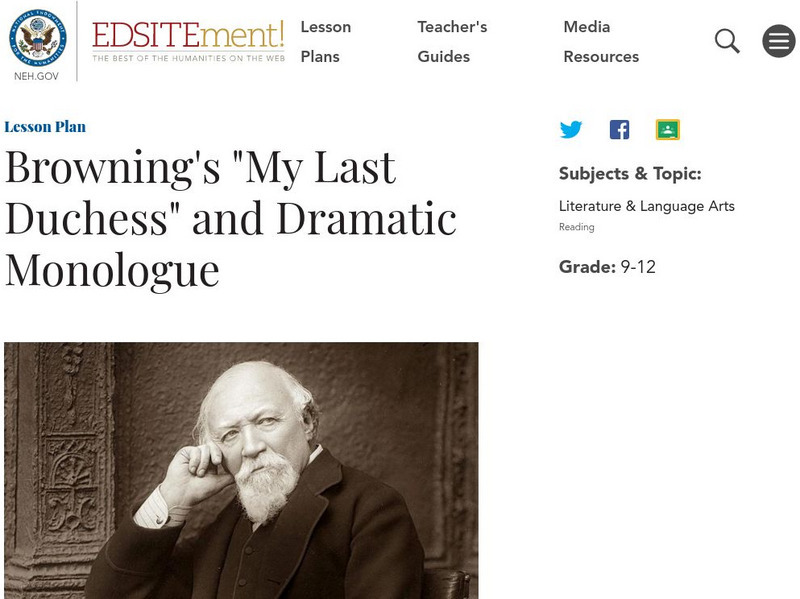
Neh: Edsit Ement: Browning's "My Last Duchess" and Dramatic Monologue
Reading Robert Browning's poem "My Last Duchess," learners will explore the use of dramatic monologue as a poetic form, where the speaker often reveals far more than intended. The students will later write their own dramatic monologue...
National Endowment for the Humanities
Neh: Edsit Ement:charlotte Perkins Gilman's "The Yellow Wall Paper" Writing Women
A close reading of "The Yellow Wall-paper" employing the analysis of such literary concepts as setting, narrative style, symbol, and characterization. Young scholars will write an essay discussing what the story suggests about...
National Endowment for the Humanities
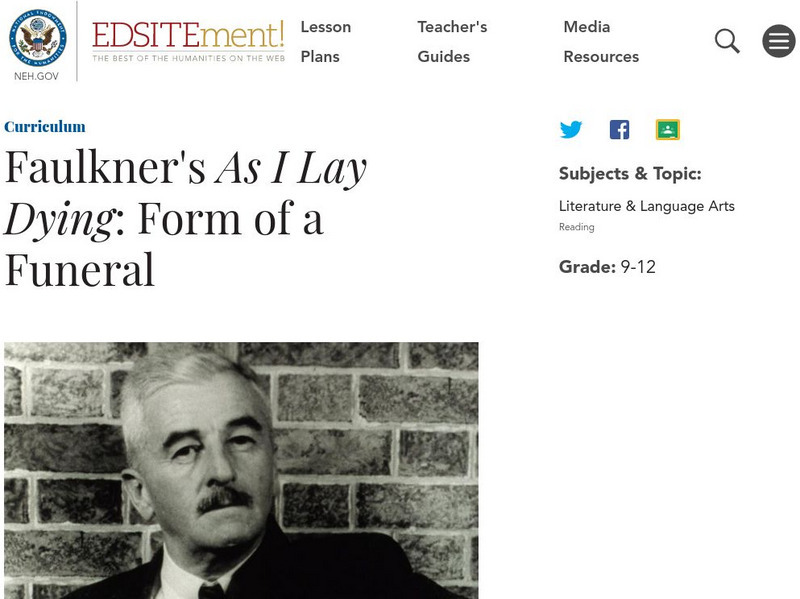
Neh: Edsit Ement: Faulkner's as I Lay Dying: Form of a Funeral
William Faulkner's self-proclaimed masterpiece, As I Lay Dying, originally published in 1930, is a fascinating exploration of the many voices found in a Southern family and community. Students will explore the use of multiple voices in...
Other
National Council for the Social Studies: A Picture's Worth
When using historical pictures in the classroom, students will need help drawing their observations together to reach conclusions about the lives of people at a particular time. Sets of photographs - along with probing questions and...