Hi, what do you want to do?





Read Works
Read Works: Drawing Conclusions Kindergarten Unit: Short Story
[Free Registration/Login Required] A lesson plan teaching students to make conclusions based on a sentences and short texts. Students use textual cues to explain how the conclusions were reached. Ideas for direct teaching, guided...

Better Lesson
Better Lesson: Goody Goody Gumdrop! Building Structures Are Fun!
In this instructional activity, the children will be building a physical model to illustrate how the shape of an object, such as triangles, helps it function. At the end, the children will test their gumdrop structures and the class will...
Read Works
Read Works: Lessons: Lesson 3: Short Story
[Free Registration/Login Required] A lesson plan, texts, and materials to teach kindergarten students to use clues in a story to draw and explain a conclusion.
University of California
University of California at Berkeley: Understanding Science: Mystery Boxes
An interesting lesson where students collaborate to create a visual image of what the inside of a sealed box looks like. The box has a marble or other type of sphere inside it, as well as partitions and/or ramps. Students come to...
Writing Fix
Writing Fix: A Literature Inspired Writing Lesson: A Time Traveler's Log
Students will read chapter four of The Time Machine by H.G. Wells, noting both the time traveler's descriptions of the new world of 800,000 ACE, and the conclusions the main character draws as a 19th century man. Students will think of a...
National Endowment for the Humanities
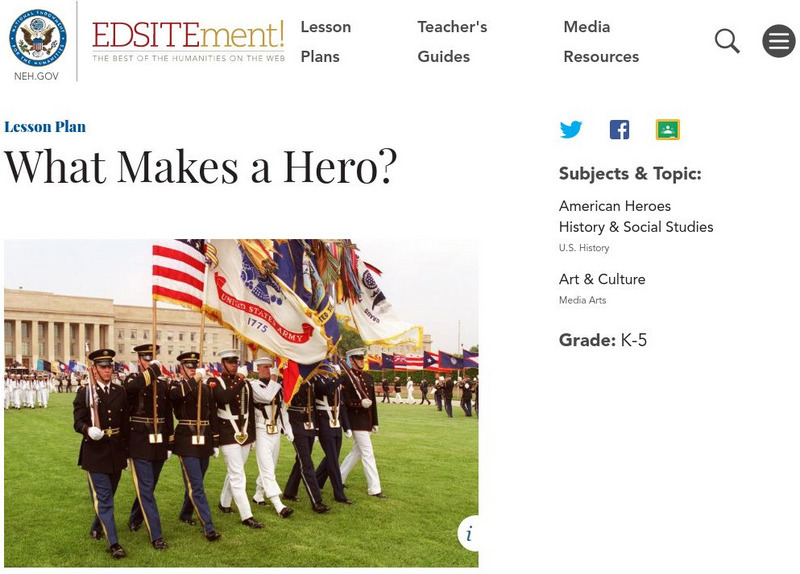
Neh: Edsit Ement: What Makes a Hero?
In this unit, students will discuss what qualities make a hero: kid heroes, adult heroes, local heroes, and historical figure heroes. They will extend this to what qualities make historical figures heroes for them; they will research a...

McGraw Hill
Read: Does Technology Make Us Lazy?
Compare these two passages for some interesting ideas about how technology affects our lives. The questions that follow ask you to identify the main idea from either direct statement or inference.
Stanford University
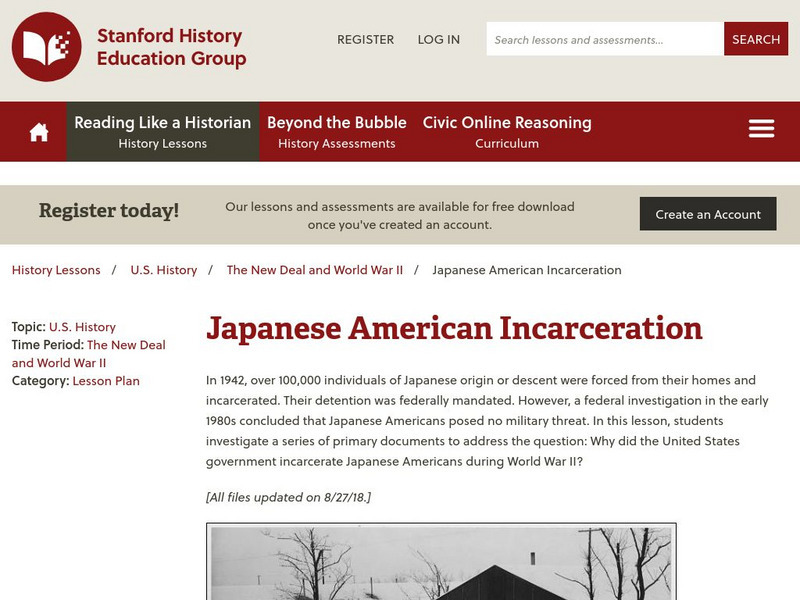
Sheg: Document Based History: Reading Like a Historian: Japanese Internment
[Free Registration/Login Required] A lesson plan delving into the reasoning behind interning the Japanese-Americans following the Pearl Harbor attack. Students will explore primary source documents to draw their conclusions.