Hi, what do you want to do?






Curated OER
Uranus
In this planet science activity, students learn 6 facts about the planet Uranus. Students also read a paragraph containing more information about the planet.

Curated OER
Telescopes Then And Now
In this telescopes worksheet, students will read information about the differences between the early telescopes and the modern telescopes. Then students will complete 2 short answer questions.

Curated OER
Watershed Management
Students investigate the concept of a watershed. They conduct research into the concept using a variety of resources. Students take a field trip to a local watershed to make observations. The outcome is a report concerning the outside...

Curated OER
Solar System
In this Solar System worksheet, 5th graders demonstrate knowledge of parts of the Solar System. Students unscramble letters to list these parts.

Curated OER
Extraordinary Lives
In this extraordinary lives worksheet, students answer questions about David Platonoff's Russian grandmother. Students answer 17 questions.
Harvard University
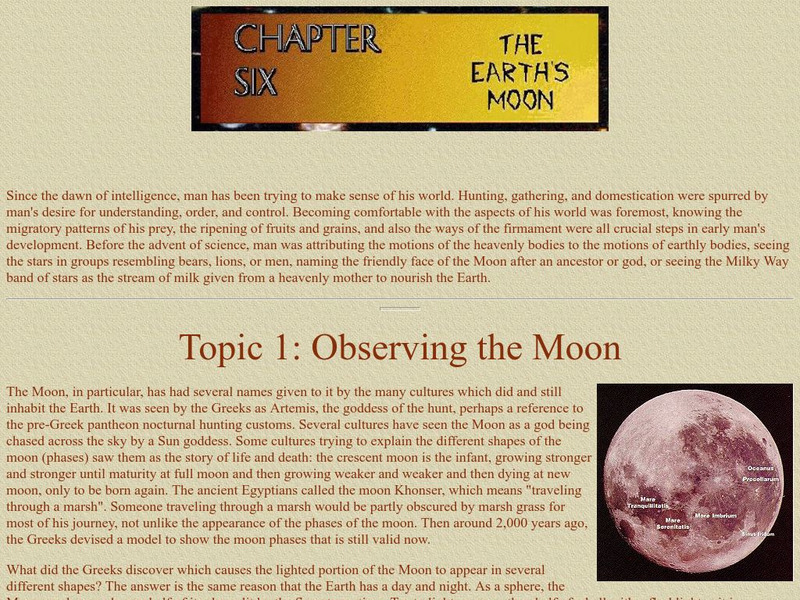
Harvard University: Eyes on the Sky, Feet on the Ground: The Earth's Moon
In this online textbook, students explore the phases of the moon, the moon's orbit, the origin of the moon, and the tides. Includes numerous inquiry-based activities.
Space.com
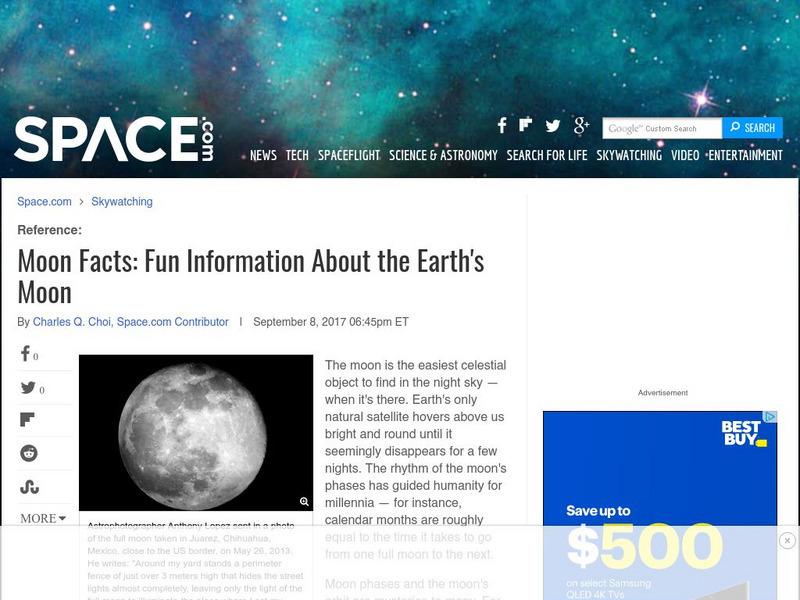
Moon Facts: Fun Information About the Earth's Moon
How did the moon form? Learn the answer to this and numerous other fun facts in this article from Space.com.

Nine Planets
The Nine Planets: The Moon
Explore the mythology, structure, observational history, gravitational force, and orbit of Earth's Moon.
PBS
Pbs Learning Media: Why Doesn't the Moon Fall Down?
In this animated video segment adapted from NASA, astronomer Doris Daou explains how the forces of speed and gravity keep the moon in a constant orbit around Earth. [1:36]
University of Colorado
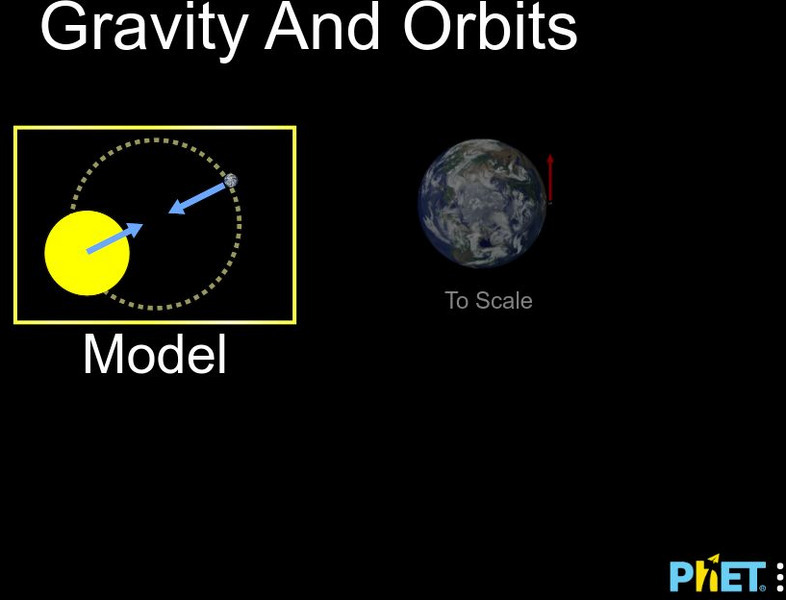
University of Colorado: Ph Et Interactive Simulations: Gravity and Orbits
Move the sun, earth, moon, and space station to see how it affects their gravitational forces and orbital paths. Visualize the sizes and distances between different heavenly bodies, and turn off gravity to see what would happen without it.

University of Colorado
University of Colorado: Ph Et Interactive Simulations: Gravity and Orbits
An interactive simulation that teaches about gravitational force, circular motion, and astronomy by manipulating the sun, earth, moon, and a space station to observe the effects of gravity and orbital paths. This simulation can either be...
Extreme Science
Extreme Science: The Moon
Read about the birth of Earth's moon, its composition, orbit, visible phases, and other interesting facts. Link to a virtual moon phase interactive which shows the current lunar phase and the phase on any date in the past or future.
Globio
Glossopedia: Moon
Orbiting around Earth at an average distance of 384,392km is our constant companion, the Moon. This and a great deal more can be learned about our closest neighbor in this article by GLOBIO

BBC
Bbc Schools: Ks2 Bitesize: Science: Physical Processes: Earth, Sun, and Moon
Help Sarah Jane and her team put the solar system's planets back in order. Following the activity, read more about the sun, the Earth, and its moon, and then take a quick quiz to check for understanding.
Annenberg Foundation
Annenberg Learner: Moon Journal Activity
Students use the process of journaling to make discoveries about the moon. This activity involves having students write observations about the moon in a journal. Using their observations they go to an online resource and choose...
NASA
Nasa Space Science Data Archive: Galileo Project Information
This is the homepage of all of the archived information about and from the Galileo Mission. Included is data from the flybys of Venus, Earth, Moon, and Asteroids Gaspra and Ida, as well as the current data from Jupiter and its moons. See...
CK-12 Foundation
Ck 12: Physical Science: Orbital Motion
[Free Registration/Login may be required to access all resource tools.] Orbital motion and why it occurs, and the orbits of the Earth around the sun and the moon around the Earth.
Nine Planets
The Eight Planets: Earth
Excellent Eight Planets site that provides a vast amount of information about planet Earth. Very comprehensive and complete site.

BBC
Bb Ci Space: Earth
The BBC provides a general overview of the planet Earth. Content includes statistical information, a focus on the four seasons, moon information, and more.

Other
Astro Methods: Earth's Nutation Visualized
Nutation is a small cyclical motion superimposed upon the steady 26,000-year precession of the Earth's axis of rotation. It is mainly caused by the gravitational effect of the 18.6-year rotation period of the Moon's orbit. The main...
Project Britain
Primary Homework Help: Earth and Space Quiz
This resource provides information about Earth and space. In addition, there is a quiz provided.
Other
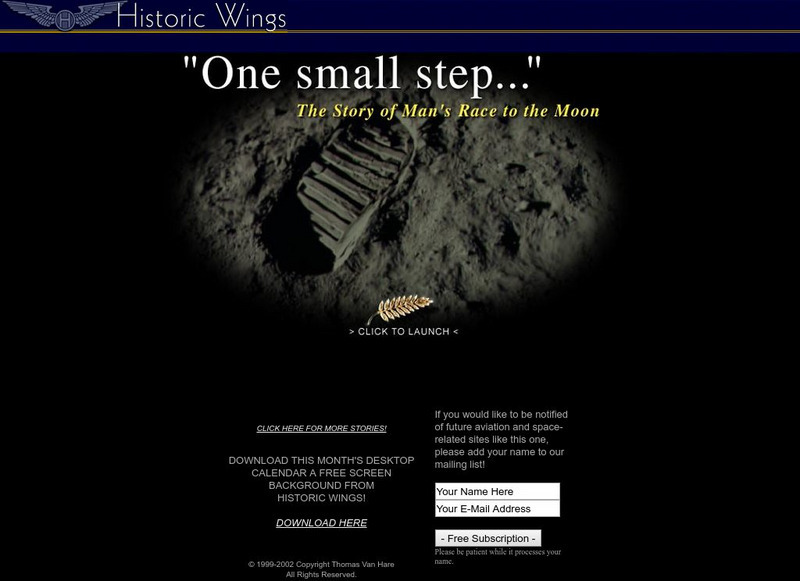
Historic Wings: "One Small Step" Race to the Moon
"One Small Step, The Race To The Moon" is a clear presentation of the story of the Moon landing program that the United States conducted during the 1960's and early 1970's. After launching the presentation click on the phases of the Moon...
Curated OER
Eyes on the Sky, Feet on the Ground: The Earth's Moon
In this online textbook produced by the Smithsonian, students explore the phases of the moon, the moon's orbit, the origin of the moon, and the tides. Includes numerous inquiry-based activities.